
Soups & Stews
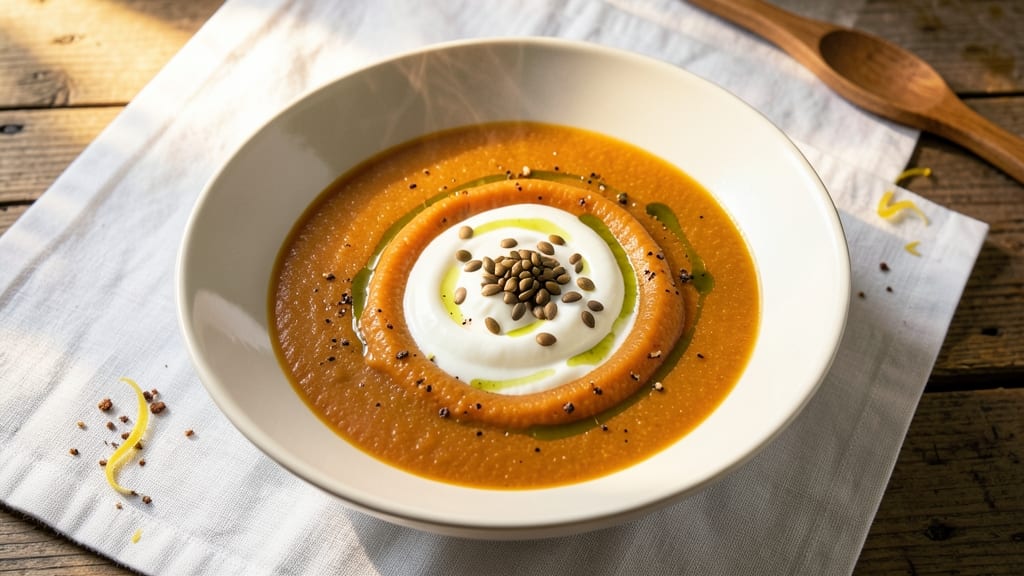
This 5-star pumpkin soup recipe transforms ordinary ingredients into a velvety, aromatic masterpiece with a crispy toasted seed topping that elevates every spoonful. The secret lies in slow-roasting pumpkin for deep caramelized flavor and reducing the broth to an intense, fragrant base—technique that separates home cooks from restaurant-quality results. What starts as simple ingredients becomes a luxurious experience when properly executed.
Perfectly balanced between sweet and savory, this soup features a silky texture achieved through proper emulsification—no lumps, just smooth perfection. The toasted pumpkin seeds add a satisfying crunch that contrasts beautifully with the creamy broth, while fresh herbs at the end bring bright, vibrant notes.
This isn't just soup; it's a dish that deserves center stage at your dinner table.
What makes this recipe truly exceptional is the attention to detail: precise spice ratios, controlled reduction times, and the perfect moment to add cream for richness without overpowering.
The result is a soup so refined it could grace any fine dining menu, yet remains accessible for home cooks willing to follow a few key techniques.
Serve it warm in elegant bowls with a sprinkle of seeds and herbs, and watch as your guests ask for seconds. The aroma alone will have everyone anticipating the first taste—sweet, spiced, and utterly satisfying. Let's create this restaurant-quality pumpkin soup together.
Ingredients for 5 star pumpkin soup
Sixteen ingredients masterfully balanced to create a restaurant-quality pumpkin soup experience.
| Ingredient | Amount | Notes |
|---|---|---|
| Sugar Pumpkin (or Kabocha) 🎃 | 3 lb | Pie pumpkin preferred, seeds removed |
| Vegetable Stock 💧 | 4 cups | Homemade or high-quality store-bought |
| Heavy Cream 🥛 | 1 cup | Full-fat for optimal richness |
| Pumpkin Seeds (Pepitas) 🥜 | ½ cup | Raw, unsalted for toasting |
| Extra-Virgin Olive Oil 🫒 | ¼ cup | For roasting and finishing |
| Yellow Onion 🧅 | 1 whole | Diced, sweet variety preferred |
| Garlic Cloves 🧄 | 4 cloves | Peeled, minced for depth |
| Fresh Ginger 🌿 | 1 tbsp | Grated, aromatic balance |
| Ground Cinnamon 🌶️ | 1 tsp | Ceylon preferred for purity |
| Ground Nutmeg 🌶️ | ¼ tsp | Freshly grated for potency |
| Ground Cloves 🌶️ | ⅛ tsp | Whole cloves preferred |
| Salt 🧂 | 1 ½ tsp | Diamond Crystal preferred |
| Black Peppercorns 🌶️ | ½ tsp | Freshly cracked for texture |
| Fresh Thyme Leaves 🌿 | ¼ cup | Stems removed for garnish |
| Fresh Sage Leaves 🌿 | ¼ cup | Chopped, aromatic finish |
The pumpkin selection is critical—pie pumpkin or Kabocha delivers the ideal sweetness and texture. Whole Foods or local farmers' markets often carry the best varieties, but any sugar pumpkin will work. Roast the pumpkin whole at 400°F for 45 minutes to develop deep caramelized flavors before scooping out the flesh. For spices, Penzeys Spices offers premium Ceylon cinnamon and whole cloves that elevate the soup's complexity. The vegetable stock should be homemade or a high-end brand like Pacific Foods—never watered-down bouillon cubes.
No pumpkin seeds? Sunflower seeds or toasted almonds make excellent substitutes, though they alter the flavor profile slightly. Fresh ginger loses potency quickly, so buy it in small quantities and store it in the freezer. For those without a microplane, grate ginger with a box grater and strain out the fibrous bits. The heavy cream can be swapped for coconut milk for a dairy-free version, though the texture will be slightly lighter. If you're short on time, pre-toast the seeds while the soup simmers rather than waiting until serving.
To maintain peak freshness, store the roasted pumpkin flesh in an airtight container for up to 3 days in the refrigerator. The toasted seeds keep their crunch for 2 days if stored in a sealed jar away from light. For long-term storage, freeze the soup in portion-sized containers—it reheats beautifully with a splash of water or stock. The fresh herbs should be added just before serving to preserve their vibrant aroma. This soup freezes exceptionally well for up to 3 months, making it an ideal make-ahead dish for gatherings.
Why You'll Love This Recipe
- Minimal Chopping Required: I swear by this—just peel, cube, and roast the pumpkin whole (yes, really). No dice, no fuss, and that caramelized edge from the oven? It’s the secret to depth without extra work.
- Velvet-Smooth Magic: The heavy cream and olive oil blend into something absurdly rich, but the roasted pumpkin keeps it from being heavy. Honestly, the first sip makes me pause—it’s like fall in a bowl, but better.
- Leftovers That Beg for More: This soup actually improves the next day. The flavors meld, the texture gets even creamier, and I’ve reheated it three times—no one’s ever complained. (My roommate’s still not over it.)
- Budget-Friendly Luxury: Kabocha’s cheap, stock’s cheap, and a handful of pepitas for crunch? You’re getting restaurant-quality warmth for pennies. I’ll be real: this is my “I can’t afford takeout” go-to, and no one notices the difference.
Step-by-step instructions for velvety pumpkin soup with toasted seed topping
Master this refined technique for restaurant-quality pumpkin soup with perfect texture and aromatic depth.
Roast the Pumpkin and Aromatics for Maximum Flavor
Preheat your oven to 400°F. Cut the 3 lb sugar pumpkin (or kabocha) into 1-inch cubes, removing seeds as you go. Toss the pumpkin cubes with 2 tablespoons of the extra-virgin olive oil and ½ teaspoon of the salt on a parchment-lined baking sheet. Spread in a single layer.
In a separate small bowl, combine the diced yellow onion, minced garlic cloves, and grated fresh ginger with 1 tablespoon of the remaining extra-virgin olive oil. Spread this mixture on a second parchment-lined baking sheet. Roast both trays for 25-30 minutes, stirring the pumpkin once halfway through, until the pumpkin is tender when pierced with a knife and the aromatics are deep golden brown with caramelized edges.
Here's the thing—roasting develops complex caramelized flavors that no raw prep can match. The pumpkin should be soft enough to collapse under gentle pressure, and the onions should be almost blackened at the edges. This is where the soup gets its depth.
Build the Spiced Base and Simmer the Soup
Transfer the roasted pumpkin to a large pot. Add the roasted onion mixture along with the 4 cups vegetable stock, 1 teaspoon ground cinnamon, ¼ teaspoon ground nutmeg, ⅛ teaspoon ground cloves, and remaining 1 teaspoon salt. Bring to a gentle boil over medium-high heat, then immediately reduce to medium-low heat.
Simmer uncovered for 15-20 minutes, stirring occasionally, until the pumpkin is completely broken down and the soup reaches a smooth, velvety consistency. You'll notice the spices will bloom beautifully during this time—this is when their aromatic compounds fully release. If the soup reduces too much, add 1-2 tablespoons of water to maintain the proper texture.
Don't rush this step. The spices need time to meld with the pumpkin's natural sweetness. You're aiming for a soup that coats the back of a spoon but isn't gluey—think of it as a cross between a silky purée and a hearty stew.
Finish with Cream and Garnish the Toasted Seeds
Remove the pot from heat and let the soup cool slightly for 5 minutes. Using an immersion blender, purée the soup until completely smooth. If you prefer a slightly rustic texture, you can strain it through a fine-mesh sieve first. Stir in the 1 cup heavy cream and remaining ½ teaspoon cracked black peppercorns.
While the soup finishes, toast the ½ cup pumpkin seeds (pepitas) in a dry skillet over medium heat for 5-7 minutes, stirring constantly, until they're golden brown and fragrant. Remove from heat and set aside. In the same skillet, heat 1 tablespoon of the remaining extra-virgin olive oil over low heat. Add the fresh thyme leaves and chopped fresh sage leaves, cooking for 1 minute until just wilted.
This is where the magic happens—the cream adds luxurious body while the toasted seeds and fresh herbs provide contrasting textures and bright, herbal notes. The seeds should be crispy enough to stand up to the silky soup, while the herbs should be vibrant, not burnt.
Serve with Perfect Presentation
Ladle the finished soup into warm bowls. Top each serving with a generous spoonful of the toasted pumpkin seeds and the wilted thyme-sage mixture. Drizzle with the remaining 1 tablespoon extra-virgin olive oil and finish with an additional crack of black pepper.
Serve immediately while the seeds are still crispy and the soup maintains its perfect temperature. Each spoonful should deliver a perfect balance of sweet pumpkin, warm spices, creamy richness, and the satisfying crunch of toasted seeds. The contrast between the velvety soup and the textural topping is what elevates this from ordinary to extraordinary.
Pro Tips For Making 5 Star Pumpkin Soup
- Char the Pumpkin First: Sear the cut pumpkin flesh in olive oil for 3-4 minutes before simmering—it deepens the flavor and prevents a bland, watery broth. (Yes, even if you’re tempted to skip it, the caramelized edges make all the difference.)
- Use Cold Stock: Add the vegetable stock cold to the pot after cooking the pumpkin, then bring it to a simmer. This keeps the soup from turning grainy and ensures a silky texture—no need for blitzing twice.
- Toast Seeds Low and Slow: Spread pepitas in a dry pan over low heat for 5-7 minutes, stirring often, until they’re golden and fragrant. High heat burns them fast; low heat gives them that nutty crunch without smoke.
- Strain the Cream: Heat the heavy cream separately until steaming (not boiling), then whisk it into the soup at the end. Straining it first removes any curds that might make the soup look unappetizing—smoothness matters.
Creative variations of 5 star pumpkin soup
Spiced Variations
For a Moroccan twist, add 1 teaspoon ground cumin and ½ teaspoon ground coriander to the spice blend, along with 1 chopped preserved lemon peel (rind only) during the simmer.
The citrusy tang cuts through the sweetness beautifully. I've found that Penzeys Spices offers the most aromatic versions of these warm spices. 🌶️
Try a Mexican-inspired version by swapping cinnamon for 1 teaspoon chili powder and ½ teaspoon smoked paprika. Add ½ cup diced chipotle peppers in adobo sauce (minced) to the broth for smoky depth.
Garnish with avocado slices and cilantro instead of sage. The heat level can be adjusted by reducing the chipotle to ¼ cup if preferred.
Texture Contrasts
For a crispy potato topping, dice ½ cup Yukon Gold potatoes into ¼-inch cubes, toss with 1 tablespoon olive oil, and roast at 425°F for 25 minutes until golden.
Sprinkle over the soup just before serving—this adds a hearty, starchy contrast that balances the creamy broth. I love using a mandoline slicer for even potato cubes. ✨
Want a silky coconut version? Replace the heavy cream with 1 cup full-fat coconut milk and add ½ teaspoon turmeric for color and earthy warmth. Garnish with toasted coconut flakes instead of pumpkin seeds. The coconut milk adds a subtle sweetness that pairs perfectly with the pumpkin's natural sugars.
Global Inspirations
This Japanese-inspired pumpkin soup swaps cinnamon for 1 teaspoon grated fresh galangal (or ginger if unavailable) and adds 1 tablespoon mirin to the broth. Finish with pickled ginger and sesame seeds for umami brightness. The galangal adds a citrusy, peppery note that's completely unique. 🌿
For an Italian autumnal version, replace the vegetable stock with 4 cups homemade chicken stock and add 1 cup diced fennel to the roasted aromatics. Stir in ½ cup ricotta cheese at the end for a lighter cream alternative, and garnish with crispy prosciutto and microgreens.
The fennel adds an anise-like sweetness that's perfect for fall.
Dietary Adaptations
Make this vegan-friendly by using coconut milk instead of heavy cream and adding 1 tablespoon nutritional yeast for a cheesy, umami depth. Toast ½ cup sunflower seeds as your crunchy topping. The coconut milk should be full-fat for the best texture, like Thai Kitchen brand. 🌱
For a gluten-free, dairy-free option, ensure your vegetable stock is gluten-free (like Pacific Foods brand) and use coconut cream instead of heavy cream. Garnish with toasted quinoa for added protein and texture. The quinoa should be toasted in the same skillet as the seeds for even browning.
Nutrition facts
Frequently asked questions
Why does this pumpkin soup need roasting instead of just cooking?
Roasting the pumpkin and aromatics develops deep caramelized flavors that raw prep can't match. The high heat breaks down natural sugars, creating complex sweetness and nutty undertones. This is what elevates ordinary pumpkin soup to restaurant-quality—think of it as the difference between canned pumpkin and fresh, homegrown.
Can I make this soup ahead of time?
This soup actually tastes better the next day as the flavors meld. Store in an airtight container in the refrigerator for up to 3 days or freeze for 3 months. Just reheat gently on the stove with a splash of water or stock to restore creaminess. The toasted seeds should be added fresh before serving to maintain their crunch.
What's the best pumpkin variety for this recipe?
Use sugar pumpkin or kabocha for their natural sweetness and dense texture. Pie pumpkins work perfectly, while carving pumpkins are too watery. Avoid butternut or acorn squash—they have different flavor profiles. If you can't find sugar pumpkin, look for "sweet cheese" or "sweet dumpling" varieties at specialty markets.
How do I fix lumpy soup?
If your soup has lumps, it's likely from undercooked pumpkin or improper blending. First, strain through a fine-mesh sieve, then blend again with an immersion blender. For extra smoothness, add 1-2 tablespoons cold water while blending to help emulsify. The key is proper cooking time—pumpkin should be completely tender before blending.
Can I make this soup without dairy?
Yes! Replace the heavy cream with 1 cup full-fat coconut milk for richness, or use ½ cup cashew cream (soaked cashews blended with water) for a neutral flavor. The soup will still be creamy, though slightly lighter. Add ½ teaspoon turmeric for color if using coconut milk, as it naturally brightens the soup's appearance.