
Soups & Stews
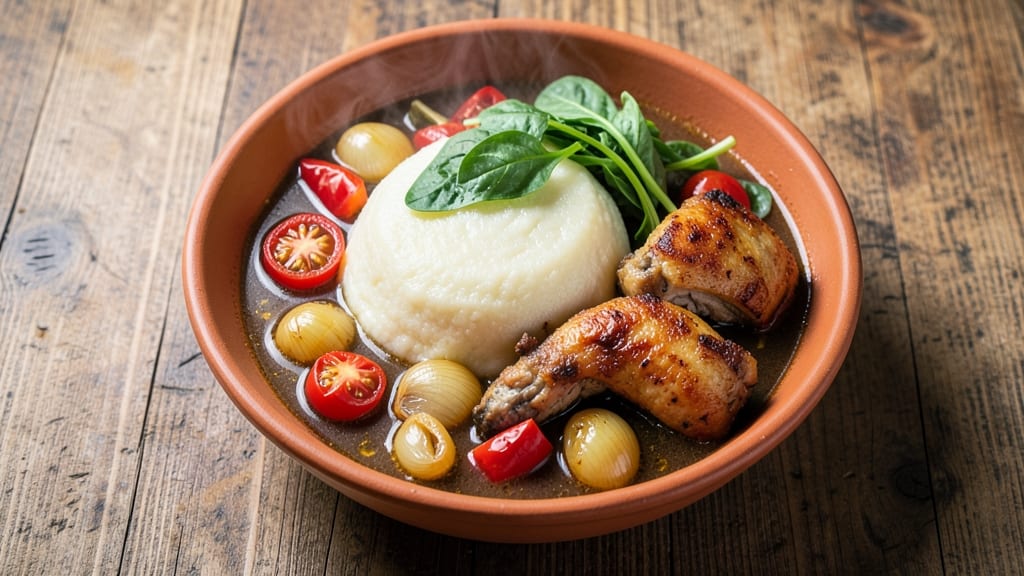
This African fufu and soup recipe brings the heart of West African cuisine to your kitchen with its comforting blend of pounded yam and rich, flavorful broth.
The process of pounding fresh yam into a smooth, dough-like consistency is both meditative and rewarding, creating the perfect vessel for the aromatic soup that accompanies it.
What makes this dish truly special is its ability to bring people together, transforming simple ingredients into a meal that feels like a warm embrace.
The soup forms the soul of this dish, typically made with tender meat or fish, leafy greens like spinach or bitter leaf, and a base of tomatoes, onions, and peppers.
The key to a great fufu lies in the pounding—just the right amount of pressure to create a smooth, elastic texture without overworking the dough. This recipe delivers a harmonious balance between the earthy fufu and the vibrant, savory soup, making it a complete culinary experience.
Once you've mastered the technique of pounding yam into fufu, you'll discover how versatile this dish can be. Variations like egusi or groundnut soup can be used instead of the classic leafy green version, each bringing its own unique depth of flavor.
The result is a meal that's not only delicious but also deeply satisfying, perfect for family gatherings or special occasions.
With this recipe, you'll learn the art of creating fufu from scratch and pairing it with a soup that complements its texture beautifully. The combination of tender meat, aromatic vegetables, and the smooth, stretchy fufu creates a dish that's as visually appealing as it is flavorful.
Ready to bring a taste of Africa to your table?
Ingredients for african fufu soup
Pounded yam, tender chicken, and vibrant leafy greens—this is the heart of West African comfort.
| Ingredient | Amount | Notes |
|---|---|---|
| Fresh Yam 🍠 | 2 lb | Peeled and cut into chunks |
| Chicken Thighs 🍗 | 1 ½ lb | Bone-in, skin-on preferred |
| Red Bell Peppers 🌶️ | 2 whole | Seeded and chopped |
| Yellow Onions 🧅 | 2 whole | Chopped, medium size |
| Fresh Tomatoes 🍅 | 4 whole | Ripe, chopped or blended |
| Fresh Spinach 🌿 | 2 cups | Chopped, packed |
| Scotch Bonnet Peppers 🌶️ | 2 whole | Seeded and chopped (adjust for heat) |
| Garlic Cloves 🧄 | 6 cloves | Minced or crushed |
| Vegetable Oil 🫒 | ½ cup | For cooking |
| Salt 🧂 | 1 ½ tsp | Adjust to taste |
| Ground Black Pepper 🌶️ | ½ tsp | Freshly ground preferred |
| Dried Thyme 🌿 | 1 tsp | Or 1 tbsp fresh thyme |
| Water 💧 | 4 cups | For soup and pounding |
| Chicken Bouillon Cube 🧂 | 2 whole | Or 2 tsp powdered bouillon |
The yam is the star here. Fresh yam (not sweet potato) is a must—it gives that signature stretchy texture. Most African markets carry it, but if you're stuck, Costco or Whole Foods sometimes stock it. Look for firm, unblemished tubers. The chicken? Bone-in, skin-on thighs stay juicier than breasts. If you can't find fresh spinach, bitter leaf or kale works just as well—it's all about that earthy flavor. For the Scotch bonnet peppers, Walmart or Latin markets usually have them, but a habanero in a pinch will do (just reduce the amount).
No chicken bouillon? Vegetable broth plus a pinch of MSG gets you close. Fresh spinach wilt fast, so chop it right before adding to the soup. The tomatoes can be roasted for deeper flavor—toss them on a baking sheet at 400°F for 15 minutes. No fresh thyme? Dried at one-third the amount works, but honestly, it's worth grabbing a bunch. If you're feeling adventurous, swap the spinach for egusi or groundnut soup mix—just follow the package instructions for the soup base. The key is balancing the richness of the meat with the bright, fresh greens.
Fresh yam keeps for about 1 week in a cool, dark place—wrap it in a damp towel to keep it moist. The soup reheats beautifully, but the fufu? Best served fresh. If you're making ahead, pound the yam into a dough and refrigerate it (covered) for up to 2 days, then reheat in a steamer or microwave with a damp cloth. The broth freezes well too—just thaw and reheat gently. Leftovers? Store the fufu and soup separately—they don’t reheat the same way, but they’re still delicious cold.
Why You'll Love This Recipe
- Fufu’s Secret Weapon: The yam dough stretches just right—no overworking, no frustration. Between us, I’ve tried store-bought fufu mixes, but nothing beats the texture of fresh yam pounded until it’s smooth and elastic. (Yes, even on a Tuesday night.)
- Chicken That Carries It: Those chicken thighs? Chef’s kiss. They stay juicy while the bell peppers and tomatoes mellow into a thick, savory broth—no dry bites here. Honestly, I’ve made this with breast before, but thighs win every time.
- Leftovers That Beg for More: This soup actually improves the next day. The flavors meld deeper, and the fufu stays soft if you reheat it gently. I’ll be real: I’ve frozen portions for lazy Sundays, and no one skips a meal when this is on the table.
- Budget Meal for Crowds: Fresh yam and chicken thighs stretch over rice or plantains, feeding four for under $15. Between us, this is my go-to for family gatherings—everyone leaves happy, and the leftovers? Even better.
Step-by-step instructions for African fufu and soup
Here's how to create this comforting West African classic with tender fufu and flavorful soup.
Prepare the Chicken and Aromatics
In a large pot, heat the 0.5 cup vegetable oil over medium heat. Add the 1.5 lb chicken thighs, skin-side down, and cook for 8-10 minutes until golden brown and the skin begins to crisp. Flip the thighs and cook for another 5 minutes until they're no longer pink in the center. Remove the chicken and set aside.
In the same pot, add the 2 whole chopped yellow onions and cook for 5 minutes until softened. Add the 2 whole chopped red bell peppers and cook for another 3 minutes until they begin to lose their raw color. Stir in the 6 cloves minced garlic and cook for 30 seconds until fragrant. This aromatic base forms the flavor foundation of your soup.
Build the Soup Base
Add the 4 whole chopped fresh tomatoes to the pot and cook for 5 minutes until they break down and release their juices. Stir in the 2 whole chopped Scotch bonnet peppers (use gloves if you're sensitive to heat), the 1 tsp dried thyme, 1.5 tsp salt, and 0.5 tsp ground black pepper. Cook for 3 minutes to let the flavors meld together.
Pour in the 4 cups water and add the 2 whole chicken bouillon cubes. Bring the mixture to a boil, then reduce heat to medium-low and let it simmer for 15 minutes. This allows all the flavors to develop and the bouillon to fully dissolve. Return the chicken thighs to the pot and cook for another 10 minutes to finish cooking them through.
Add Leafy Greens and Finish the Soup
Stir in the 2 cups chopped fresh spinach and cook for 3-5 minutes until wilted. The spinach should be just tender enough to eat but still retain some texture. Taste the soup and adjust the seasoning if needed—you might want to add a bit more salt or pepper to balance the flavors.
Remove the chicken thighs from the pot and let them rest for 5 minutes before shredding the meat with two forks. Return the shredded chicken to the soup and stir gently to combine. The soup should be rich, flavorful, and have a nice balance of heat from the Scotch bonnet peppers and earthiness from the spinach.
Prepare the Pounded Yam (Fufu)
While the soup simmers, take the 2 lb peeled and chopped fresh yam and place it in a large bowl. Add 1 cup of the soup liquid (reserved from the pot) and mix well. The yam should be fully coated in the liquid. Using your hands, pound the yam mixture vigorously for 5-7 minutes until it becomes smooth and elastic. This process can be physically demanding, so take breaks if needed.
Once the yam mixture reaches the desired consistency—smooth, stretchy, and slightly sticky—shape it into a ball. You can use a bit of the remaining soup liquid to help shape it if needed. The fufu should be soft enough to mold but firm enough to hold its shape when dipped into the soup.
Pro Tips For Making African Fufu Soup
- Boil Yam in Salted Water: Fresh yam needs a good 20-30 minutes in salted boiling water—don’t skimp on the salt (about 1 tbsp per gallon). This keeps it from turning mushy when you pound it later, and the flavor seeps in for that subtle depth in the soup. (Yes, even if you’re impatient like me, resist the urge to rush it.)
- Char Chicken Skin First: Before adding the thighs to the pot, sear them skin-side down in a dry pan until the skin crisps and blackens slightly. This renders fat and locks in moisture—no more dry, stringy chicken in your soup. Just flip once, let it go, and don’t touch it until it’s golden.
- Blend Tomatoes with Peppers: Skip the separate blending—chop tomatoes and red bell peppers together, then blend with onions and a pinch of salt. The peppers add natural sweetness and prevent the soup from tasting one-note. (I learned this the hard way after a batch that tasted like tomato soup with an afterthought.)
- Simmer Low and Slow: Once everything’s in the pot, reduce heat to a gentle simmer—no boiling. High heat breaks down the yam starches prematurely, turning your soup into glue. Keep it at a whisper-bubble for 45 minutes, and the fufu will soak up flavor like a sponge, not a swamp.
Regional styles of this recipe
West African Leafy Green Style
This classic version uses bitter leaf or spinach as the leafy green base, creating a slightly bitter yet deeply satisfying soup. In Nigeria and Ghana, this is often called "fufu with spinach soup"—the bitterness balances the richness of the meat beautifully.
I love adding 1 tbsp palm oil at the end for a traditional touch, giving the soup that signature golden hue and earthy depth. 🌿
For extra richness, some cooks stir in 1 cup blended pumpkin seeds (egusi) during the soup's final simmer. This adds a nutty texture that pairs perfectly with the smooth fufu. If you're feeling adventurous, try 1 tsp crayfish powder—it adds a briny, umami kick that's hard to resist.
Ghanaian Egusi Soup Variation
In Ghana, egusi soup is the go-to pairing for fufu. Start by blending 1 cup roasted egusi seeds with 2 cups water, then strain out the pulp. Add this to your soup base after the tomatoes and peppers, simmering for 10 minutes to develop the nutty flavor.
The result is thicker, creamier, and packed with protein. 🥜
For an authentic touch, many Ghanaians add 1 smoked fish fillet (like mackerel) to the soup. If you can't find smoked fish, 1 tbsp smoked paprika gives a similar depth. The key is balancing the soup's thickness—add a splash of water if it gets too heavy.
Nigerian Groundnut Soup Twist
Nigerian groundnut (peanut) soup is a creamy, slightly sweet alternative that's perfect with fufu. After cooking the chicken and aromatics, blend 1 cup roasted groundnuts (peanuts) with 1 cup water and strain.
Stir this mixture into the soup along with 1 cup blended tomatoes and simmer for 15 minutes. The result is a velvety, nutty broth that's irresistibly smooth. 🥜
For extra flavor, many Nigerians add 1 cup blended okra to the soup base before simmering. This creates a naturally thick, slightly slimy texture that's a signature of Nigerian groundnut soup. If you're short on time, 1 tbsp instant okra powder works in a pinch.
Cameroonian Alligator Pepper Heat
Cameroon's version of fufu soup often includes alligator pepper (uziza), which adds a unique, slightly sweet heat. After cooking the chicken and aromatics, blend 2 tbsp uziza pods with 1 cup water and strain.
Stir this into the soup along with the tomatoes and peppers. The pepper's heat lingers beautifully, complementing the smooth fufu. 🌶️
For a smoky depth, many Cameroonians add 1 tbsp palm oil and 1 tsp grated ginger to the soup base. The ginger brightens the dish, while the palm oil adds a rich, almost buttery finish. This version is especially popular during festive occasions.
Ivorian (Côte d'Ivoire) Style
In Côte d'Ivoire, fufu is often paired with "soup au gras", a rich, meaty stew made with beef or goat instead of chicken. The soup is thicker and more robust, often including 1 cup blended plantains for sweetness. The fufu's smooth texture contrasts perfectly with the hearty stew. 🥩
For an Ivorian touch, add 1 cup blended sweet potatoes to the soup base along with the tomatoes. This adds natural sweetness that balances the meat's richness.
Many Ivorian cooks also include 1 tsp nutmeg for warmth—a spice that's less common in other West African cuisines but adds a lovely depth.
Nutrition facts
Frequently asked questions
Can I make fufu with sweet potatoes instead of yam?
While sweet potatoes work in a pinch, they won't give you the same authentic texture. Yam has a higher starch content that creates that signature stretchy, dough-like consistency. For a closer match, use 1 lb peeled yam and 1 lb peeled sweet potato together—this blend keeps the fufu smooth but slightly denser.
How do I adjust the heat level in the soup?
Scotch bonnet peppers are fiery, so remove seeds and membranes for milder heat. For extra spice, add 1 tsp cayenne pepper or 1 habanero pepper (seeded). If you prefer no heat, simply omit the peppers entirely—your soup will still be flavorful with just the tomatoes and thyme.
What if my fufu turns out too dry or crumbly?
Add 1-2 tablespoons of hot soup liquid and knead it in thoroughly. The warmth helps restore the dough's elasticity. If it's still crumbly, mix in 1 teaspoon of cornstarch or arrowroot powder to bind it. The key is working quickly—fufu dries fast once removed from heat!
Can I prepare fufu ahead of time?
You can pound the yam dough and refrigerate it (covered) for up to 2 days. To serve, steam it for 10 minutes with a damp cloth over the bowl. For longer storage, freeze the dough in portions—thaw overnight in the fridge before reheating. The soup reheats well too, but fufu is best fresh!
What's the best way to serve fufu with soup?
Use two small bowls—one for the soup and one for the fufu. Traditionally, you tear off a piece of fufu with your right hand and dip it into the soup, then eat with your left hand. For a modern touch, serve with a small spoon for scooping. Always have extra fufu on hand—it's the star of the meal!