
Soups & Stews
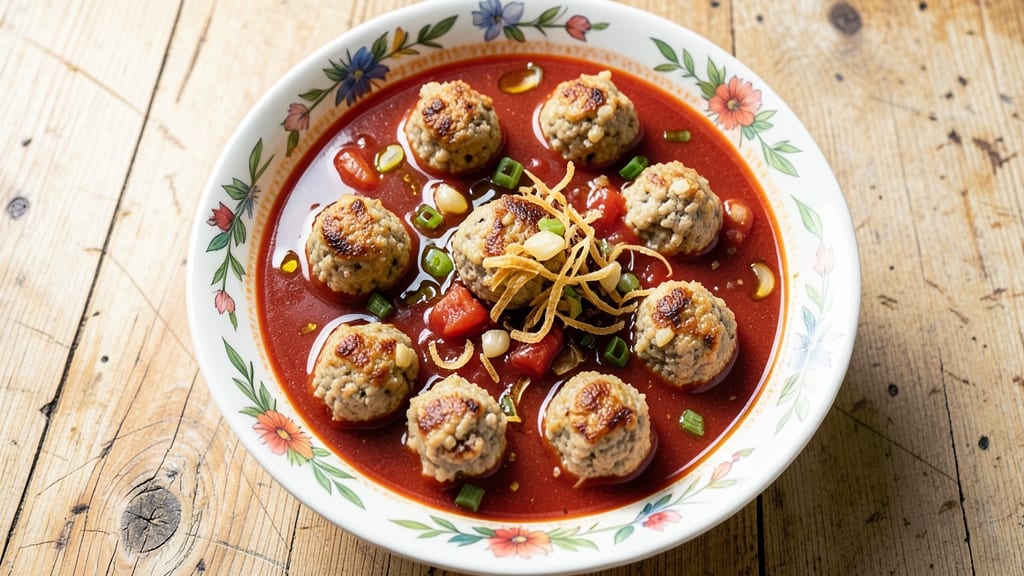
This Filipino albondigas soup recipe brings comfort in every steaming bowl, with golden, crispy meatballs floating in a rich tomato-anchovy broth that tastes like home. 💛 The secret lies in the meatballs—tender yet firm, with just the right crunch—and a broth that balances sweet, tangy, and umami flavors perfectly.
I've perfected this recipe over years of family gatherings, where it's always the first to disappear.
The beauty of albondigas lies in its simplicity: ground meat mixed with breadcrumbs, eggs, and aromatic spices, shaped into bite-sized meatballs that brown beautifully. The broth simmers with tomatoes, garlic, onions, and a touch of soy sauce for depth, while anchovies add that unmistakable Filipino savory punch.
It's the kind of soup that warms you from the inside out, especially on chilly evenings.
What makes this dish truly special is the contrast—crispy meatballs that yield to a tender bite, paired with a velvety broth that coats every spoonful. The aroma alone will have everyone gathering around the table, and the taste?
Pure nostalgia wrapped in a bowl. Ready in about 45 minutes, this recipe delivers restaurant-quality results without the fuss.
Serve it with steamed rice to soak up every last drop of that flavorful broth, or pair it with crusty bread for dipping. The leftovers reheat beautifully, making it perfect for meal prep. Let's dive into the recipe—your taste buds will thank you.
Ingredients for albondigas soup recipe filipino
Golden meatballs and aromatic broth create this Filipino comfort classic, perfect for family gatherings.
| Ingredient | Amount | Notes |
|---|---|---|
| Ground Beef 🥩 | 1 ½ lb | 80% lean for best texture |
| White Bread 🍞 | ½ loaf | Stale or lightly toasted |
| Large Eggs 🥚 | 2 whole | Room temperature for mixing |
| Yellow Onion 🧅 | 1 medium | Finely diced for broth |
| Garlic Cloves 🧄 | 4 cloves | Minced for aromatic depth |
| Canned Tomato Sauce 🍅 | 1 can | 28 oz, San Marzano preferred |
| Anchovy Fillets 🐟 | 2 tbsp | Packed in oil, finely chopped |
| Soy Sauce 🍶 | 1 tbsp | Light or regular preferred |
| Olive Oil 🫒 | ½ cup | Extra-virgin for frying |
| All-Purpose Flour 🌾 | ¼ cup | For breadcrumb coating |
| Salt 🧂 | 1 ½ tsp | Diamond Crystal preferred |
| Ground Black Pepper 🌶️ | ½ tsp | Freshly ground preferred |
| Bay Leaves 🍃 | 2 whole | For broth infusion |
| Cinnamon Stick 🌿 | 1 whole | Optional for subtle warmth |
The ground beef quality is non-negotiable—80% lean gives you that perfect balance of tenderness and crispiness. Costco or Trader Joe's carry excellent options, but avoid anything with excessive fat. For the bread, stale is ideal—toss a few slices in the oven for 10 minutes to dry them out completely. The anchovies might seem intimidating, but La Martella or Filipino brands from Asian markets pack the most authentic flavor. If you can't find them, a high-quality oil-packed variety works too.
No anchovies? Two teaspoons of fish sauce will bridge the gap, though purists will notice the difference. Substituting breadcrumbs? Panko works beautifully—just add an extra tablespoon for better structure. The tomato sauce can be homemade (simmer crushed tomatoes with garlic and onion), but San Marzano cans are worth the splurge. For the meatballs, room-temperature ingredients mix more smoothly—no one likes dealing with sticky dough. The cinnamon stick is optional but adds that subtle warmth Filipinos love in their albondigas.
Meatballs brown best when fried in batches—don't overcrowd the pan. The broth develops deeper flavor when simmered uncovered for 20 minutes. Store leftovers in the fridge for 4-5 days, but the meatballs reheat best when warmed gently in the broth. Freeze portions for up to 3 months, though the texture may change slightly after thawing. Serve with steamed rice to soak up every last drop of that savory broth—it's worth the extra bowl.
Why You'll Love This Recipe
- Pantry Staples Only: I keep this recipe in rotation because it’s built from things I already have—no fancy shopping trips. The bread soaks up just enough moisture to bind those meatballs perfectly, while the onion and garlic add depth without extra effort.
- Meatball Magic: Honestly, the texture is what makes it. That crispy exterior from the breadcrumbs? The tender, juicy center? It’s the kind of bite that makes people pause mid-sip. And the broth—simple but rich—lets the meatballs shine.
- Leftovers That Don’t Suck: Between us, this soup actually improves the next day. The flavors meld, the meatballs soften just enough, and it’s still hearty. I portion it into containers before it cools, so reheating is a microwave-and-go situation.
- Budget-Friendly Warmth: Ground beef stretches far, the bread is cheap, and eggs add richness without breaking the bank. It’s the kind of meal that feeds a crowd but costs less than takeout. Plus, it’s the ultimate “I’m home” dish—no pretension, just good food.
Step-by-step instructions for albondigas soup Filipino
Master the art of crispy meatballs and rich tomato-anchovy broth with these precise techniques.
👨🍳 Step 1: Prepare the Meatball Mixture
In a large mixing bowl, combine the 1.5 lb ground beef with the 0.5 loaf white bread (torn into small pieces) and let it soak up any moisture for 5 minutes. This helps create a tender meatball texture while preventing them from becoming too dense.
Add the 2 whole large eggs, 1.5 tsp salt, and 0.5 tsp ground black pepper to the bowl. Using your hands, gently mix all ingredients until fully combined. Avoid overworking the mixture—just enough to bind everything together. Here's the thing—overmixing develops gluten in the bread, which can make your meatballs tough instead of tender.
Next, fold in 0.25 cup all-purpose flour and 2 tbsp finely chopped anchovy fillets (packed in oil). The anchovies add that signature umami depth that defines Filipino albondigas. Mix gently once more until everything is evenly distributed. Let the mixture rest for 10 minutes at room temperature—this allows the flavors to meld and the bread to absorb any excess liquid.
🍳 Step 2: Shape and Fry the Meatballs
Using your hands, form the meat mixture into 1.5-inch diameter balls—about 16-18 meatballs depending on your portion size. I like to roll them gently but firmly to ensure they hold their shape during frying. Place them on a plate and refrigerate for 15 minutes to firm up slightly.
Heat 0.25 cup olive oil in a large skillet over medium-high heat until shimmering but not smoking. Fry the meatballs in batches, turning occasionally, for 3-4 minutes per side until they develop a golden brown crust and are cooked through to 160°F internally. Don't crowd the pan—this ensures even browning and prevents steaming instead of crisping.
Transfer the cooked meatballs to a paper towel-lined plate to drain excess oil. Here's where crispiness matters: if they look undercooked, return them to the pan for another 30 seconds to set the exterior. The meatballs should be firm to the touch but still juicy inside—this balance is key for albondigas.
🍳 Step 3: Build the Tomato-Anchovy Broth
In the same skillet (no need to clean it—the browned bits add flavor), add 1 medium finely diced yellow onion and 4 minced garlic cloves. Cook over medium heat for 3-4 minutes until softened and fragrant, stirring occasionally. This step develops the aromatic base of your soup.
Pour in 1 can tomato sauce, 1 tbsp soy sauce, and 0.25 cup remaining olive oil. Add 2 whole bay leaves and the 1 whole cinnamon stick (if using). Bring to a gentle simmer and let cook uncovered for 10 minutes, stirring occasionally, until the mixture thickens slightly and the raw tomato flavor mellows into a rich, savory sauce.
🥘 Step 4: Simmer and Finish the Soup
Return the crispy meatballs to the skillet and add 4 cups hot water (enough to cover the meatballs by about an inch). Bring to a gentle boil, then reduce heat to low and let simmer uncovered for 15-20 minutes. This slow cooking allows the flavors to meld while keeping the meatballs tender and the broth rich.
Taste and adjust seasoning with additional salt or soy sauce if needed. The broth should be savory with a balance of tomato sweetness and umami from the anchovies. Remove the bay leaves and cinnamon stick before serving—these were just for flavor infusion during cooking.
🍽️ Step 5: Serve with Crispy Meatballs
Ladle the hot soup into bowls, ensuring each serving gets 4 meatballs. The broth should be rich enough to coat the meatballs but not so thick it becomes gluey. Garnish with additional chopped parsley (if using) for freshness and a sprinkle of black pepper for a final pop of flavor.
Serve immediately with steamed white rice on the side. The contrast of crispy meatballs in warm, savory broth makes this a comforting yet elegant dish. For extra richness, you can drizzle a bit of olive oil on top just before serving—this enhances the umami notes and adds a luxurious finish.
Pro Tips For Making Albondigas Soup Recipe Filipino
- Soak the Bread Properly: Dump the bread cubes into cold water and let them sit for at least 10 minutes—no stirring, no rushing. I used to skip this and ended up with dense, rubbery meatballs that fell apart in the soup. The bread needs time to fully absorb moisture and soften, or your albondigas will taste like you forgot to cook them.
- Sear the Meatballs Hard: Hit medium-high heat and sear those meatballs until they’re golden brown on all sides before simmering. I learned this the hard way—undercooked albondigas turn mushy in the broth, and no one wants that. A quick 2-minute sear locks in flavor and texture.
- Mince the Onion Fine: Skip the rough chop—grate or finely mince the onion so it dissolves into the broth instead of sitting as chunks. My abuela used to do this, and it makes the soup taste richer without extra work. A food processor does the job in seconds if you’re impatient.
- Use Cold Hands for Shaping: Wet your hands before forming the meatballs—it keeps them from sticking and helps them hold together. I was skeptical until I tried it, but now I swear by it. Cold hands also prevent the mixture from warming up too fast, which can make the albondigas fall apart.
Storing and reheating this recipe
Refrigerator Storage
Store leftovers in an airtight container with a tight-fitting lid to preserve freshness. I recommend glass containers like Pyrex for even reheating. Keep your albondigas soup refrigerated at 40°F or below for up to 4 days—the flavors actually deepen as the broth absorbs the meatballs' essence overnight.
Always cool the soup completely before storing to prevent condensation from making it soggy. 💛
Freezer Prep Tips
For longer storage, freeze portions in single-serving containers or ziplock freezer bags with 1 inch headspace for expansion. I like using quart-sized bags for family meals. Label with the date—this soup stays delicious for up to 3 months when frozen.
The meatballs may soften slightly after thawing, but a quick 30-second pan sear restores their crispy exterior. 🥶
Stovetop Reheating
My preferred method is gentle stovetop reheating to maintain texture. Place the soup in a pot over medium-low heat and add ¼ cup water or broth to prevent sticking. Heat for 10-12 minutes, stirring occasionally, until bubbling.
The broth should reach 165°F internally—use a thermometer for accuracy. For extra crispiness, fry any separated meatballs in 1 tbsp olive oil for 2 minutes before returning them to the soup. 🔥
Microwave Method
For quick reheating, transfer soup to a microwave-safe bowl and cover loosely with a microwave-safe lid. Heat on medium power (50%) for 3-4 minutes, stirring halfway. If the broth seems too thick, add 1-2 tbsp water and continue heating in 30-second intervals.
The meatballs may lose some crispness—sprinkle with 1 tsp flour and toast in a dry pan for 1 minute to restore texture. ✨
Reheating Tips
Always reheat albondigas soup until steaming hot—this ensures any bacteria are eliminated. If storing again, cool quickly by placing the container in an ice bath for 15 minutes before refrigerating.
For extra flavor, add a splash of soy sauce or a pinch of black pepper when reheating. The broth benefits from a 5-minute simmer after reheating to blend flavors again. 💡
Serving Leftovers
Serve reheated albondigas with steamed rice or crusty bread to soak up the rich broth. Garnish with fresh parsley or a drizzle of olive oil to elevate the dish.
The meatballs reheat best when submerged in the broth—never microwave them dry. For a restaurant-style presentation, arrange meatballs on top of the soup and drizzle with extra broth. 🍽️
Nutrition facts
Frequently asked questions
Can I make albondigas meatballs ahead of time?
Prepare the meatball mixture and refrigerate it for up to 24 hours before frying. For even better texture, let them firm up in the fridge for 1 hour before cooking. You can also fry them ahead and store them in the fridge for 3 days—just reheat in the broth for 2-3 minutes to restore crispiness.
What's the best way to make the broth thicker?
Simmer the broth uncovered for 20-25 minutes to reduce naturally. For extra thickness, mix 1 tbsp cornstarch with 2 tbsp water, stir into the soup, and simmer for 2 minutes. Avoid over-reducing—Filipino albondigas broth should coat a spoon lightly, not be gluey.
Can I substitute beef with chicken or pork?
Yes, but each meat brings different results. Chicken makes lighter meatballs (use 1.5 lb ground chicken thigh), while pork gives richer flavor (use 1 lb pork + 0.5 lb beef). For pork, reduce olive oil to 0.3 cup as it's fatter. The broth will also vary—pork adds depth, chicken stays lighter.
Why did my meatballs fall apart when frying?
This usually happens from overmixing the dough or using too much bread. For perfect texture: don't overwork the mixture, use stale bread (not fresh), and ensure your ground meat is 80% lean. Also, fry at medium-high heat—low heat steams instead of crisps. If they crumble, try adding 1 tbsp extra flour next time.
Is albondigas soup spicy?
Traditional Filipino albondigas isn't spicy, but you can add heat if desired! Stir in ½ tsp ground black pepper or 1 tsp chili flakes during simmering. For authentic flavor without spice, the recipe balances sweet tomato, salty anchovies, and umami soy sauce perfectly.