
Soups & Stews
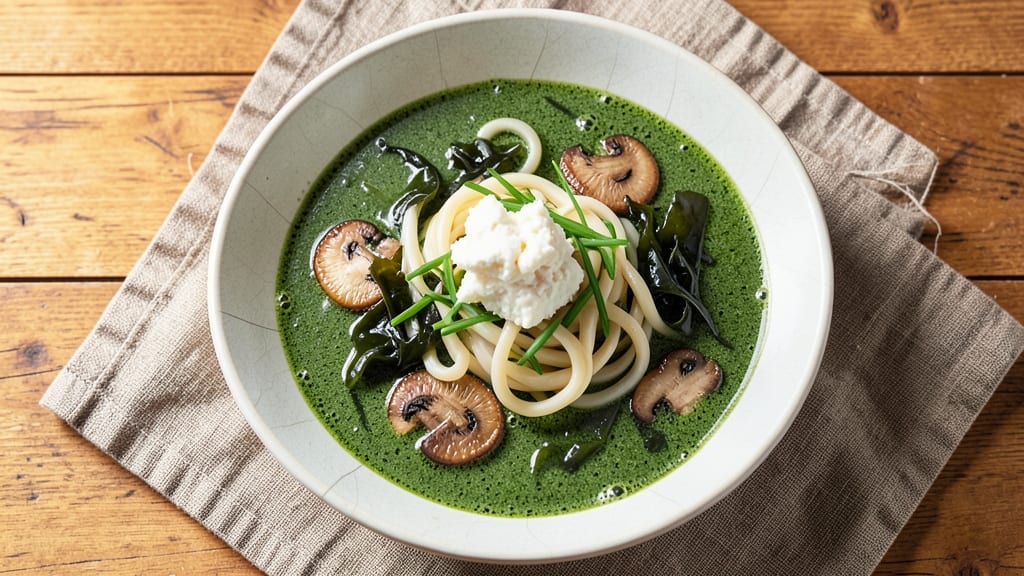
This algae soup recipe transforms oceanic umami into a velvety, nutrient-packed bowl that balances earthy depth with silky texture. The secret lies in properly preparing the algae—whether it’s toasted nori for crispy layers, rehydrated wakame for briny richness, or spirulina for a vibrant, protein-packed punch.
What makes this dish special is how it bridges tradition and innovation, offering a modern twist on classic broth-based soups while keeping preparation straightforward.
The foundation is a light yet flavorful broth, built from kombu and shiitake mushrooms for a savory base that deepens as it simmers. Silky noodles—like udon or soba—absorb the broth’s essence, while complementary ingredients like tofu, mushrooms, or seasonal vegetables add texture and balance.
The result is a soup that’s both comforting and unexpectedly vibrant, with every spoonful delivering a harmonious blend of flavors and nutrients.
What sets this recipe apart is its versatility—adapt it as a miso-algae fusion with fermented depth or a refreshing gazpacho-style version with chilled algae and citrus. Whether served as a light lunch or a nourishing dinner, it’s a dish that impresses with its complexity while remaining accessible.
The key is patience in preparing the algae and letting the broth develop its layers of flavor.
Pair it with a sprinkle of sesame seeds, a drizzle of chili oil, or fresh herbs for added brightness. This isn’t just a soup—it’s a celebration of umami, texture, and modern plant-based cooking. Let’s bring it to your table.
Ingredients for algae soup
Earthy kombu meets delicate udon in this nutrient-rich algae soup. Every ingredient balances umami depth with silky texture.
| Ingredient | Amount | Notes |
|---|---|---|
| Dried Kombu Seaweed 🌿 | 1 sheet | Cut into 1-inch pieces |
| Dried Shiitake Mushrooms 🍄 | 8 whole | Stems removed, caps halved |
| Dried Wakame Seaweed 🌊 | ½ oz | Rehydrated in cold water |
| Spirulina Powder 💚 | 1 tbsp | Vibrant green color indicator |
| Udon Noodles 🍜 | 8 oz | Fresh or dried, cut into 6-inch pieces |
| Silken Tofu 🧀 | 1 block | Firm, cubed for texture |
| Fresh Shiitake Mushrooms 🍄 | 4 whole | Sliced for garnish |
| Fresh Ginger 🧅 | 1 inch | Peeled, sliced thinly |
| Green Onions 🧅 | 3 whole | Thinly sliced for garnish |
| Sesame Seeds 🥜 | 1 tbsp | Toasted for nutty aroma |
| Red Chili Oil 🌶️ | 1 tbsp | For finishing touch |
| White Miso Paste 🍶 | 1 tbsp | Fermented umami depth |
| Soy Sauce 🍶 | 1 tbsp | For salty balance |
| Rice Vinegar 🍶 | 1 tbsp | Bright acidity |
| Vegetable Oil 🫒 | 2 tbsp | For light frying |
The kombu is the umami anchor—look for thick, dark sheets at Asian markets or well-stocked grocery stores like Whole Foods. Dried shiitake mushrooms should be plump and firm, not brittle. Wakame comes in sheets or flakes; rehydrate it in cold water for 10 minutes before using. Spirulina powder is a game-changer for color and protein—NOW Foods or Bluebonnet brands work well. For the udon, fresh noodles have a chewier bite, but dried are more accessible. If using dried, soak them in hot water for 3-4 minutes before adding to the broth. The tofu should be silken but firm enough to hold its shape when cubed.
No kombu? Dulse flakes at half the amount work in a pinch, though the flavor profile shifts slightly. Short on shiitake? Cremini mushrooms add earthiness, but they lack the deep umami. Wakame unavailable? Nori flakes toasted quickly can mimic some brininess. The miso paste is non-negotiable for depth—Miso Master or White Diamond brands deliver consistent quality. For the chili oil, La Choy is reliable, but homemade versions with chili flakes and oil give better control. Spirulina can be omitted if you prefer a more traditional look, but the nutritional boost is worth it.
Store dried kombu and shiitake in a cool, dark place for up to 6 months. Rehydrated wakame keeps for 3 days in the fridge if stored in its soaking water. The broth base can be made ahead and refrigerated for 4 days or frozen for 3 months. For leftovers, store noodles separately and reheat the broth gently before combining. The tofu and fresh mushrooms should be added fresh to maintain texture. Garnishes like sesame seeds and green onions stay vibrant for 5 days in the fridge if stored in an airtight container.
Why You'll Love This Recipe
- No-Soaking Required: Just toss in the dried kombu and shiitakes—they rehydrate while you prep the rest. No waiting around, no forgotten bowls of mushrooms soaking overnight.
- Umami Bomb: That first sip? Kombu and wakame team up for a deep, savory punch without a drop of meat. Spirulina adds a subtle earthy kick that makes it taste like a restaurant secret.
- Lunchbox Hero: Pack it cold or reheat it—this soup holds up for days. Toss in extra udon for texture, or swap in tofu for protein. Honestly, I’ve had it three mornings in a row and never tired of it.
- Pantry Magic: You’re already using ingredients you might have ignored: dried seaweed and mushrooms last forever, and spirulina adds nutrients without breaking the bank. Leftovers? Even better the next day.
Step-by-step instructions for algae-inspired umami broth with silken noodles
This method transforms delicate sea vegetables into a rich, layered broth with vibrant umami depth.
Rehydrate and Prepare the Sea Vegetables
Begin by cutting the 1 sheet dried kombu seaweed into 1-inch pieces. Place these in a large bowl and cover with 4 cups cold water. Let it soak for 10 minutes while you prepare the dried shiitake mushrooms. Remove and discard the stems from the 8 whole dried shiitake mushrooms, then halve each cap. Soak these in a separate bowl with 2 cups cold water for 15 minutes—they'll absorb water and soften significantly.
For the 0.5 oz dried wakame seaweed, rinse it thoroughly under cold water to remove any grit, then place in a small bowl and cover with 1 cup cold water. Let it hydrate for 10 minutes, until it expands to about 3 times its original size. The kombu and wakame will form the aromatic base of your broth, while the shiitake mushrooms contribute their earthy depth.
Build the Umami Broth Foundation
In a large pot, combine the soaked kombu pieces, drained shiitake mushrooms, and wakame with their soaking liquids. Add 8 cups fresh water and bring to a gentle simmer over medium heat. Once simmering, reduce heat to low and let the broth cook uncovered for 20 minutes. This slow simmer extracts the maximum umami compounds from the sea vegetables without bitterness.
After 20 minutes, strain the broth through a fine-mesh sieve into a clean pot, pressing gently on the solids to extract every last drop of flavor. Discard the solids. Return the strained broth to medium-high heat and bring to a boil. Whisk in the 1 tbsp spirulina powder and 1 tbsp white miso paste, stirring constantly for 1 minute until fully dissolved. The broth should now have a vibrant green hue and a deep, complex umami aroma.
Cook the Udon Noodles and Silken Tofu
While the broth simmers, prepare the 8 oz udon noodles according to package instructions—typically boiling for 3-4 minutes in salted water until al dente. Drain immediately and rinse briefly under cold water to stop the cooking process. Divide the noodles among 4 serving bowls.
In the same pot used for the broth (after cleaning it thoroughly), heat 2 tbsp vegetable oil over medium heat. Add the 1 block silken tofu, cut into 1-inch cubes, and cook gently for 3-4 minutes until lightly golden on all sides. Remove the tofu with a slotted spoon and set aside. The tofu should maintain its delicate texture while developing subtle caramelization.
Assemble and Finish the Soup
Return the broth to a gentle simmer. Add the 1 tbsp soy sauce and 1 tbsp rice vinegar, stirring to combine. Taste and adjust seasoning—you may need a touch more soy sauce for saltiness or vinegar for brightness. The broth should taste deeply umami with a balanced acidity.
To serve, ladle the hot broth evenly over the udon noodles in each bowl. Top with the silken tofu cubes, 4 sliced fresh shiitake mushrooms per bowl, and 1 thin slice of peeled, sliced ginger. Drizzle each serving with 1 tsp red chili oil and sprinkle with 1 tsp toasted sesame seeds. Garnish with 1 green onion, sliced thinly on the bias, for freshness.
Serve Immediately for Maximum Freshness
This soup is best enjoyed immediately while the noodles are hot and the broth maintains its vibrant texture. The combination of silken tofu's delicate mouthfeel with the umami-rich broth creates a harmonious balance. Each spoonful delivers layers of sea vegetable complexity, from the deep kombu base to the bright wakame finish.
For an extra touch, serve with additional green onion slices on the side and a small dish of toasted sesame seeds for customization. The vibrant green spirulina not only enhances the visual appeal but also adds a subtle earthy note that complements the overall umami profile.
Pro Tips For Making Algae Soup
- SOAK KOMBU FIRST: Dried kombu releases its umami punch faster if you steep it in hot water for 10 minutes before adding the rest. I used to toss it in dry—big mistake, the broth stays flat. Trust me, that initial soak builds flavor from the start.
- REHYDRATE SHIITAKES PROPERLY: Break dried shiitake caps into quarters and soak in hot water for 20 minutes—they’ll plump up and stay tender. My first few tries left them chewy because I skipped the soaking or used cold water. Warm water does the trick every time.
- STOP WHEN WAKAME CURLS: Wakame turns rubbery if overcooked—remove it from the broth when it’s just starting to curl, not when it’s floating. I learned this after burning a batch where the texture turned to mush. A quick 3-4 minutes max is all it needs.
- STIR IN SPIRULINA LAST: Add spirulina powder to the finished soup, not during cooking—it’ll clump and turn bitter if heated too long. A teaspoon stirred into the hot broth at the end gives that vibrant color and clean taste without ruining the texture.
Serving suggestions for this algae soup
Garnish Like a Pro
Toast 1 tbsp sesame seeds in a dry skillet over medium heat for 2-3 minutes until golden and fragrant. Sprinkle them generously over each bowl just before serving—they add nutty depth and a satisfying crunch.
For extra flair, use a microplane to zest ½ tsp lemon peel and scatter it alongside the sesame seeds. This bright citrus note cuts through the umami richness beautifully. 🌟
Bowl Presentation
Serve the soup in deep, wide bowls to showcase its vibrant layers. Place the udon noodles at the center, then ladle the algae broth over them in a gentle spiral motion. Arrange the silken tofu cubes and sliced shiitake mushrooms in a circular pattern around the edges.
Finish with a drizzle of red chili oil and a sprinkle of green onion slices for a pop of color. The contrast between the deep green broth and the white tofu creates a visually stunning dish.
Dipping Sauce Pairing
Prepare a simple dipping sauce by whisking together 2 tbsp soy sauce, 1 tbsp rice vinegar, 1 tsp grated ginger, and ½ tsp sesame oil. Serve it on the side for extra umami and tang.
This sauce also works beautifully with fresh steamed edamame or crispy tofu if you want to turn this into a full meal. The sauce’s acidity balances the soup’s earthy notes perfectly.
Seasonal Add-Ins
Spring: Add thinly sliced scallions and a handful of baby spinach to each bowl for freshness. Summer: Top with cucumber ribbons and a squeeze of lime juice for brightness.
Fall: Incorporate roasted butternut squash cubes and a sprinkle of pumpkin seeds. Winter: Swap the udon for thick ramen noodles and add a soft-boiled egg for extra richness.
Make-Ahead Garnishes
Prep garnishes in advance to streamline serving. Store toasted sesame seeds in an airtight container at room temperature for up to 1 week. Keep sliced green onions wrapped in a damp paper towel in the fridge for 5 days.
For the chili oil, store it in a small jar in the pantry—it stays fresh for 3 months. This way, you can assemble the soup quickly and focus on savoring the moment with your guests.
Flavor Customization
For a spicy kick, add ½ tsp gochugaru (Korean chili flakes) directly to the broth while simmering. Prefer something creamy? Stir in 1 tbsp silken tofu puree at the end for a velvety texture.
Love tang? A splash of yuzu juice (or sub lemon juice) adds a citrusy lift. Adjust to taste—this soup is your canvas! 💫
Nutrition facts
Frequently asked questions
Can I substitute fresh algae for dried in this recipe?
Fresh algae like nori or wakame works, but you'll need 3-4 times more by volume since it contains more water. Rinse thoroughly and use immediately—fresh seaweed loses texture when stored. For example, replace 0.5 oz dried wakame with 1.5 oz fresh wakame, but reduce the broth water by 1 cup to balance seasoning.
Why does my algae broth taste bitter?
Overcooking the kombu or using low-quality seaweed causes bitterness. Simmer kombu for no more than 20 minutes—longer releases bitter compounds. For stronger flavor, use organic kombu from trusted sources. If bitterness lingers, balance it with 1 extra tbsp rice vinegar or a pinch of sugar.
How do I make this soup spicier without overpowering the algae flavors?
Start with ½ tsp gochugaru (Korean chili flakes) mixed into the broth while simmering. For heat control, stir in 1 tsp chili oil at the end instead of during cooking. Garnish with red chili crisp on the side for customizable heat. The algae's umami will still shine through the spice.
Can I use this broth for other dishes besides soup?
Use it as a base for ramen, pho, or risotto—just reduce the water content by 25% when cooking grains. It also makes an excellent vegan gravy for roasted vegetables or tofu. Store broth in the fridge for 4 days or freeze for 3 months for later use.
What's the best way to store leftover algae soup?
Store broth and noodles separately in airtight containers for up to 3 days. Reheat broth gently, then add cold noodles to prevent mushiness. For longer storage, freeze broth alone for 3 months. When reheating, add 1 tsp water per cup to restore texture. Garnishes like sesame seeds and green onions should be added fresh.