
Soups & Stews
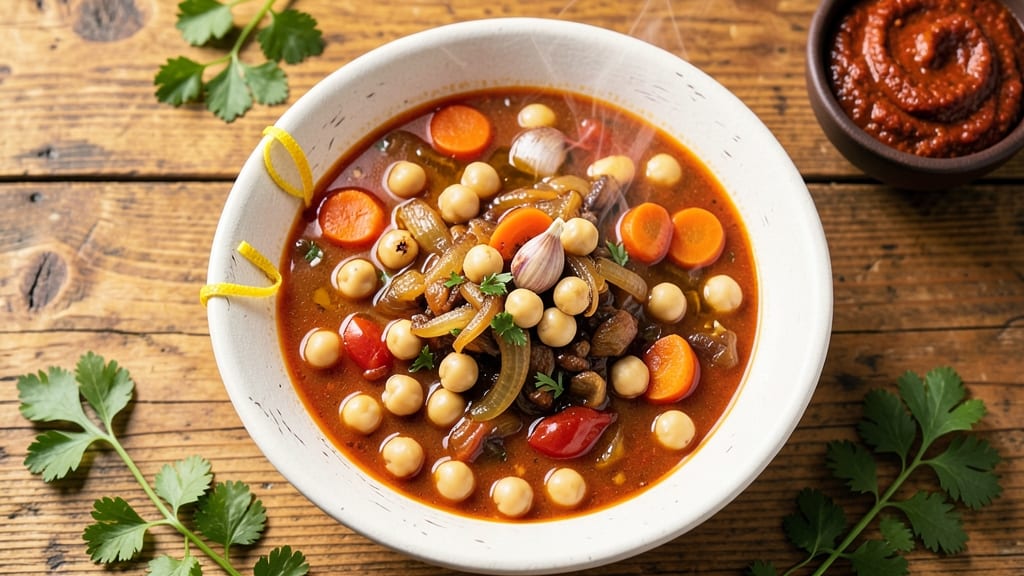
This Algerian shorba soup recipe brings the vibrant flavors of North Africa to your kitchen with its harissa-spiced chickpea and tomato base. 🌟 A staple during Ramadan and family gatherings, this hearty soup transforms simple ingredients into a comforting, aromatic dish that's both nourishing and deeply satisfying.
The secret lies in the slow-simmered broth, where harissa's fiery kick mellows into warm, earthy depth.
The beauty of shorba lies in its adaptability—vegetarian by nature but easily enriched with protein like shredded chicken or lamb if desired. I've perfected this version to balance harissa's heat with sweet tomatoes and tender chickpeas, creating a soup that's equally comforting as it is flavorful.
The long simmer develops complex layers of flavor, turning humble ingredients into something extraordinary.
What makes this recipe truly special is its ability to transform any meal into an occasion. The rich, savory broth pairs perfectly with crusty bread for dipping, while the chickpeas add satisfying texture.
Each spoonful delivers a harmonious blend of spice, acidity, and warmth that lingers long after the last bite.
Perfect for chilly evenings, meal prep, or special gatherings, this shorba brings a taste of Algerian tradition to your table. The recipe builds confidence with straightforward techniques that yield professional results—no shortcuts needed, just pure, comforting flavor.
Ingredients for algerian shorba soup
Harissa-spiced chickpeas and tomatoes create North Africa's most comforting vegetarian soup experience.
| Ingredient | Amount | Notes |
|---|---|---|
| Vegetable Oil 🫒 | ½ cup | For sautéing onions and garlic |
| Yellow Onion 🧅 | 2 whole | Diced into small even pieces |
| Fresh Garlic Cloves 🧄 | 6 cloves | Minced for aromatic depth |
| Fresh Tomatoes 🍅 | 3 cups | Chopped, vine-ripened preferred |
| Fresh Carrots 🥕 | 1 ½ lb | Peeled and sliced into rounds |
| Dried Chickpeas 🌾 | 1 ½ cups | Soaked overnight for tenderness |
| Harissa Paste 🌶️ | 2 tbsp | Adjust for desired spice level |
| Cumin Seeds 🌿 | 1 tbsp | Toasted for enhanced aroma |
| Ground Coriander 🌿 | 1 tbsp | Freshly ground preferred |
| Turmeric Powder 🌶️ | 1 tsp | For vibrant color and flavor |
| Vegetable Broth 💧 | 6 cups | Low-sodium preferred |
| Fresh Cilantro 🌿 | ¼ cup | Chopped for garnish |
| Lemon Juice 🍋 | 2 tbsp | Freshly squeezed |
| Salt 🧂 | 1 ½ tsp | Diamond Crystal preferred |
| Black Pepper 🌶️ | ½ tsp | Freshly ground for heat |
The harissa paste is the soul of this dish—look for brands like Tanta or El Fennec at specialty stores or well-stocked supermarkets. Fresh harissa paste has vibrant color and intense flavor, while jarred versions can be hit-or-miss. If you can't find it, mix 1 tbsp smoked paprika with 1 tsp cayenne as a substitute. For the tomatoes, vine-ripened varieties develop the deepest flavor when cooked down. Carrots should be uniform in size to ensure even cooking throughout the soup. The chickpeas are non-negotiable—soak them overnight for perfect texture, or use canned for convenience (just drain and rinse).
No harissa? Mix smoked paprika, cayenne, and a pinch of cinnamon for a similar depth. Fresh cilantro is ideal, but dried works at one-third the amount if you're in a pinch. The cumin seeds should be toasted in the oil until fragrant—this step is worth the minute it takes. For extra richness, stir in 2 tbsp tahini at the end. The vegetable broth can be homemade or store-bought—low-sodium options prevent over-salting. If you prefer a creamier texture, blend half the soup before serving, then stir it back in.
This soup tastes even better the next day as flavors meld. Store in an airtight container in the fridge for up to 5 days, or freeze for 3 months. For meal prep, double the recipe and portion into containers—the broth stays rich even when reheated. Garnish with fresh cilantro and a squeeze of lemon just before serving to brighten the flavors. The harissa's heat mellows with time, so don't be afraid to add more if you love spice.
Why You'll Love This Recipe
- Onion-Garlic Magic: I swear by that first sizzle of onions and garlic in oil—it’s the soul of this soup. The way the onions caramelize just a little before the tomatoes hit? That deep, sweet base is everything, and it takes zero effort beyond chopping.
- One-Pot Miracle: Honestly, this soup is my lazy-day hero. Toss everything into one pot—carrots, tomatoes, spices—simmer, and boom. No fancy techniques, no last-minute grocery runs. My college apartment survived on this when I had three pots and no time.
- Leftovers That Shine: Between us, this soup tastes better the next day. The flavors meld into this rich, cozy depth, and it reheats like a dream. I make a big batch on Sundays and have soup for lunch all week—no sad, watery leftovers here.
- Budget-Busting Comfort: Carrots, onions, tomatoes—these are the ingredients that don’t break the bank. A few cloves of garlic and a splash of oil, and suddenly you’ve got a meal that feeds four for under $5. My wallet and my family thank me every time.
Step-by-step instructions for Algerian shorba soup
Here's how to craft this aromatic, spice-infused Algerian classic with deep flavors and satisfying texture.
🔥 Step 1: Toast Spices and Sauté Aromatics
Heat the 0.5 cup vegetable oil in a large pot over medium heat. Add the 1 tablespoon cumin seeds and toast for 1 minute until fragrant and lightly golden—this releases their essential oils. Immediately add the 2 whole yellow onions (diced) and cook for 5 minutes until softened and translucent.
Stir in the 6 cloves fresh garlic (minced) and the 1 tablespoon ground coriander. Cook for 1 minute until the garlic becomes golden around the edges but doesn't brown. This step builds the aromatic foundation—don't rush it. The spices should be warm but not burning, as that creates bitterness.
🍳 Step 2: Develop the Harissa-Tomato Base
Add the 2 tablespoons harissa paste and stir for 30 seconds to distribute evenly. The paste will darken the mixture and introduce that signature Algerian heat. Immediately add the 3 cups fresh tomatoes (chopped) and cook for 8-10 minutes until they break down into a thick, jammy consistency. You're looking for a rich, deep red sauce that coats the back of a spoon.
Stir in the 1 teaspoon turmeric powder and 1.5 teaspoons salt. The turmeric will give the soup its characteristic golden hue while adding earthy warmth. Let the mixture simmer for 2 minutes to meld all the spices together. This is where the soup's complex flavor profile begins to develop—taste it now to adjust seasoning if needed.
🥘 Step 3: Build the Vegetable and Chickpea Foundation
Add the 1.5 pounds fresh carrots (sliced into rounds) and 1.5 cups dried chickpeas (drained from soaking water). Pour in 6 cups vegetable broth and bring to a gentle boil. Once boiling, reduce heat to medium-low and simmer uncovered for 30 minutes, stirring occasionally. The chickpeas should be tender but not mushy, and the carrots should soften while maintaining their shape.
Here's the thing—don't skip the uncovered simmering. This allows excess moisture to evaporate, concentrating the flavors. You'll know it's ready when the chickpeas crush easily between your fingers and the carrots are fork-tender. If the soup seems too thick, add ½ cup water to reach your desired consistency.
⏰ Step 4: Finish and Balance Flavors
Remove from heat and stir in the 2 tablespoons lemon juice. This brightens the dish and cuts through the richness of the harissa and chickpeas. Taste and adjust seasoning with additional salt or ½ teaspoon black pepper if needed. The lemon should be noticeable but not overpowering—think of it as the final flavor bridge.
Let the soup rest for 10 minutes before serving. This allows the flavors to fully integrate. Ladle into bowls and garnish with ¼ cup fresh cilantro (chopped). The cilantro adds freshness and visual contrast to the deep red broth. Serve with crusty bread to soak up every last drop of this comforting Algerian masterpiece.
Pro Tips For Making Algerian Shorba Soup
- Sweat the Onions Low: I learned this the hard way—crank the heat to medium-low when cooking the onions, and let them turn a deep golden brown before adding garlic. Rushing this step means your soup will taste raw and bitter, not rich and caramelized. (Yes, even if you're impatient like me.)
- Char the Tomatoes: Toss the diced tomatoes directly into the hot oil after the onions, no need to pre-cook them. Let them blister and darken at the edges for 3-4 minutes—this smoky depth is what makes Algerian shorba sing. Skip this, and your soup will taste flat.
- Cut Carrots Uniformly: Thin, even slices (about 1/8-inch thick) cook faster and stay tender without turning mushy. Thick chunks mean some will be undercooked while others dissolve into the broth. (Your future self will thank you for the 5 extra minutes of prep.)
- Salt the Water Late: Add salt to the soup after the carrots and tomatoes have softened—around the 15-minute mark. Salting too early makes the carrots release water and turn limp. Wait, and they’ll stay crisp with just the right bite. (Sounds weird, but it works.)
Dietary considerations for this dish
Vegetarian-Friendly Base
This shorba recipe is naturally vegetarian, relying on chickpeas for protein and hearty vegetables for texture. The dried chickpeas provide 15 grams of plant-based protein per serving, while the carrots and tomatoes add fiber and natural sweetness.
I love how the harissa and spices create rich depth without any meat—it’s surprisingly satisfying. 🌱
For extra protein, stir in ½ cup cooked lentils during the final simmer. Or add 1 cup crumbled feta cheese at the end for a tangy contrast. The broth stays rich and flavorful even without animal products, making it perfect for vegans or anyone reducing meat intake.
Gluten-Free Adaptation
Traditional shorba uses chickpeas, which are naturally gluten-free, so no modifications are needed for the base recipe. However, if serving with bread, opt for gluten-free flatbread or corn tortillas.
I recommend La Tortilla Factory corn tortillas for dipping—they hold up well to the thick broth. Always check broth labels too, as some store-bought versions contain gluten additives.
For extra security, make your own broth using vegetable scraps and water. Simmer for 30 minutes with 1 bay leaf and 1 tsp salt for a completely gluten-free foundation. The homemade version adds depth that store-bought can’t match.
Spice Sensitivity Adjustments
Harissa can be intense, so adjust the 2 tbsp harissa paste to your tolerance. For milder heat, reduce to 1 tbsp and add ½ tsp smoked paprika for depth. If you love spice, increase to 2.5 tbsp and balance with 1 extra tbsp lemon juice.
I find that letting the soup sit for 10 minutes after cooking helps the heat mellow slightly.
For children or sensitive eaters, skip the harissa entirely and use 1 tsp ground cumin and ½ tsp turmeric for warmth. The carrots and tomatoes will still provide natural sweetness to balance the flavors. Always taste as you go—this soup is forgiving and easy to adjust.
Low-Carb Options
To reduce carbs, swap the carrots for 1 cup sliced zucchini or ½ cup cauliflower florets. Both add color and texture while cutting net carbs. I’ve also had success with ½ cup diced eggplant, which soaks up the harissa flavors beautifully.
The chickpeas remain the star, but these swaps keep the dish lighter.
For a creamier low-carb version, stir in 2 tbsp tahini at the end. The nutty flavor complements the harissa and adds richness without extra carbs. Serve with cheese crisps instead of bread for a satisfying crunch. The soup’s natural umami keeps it deeply flavorful even with fewer carbs.
Nutrition facts
Frequently asked questions
Can I make this Algerian shorba with canned chickpeas instead of dried?
For convenience, use 2.5 cups canned chickpeas (drained and rinsed) and reduce the simmering time to 20 minutes instead of 30 minutes. Canned chickpeas are already tender, so they cook faster but absorb flavors just as well. Just be sure to add them during the final 20 minutes of simmering to prevent them from becoming mushy.
How can I make this soup less spicy for kids or sensitive eaters?
Start by reducing the harissa paste to 1 tablespoon instead of 2 tablespoons. For extra mildness, replace it with ½ teaspoon smoked paprika and ¼ teaspoon ground cumin. The carrots and tomatoes will naturally balance any remaining heat. Always taste as you go—this soup is forgiving and easy to adjust!
What's the best way to store leftover Algerian shorba?
Store leftovers in an airtight container in the fridge for up to 5 days. The flavors actually deepen overnight, making it even more delicious! For freezing, portion into meal-sized containers and freeze for up to 3 months. Thaw overnight in the fridge—never microwave directly from frozen to preserve texture.
Can I add meat to this vegetarian shorba?
Yes! For a meat version, add 1 pound shredded chicken or lamb during the final 15 minutes of simmering. The meat will absorb the harissa flavors beautifully. You can also stir in ½ cup cooked lentils for extra protein without meat. Traditional Algerian shorba often includes meat, so