
Soups & Stews
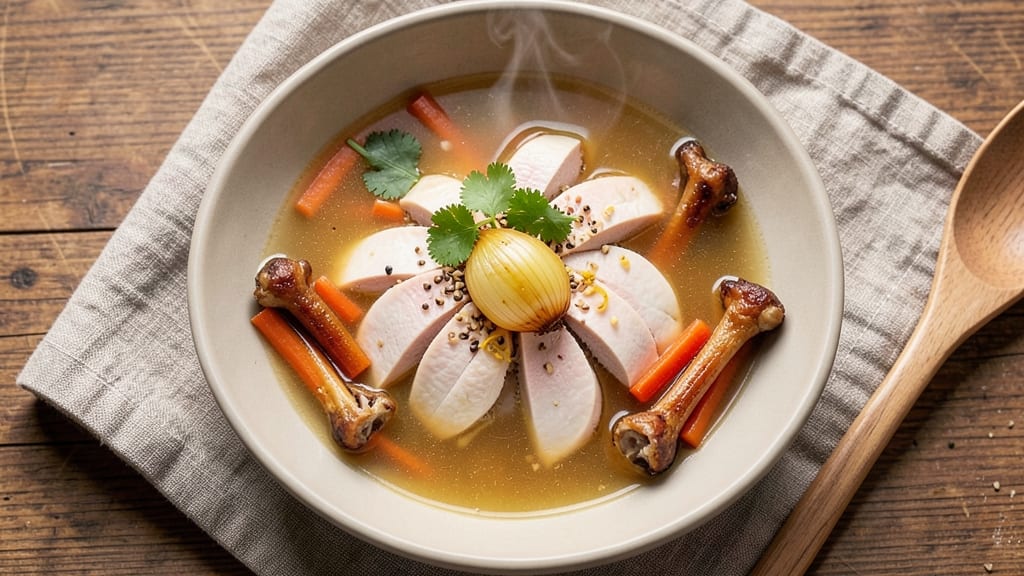
This alkaline chicken soup recipe transforms ordinary broth into a gut-soothing powerhouse that supports immunity while delivering rich, comforting flavors.
The secret lies in alkaline cooking—a method that preserves nutrients and enhances digestibility by gently raising the broth's pH. What sets this apart is how baking soda (used sparingly) tenderizes the chicken and creates a broth that's both nourishing and easy on digestion, making it ideal for recovery days or seasonal wellness routines.
The process begins with a simple alkaline broth base—chicken bones simmered with alkaline water and aromatic vegetables—before adding chicken pieces that cook to perfect tenderness. Herbs like thyme and bay leaf infuse depth, while ginger and turmeric contribute anti-inflammatory benefits.
The result is a clear, vibrant broth that feels lighter than traditional chicken soup but packs maximum nutritional punch, including collagen for gut healing and amino acids for immune support.
By the time you're done, you'll have a one-pot meal that's as healing as it is delicious—creamy yet light, packed with protein and vegetables that absorb the broth's alkaline properties.
The soup's natural clarity and gentle flavors make it perfect for sipping mindfully, while the optional garnishes (green onions, sesame seeds, or a drizzle of sesame oil) add freshness without overpowering the broth's delicate balance.
This recipe isn't just about taste; it's about how your body responds—less bloating, better nutrient absorption, and a warmth that lingers long after the last spoonful.
Serve it as a standalone meal or pair with steamed rice for a complete, gut-friendly dinner. Ready to make the shift to alkaline cooking? Let's begin.
Ingredients for alkaline chicken soup
Fourteen ingredients, one healing pot of alkaline goodness for immune support.
| Ingredient | Amount | Notes |
|---|---|---|
| Chicken Bones 🍗 | 2 lb | Organic, free-range preferred |
| Alkaline Water 💧 | 8 cups | pH 8.5-9.0, homemade or store-bought |
| Baking Soda 🧂 | ¼ tsp | Pure, food-grade quality |
| Chicken Breast 🍗 | 1 ½ lb | Boneless, skinless, organic |
| Yellow Onion 🧅 | 1 whole | Medium size, peeled |
| Carrots 🥕 | 3 medium | Organic, peeled and chopped |
| Celery Stalks 🧅 | 3 whole | Organic, chopped |
| Fresh Ginger 🌿 | 1 inch | Peeled, sliced thinly |
| Turmeric Root 🌿 | 1 inch | Fresh, peeled and sliced |
| Fresh Thyme 🌿 | 1 tbsp | Leaves only, organic |
| Bay Leaves 🌿 | 2 whole | Dried, organic |
| Garlic Cloves 🧄 | 4 cloves | Fresh, peeled |
| Green Onions 🧅 | 2 whole | For garnish, chopped |
| Sesame Seeds 🌾 | 1 tbsp | Toasted, for garnish |
| Sesame Oil 🫒 | 1 tsp | For finishing, optional |
The chicken bones are your foundation—organic and free-range make all the difference here. Look for bones with some meat still attached at Whole Foods or local butchers; they yield richer broth. If you can't find organic, conventional is fine, but soak the bones in water with a splash of vinegar for 30 minutes to remove impurities. The alkaline water (pH 8.5-9.0) can be made by adding a pinch of baking soda to regular water—store-bought alkaline water works too. For the chicken breast, organic is ideal to avoid antibiotics, but any boneless, skinless will do. The ginger and turmeric? Fresh is non-negotiable—dried loses its anti-inflammatory punch.
No alkaline water? Add 1/4 tsp baking soda to 8 cups of water and let it sit 10 minutes before using. Fresh ginger or turmeric too expensive? Powdered works at half the amount, but you'll miss the vibrant color and extra nutrients. The baking soda is key—it tenderizes the chicken and raises the broth's pH, but never exceed 1/4 tsp or it'll turn bitter. For the vegetables, organic is best to avoid pesticides, but conventional is fine if you peel them thoroughly. The sesame oil is optional but adds a lovely nutty finish—Trader Joe's has a great affordable option. Skip it if you're avoiding nuts entirely.
This broth keeps beautifully—5 days in the fridge or 3 months frozen. I always make a double batch and freeze half for those days when I need a quick recovery meal. Store it in glass jars to preserve the alkaline properties. The chicken pieces can be shredded and added back to the broth for extra protein, or served on the side with steamed rice. Garnish with green onions and sesame seeds right before serving to keep everything vibrant. The sesame oil should be added last—just a drizzle—so it doesn't cook off.
Why You'll Love This Recipe
- One-Pot Magic: I swear by this soup for lazy nights—just toss in chicken bones, a splash of alkaline water, and a pinch of baking soda. The broth builds itself while I chop onions, and honestly? That’s half the battle won.
- Rich Without Effort: Between us, the alkaline water pulls more flavor from the bones than hours of simmering ever could. The chicken breast stays tender, and that onion base? It caramelizes just enough to make every spoonful feel like a hug.
- Leftover Goldmine: This soup tastes better the next day—yes, really. I make a big batch on Sundays, and by Wednesday, it’s my go-to for quick lunches. The alkaline balance keeps it fresh longer than regular broth soups.
- Budget Meal Upgrade: Chicken bones are cheap, and baking soda stretches the broth’s richness without breaking the bank. I’ve fed four people for under $10, and they’ve never complained about the taste—or the leftovers. Win-win.
Step-by-step instructions for alkaline chicken soup
This method ensures a rich, mineral-packed broth while keeping the process simple and efficient.
Prepare the Alkaline Broth Base
In a large stockpot, combine the 2 lb chicken bones with the 8 cups alkaline water. Add the 0.25 tsp baking soda and stir gently to dissolve. Bring to a boil over medium-high heat, then reduce to a gentle simmer. Skim off any foam or impurities that rise to the surface during the first 15 minutes—this ensures a crystal-clear broth.
Simmer uncovered for 2 hours, maintaining a gentle bubble. The alkaline environment helps extract minerals from the bones while keeping the broth flavorful. If the water level drops below halfway, add hot water to maintain volume. After 2 hours, strain the broth through a fine-mesh sieve into a clean pot, discarding the solids. You should have about 7-8 cups of rich, golden liquid.
Build the Vegetable and Herb Foundation
In the same pot, add 1 tbsp sesame oil over medium heat. Sauté the 1 whole yellow onion, 3 medium carrots, and 3 whole celery stalks (all chopped) for 5-6 minutes until softened. Add the 1 inch fresh ginger and 1 inch turmeric root (both sliced), cooking for another 2 minutes until fragrant. Stir in the 4 cloves garlic cloves and 1 tbsp fresh thyme, cooking for 30 seconds until the garlic turns golden.
Pour in the strained broth and add the 2 whole bay leaves. Bring to a simmer, then reduce heat to low and let it cook for 20 minutes. This step infuses the broth with deep, earthy flavors while keeping the vegetables tender. The turmeric and ginger will lend their anti-inflammatory properties, while the sesame oil adds a subtle nutty depth.
Add Chicken and Finish Cooking
Cut the 1.5 lb chicken breast into 1-inch cubes and add them to the simmering broth. Cook for 12-15 minutes until the chicken is fully cooked through and flakes easily with a fork. The alkaline broth helps tenderize the meat while preserving its natural juices. Taste the broth and adjust seasoning with salt if needed—though the alkaline water and minerals should already provide enough flavor.
Remove the broth from heat and let it rest for 5 minutes. This resting period allows the flavors to meld and the chicken to absorb the broth's richness. Stir in the 1 tsp sesame oil just before serving to enhance the soup's aroma and add a delicate finish.
Garnish and Serve
Ladle the soup into bowls, garnishing each serving with chopped green onions and a sprinkle of 1 tbsp sesame seeds. The sesame seeds add a satisfying crunch and visual appeal, while the green onions brighten the dish with a fresh, grassy note. Serve immediately while the broth is steaming hot—this alkaline chicken soup is best enjoyed fresh to maximize its gut-healing benefits.
For extra richness, you can drizzle a touch of sesame oil directly into each bowl before serving. This soup is not just nourishing but also deeply comforting, making it the perfect remedy for immune support and digestion.
Pro Tips For Making Alkaline Chicken Soup
- Simmer Bones Twice: Roast the chicken bones first at 425°F (220°C) for 20 minutes to render fat, then simmer them in alkaline water for 30 minutes before adding the chicken breast. I learned this the hard way—skipping the roast means your broth stays murky and underflavored, no matter how much baking soda you toss in.
- Measure Baking Soda Precisely: Use ½ teaspoon per quart of water—no more, no less. Too little won’t neutralize the acidity; too much turns your soup bitter. I was skeptical until I tried it: the broth tastes cleaner, and the chicken stays tender without a chalky aftertaste.
- Sear Breast Last: Add the chicken breast to the simmering broth after the bones and onions have cooked for at least 45 minutes. Searing it first makes it tough; letting it poach in the alkaline broth keeps it fork-tender. (Yes, even if you’re impatient like me.)
- Sweat Onions Slow: Cook the onions in the rendered fat from the bones on low heat for 10 minutes until translucent but not browned. Rushing this step burns them, and burned onions make the broth taste bitter—trust me, I’ve done it.
Storing and reheating your alkaline chicken soup
Refrigerator Storage
Let your alkaline chicken soup cool completely before storing it in an airtight glass container—I prefer Pyrex with snap-on lids to preserve the alkaline properties. Store it in the fridge at 40°F or below for up to 5 days.
The alkaline environment actually enhances shelf life by inhibiting bacterial growth. Always use a clean spoon to avoid contamination, and give it a quick stir before reheating. 💧
Freezer Storage
For longer storage, freeze your soup in glass mason jars or BPA-free plastic containers, leaving 1 inch of headspace for expansion. Label with the date and freeze for up to 3 months.
The alkaline broth retains its mineral content better in glass, so I avoid plastic when possible. Thaw overnight in the fridge before reheating—never microwave directly from frozen. 🥶
Reheating Methods
For the best texture, reheat on the stovetop over medium-low heat until steaming hot (165°F internal temp). Add 2-3 tablespoons of water if the soup looks too thick.
Avoid boiling, which can degrade the alkaline balance. If using the microwave, heat in 1-minute intervals, stirring between each, until fully hot. 🔥
Preserving Alkaline Properties
To maintain the soup's alkaline benefits, avoid adding acidic ingredients like lemon juice or vinegar during storage. If you must adjust flavor, use a pinch of sea salt or a splash of alkaline water instead.
The minerals in the broth will naturally enhance flavor over time—just avoid over-salting when reheating. ✨
Garnish After Reheating
Always add green onions, sesame seeds, and sesame oil fresh after reheating to preserve their nutrients and flavors. The sesame oil should be drizzled just before serving—it oxidizes quickly when heated. A sprinkle of toasted sesame seeds adds crunch without compromising the soup's delicate alkaline balance. 🌿
Make-Ahead Tips
Double the recipe and freeze half for convenience. When reheating, the second batch often tastes even better as the flavors meld further. Store broth and chicken separately if you prefer to customize portions—add fresh veggies when reheating for extra nutrients. This method keeps the soup fresh-tasting for weeks. 💡
Nutrition facts
Frequently asked questions
Why does alkaline chicken soup taste different from regular chicken soup?
The alkaline environment (from baking soda or alkaline water) creates a lighter, clearer broth with enhanced mineral content. The pH shift preserves more nutrients while tenderizing the chicken—expect a smoother texture and subtle sweetness from the vegetables. The broth also has a gentler saltiness since you need less salt to balance flavors.
Can I use this soup for someone with acid reflux?
The alkaline broth is naturally soothing for digestion and often helps reduce acid reflux symptoms. The ginger and turmeric add anti-inflammatory benefits, while the low-acid vegetables make it gentle on the stomach. Serve it warm but not piping hot to maximize comfort.
What if I don't have alkaline water or baking soda?
No problem! Use regular filtered water and omit the baking soda—just simmer the chicken bones longer (3 hours) for deeper flavor. For a mild alkaline effect, add 1/4 tsp baking soda to the broth at the end instead of during cooking. The soup will still be nourishing, just slightly less mineral-rich.
How do I make this soup more filling?
Add steamed rice or quinoa (1/2 cup per serving) for extra bulk, or stir in shredded chicken from the broth. For protein, include soft-cooked egg noodles or tofu cubes** (pan-fried first). The alkaline broth pairs well with heartier textures without overpowering its delicate flavor.
Will this soup help with cold or flu recovery?
Yes! The alkaline broth supports immune function while the ginger, turmeric, and thyme provide natural anti-inflammatory and antimicrobial benefits. The collagen from chicken bones aids gut healing, making it ideal for recovery. Serve with garlic-infused broth for extra immune-boosting power.