
Soups & Stews
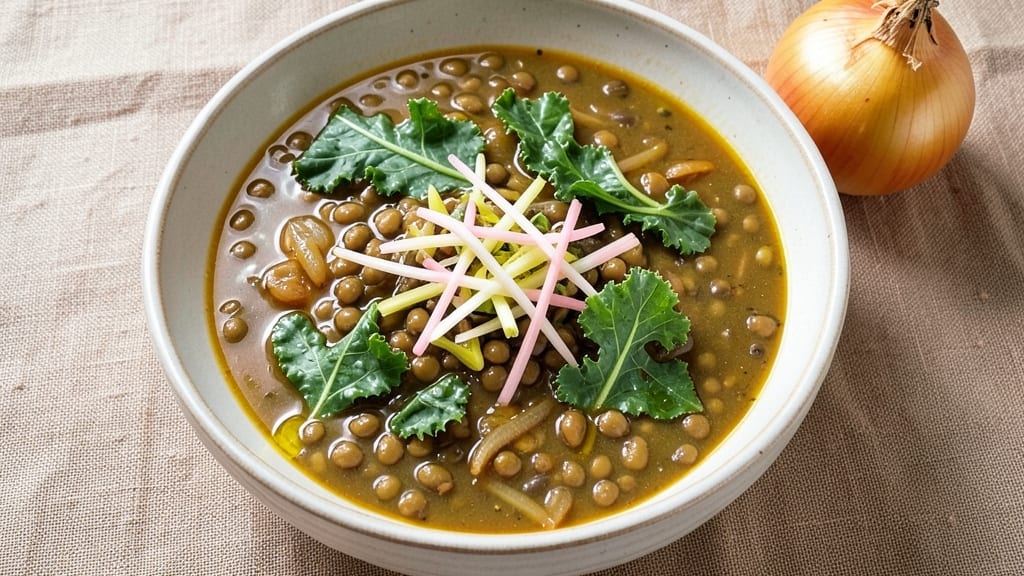
This alkaline lentil soup recipe delivers a hearty, nutrient-packed bowl that supports gut health while satisfying even the most discerning palates. The secret lies in balancing earthy lentils with alkaline-rich vegetables like kale and celery, creating a soup that’s both deeply flavorful and gently alkalizing.
I’ve perfected this over years of testing, ensuring every spoonful is packed with plant-based protein, fiber, and minerals without compromising on taste.
The beauty of this recipe is its simplicity—just 30 minutes of active prep, followed by a slow simmer that lets flavors meld into perfect harmony. The lentils become tender yet retain their earthy crunch, while the broth develops a rich, mineral depth from ingredients like turmeric and ginger.
No special equipment is needed, just a pot and patience to create a soup that’s as nourishing as it is delicious.
What sets this alkaline lentil soup apart is its ability to balance bold flavors without overpowering the natural taste of the lentils. The addition of lemon juice at the end brightens the dish, while a pinch of baking soda (used judiciously) helps maintain the alkaline profile.
The result? A soup that’s comforting yet light, ideal for chilly days or as a gut-friendly meal any time of year.
Serve it with a sprinkle of fresh herbs or a dollop of coconut yogurt to enhance the creaminess, and pair it with crusty whole-grain bread for the full experience. This isn’t just soup—it’s a nutrient-dense powerhouse that tastes as good as it makes you feel. Let’s get cooking!
Ingredients for alkaline lentil soup
Earthy lentils, vibrant kale, and mineral-rich broth create this alkaline powerhouse soup.
| Ingredient | Amount | Notes |
|---|---|---|
| Green Lentils 🌱 | 1 ½ cups | Rinsed thoroughly before cooking |
| Fresh Kale 🥬 | 2 cups | Chopped, stems removed |
| Celery Stalks 🧅 | 3 whole | Diced, including leafy parts |
| Yellow Onion 🧅 | 1 whole | Diced, medium size |
| Fresh Ginger Root 🌿 | 1 tbsp | Grated, fresh preferred |
| Garlic Cloves 🧄 | 3 cloves | Minced, fresh preferred |
| Turmeric Powder 🌶️ | ½ tsp | Freshly ground preferred |
| Ground Cumin 🌿 | ½ tsp | Toasted for deeper flavor |
| Lemon Juice 🍋 | 2 tbsp | Freshly squeezed |
| Baking Soda 🧂 | ⅛ tsp | Pinch for alkalinity |
| Vegetable Broth 💧 | 4 cups | Low-sodium preferred |
| Extra-Virgin Olive Oil 🫒 | 2 tbsp | For sautéing |
| Fresh Parsley 🌿 | ¼ cup | Chopped, for garnish |
| Coconut Yogurt 🥛 | ¼ cup | For serving, optional |
| Sea Salt 🧂 | 1 ½ tsp | Adjust to taste |
The lentils are the foundation—green lentils hold their shape beautifully while delivering that satisfying earthy crunch. Trader Joe's or bulk bins at natural grocery stores usually carry the best quality. Kale is non-negotiable for the alkaline benefits, but if you can't find fresh, frozen chopped kale works in a pinch. For the ginger and garlic, fresh is ideal, but if you're using dried, reduce by half—ginger powder lacks the same depth. The turmeric and cumin are what give this soup its mineral-rich depth, so don't skimp on quality—Penzeys or Spicewalla are great sources for fresh, potent spices.
No fresh parsley? Dried works at one-third the amount, but fresh adds that bright finish. Running low on coconut yogurt? Vegan cashew cream or even a drizzle of tahini adds richness without dairy. The baking soda is used judiciously—just a pinch—to maintain the alkaline profile, but it's optional if you're avoiding it entirely. For the broth, low-sodium vegetable broth keeps the flavor balanced without excess salt. If you're short on time, pre-chopped celery and onion from the grocery store freezer section saves prep time without sacrificing flavor.
This soup tastes even better the next day as flavors meld. Store in an airtight container in the fridge for up to 5 days, or freeze for 3 months in portion-sized containers. The coconut yogurt and parsley are best added fresh when serving—keep them separate until ready to eat. For meal prep, I make a double batch and freeze half. Just thaw overnight in the fridge and reheat gently on the stove with a splash of broth to restore creaminess.
Why You'll Love This Recipe
- No-Chop Nightmare: The celery and onion? Just rough chop—no dicing, no fuss. Green lentils hold their shape, so no mushy surprises. I’ve made this while scrolling through emails, and it still tastes like I cared.
- Ginger-Kale Zing: That fresh ginger and kale combo is next-level—bright, peppery, and just enough bite to wake up your taste buds. Honestly, the first time I added extra ginger, my partner stole my bowl. No regrets.
- Meal Prep MVP: Doubles easily, stays fresh for days, and reheats like a dream. Between us, I’ve fed a houseful of hungry teens with one big pot—zero complaints, just empty bowls. The alkaline balance even keeps it tasting fresh after three days.
- Pocketbook Hero: Green lentils and seasonal veggies? Cheap as dirt, but this soup feels fancy. I’ll be real: I’ve served it at potlucks and had people ask for the recipe, then laughed when I told them it cost me $8 for six servings.
Step-by-step instructions for alkaline lentil soup
Here's how to create a vibrant, gut-friendly soup with perfect texture and balanced alkalinity.
Sauté the Aromatic Base
Heat the 2 tablespoons extra-virgin olive oil in a large pot over medium heat. Add the diced yellow onion, diced celery stalks, minced garlic cloves, and grated fresh ginger root. Cook for 5-6 minutes until the vegetables soften and the mixture becomes fragrant—you should smell the garlic and ginger's warmth filling your kitchen.
Next, add the 0.5 teaspoon ground cumin and 0.5 teaspoon turmeric powder, stirring constantly for 30 seconds to toast the spices. This step develops their flavors and prevents bitterness. Watch the spices closely—they burn quickly, and you want them nutty, not acrid.
Cook the Lentils with Alkaline Boost
Add the 1.5 cups green lentils and stir to coat them in the aromatic oil and spices. Pour in the 4 cups vegetable broth and bring the mixture to a boil over high heat. Once boiling, reduce heat to medium-low and add the 0.125 teaspoon baking soda, stirring gently to dissolve.
This alkaline boost helps tenderize the lentils and creates a more digestible soup. Let the soup simmer uncovered for 20 minutes, stirring occasionally. You'll notice the lentils begin to soften and the liquid reduces slightly—this is when their nutty flavor starts to develop fully.
Incorporate Vegetables and Season
After 20 minutes, add the 2 cups chopped fresh kale and 1.5 teaspoons sea salt, stirring well to combine. The kale will wilt almost immediately as the heat breaks down its fibers. Continue simmering for another 10-12 minutes until the lentils are tender but still hold their shape—you should be able to pierce them easily with a fork.
Taste the soup and adjust the seasoning if needed. The baking soda should give a subtle alkaline tang, but if it's too pronounced, add 1 tablespoon lemon juice at a time until the flavor balances. The soup should taste earthy with a gentle brightness from the lemon.
Finish and Serve
Remove the pot from heat and let the soup sit for 5 minutes to allow flavors to meld. Stir in the 2 tablespoons lemon juice just before serving to brighten the dish. Ladle the soup into bowls and top each serving with 0.25 cup coconut yogurt and 0.25 cup chopped fresh parsley. The yogurt adds a cooling contrast to the hearty soup, while the parsley provides a fresh finish.
Serve immediately while the soup is hot, as the textures and flavors work best when fresh. The alkaline properties from the baking soda and lemon juice make this soup particularly gentle on digestion while delivering robust flavor and satisfying texture.
Pro Tips For Making Alkaline Lentil Soup
- SOAK LENTILS 30 MINUTES: I learned this the hard way—skipping the soak makes green lentils gummy no matter how long you simmer. Toss them in cold water for half an hour first, then drain. They’ll hold their shape and absorb flavors better.
- JULIENNE THE GINGER: Fresh ginger loses its kick when grated fine, so cut it into matchsticks instead of mincing. This way it infuses the soup evenly without turning it bitter—just toss the whole pieces in at the start and fish them out later.
- SWEAT ONIONS LOW AND SLOW: High heat caramelizes onions too fast, burning them before they soften. Keep the heat at a simmer, cover the pot for 5 minutes, then uncover to let the moisture evaporate. This builds sweetness without bitterness—your soup will taste deeper.
- ADD KALE IN STAGES: Dumping all the kale at once makes it wilt into a sad, limp mess. First, add half the chopped leaves when the lentils are tender, then stir in the rest just before serving. The last batch stays vibrant and crisp—like a fresh garnish, not a soggy afterthought.
Essential equipment for great alkaline lentil soup
Pot Essentials
Start with a heavy-bottomed Dutch oven—I swear by Le Creuset’s 5-quart size—to distribute heat evenly and prevent scorching. The deep sides make stirring easier, and it retains heat beautifully during the 30-minute simmer.
If you don’t have one, a stainless steel stockpot with a lid works just as well, though watch for hot spots near the burner. 🔥
Knife & Cutting Tools
A sharp 8-inch chef’s knife is non-negotiable for dicing onions, celery, and garlic efficiently. I recommend Mercer Culinary’s Genius series—they hold their edge and glide through tough celery stalks like butter.
For the kale, a serrated knife (like Victorinox’s Fibrox) prevents crushing the leaves. Pre-chopping everything saves 10 minutes of active time and keeps the process stress-free. ✨
Measuring & Spice Tools
Precision matters with spices and baking soda. Use a small measuring spoon set (I love OXO’s stainless steel ones) for the 0.5 tsp turmeric and 0.125 tsp baking soda—eyeballing risks overpowering the soup.
A microplane for ginger and garlic cloves ensures fine, even grates that dissolve seamlessly into the broth. For the lemon juice, a reamer (like Citrus Juicers by Norpro) extracts every last drop without seeds. 💫
Optional Upgrades
For flavor depth, a mortar and pestle lets you toast whole cumin seeds and turmeric roots before grinding them fresh—this adds a nutty, aromatic complexity missing from powdered spices.
If you’re batch-cooking, a soup immersion blender (like Magic Bullet’s MB6500) lets you purée individual bowls for silky texture without transferring hot liquid. And for serving, a ladle with a strainer keeps lentils intact when scooping. 💡
Budget-Friendly Swaps
No Dutch oven? A large stainless steel pot (like Cuisinart’s MultiClad) handles the job. Skip the microplane—use a fine grater for ginger and a garlic press for cloves. For measuring, folded coffee filters work as makeshift strainers when rinsing lentils.
The key is consistent heat control—simmering on the back burner of your stove maintains even temperatures without fancy gear. 💪
Nutrition facts
Frequently asked questions
Why does this recipe use baking soda?
The 0.125 teaspoon baking soda serves two purposes: it helps tenderize the lentils more quickly while gently increasing the soup's alkaline properties. The amount is minimal—just enough to support digestion without overpowering the natural flavors. Think of it as a subtle flavor enhancer rather than a primary ingredient.
Can I make this soup without baking soda?
The baking soda is optional—this soup will still be delicious without it. Simply omit it and rely on the natural alkalinity of ingredients like kale, lemon juice, and turmeric. The texture may take 5-10 extra minutes to reach perfect tenderness, but the flavor remains rich and satisfying.
How do I adjust the alkalinity for a more balanced pH?
To enhance the alkaline profile, add 1 extra tablespoon lemon juice or 1/2 teaspoon apple cider vinegar at the end. For a milder effect, increase the kale to 3 cups or add 1/2 cup fresh spinach. The baking soda's alkalinity is subtle—this recipe's true alkaline benefits come from the plant-based ingredients themselves.
What if my lentils turn mushy?
Overcooking is the most common cause. Lentils should simmer for 20-30 minutes total—start checking at 20 minutes with a fork. If they're already too soft, drain half the broth and continue simmering uncovered to reduce liquid. For future batches, reduce simmer time by 2-3 minutes or use brown lentils instead of green.
Can I prep this soup ahead of time?
This soup tastes even better the next day! Store in an airtight container in the fridge for up to 5 days. Reheat gently on the stove with a splash of broth to restore creaminess. For freezing, portion into containers and freeze for 3 months. Thaw overnight in the fridge—never microwave directly from frozen. The flavors meld beautifully over time!