
Soups & Stews
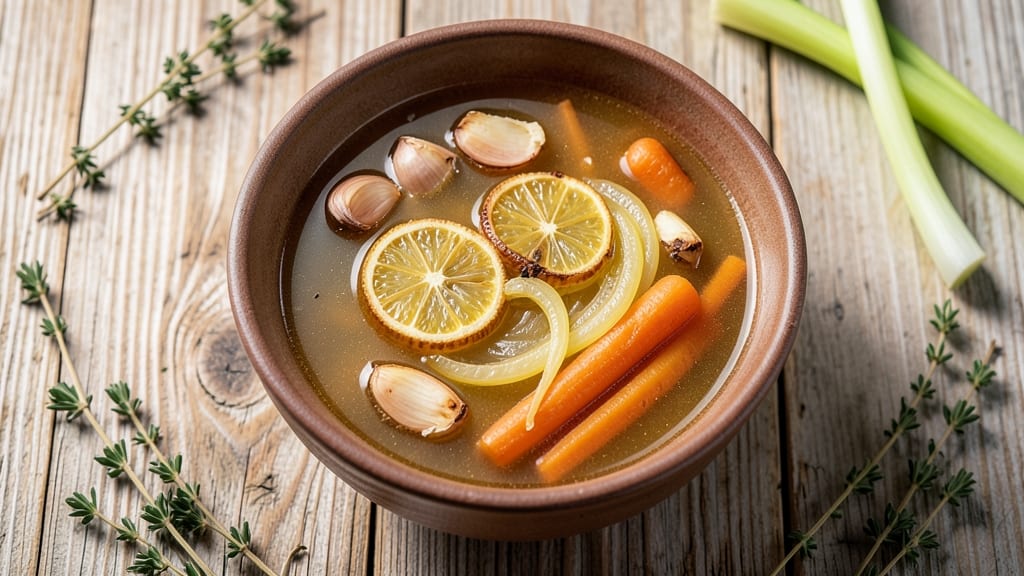
This ancient ginger and garlic soup recipe brings centuries-old wisdom into your kitchen with its warm, spiced harmony. 🌿 The combination of fresh ginger, aromatic garlic, and slow-simmered vegetables creates a deeply comforting broth that's both earthy and invigorating.
What makes this recipe special is its historical roots—inspired by traditional remedies that valued these ingredients for their medicinal properties and rich flavors.
The foundation of this soup lies in its carefully balanced broth, where ginger and garlic infuse the liquid with their signature warmth and depth. Unlike modern versions, this recipe emphasizes a longer simmering process to develop complex flavors without losing the natural sweetness of the vegetables.
The result is a velvety soup that's equally satisfying as a light meal or hearty starter.
What you'll achieve is a bowl of soup that's rich in both taste and tradition, with a smooth texture and layers of spicy, savory, and slightly sweet notes. The simplicity of the ingredients—garlic, ginger, vegetables, and aromatic spices—makes it easy to customize while maintaining authenticity.
Perfect for chilly evenings or as a nourishing addition to any meal.
Serve with crusty bread to soak up every last drop of that fragrant broth, or pair it with a simple green salad for balance. This recipe is not only vegetarian but also easily adaptable to vegan diets by using vegetable broth and omitting any optional dairy garnishes.
Let's create this timeless dish together.
Ingredients for ancient ginger and garlic soup
A symphony of earthy ginger, aromatic garlic, and slow-simmered vegetables creates this ancient soup's velvety harmony.
| Ingredient | Amount | Notes |
|---|---|---|
| Fresh Ginger Root 🌿 | 2 tbsp | Finely grated, skin removed |
| Garlic Cloves 🧄 | 6 cloves | Peeled, roughly chopped |
| Yellow Onion 🧅 | 1 whole | Medium, diced |
| Carrots 🥕 | 3 medium | Peeled, sliced into rounds |
| Celery Stalks 🌿 | 3 whole | Trimmed, chopped |
| Vegetable Broth 💧 | 4 cups | Low-sodium preferred |
| Extra-Virgin Olive Oil 🫒 | 2 tbsp | For sautéing aromatics |
| Fresh Turmeric Root 🌿 | 1 tbsp | Grated, optional for color |
| Ground Cumin 🌶️ | ½ tsp | Toasted for depth |
| Ground Coriander 🌿 | ½ tsp | Freshly toasted preferred |
| Salt 🧂 | 1 tsp | Diamond Crystal preferred |
| Black Peppercorns 🌶️ | ½ tsp | Freshly cracked |
| Fresh Cilantro 🌿 | ¼ cup | Chopped, for garnish |
| Lemon Juice 🍋 | 1 tbsp | Freshly squeezed |
The ginger and garlic form this soup's soul—look for vibrant, plump ginger root with minimal blemishes, and fresh garlic cloves with tight skins. Whole Foods Market or Trader Joe's carry excellent quality, but local Asian markets often have the freshest ginger. Toast the whole spices (cumin and coriander) in a dry pan for 30 seconds before grinding to unlock deeper flavors. The vegetable broth should be low-sodium—homemade or high-quality store-bought brands like Pacific Foods or Imagine work best. For turmeric, fresh root is ideal but ground turmeric at one-third the amount works in a pinch.
No fresh turmeric? Saffron threads at one-eighth teaspoon add color and complexity. Substituting dried ginger? Use one-third the amount of fresh. The carrots and celery can be swapped for sweet potatoes or fennel for variation. For extra richness, stir in 1 tablespoon of coconut milk at the end. If you're avoiding nightshades, omit the black peppercorns and increase the coriander to three-quarters teaspoon. The lemon juice should be freshly squeezed—bottled versions lack the bright acidity that balances the soup's earthy notes.
This soup improves with time—reheat gently on the stove to preserve its velvety texture. Stores beautifully for 4-5 days in the fridge or 3 months frozen. For meal prep, freeze in single-serving portions—thaw overnight in the fridge before reheating. Garnish with fresh cilantro just before serving to maintain its vibrant color and aroma. The broth reduces slightly upon reheating, so add 1-2 tablespoons of water if you prefer a lighter consistency.
Why You'll Love This Recipe
- One-Pot Magic: I swear by this recipe when I’m too tired to wash a million dishes. Just toss chopped onion, garlic, ginger, carrots, and celery into a pot with broth—no fancy gadgets, no stress. The veggies soften into a fragrant, cohesive base while I sip my coffee.
- Ginger-Garlic Bomb: That first spoonful? Chef’s kiss. The fresh ginger and garlic caramelize into a deep, warm punch, while the celery adds a bright crunch that cuts through the richness. Honestly, it’s the kind of flavor that makes me pause mid-sip of water just to savor it.
- Weeknight Workhorse: Between us, this soup is my secret weapon for busy nights. Double the batch on Sunday, and you’ve got lunch for Tuesday and Wednesday—no takeout menus, no last-minute grocery runs. The carrots and celery hold up beautifully, so it tastes fresh even reheated.
- Budget-Friendly Powerhouse: I use this recipe when I’m pinching pennies but still want something hearty. Onions, carrots, celery, and ginger are cheap staples that stretch into a full meal, and the garlic adds depth without breaking the bank. Leftovers? Even better—they’re my go-to for packing lunches.
Step-by-step instructions for ancient ginger and garlic soup
This soup builds flavor through precise layering—each aromatic element unlocks deeper complexity.
🍳 Step 1: Sauté Aromatics Until Fragrant
Heat the 2 tbsp extra-virgin olive oil in a heavy-bottomed pot over medium heat. Add the 1 whole yellow onion, 3 medium carrots, and 3 whole celery stalks, stirring occasionally for 5 minutes until softened. The vegetables should release their natural juices and develop a translucent sheen.
Add the 6 cloves garlic cloves and 2 tbsp finely grated fresh ginger root, cooking for another 2 minutes until the garlic turns golden and the ginger releases its pungent aroma. This step develops the foundational flavors—don't rush it. If the garlic starts to brown too quickly, reduce heat slightly to prevent bitterness.
🍳 Step 2: Toast Spices for Depth
Add the 0.5 tsp toasted ground cumin, 0.5 tsp toasted ground coriander, 1 tbsp grated fresh turmeric root, 1 tsp salt, and 0.5 tsp freshly cracked black peppercorns to the pot. Stir vigorously for 30 seconds until the spices bloom and fill the kitchen with their warm, earthy scent. This toasting step unlocks their essential oils, creating a more complex flavor profile.
Immediately pour in the 4 cups vegetable broth, scraping up any browned bits from the bottom of the pot. These bits, called fond, contain concentrated flavor that will deepen your soup's character. Bring the mixture to a gentle simmer over medium-low heat—you're looking for small, steady bubbles breaking the surface, not a rolling boil.
⏰ Step 3: Simmer Until Vegetables Are Tender
Cover the pot and let the soup simmer gently for 20-25 minutes until the vegetables are fork-tender but still hold their shape. You'll know it's ready when a knife slides in easily through the carrots and celery. Stir occasionally to prevent sticking, adding a splash of water if the soup reduces too much.
Taste and adjust seasoning—this is your quality control moment. The broth should be vibrant with the flavors of ginger, garlic, and spices. If it needs more salt, add it now. If the acidity feels flat, a splash of 1 tbsp freshly squeezed lemon juice at the end will brighten the flavors. The soup should be harmonious, with each spice contributing without overpowering.
🥘 Step 4: Finish with Fresh Herbs
Remove the pot from heat and let the soup rest for 5 minutes. This resting period allows the flavors to meld and the vegetables to absorb the broth completely. Stir in the 0.25 cup chopped fresh cilantro, reserving a few sprigs for garnish. The cilantro adds a fresh, bright contrast to the warm, spiced broth.
Ladle the soup into bowls, garnishing each serving with the reserved cilantro sprigs and an additional drizzle of lemon juice if desired. Serve immediately while the soup is steaming hot—this is when the flavors are at their peak. Each spoonful should deliver a balanced harmony of spicy, earthy, and citrus notes, with the vegetables providing satisfying texture.
Pro Tips For Making Ancient Ginger And Garlic Soup
- CHAR THE GINGER FIRST: Don’t just toss in raw ginger chunks—they’ll sit like rocks in your soup. Peel and slice it thin, then char the pieces directly over the flame (or in a dry pan for 30 seconds per side) until they’re blackened in spots. That smoky depth is what makes ancient soups taste old-school good—skip it, and you’re missing half the flavor.
- PEEL GARLIC IN THE PAN: After sautéing onions, toss in whole garlic cloves (peels on) with the ginger. The heat will loosen the skins so they slip off effortlessly when you crush them later. I learned this the hard way—peeling garlic mid-cook is a mess, and crushed raw garlic burns faster than you’d think.
- SWEAT THE AROMATICS LOW: Onions, carrots, and celery need 8–10 minutes of gentle cooking—no browning, just softening until the onion is translucent and the veggies release their juices. Push a spoon through them; if they resist, keep going. Rushing this step means your soup will taste raw and watery, no matter how long you simmer.
- SAVE THE GARLIC OIL: After cooking the garlic, strain it out and reserve the golden oil (about 1–2 tablespoons) to finish the soup. That liquid is liquid gold—it’s packed with caramelized flavor that’ll tie everything together. Pour it back in at the end, stir once, and call it done. (Yes, even if you’re impatient like me.)
Common mistakes when making great ancient ginger and garlic soup
Overcooking Vegetables
Watch the simmer time closely—vegetables should be tender but still hold their shape after 20-25 minutes. Overcooking turns carrots and celery mushy, losing their satisfying texture. I've ruined this soup by letting it boil too vigorously, which breaks down the vegetables into a sad, watery mess.
Keep heat at medium-low and stir occasionally to prevent sticking. 🌶️
Skipping Spice Toasting
Never skip toasting the cumin and coriander—this crucial step unlocks their essential oils for deeper flavor. I once made this soup without toasting and was disappointed by its flat, one-dimensional taste.
Simply dry-toast the spices in a separate pan for 30 seconds until fragrant before adding to the pot. This small effort makes a huge difference. ⏰
Using Bottled Lemon Juice
Freshly squeezed lemon juice brightens the soup's flavors, while bottled versions lack the same vibrant acidity. I've used bottled lemon juice before, and the soup always tasted slightly off—like something was missing. Always use freshly squeezed lemon juice for that bright, citrusy finish that balances the earthy spices. 🍋
Ignoring the Resting Period
Letting the soup rest for 5 minutes off the heat allows flavors to meld and vegetables to absorb the broth completely. I've skipped this step in the past, and the soup always tasted uneven—some bites were flavorful, while others were bland.
This resting period ensures every spoonful is perfectly harmonized. ✨
Adding Broth Too Early
Pour the broth in only after toasting the spices—adding it earlier dilutes their concentrated flavors. I once added broth too soon and ended up with a watery, flavorless soup. Always toast the spices first, then add the broth to create a rich, flavorful base. 💧
Overcrowding the Pot
Use a heavy-bottomed pot with enough space for the vegetables to move around freely. I've overcrowded this soup before, and the vegetables steamed instead of simmering, leading to uneven cooking and a bland broth. If your pot feels too full, cook in batches or use a larger pot. 🥘
Nutrition facts
Frequently asked questions
Can I make this soup without fresh ginger?
Yes, but use one-third the amount of dried ginger powder for the same impact. For 2 tbsp fresh ginger, use 2 tsp dried ginger. Toast the dried ginger in a dry pan for 30 seconds to enhance its flavor before adding to the soup. Fresh ginger has a brighter, more complex taste, but dried works well in a pinch.
How can I make this soup vegan?
This recipe is already vegetarian, but for a fully vegan version, use 100% vegetable broth (no chicken or fish-based options) and omit any optional dairy garnishes like cream. The original recipe's flavor profile works beautifully without animal products. For extra richness, stir in 1 tablespoon coconut milk at the end.
What's the best way to store leftovers?
Store in an airtight container in the fridge for 4-5 days or freeze for 3 months. Portion into single servings before freezing for easy reheating. Thaw overnight in the fridge—never at room temperature. Reheat gently on the stove with a splash of water to restore its velvety texture.
Can I add protein to this soup?
For a heartier version, add 1 cup cooked chickpeas or 12 oz firm tofu (cubed and pan-fried) during the final 5 minutes of simmering. For meat-eaters, try 1 cup shredded rotisserie chicken or 1/2 lb shrimp added at the end. The soup's flavors will complement any protein beautifully.
Why does my soup taste bland?
Most likely, you skipped toasting the spices or didn't simmer long enough. Always toast cumin and coriander for 30 seconds to unlock their flavors, and simmer for the full 20-25 minutes. Taste as you go—add more salt or a splash of lemon juice if needed. The broth should be vibrant with ginger and garlic aroma.