
Soups & Stews
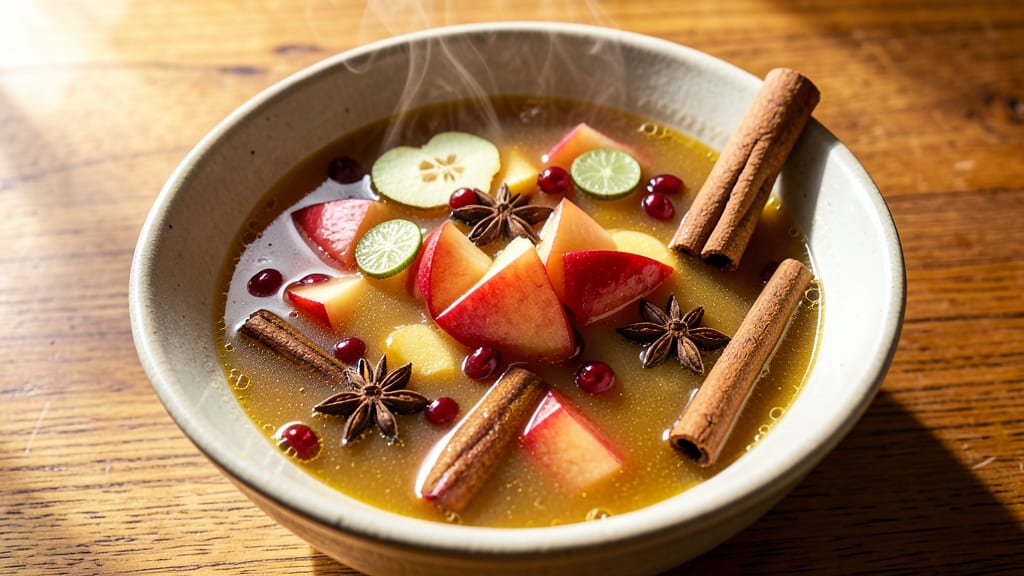
This Chinese apple soup recipe transforms humble ingredients into a fragrant, warming bowl that bridges sweet and savory traditions. The harmony of tender apples, aromatic ginger, and subtle spices creates a dish that's both comforting and sophisticated—perfect for chilly evenings or festive gatherings.
What makes this version special is its balance: the natural sweetness of apples pairs beautifully with the earthy depth of star anise and cinnamon, while ginger adds a bright, invigorating lift.
The beauty of this recipe lies in its simplicity—just a handful of ingredients work together in one pot, yet the result feels restaurant-quality. Traditional Chinese apple soups often feature ginger prominently, both for its medicinal properties and its ability to enhance the apple's natural flavors.
This version also incorporates goji berries for a subtle sweetness and nutritional boost, a common addition in many regional variations.
By the time you finish cooking, you'll have a velvety soup with tender, caramelized apple pieces floating in a fragrant broth. The aroma alone—warm apples mingling with spiced ginger—will fill your kitchen, while the texture offers a satisfying contrast between creamy broth and tender fruit.
It's the kind of dish that feels both nostalgic and fresh, perfect for sharing with family or enjoying on your own.
Whether you're serving this as a light meal or a starter, the soup's versatility shines. Pair it with steamed dumplings or a side of jasmine rice for a complete meal, or enjoy it as-is for a comforting, flavorful experience.
The recipe also adapts well to dietary preferences—vegetarian-friendly and easy to customize with additional herbs or spices.
Ingredients for apple soup recipe chinese
Just 13 ingredients transform into a fragrant, velvety Chinese apple soup that feels like a hug in a bowl.
| Ingredient | Amount | Notes |
|---|---|---|
| Honeycrisp or Fuji Apples 🍎 | 4 medium | Peeled, cored, cut into chunks |
| Fresh Ginger 🧄 | 2 inches | Peeled, sliced into coins |
| Star Anise Pods 🌿 | 2 whole | Lightly crushed for aroma |
| Cinnamon Sticks 🍃 | 2 whole | For subtle warmth |
| Goji Berries 🍇 | ¼ cup | Dried, rinsed if dusty |
| Vegetable Oil 🫒 | 2 tbsp | For sautéing apples |
| Water 💧 | 4 cups | Or low-sodium broth |
| White Sugar 🍚 | ¼ cup | Adjust to taste |
| Salt 🧂 | ½ tsp | Kosher or sea salt |
| Black Pepper 🌶️ | ¼ tsp | Freshly ground |
| Cornstarch 🌾 | 1 tbsp | For thickening |
| Sesame Oil 🫒 | 1 tsp | For finishing |
| Green Onions 🧅 | 2 whole | Sliced for garnish |
The apples are the star—Honeycrisp or Fuji hold their shape beautifully, but any crisp variety works. Asian markets often have better selection for this dish, but regular grocery stores carry these too. Ginger should be fresh and firm; no woody stems. Star anise and cinnamon are non-negotiable for that authentic aroma—Penzeys or bulk spice sections are your best bets. Goji berries add subtle sweetness; rinse them well if they're dusty from packaging. The cornstarch is key for that silky texture—don't skip it.
No star anise? 1/4 tsp ground anise works in a pinch, but the whole pods give better flavor. Fresh ginger too fibrous? Powdered ginger at half the amount gets you close. Swapping apples? Pears work perfectly—just reduce sugar slightly. The soup thickens as it sits, so if it's too thin, stir in a splash of cornstarch slurry. For extra depth, add 1 tsp soy sauce when serving. Sesame oil is optional but adds that final umami punch—toasted sesame oil is best.
This soup tastes even better the next day—3-4 days in the fridge with a lid on. Freezes beautifully for up to 3 months—just reheat gently to preserve texture. I always double the batch because it disappears fast. Garnish with green onions and a drizzle of sesame oil right before serving. The aroma alone will have everyone gathering around your pot.
Why You'll Love This Recipe
- No Peel Required: I swear by Honeycrisp apples here—tender enough to slice raw, no peeling, no fuss. That crisp bite stays even after simmering, and the ginger’s sharp kick cuts through the sweetness like a knife through butter.
- Spiced Like a Memory: Star anise and cinnamon sticks infuse this soup with warmth that lingers. Honestly, it smells like autumn in a pot—earthy, sweet, and just a little mysterious, like the first sip of tea on a chilly morning.
- Leftovers That Beg for Seconds: This soup only gets better the next day. The flavors meld, the apples soften just right, and it reheats in minutes. I’ve sent jars to work with coworkers who now demand it every fall.
- Goji Berry Magic: A handful of goji berries turns this from ordinary to ridiculously good. They pop with chewy sweetness, balancing the soup’s depth—plus, they’re my secret weapon for making it feel special without extra effort.
Step-by-step instructions for spiced apple and ginger harmony in one pot
This Chinese-inspired apple soup comes together beautifully with just a few key techniques.
Sauté Apples and Ginger Until Golden
Heat the 2 tablespoons vegetable oil in a large pot over medium heat. Add the 4 medium Honeycrisp or Fuji Apples cut into chunks and the 2 inches Fresh Ginger sliced into coins. Cook for 5-6 minutes, stirring occasionally, until the apples begin to soften slightly and the ginger releases its aromatic oils.
You'll know it's ready when the apples develop a faint golden hue at the edges—that's your signal they're ready for the next stage. The ginger should be fragrant but not browned. This initial sauté builds the soup's flavor foundation while preventing the apples from turning mushy later in the cooking process.
Build the Spiced Broth
Add the 2 whole Star Anise Pods and 2 whole Cinnamon Sticks to the pot, giving everything a gentle stir. Pour in the 4 cups Water (or low-sodium broth if using) along with the 0.25 cup White Sugar, 0.5 teaspoon Salt, and 0.25 teaspoon Black Pepper. Bring the mixture to a boil over high heat, then immediately reduce to medium-low heat and let it simmer uncovered for 15 minutes.
During this time, the spices will infuse the liquid with their warm aromas while the apples continue to tenderize. You'll notice the star anise and cinnamon sticks floating—this is normal and actually helps concentrate their flavors. The liquid should smell like a cozy autumn spice market when fully infused.
Thicken and Finish the Soup
In a small bowl, whisk together the 1 tablespoon Cornstarch with 2 tablespoons Water until smooth. Slowly pour this mixture into the simmering soup while stirring constantly. Cook for another 5-7 minutes until the soup thickens to your desired consistency—it should coat the back of a spoon but still be light enough to stir easily.
Remove the pot from heat and stir in the 0.25 cup Goji Berries and 1 teaspoon Sesame Oil. The goji berries will soften slightly and add a subtle sweet-tart contrast, while the sesame oil brings a nutty depth. Let the soup rest for 5 minutes to allow all the flavors to meld together completely.
Serve with Fresh Garnish
Ladle the soup into bowls and garnish each serving with 2 whole Green Onions sliced thinly. The bright green color provides a beautiful contrast to the warm, spiced apple broth. I like to serve this soup immediately while it's still steaming hot—it's even better the next day when the flavors have had time to develop further.
This Chinese-inspired apple soup delivers the perfect balance of sweet, spicy, and umami flavors in every spoonful. The ginger and star anise create warmth, while the goji berries add a delightful chewy texture that keeps each bite interesting. The sesame oil finishing touch elevates it from ordinary to extraordinary.
Pro Tips For Making Apple Soup Recipe Chinese
- PEEL GINGER THIN: The skin’s bitterness lingers—trust me, you’ll taste it if you skip this. Use a spoon to scrape off just the outer layer, leaving the pale yellow underneath. No peeler needed; this keeps the texture right for simmering.
- SIMMER STAR ANISE LOW: Drop the pods in early but keep the heat gentle—anything hotter and they’ll turn the broth bitter. I’ve ruined batches by rushing this; 15 minutes on low is enough to infuse flavor without overpowering.
- COOK APPLES UNTIL SOFT: Honeycrisp stays crunchy if you cut them too big. Dice into ½-inch pieces and simmer until they’re fork-tender, not mushy. A quick taste test tells you when they’re done—no guessing.
- TOAST GOJI BERRIES FIRST: Dry-toast them in a pan for 30 seconds before adding to the soup. This deepens their sweetness and prevents them from turning to mush in the broth. (Yes, it’s a small step, but it matters.)
Common mistakes when making perfect results
Overcooking Apples
Apples are delicate and turn mushy when overcooked, ruining the soup's texture. The key is to sauté them just until golden (5-6 minutes) before adding liquid. If your apples soften too quickly, reduce the heat to medium-low after adding water.
I've learned the hard way—once I let my apples simmer too long, and the soup became unpleasantly thick and grainy. 🍎
Skipping the Cornstarch
Many home cooks skip the cornstarch slurry, thinking the soup will thicken on its own. But without it, your broth will remain watery and lack that silky, velvety texture.
Mix 1 tbsp cornstarch with 2 tbsp water and whisk it in slowly while stirring constantly. This creates a smooth, restaurant-quality finish. Trust me, the difference is noticeable!
Using Pre-Cut Ginger
Pre-cut ginger from jars often contains preservatives that can alter the soup's flavor. Fresh ginger is non-negotiable for authentic taste and aroma. If you're short on time, use ½ tsp ground ginger instead, but it won't have the same depth.
I always peel and slice my own—it takes 2 minutes and makes a world of difference. The fragrant oils released during cooking are what makes this soup truly special. 🧄
Ignoring the Resting Time
Rushing to serve the soup right after cooking means missing out on flavor development. Let it rest for 5 minutes off the heat before serving. This allows the spices to fully infuse and the goji berries to soften slightly.
I've caught myself serving it too soon, and the result was always underwhelming. Patience here is key to that perfect balance of sweet and spicy.
Overcrowding the Pot
Using a pot that's too small causes the apples to steam instead of caramelize, leading to a watery, flavorless soup. Choose a pot that gives your ingredients room to breathe—at least 4-5 quarts for this recipe.
I use a 5-quart Dutch oven because it gives me enough space to stir and develop those beautiful caramelized edges on the apples. 🔥
Forgetting to Strain
While star anise and cinnamon sticks add wonderful aroma, leaving them in too long can make the soup bitter. Remove them after 15 minutes of simmering—just strain them out with a slotted spoon.
I once forgot and ended up with a slightly bitter aftertaste. The pods are easy to remove, so don't skip this step. It's all about balance—you want flavor, not bitterness.
Nutrition facts
Frequently asked questions
Can I make this Chinese apple soup vegetarian?
This recipe is already vegetarian-friendly as written. The broth uses water (or low-sodium vegetable broth) instead of meat-based stock, and all ingredients are plant-based. For extra depth, consider adding a splash of soy sauce or a pinch of white miso paste when serving. The goji berries and ginger provide natural umami that complements the sweetness perfectly.
How do I adjust the sweetness level?
The recipe balances natural apple sweetness with just 0.25 cup sugar, but you can easily customize it. For tart apples like Granny Smith, add 1-2 extra tablespoons sugar. For sweeter varieties, reduce to 0.125 cup or omit entirely. Taste after simmering and adjust—remember, flavors meld as it rests, so go slightly lighter if you plan to serve immediately.
What's the best way to store leftovers?
Store in an airtight container in the fridge for 3-4 days, or freeze for up to 3 months. For freezing, let the soup cool completely first. Reheat gently on the stove over low heat—never microwave directly from frozen to preserve texture. The flavors actually improve overnight, making it perfect for meal prep!
Can I substitute any of the spices?
Star anise and cinnamon are traditional, but you can experiment! For star anise, try 1/4 tsp ground anise or 1 bay leaf. Replace cinnamon with 1/2 tsp ground cloves (use sparingly—they're strong!). The ginger is non-negotiable for authentic flavor, but if you must substitute, use 1/2 tsp ground ginger (though fresh is always better).
Is this soup suitable for children?
Yes, but with a few adjustments. The natural sweetness and mild spices make it child-friendly, but some kids might find the texture of goji berries unfamiliar. Remove them before serving to little ones. For extra appeal, blend the soup lightly for a smoother consistency. The ginger's warmth is gentle enough that most children tolerate it well—just check with your pediatrician if your child has sensitive digestion.