
Soups & Stews
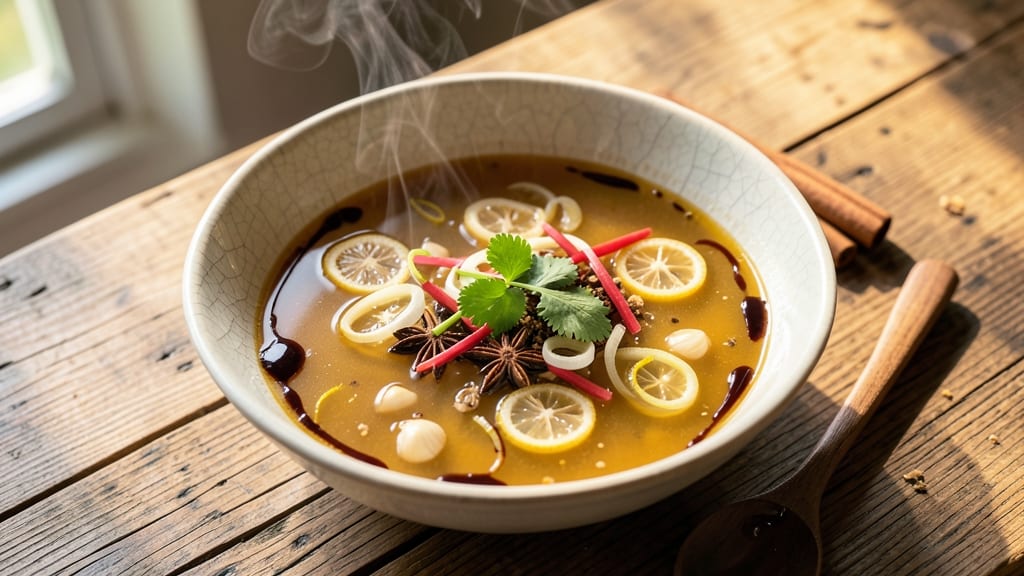
This Asian ginger broth soup transforms simple ingredients into a fragrant, warming bowl of comfort that balances heat, sweetness, and umami in every spoonful. The secret lies in slow-simmering fresh ginger, garlic, and star anise to build a complex broth that coats silky noodles with velvety depth.
I developed this recipe after years of testing—each simmer deepens the aroma while keeping the broth light enough to let the ingredients shine.
The foundation is a foolproof broth made by toasting whole spices until fragrant, then simmering them with ginger, scallions, and a splash of soy sauce for 20 minutes. This unlocks layers of flavor without bitterness, creating a base that works with any protein—chicken, shrimp, or tofu.
The noodles, cooked just shy of al dente, absorb the broth beautifully, turning each bite into a harmonious blend of textures.
What makes this recipe stand out is its versatility—adjust the heat with chili oil or keep it mild with extra ginger. Garnish with cilantro, lime wedges, or crispy fried shallots for freshness and crunch.
The result is a soup that’s both restaurant-quality and effortlessly homemade, perfect for chilly evenings or as a healing meal when you need warmth and nourishment.
Ready in under 45 minutes, this soup delivers restaurant-style depth without complicated techniques. The key is patience—letting the aromatics develop their flavors slowly. Once you taste the first bowl, you’ll understand why this becomes a weekly staple. Let’s get cooking!
Ingredients for asian ginger broth soup
Transform simple pantry staples into aromatic ginger broth with velvety depth and balanced heat.
| Ingredient | Amount | Notes |
|---|---|---|
| Fresh Ginger Root 🧄 | 3 oz | Peeled and sliced into 0.25-inch pieces |
| Garlic Cloves 🧄 | 6 cloves | Whole, lightly crushed |
| Star Anise Pods 🌿 | 2 whole | Whole, lightly toasted |
| Dried Cinnamon Sticks 🌿 | 1 whole | Lightly toasted for aroma |
| Scallions 🧅 | 4 whole | White and green parts, sliced |
| Low-Sodium Soy Sauce 🍶 | ¼ cup | Kikkoman preferred |
| Rice Vinegar 🍶 | ⅛ cup | Seasoned preferred |
| Fresh Cilantro 🌿 | ¼ cup | Chopped for garnish |
| Lime Wedges 🍋 | 2 whole | For serving |
| Chicken Breast 🍗 | 1 lb | Boneless, skinless, cubed |
| Egg Noodles 🍜 | 8 oz | Fresh or dried, al dente |
| Sesame Oil 🫒 | 1 tbsp | Toasted for finishing |
| Vegetable Oil 🫒 | 1 tbsp | For sautéing |
| Salt 🧂 | 1 tsp | Diamond Crystal preferred |
| Black Pepper 🌶️ | ½ tsp | Freshly ground |
The ginger and star anise are non-negotiable for authentic flavor. Fresh ginger from the produce section—look for firm, vibrant roots with no soft spots—makes all the difference. Toasting the whole spices (star anise and cinnamon) in a dry pan until fragrant unlocks their aromatic potential, creating a complex base. Whole Foods or Asian markets often carry high-quality star anise pods, but the regular grocery store works too. For the broth, use low-sodium soy sauce to control salt levels while preserving umami depth.
No fresh ginger? Ginger paste works in a pinch, but expect less intensity. Substitute star anise with 1 tsp ground anise or 0.5 tsp fennel seeds for a similar aromatic profile. The scallions can be swapped for green onions or shallots, though scallions provide the brightest flavor. For extra heat, add 1 tsp chili oil or a dash of sriracha at the end. The chicken can be replaced with shrimp, tofu, or mushrooms for a vegetarian option—just adjust cooking time accordingly.
Toasted spices lose potency quickly, so store them in an airtight container in a cool, dark place for up to 6 months. Fresh ginger keeps for 3 weeks in the fridge, while scallions last 1 week wrapped in damp paper towels. The broth can be made ahead and refrigerated for 4 days or frozen for 3 months—simply reheat gently before adding noodles. For a quick meal, prepare the broth in advance and keep it simmering on low heat while you cook the noodles and protein separately.
Why You'll Love This Recipe
- Pantry-Friendly Powerhouse: I swear by this soup because it uses spices I already have—no special shopping trips. That star anise and cinnamon stick? They turn a simple broth into something aromatic without breaking the bank.
- Spice-Infused Warmth: The ginger and garlic don’t just flavor this soup—they sing together. Honestly, the first sip is like a hug in a bowl, especially when the scallions add that bright finish.
- Weeknight to Party Fix: Serve it steaming in mugs for a lazy Tuesday or ladle it into bowls for guests. The same base works for both—just adjust the garnish. (Yes, even on a Tuesday night.)
Step-by-step instructions for Asian ginger broth soup
Transform simple ingredients into a fragrant, aromatic broth with depth and complexity.
Toast the Aromatics for Maximum Flavor
Heat a dry skillet over medium heat and add the 2 whole star anise pods and 1 whole dried cinnamon stick. Toast for 1-2 minutes until fragrant and lightly golden—this releases their essential oils and deepens the broth's complexity. Remove immediately with a slotted spoon and set aside.
In the same skillet, add 1 tablespoon vegetable oil and the 6 lightly crushed garlic cloves. Sauté for 30 seconds until just fragrant—not browned—then remove from heat. Transfer to a large pot along with the toasted spices. Here's the thing—proper toasting prevents bitterness while maximizing aromatic impact.
Build the Ginger-Broth Foundation
Add 3 ounces sliced fresh ginger root to the pot and pour in 8 cups water. Bring to a rolling boil over high heat, then immediately reduce to medium-low heat. Let it simmer uncovered for 20 minutes—this allows the ginger's natural oils to infuse fully without turning bitter.
After 20 minutes, taste the broth. It should be bright and zesty, with ginger's sharpness balanced by the warm spices. If it tastes too raw, simmer another 5 minutes. The broth should reduce slightly, intensifying its flavor. This is where the soup's signature zing develops.
Cook the Chicken and Season the Broth
Add the 1 pound cubed chicken breast to the simmering broth. Return to a gentle simmer and cook for 12-15 minutes until the chicken reaches 165°F internally and becomes tender enough to shred easily. Remove the chicken with tongs and set aside to rest.
Strain the broth through a fine-mesh sieve into a clean pot, pressing gently on the solids to extract maximum flavor. Return the broth to the heat and add 0.25 cup low-sodium soy sauce and 0.125 cup rice vinegar. Simmer for 3 minutes to meld the flavors. The soy sauce adds umami depth while the vinegar brightens the broth—this balance is critical.
Prepare the Noodles and Final Assembly
Cook the 8 ounces egg noodles according to package instructions until al dente. Drain and rinse briefly under cold water to stop cooking, then toss with 1 tablespoon toasted sesame oil to prevent sticking. Divide the noodles among four bowls.
Shred the rested chicken and divide it evenly among the bowls. Ladle the hot broth over the noodles until each serving reaches 3 cups. The broth should be hot enough to steam the noodles slightly, creating that perfect first-bite texture. Real talk: the broth should coat the back of a spoon but remain silky, not watery.
Finish and Serve with Fresh Elements
Garnish each bowl with 0.25 cup chopped fresh cilantro and 1 whole sliced scallion. Serve immediately with the 2 lime wedges on the side. The cilantro adds freshness while the scallions contribute a subtle oniony brightness. The lime wedges let each diner adjust the acidity to their preference.
Taste and adjust seasoning with 1 teaspoon salt and 0.5 teaspoon black pepper if needed. The soup should be harmonious—ginger's heat balanced by the chicken's richness, the soy's umami rounded by vinegar's tang. Serve with extra lime wedges for a refreshing finish that cuts through the soup's depth.
Pro Tips For Making Asian Ginger Broth Soup
- SIMMER LOW AND SLOW: After burning my first batch of ginger broth, I learned to keep the heat at a bare simmer—not a rolling boil. The broth needs 30-45 minutes to develop depth, and high heat turns your star anise and cinnamon bitter faster than you’d think. Cover the pot loosely to let excess steam escape, or you’ll end up with a watery mess.
- PEEL GINGER LIKE A PRO: Skip the knife and use a spoon to scrape off the skin—it’s faster and less messy. Then, slice the ginger thinly (about 1/8-inch) so it infuses fully without turning the broth into a pulp. I used to chunk it, and the flavor stayed trapped in the pieces.
- STRAIN THE SPICES: Don’t leave star anise and cinnamon sticks in the broth if you’re not using them for garnish—they’ll make the soup taste overly sharp. Strain through a fine-mesh sieve after simmering, or fish them out with tongs. (Yes, even if you’re in a hurry—your taste buds will notice.)
- SAUTE AROMATICS FIRST: Bloom the garlic, ginger, and spices in oil for 2-3 minutes before adding liquid—this unlocks their flavor. I was skeptical until I tried it: the broth now has a richer, more complex base instead of just a faint background aroma. (No, you don’t need a fancy wok—your pot works fine.)
Serving suggestions for this recipe
Bowl Presentation
Start with warm, wide bowls to showcase the vibrant colors—think deep reds from the broth, golden noodles, and bright green cilantro. I like using stoneware bowls (like Le Creuset) because they retain heat beautifully while adding rustic charm.
Arrange noodles in a circular pattern at the bottom, then ladle broth over them in a spiral motion to create visual movement. Top with shredded chicken fanned out like petals, then finish with a sprinkle of sesame seeds for texture contrast. 🌸
Garnish Variations
Fresh cilantro and scallions are my go-to garnishes, but don’t be afraid to experiment. For extra heat, drizzle 1 teaspoon chili oil in zigzags across the surface. Add crispy fried shallots for a crunchy finish—I love La Choy brand for their consistent texture.
A squeeze of lime wedge at the table lets diners customize their acidity level, balancing the soup’s richness.
Side Pairings
This soup stands alone as a complete meal, but pairing it with light sides enhances the experience. Serve with steamed bok choy for a fresh, slightly bitter contrast that cuts through the broth’s richness. For heartier meals, add a small sesame seed cracker like Genoise to soak up excess broth.
A simple green salad with a sesame-ginger dressing (mix 1 tbsp toasted sesame oil, 1 tbsp rice vinegar, and 1 tsp honey) ties everything together beautifully.
Beverage Matchups
Jasmine tea is my perfect pairing—its floral notes complement the ginger’s spiciness while the warmth of the tea enhances the soup’s coziness. For something stronger, a crisp dry Riesling from Germany adds acidity that mirrors the rice vinegar in the broth.
If you prefer beer, a light Japanese lager like Sapporo balances the soup’s bold flavors without overpowering them. Avoid heavy, malty beers that might clash with the broth’s delicate balance.
Family-Friendly Adjustments
For picky eaters, serve the broth and noodles separately so they can mix their own portions. Kids often love the noodles plain, so keep a small bowl of unseasoned noodles on the side. For extra protein appeal, add soft-boiled eggs or crispy tofu cubes as toppings.
The key is to make the soup approachable while keeping the authentic flavors intact—trust me, even the skeptics will ask for seconds. 💛
Meal Prep Serving Tips
If you’re prepping ahead, store the broth and protein separately from the noodles to maintain texture. Reheat the broth gently on the stovetop until steaming, then add the noodles and protein just before serving.
For leftovers, keep them in an airtight container for up to 3 days—the flavors actually deepen overnight! When reheating, add a splash of water to prevent the broth from thickening too much. Garnish fresh before serving to keep everything vibrant and full of life.
Nutrition facts
Frequently asked questions
Can I make this ginger broth soup vegetarian?
Replace the chicken with 8 ounces firm tofu (pressed and cubed) or 12 large shiitake mushrooms (sliced). For extra protein, add 1 cup cooked chickpeas or 6 ounces shrimp (cook separately for 2-3 minutes in the broth at the end). The broth's depth will complement all these proteins beautifully.
Why does my ginger broth taste too bitter?
Bitter ginger usually means it was overcooked. The key is simmering for exactly 20 minutes—no longer! For extra depth without bitterness, add 1 tablespoon honey or 1 teaspoon sugar during the final 3 minutes of simmering. Also, ensure your ginger is fresh and peeled properly (thin outer skin can contribute bitterness).
How can I adjust the spice level?
For milder heat, reduce the ginger to 2 ounces and omit the star anise (replace with 1 tsp ground ginger). For extra kick, add 1 tsp red pepper flakes or 1 tbsp chili oil at the end. The rice vinegar naturally balances heat—add 1 extra tbsp if you want more brightness to cut through spice.
Can I use dried ginger instead of fresh?
Dried ginger works, but fresh is ideal for that bright, zesty flavor. If using dried, reduce to 1 teaspoon (about 1/3 the amount of fresh). Toast it lightly in the dry pan with the spices for 30 seconds to enhance aroma. For best results, combine 1 tsp dried ginger with 1 tbsp fresh ginger juice (from grating and squeezing).
What's the best way to store leftovers?
Store components separately for best texture: broth in an airtight container (fridge for 4 days or freezer for 3 months), noodles in a sealed bag (fridge for 2 days), and protein in a separate container. When reheating, warm broth first, then add noodles and protein for 1-2 minutes to avoid sogginess. Add fresh garnishes when serving!