
Soups & Stews
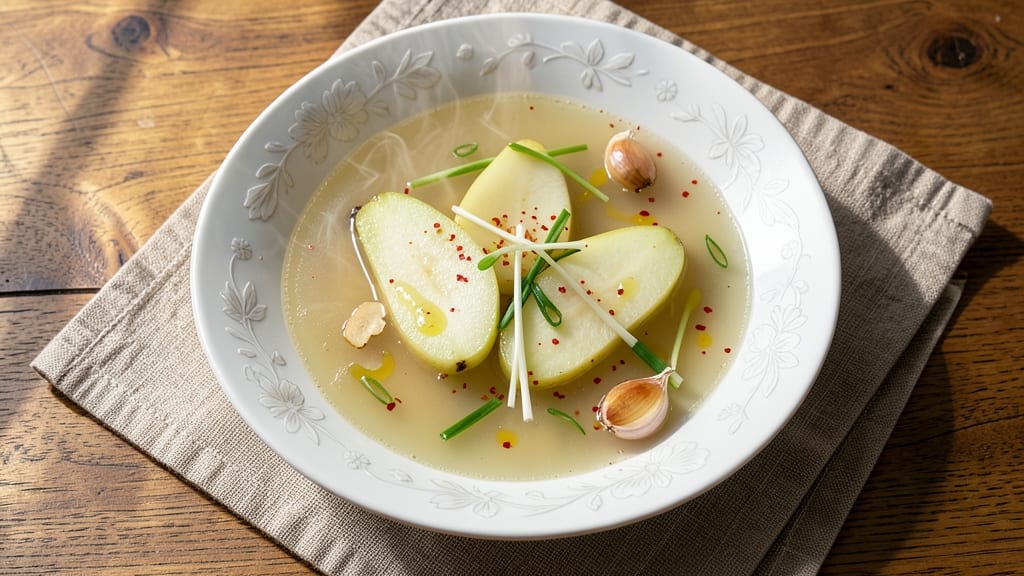
This Asian pear and ginger soup delivers a perfect balance of silky sweetness and warming spice—ideal for chilly evenings or when you crave something comforting yet refined. 🌿 The secret lies in slow-simmering fresh pears with ginger and green onions until they release their natural sugars, creating a velvety broth that's both soothing and subtly complex.
Unlike heavier soups, this one stays light yet satisfying, with just enough heat from a touch of chili to wake up the palate.
What sets this recipe apart is its versatility—it works as a standalone dish or pairs beautifully with steamed rice or grilled fish. The technique is straightforward: simmer the pears until tender, then blend for a smooth texture or leave them slightly chunky for texture contrast.
Fresh ginger and garlic form the aromatic base, while a splash of rice vinegar brightens the finish, balancing the natural sweetness of the pears.
By the time you're done, you'll have a bowl of soup that's creamy without dairy, fragrant without being overpowering, and perfectly balanced in sweetness and spice. The pears soften just enough to release their juices, creating a broth that's rich yet light, while the ginger adds depth without dominating.
Garnish with crisp green onions and a drizzle of sesame oil for that final touch of sophistication.
This recipe is perfect for meal prep—it tastes even better the next day as the flavors meld—and adapts easily to dietary preferences. Swap the broth for coconut milk for a tropical twist or add a dash of chili paste for extra heat. Here's how to make it shine.
Ingredients for asian pear soup
Silky pears and zesty ginger create a velvety broth that's both comforting and refined.
| Ingredient | Amount | Notes |
|---|---|---|
| Asian Pears 🍐 | 2 whole | Ripe but firm, skin on |
| Fresh Ginger 🧄 | 3 oz | Peeled, roughly chopped |
| Green Onions 🧅 | 1 whole | White and green parts |
| Garlic Cloves 🧄 | 3 cloves | Peeled, smashed |
| Red Chili Flakes 🌶️ | ½ tsp | Adjust for spice preference |
| Rice Vinegar 💧 | 1 tbsp | White or seasoned |
| Sesame Oil 🫒 | 1 tsp | Toasted sesame preferred |
| Vegetable Broth 💧 | 4 cups | Low-sodium preferred |
| Granulated Sugar 🍯 | 2 tbsp | Or honey for floral notes |
| Salt 🧂 | 1 tsp | Kosher or sea salt |
| White Pepper 🌶️ | ¼ tsp | Freshly ground |
| Sesame Seeds 🌾 | 1 tsp | Toasted for garnish |
Asian pears are the star here—look for ones that are ripe but still firm to the touch. Whole Foods or Asian markets usually carry them year-round, but regular grocery stores often stock them in fall. If you can't find them, Bosc pears work as a close substitute though the texture will differ slightly. The ginger should be fresh and aromatic—no shriveled roots. I always buy extra because it's used in so many dishes. For the broth, low-sodium is key unless you're adding extra salt later. The green onions add a fresh pop of color, so grab a bunch and use the whites for cooking, the greens for garnish.
No Asian pears? Bosc or Anjou pears will work, though the flavor profile shifts slightly. Fresh ginger is non-negotiable here—dried won't give you that bright, zesty kick. Running short on rice vinegar? Apple cider vinegar at half the amount gets you close. The sesame oil is optional but adds that authentic umami finish. For extra depth, toast the sesame seeds in a dry pan before adding to the soup. The chili flakes can be swapped for 1/4 tsp chili paste if you prefer a smoother heat. And if you're using honey instead of sugar, remember it's sweeter so start with 1 tbsp and adjust to taste.
This soup tastes even better the next day as the flavors meld together. Store in an airtight container in the fridge for up to 5 days. For meal prep, I double the recipe and freeze half in 2-cup portions—just thaw overnight in the fridge before reheating. The sesame oil and seeds should be added fresh when serving, not stored with the soup. Garnish with extra green onions and a drizzle of sesame oil right before serving to keep everything vibrant.
Why You'll Love This Recipe
- Here’s what sold me: that perfect bite where the pear stays just firm enough to hold its shape, while the broth turns velvety from the ginger and garlic. Add a pinch of chili flakes, and suddenly it’s bright, warm, and a little spicy—like a hug in a bowl. (Yes, even on a Tuesday night.)
- No-Chop Needed: Honestly, I swear by this—just slice the pears into wedges, no peeling, no fuss. The ginger and garlic go straight from jar to pot, and the green onions? Toss them in whole or chopped, your call. That’s right: five minutes of actual work, and the rest is simmering while you do something else.
- Crispy-Creamy Magic: Here’s what sold me: that perfect bite where the pear stays just firm enough to hold its shape, while the broth turns velvety from the ginger and garlic. Add a pinch of chili flakes, and suddenly it’s bright, warm, and a little spicy—like a hug in a bowl. (Yes, even on a Tuesday night.)
- Leftover Goldmine: Between us, this soup only gets better the next day. The flavors meld into something deeper, and the pears soften just enough to make every spoonful feel like a reward. I’ve reheated mine three times, and the only complaint? Running out before the last sip.
Step-by-step instructions for Asian pear and ginger soup
Transform ripe pears and aromatic ginger into a velvety soup with balanced sweetness and subtle heat.
🍳 Step 1: Sauté Aromatics Until Fragrant
Heat the sesame oil in a medium pot over medium heat. Add the 3 oz peeled, roughly chopped fresh ginger and 3 smashed garlic cloves, cooking for 2 minutes until the ginger softens and releases its piney aroma. You'll smell that distinct ginger fragrance—this is your cue to add the 0.5 tsp red chili flakes, stirring for 30 seconds until the spices bloom and the oil shimmers with color.
Here's the thing—don't rush this step. The ginger needs to break down completely so it infuses the broth later. If it looks like it's sticking, add 1-2 tablespoons of the vegetable broth to help it release. The chili flakes should just barely color the oil, not burn—watch closely.
🍳 Step 2: Simmer Pears and Broth for Silky Texture
Peel and core the 2 whole Asian pears, then cut them into ½-inch chunks. Add them to the pot along with the 4 cups vegetable broth, 2 tbsp granulated sugar, 1 tsp salt, and 0.25 tsp white pepper. Bring to a boil, then reduce heat to medium-low and simmer uncovered for 15-20 minutes until the pears are fork-tender but still hold their shape.
You'll know it's ready when the pears collapse slightly under gentle pressure and the soup thickens slightly. Stir occasionally to prevent sticking—this is where the magic happens. The sugar will dissolve completely, balancing the ginger's sharpness with natural sweetness.
🥘 Step 3: Finish with Vinegar and Garnish
Remove the pot from heat and stir in the 1 tbsp rice vinegar. This brightens the flavors and cuts through the richness. Let the soup sit for 5 minutes to allow the vinegar to mingle with the other ingredients. Taste and adjust seasoning—you might need a pinch more salt or sugar depending on your pears' natural sweetness.
Just before serving, toast the 1 tsp sesame seeds in a dry skillet over low heat for 1-2 minutes until golden and fragrant. Sprinkle over each serving along with thinly sliced green onions. The contrast of cool, silky soup with warm, nutty seeds elevates every spoonful.
⏰ Step 4: Rest and Serve at Peak Temperature
Let the soup rest for 10 minutes before serving. This allows flavors to meld and the pears to absorb any remaining liquid. Ladle into bowls, ensuring each serving gets a generous portion of pear chunks and aromatic broth.
The ideal serving temperature is 170-180°F—hot enough to steam the green onions slightly when they hit the soup. Serve with crusty bread to soak up every last drop of that velvety, spice-sweet broth. The pears should be tender but still hold their shape, releasing their floral notes with each bite.
Pro Tips For Making Asian Pear Soup
- Slice Pears Thinly, Evenly: I learned this the hard way—uneven slices mean some pears turn to mush while others stay crunchy. Use a sharp knife and cut them all about ¼-inch thick, so they soften at the same rate and release their juices evenly into the broth.
- Sweat Garlic Low and Slow: After burning three batches of garlic, I finally figured out: cook it on medium-low heat for 2-3 minutes until just fragrant, not golden. High heat = bitter flavor, and you want that sweet, mellow garlic aroma to shine in the soup.
- Skip the Crowding in Broth: Tossing all the pears into the pot at once? They’ll steam instead of simmer, and the broth stays cloudy. Work in batches—add half the pears first, let them soften slightly, then stir in the rest. This keeps the liquid clear and the pears tender.
- Toast Chili Flakes Last: Sounds weird, but it works: dry-toast the chili flakes in a separate pan for 30 seconds until they smell smoky, then sprinkle them in at the very end. This boosts their heat and aroma without muting the ginger’s freshness or the pears’ delicate sweetness.
Flavor customization for this asian pear soup
Sweetness Levels
Adjust the natural sweetness to your taste by modifying the 2 tbsp granulated sugar. For a subtler touch, reduce to 1 tbsp and rely on the pears' inherent sweetness.
If you prefer a dessert-like richness, increase to 3 tbsp or swap in 1 tbsp honey—it adds floral notes that pair beautifully with ginger. 🍯
For a diabetic-friendly version, omit the sugar entirely and let the pears' natural sugars shine. The ginger's warmth will still balance the fruit's mild sweetness without added sweetener. Trust me, the pears carry enough flavor on their own.
Spice Variations
Swap the 0.5 tsp red chili flakes for 1 tsp gochugaru (Korean chili flakes) for a deeper, slightly sweeter heat. Alternatively, add ½ tsp ground white pepper for a smoother, less obvious spice. For a tropical twist, stir in ½ tsp grated galangal—it's like ginger's more exotic cousin.
If you love umami, finish with ½ tsp fish sauce (just a drop!) or 1 tsp soy sauce to deepen the broth's complexity. The key is balance—start with half the amount and taste as you go.
Texture Contrast
For a rustic touch, leave the pears slightly chunky (¾-inch pieces) instead of blending. The contrast of soft pears against the smooth broth creates an interesting mouthfeel. I often do this when serving to kids—they love the texture surprise.
For a completely smooth version, blend half the soup after simmering. Return the blended portion to the pot and stir well. The result is a velvety texture with no lumps, perfect for sipping like a tea. 🥄
Broth Alternatives
Replace the vegetable broth with coconut milk (full-fat for creaminess) for a tropical version. Simmer the pears in 2 cups coconut milk + 2 cups water instead. The richness pairs beautifully with ginger's spice.
For a lighter option, use green tea broth (steep 2 green tea bags in 4 cups hot water for 5 minutes). The subtle bitterness complements the pears' sweetness and cuts through the ginger's sharpness. 🍵
Garnish Ideas
Elevate your bowl with crispy shallots (fry 2 thinly sliced shallots in 1 tbsp oil until golden). Their sharp crunch contrasts perfectly with the silky soup. For extra flair, add edible flowers like nasturtiums—their peppery bite adds another layer.
Don't overlook the power of fresh herbs. A sprinkle of cilantro or Thai basil adds brightness, while mint leaves** bring a refreshing coolness. I like to tear the herbs by hand rather than chopping for a more delicate presentation.
Nutrition facts
Frequently asked questions
Can I substitute regular pears for Asian pears in this recipe?
Yes, but expect some texture and flavor differences. Bosc or Anjou pears work best—they hold their shape better when cooked. Asian pears are firmer and slightly sweeter, so you may need to add 1 extra tablespoon of sugar if using regular pears. The soup will still taste delicious, just with a slightly softer pear texture.
How do I know when the pears are fully cooked?
The pears are done when they're fork-tender but still hold their shape—about 15-20 minutes of simmering. Gently press a pear chunk with a fork; it should collapse slightly but not turn to mush. Overcooking will make the soup too watery, so keep an eye on it during the last 5 minutes of cooking.
Can I make this soup ahead of time?
This soup actually tastes better the next day as flavors meld together. Store in an airtight container in the fridge for up to 5 days. Reheat gently on the stove—never microwave—until warmed through. Add a splash of water if it's too thick. The sesame oil and seeds should be added fresh before serving.
What if I don't have rice vinegar?
No problem! Use apple cider vinegar at half the amount (½ tbsp) or white vinegar for a sharper tang. For a sweeter alternative, try 1 tsp honey instead. The vinegar brightens the flavors, so just adjust to taste after cooking. If you omit it completely, the soup will still be delicious but slightly less balanced.
Is this soup suitable for kids?
Yes, but with a few adjustments. Reduce the chili flakes to ¼ tsp or omit them entirely. For extra kid appeal, leave the pears slightly chunky (¾-inch pieces) and serve with a side of buttered noodles. The natural sweetness of the pears makes this soup naturally appealing to children while still being nutritious.