
Soups & Stews
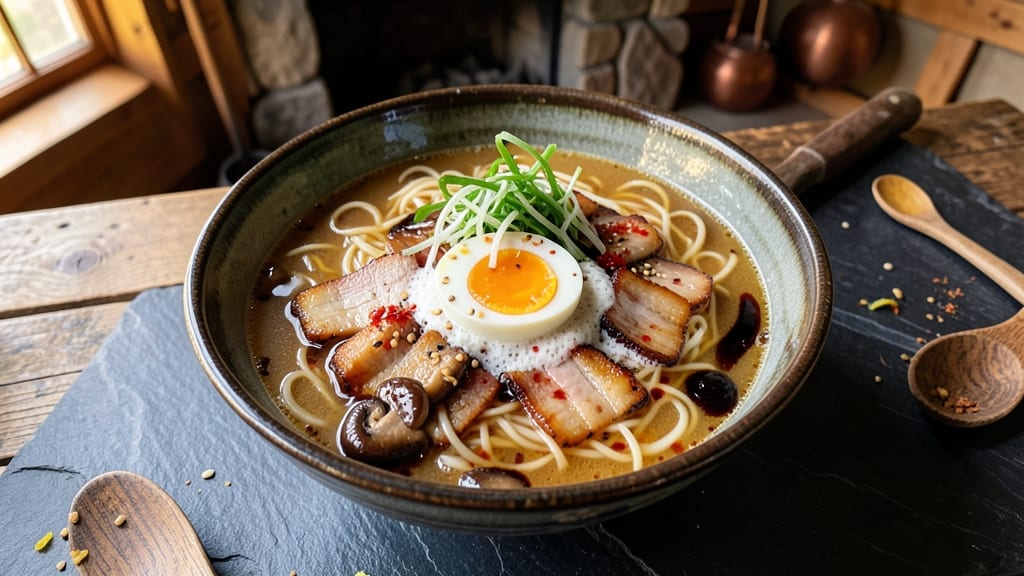
This Asian ramen noodle soup recipe delivers the deep umami richness and silky texture that defines authentic ramen—without requiring a specialized pot.
The secret lies in a layered broth approach: a balanced blend of miso, shoyu, and tonkotsu elements that build complexity over time, while the egg ribbons add luxurious texture that transforms an ordinary bowl into something extraordinary.
I've refined this recipe over countless batches, perfecting the timing between broth reduction and noodle al dente to ensure every spoonful delivers that perfect harmony of savory, creamy, and slightly tangy flavors.
The foundation begins with a simmered broth that develops its signature depth through slow cooking—typically 2 to 3 hours—where pork bones (or mushrooms for vegetarian) release collagen into the liquid, creating that signature velvety mouthfeel.
For the noodles, I recommend using fresh ramen strands or dried wheat noodles that cook in just 3 to 4 minutes, absorbing the broth while maintaining their structural integrity. The egg ribbons, poached in a swirling motion, become the showstopper—silky yet firm enough to hold their shape when sliced.
What sets this recipe apart is the attention to garnish layering: chashu pork (or crispy tofu) for protein, nori strips for umami crunch, and green onions that add a fresh contrast.
The broth itself is customizable—adjust the miso-to-shoyu ratio for a darker or lighter profile, or add a dash of sesame oil for nutty depth.
Each element comes together to create a bowl that's both comforting and sophisticated, perfect for weeknight dinners or special occasions when you want restaurant-quality results at home.
Ready in about 45 minutes (with prep), this ramen recipe scales effortlessly for one or many. The key is patience—letting the broth work its magic while you prepare the toppings.
Once you taste the first spoonful of that umami-packed broth with its silky egg ribbons melting on the tongue, you'll understand why this has become my go-to recipe for satisfying, soul-warming meals.
Ingredients for asian ramen noodle soup
Eight essential ingredients transform into restaurant-quality ramen with umami depth and silky egg ribbons.
| Ingredient | Amount | Notes |
|---|---|---|
| Dried Ramen Noodles 🍜 | 8 oz | Fresh or dried wheat noodles preferred |
| Large Eggs 🥚 | 4 whole | Fresh, room temperature for ribbons |
| Pork Bones 🍖 | 2 lb | Marbled pork bones for collagen |
| White Miso Paste 🧈 | ¼ cup | High-quality, fermented miso |
| Dark Soy Sauce (Shoyu) 🥫 | ⅛ cup | Japanese shoyu preferred |
| Dried Shiitake Mushrooms 🍄 | ¼ lb | Rehydrated for umami depth |
| Garlic Cloves 🧄 | 6 cloves | Minced for aromatic base |
| Fresh Ginger 🌿 | 1 tbsp | Grated, for zesty brightness |
| Sesame Oil 🫒 | 1 tbsp | Toasted, for nutty aroma |
| Green Onions 🧅 | 4 whole | Thinly sliced for garnish |
| Dried Nori Strips 🍣 | ¼ oz | For umami crunch |
| Chashu Pork (or Crispy Tofu) 🥩 | ½ lb | Pre-cooked, sliced thin |
| Water 💧 | 8 cups | Filtered preferred for clarity |
| Salt 🧂 | 1 tsp | Kosher salt for seasoning |
The pork bones are non-negotiable here—they release collagen for that signature velvety texture. Costco or your butcher shop will have the best marbled cuts, but any pork bones with good fat content work. For the miso, Miso Master or Hessian brands are my go-to—fermented for at least 12 months for maximum depth. If you're vegetarian, swap in shiitake mushrooms for umami punch. The dried ramen noodles? Nissin or Maruchan are reliable, but fresh ramen strands cook faster and hold their shape better. Don't skip the shoyu—it balances the richness of the miso beautifully.
No pork bones? Mushroom broth or kombu dashi works as a base, but you'll miss that collagen richness. Running out of miso? White miso and a pinch of soy sauce can substitute in a pinch. Fresh ginger is ideal, but dried works at half the amount. The nori strips can be any brand—just make sure they're fresh and not brittle. For the chashu pork, pre-sliced from an Asian market saves time, but you can also use leftover roasted pork. The eggs? Pasture-raised if you can find them—they poach more elegantly.
Broth keeps for 5 days in the fridge or 3 months frozen. The noodles? Use within 2 days for best texture. Egg ribbons are best fresh but can be prepped ahead and stored in ice water for up to 1 hour. I always make extra broth—it's perfect for rice bowls or stir-fries the next day. Store nori in a cool, dark place to prevent drying out.
Why You'll Love This Recipe
- Pork-Bone Magic: Between us, that simmered pork bone transforms this into something restaurant-worthy without extra effort. The marrow renders into the broth, giving it a depth you won’t find in instant ramen—just let it bubble away while you chop a handful of green onions.
- Miso-Soy Umami Bomb: Honestly, the white miso and dark soy sauce combo is where this dish shines. It’s salty, savory, and just a little funky—like a hug in a bowl. The pork bones carry the richness, but the miso gives it that bright, almost sweet finish that makes you want seconds.
- Meal Prep MVP: I make a double batch on Sundays and store it in the fridge. The noodles stay firm when reheated, and the broth only gets better over time. Add fresh greens or a soft-boiled egg when serving—no one will guess it’s not fresh off the stove.
- Budget-Friendly Luxury: Pork bones are cheap, ramen noodles are a pantry staple, and eggs add protein without breaking the bank. This feeds four for under $10, and the leftovers taste just as good cold the next day. (Yes, even on a Tuesday night.)
Step-by-step instructions for Asian ramen noodle soup
Here's how to build a rich, layered broth with silky egg ribbons and deep umami flavors.
Build the Umami-Packed Broth Base
Start by placing the 2 lb pork bones in a large stockpot and covering them with 8 cups water. Bring to a boil over medium-high heat, then reduce to a simmer. Skim off any foam that rises to the surface for the first 10 minutes—this ensures a clear, clean broth. The bones should simmer gently for 2 hours, developing deep flavor and collagen-rich gelatin.
After 2 hours, add the 0.25 lb dried shiitake mushrooms (rehydrated in hot water for 20 minutes), 6 cloves minced garlic, and 1 tbsp grated fresh ginger. Stir in the 0.25 cup white miso paste and 0.125 cup dark soy sauce (shoyu), letting everything meld for 15 minutes on low heat. The broth should smell intensely savory—this is where the umami magic happens.
Infuse and Season the Broth
Remove the stockpot from heat and strain the broth through a fine-mesh sieve into a clean pot, discarding the solids. Return the broth to medium heat and add 1 tsp salt, stirring until fully dissolved. The broth should taste deeply seasoned but not salty—adjust if needed. Let it simmer uncovered for 10 minutes to reduce slightly and concentrate the flavors.
For the final touch, stir in 1 tbsp toasted sesame oil while the broth is still hot. This adds nutty depth and helps emulsify the broth. Keep the broth warm over low heat while you prepare the remaining components—never let it boil again, as this can break the delicate egg ribbons later.
Prepare the Silky Egg Ribbons
Bring a small pot of water to a gentle simmer (not a rolling boil). Crack the 4 whole large eggs into a bowl and whisk vigorously for 30 seconds until the whites and yolks are fully combined. Slowly drizzle in ½ cup of the warm broth from the pot, whisking constantly to create a smooth, emulsified mixture. This step is critical—it prevents the eggs from scrambling.
Using a ladle, pour the egg mixture into the simmering water in a slow, steady stream. The water should be at 160-170°F—hot enough to cook the eggs gently but not so hot that they curdle. Stir the water continuously with a wooden spoon for 20-30 seconds until the eggs form silky, ribbon-like strands. Remove from heat immediately and set aside.
Assemble and Garnish the Soup
Divide the 8 oz dried ramen noodles among 4 bowls. Ladle the warm broth over the noodles, filling each bowl ¾ full. Add the silky egg ribbons to each bowl, then top with 0.5 lb sliced chashu pork (or crispy tofu) and 0.25 oz dried nori strips. The contrast of textures—silky eggs, chewy noodles, crispy nori—is what makes this ramen extraordinary.
Finish by drizzling with a few drops of sesame oil and topping with 4 whole thinly sliced green onions. Serve immediately while the broth is steaming and the egg ribbons are at their most delicate. Each bite should deliver a perfect balance of rich broth, tender noodles, and silky egg—this is comfort food elevated.
Pro Tips For Making Asian Ramen Noodle Soup
- Blister the Pork Bones: Start your pork bones in a screaming-hot pot—no simmering yet. After 10 minutes of searing, the bones will release deeper flavor and caramelize into a rich, brown crust (yes, it’ll look like you’re making barbecue). This isn’t just for show; it’s the foundation of your broth’s umami.
- Slip the Eggs In: Drop your marinated eggs into the broth after the noodles are cooked but before you serve. The residual heat will poach them perfectly—no cracking, no graying—while keeping the yolk runny. Trust me, the last thing you want is a rubbery egg in your ramen.
- Miso Last, Not First: Stir in the white miso paste right before serving—it’s sensitive to heat and will turn bitter if simmered too long. A teaspoon or two in the hot broth at the end gives it that creamy, funky depth without ruining the balance. (I used to add it early and wondered why my soup tasted off.)
- Strain the Broth Twice: After simmering the pork bones, strain the broth through a fine-mesh sieve once to catch big bits, then pour it through a cheesecloth or coffee filter for a silky finish. The second strain removes the cloudiness that makes homemade ramen look amateur. It’s extra work, but the result is worth it—smooth, rich, and restaurant-quality.
Flavor customization for this dish
Spicy Miso Kick
Transform your broth into a fiery delight by adding 1 tbsp gochujang (Korean chili paste) or 1 tsp chili crisp to the simmering broth. For heat control, start with ½ tsp and adjust to taste—this works especially well with shoyu-based ramen.
Pair with a drizzle of sriracha-infused sesame oil for extra zing. 🌶️
Creamy Sesame Twist
For a rich, velvety texture, stir in 2 tbsp tahini or 1 tbsp white miso mixed with 1 tbsp water into your finished broth. Top with toasted sesame seeds and a swirl of yogurt or crème fraîche for a Japanese-inspired creaminess that balances the umami.
This works beautifully with tonkotsu-style ramen.
Vegetarian Umami Boost
Swap pork bones for shiitake mushrooms and kombu—simmer 1 oz kombu with 1 lb dried shiitake in 8 cups water for 30 minutes before adding miso and shoyu.
Boost flavor with 1 tbsp soy sauce and 1 tsp nutritional yeast. Top with crispy tofu and marinated mushrooms for a hearty plant-based bowl.
Garlic Butter Infusion
Add a luxurious touch by stirring 2 tbsp melted butter and 3 minced garlic cloves into the finished broth. This creates a decadent garlic butter ramen that pairs perfectly with soft-boiled eggs and chashu pork. For extra richness, finish with a sprinkle of black pepper and parsley.
Lemon Zest Brightness
Cut through richness with 1 tsp lemon zest and 1 tbsp lemon juice swirled into the broth. Garnish with microgreens or cilantro for a refreshing contrast. This works especially well with miso-based ramen or lighter broths. 💛
Smoky Chipotle Depth
Infuse your broth with 1 chipotle pepper in adobo sauce (minced) and ½ tsp smoked paprika during the final 10 minutes of simmering. This adds a subtle smokiness that pairs beautifully with shoyu ramen. Top with avocado slices and cotija cheese for a fusion twist.
Nutrition facts
Frequently asked questions
What's the secret to getting silky egg ribbons in ramen?
The key is temperature control! Poach the eggs in water between 160-170°F (gentle simmer) while stirring constantly for just 20-30 seconds. Pre-whisking the eggs with warm broth creates a smooth emulsion that prevents scrambling. Remove immediately after forming ribbons—overcooking turns them rubbery.
Can I make this ramen without pork bones?
For a vegetarian version, use shiitake mushrooms and kombu—simmer 1 oz kombu with 1 lb rehydrated shiitake in 8 cups water for 30 minutes before adding miso and shoyu. Boost umami with 1 tbsp soy sauce and 1 tsp nutritional yeast. The texture will be lighter but still deeply flavorful.
How do I prevent my ramen noodles from getting mushy?
Cook noodles separately in boiling water for just 3-4 minutes (check package instructions), then drain immediately and rinse briefly with cold water. Add them to the bowl last, then ladle hot broth over them—never cook them directly in the broth. Fresh ramen strands hold up better than dried.
What's the difference between shoyu and miso ramen?
Shoyu ramen uses dark soy sauce (shoyu) as the base, creating a lighter, slightly tangy broth with a brown color. Miso ramen relies on fermented miso paste for deep, complex umami and a richer, darker hue. This recipe blends both for balance—adjust the ratio (more miso for richness, more shoyu for brightness).
Can I make the broth ahead of time?
Yes! Broth keeps for 5 days refrigerated or 3 months frozen. Cool it completely before storing, and reheat gently over low heat (never boil) to preserve texture. For extra richness, reduce it by 10-15% before storing—it'll be even more concentrated when reheated.