
Soups & Stews
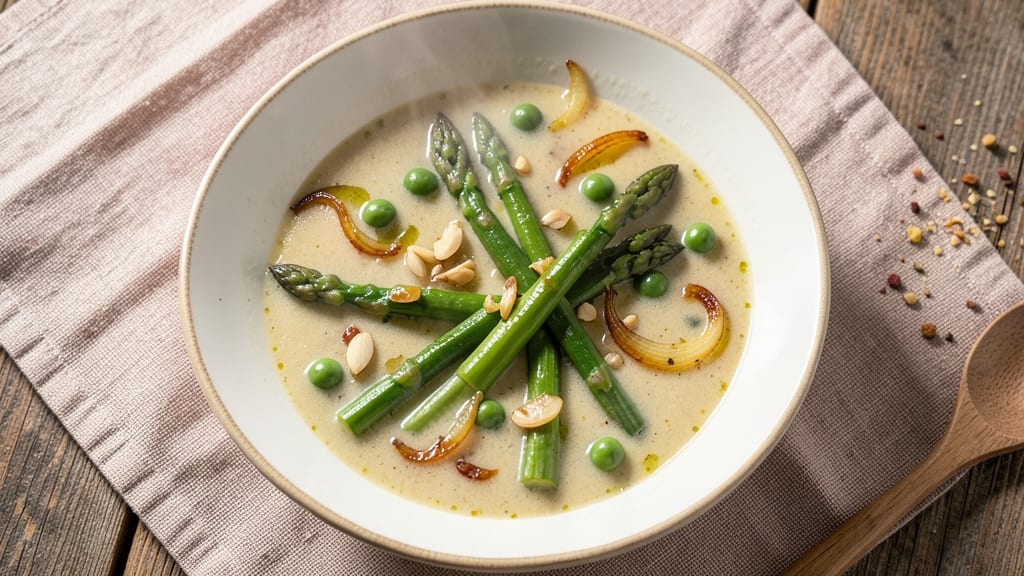
This asparagus and pea soup recipe is my go-to when spring greens are at their peak—bright, fresh, and packed with tender asparagus and sweet peas. The secret?
Blanching the asparagus first to preserve its vibrant color and crisp texture, then simmering everything into a velvety broth that feels like a warm hug on chilly evenings. It’s the kind of soup that transforms simple ingredients into something restaurant-worthy without requiring fancy techniques.
What makes this recipe special is the balance of textures: silky smooth soup with just enough bite from the blanched asparagus and peas. A swirl of herbed crème fraîche at the end adds a tangy, creamy finish that ties everything together—no heavy cream needed, so it stays light and refreshing.
The best part? It’s ready in under 45 minutes, making it perfect for a weeknight dinner that still feels like a celebration.
This soup is naturally vegetarian but easily adaptable—swap the crème fraîche for coconut yogurt to make it vegan, or add a splash of lemon juice for brightness if you prefer.
The aroma alone will have everyone gathering around the table, and the first spoonful delivers that perfect harmony of earthy asparagus, sweet peas, and herbal notes. It’s the kind of dish that makes spring feel even more special.
Serve it with crusty bread to soak up every last drop, or pair it with a simple green salad for a complete, satisfying meal. The leftovers reheat beautifully, so you’ll find yourself making extra—trust me, it disappears fast. Let’s get cooking!
Ingredients for asparagus and pea soup
Spring's brightest greens meet velvety broth in this vibrant vegetarian masterpiece—simple yet restaurant-worthy.
| Ingredient | Amount | Notes |
|---|---|---|
| Fresh Asparagus Spears 🌱 | 1 ½ lb | Trimmed, tough ends removed |
| Fresh Peas 🌿 | 1 ½ cups | Shelling optional for convenience |
| Yellow Onion 🧅 | 1 whole | Diced, medium size preferred |
| Garlic Cloves 🧄 | 4 cloves | Peeled, minced for depth |
| Vegetable Stock 💧 | 4 cups | Low-sodium preferred, homemade best |
| Extra-Virgin Olive Oil 🫒 | ¼ cup | High-quality, fruity variety |
| Fresh Lemon Juice 🍋 | 2 tbsp | Brightens flavors beautifully |
| Fresh Thyme Leaves 🌿 | ¼ cup | Stems removed, chopped |
| Crème Fraîche 🧀 | ½ cup | Herbed for extra flavor |
| Salt 🧂 | 1 tsp | Diamond Crystal preferred |
| Black Peppercorns 🌶️ | ½ tsp | Freshly cracked for aroma |
| Crusty Bread 🍞 | 1 loaf | For serving, sliced thick |
| Fresh Chives 🌿 | 2 tbsp | Chopped, for garnish |
The asparagus and peas are the stars here, so pick peak-season produce—look for asparagus with tightly closed tips and peas that smell sweet, not earthy. Trader Joe's and local farmers markets are my go-tos for the freshest spring greens. If you're using frozen peas, no need to thaw—they'll soften right in the pot. For the vegetable stock, homemade is ideal, but even the good-quality low-sodium store-bought brands work. The crème fraîche adds that luxurious finish, but if you can't find it, Greek yogurt thinned with a splash of milk does the trick.
No fresh thyme? Dried thyme at half the amount works in a pinch, though fresh has that bright herbal note. Short on crème fraîche? Coconut yogurt makes it vegan-friendly while keeping that tangy creaminess. The lemon juice is non-negotiable—it cuts through the richness and makes the whole soup sing. For extra depth, toast the garlic cloves in olive oil before adding them to the pot. It's worth the extra minute for that nutty aroma. And if you're using pre-shelled peas, give them a quick rinse to remove any excess starch that could make your soup gummy.
This soup tastes even better the next day as flavors meld. Store leftovers in an airtight container for up to 4 days in the fridge. Freezes beautifully for 3 months—just reheat gently on the stove with a splash of water or stock. For serving, I always slice the crusty bread into thick pieces so it can soak up every last drop of that herbed crème fraîche. Garnish with fresh chives right before serving—they add a pop of color and freshness that makes the dish feel extra special.
Why You'll Love This Recipe
- No Chopping Chaos: I swear by this recipe because the asparagus and peas go in whole—no tedious trimming or peeling. Just snap the woody ends off the asparagus, halve the spears, and toss in the peas straight from their pod. That’s it.
- Earthy-Garlicky Magic: The onion and garlic caramelize into something ridiculously good—sweet, deep, and layered with that fresh asparagus bite. Honestly, the first time I made it, I nearly skipped lunch just to have seconds.
- Lunchbox Hero: This soup reheats like a dream for packed lunches or a quick workday meal. I’ll be real: my kids groan when I pack it, but they’re the first to finish their containers. (Yes, even on a Tuesday night.)
- Budget Bright Spot: Fresh peas and asparagus might sound fancy, but they stretch across multiple meals—plus, the stock keeps it affordable. I’ve made this for under $10 and fed four people with leftovers that taste just as good the next day.
Step-by-Step instructions for spring greens simmered with herbed crème fraîche
This vibrant soup captures spring's essence with tender asparagus and sweet peas in a velvety broth.
Prepare the Spring Vegetables
Start by trimming the tough ends from the 1.5 lb fresh asparagus spears using a sharp knife. Cut each spear into 1-inch pieces—this size ensures even cooking and prevents the soup from becoming too fibrous. In a separate bowl, shell the 1.5 cups fresh peas if using shelled peas, or rinse thoroughly if using pods. I like to keep the pea pods intact until the very end to prevent them from breaking apart during cooking.
Dice the 1 whole yellow onion into small, even pieces—about ¼-inch cubes. This size creates a smooth texture that blends seamlessly into the soup. Set aside the diced onion and asparagus pieces until ready to use. The key here is uniformity; inconsistent sizes lead to uneven cooking and a less refined final texture.
Sauté Aromatics in Olive Oil
Heat the 0.25 cup extra-virgin olive oil in a large pot over medium heat. Once the oil shimmers—you'll see tiny bubbles forming around the edges but not yet smoking—add the diced onion. Cook for 5-6 minutes until the onions turn translucent and begin to soften, releasing their natural sweetness. This step forms the flavor base of your soup.
Add the 4 cloves minced garlic and 0.25 cup chopped fresh thyme leaves to the pot. Stir for 30 seconds until fragrant—you should smell the garlic's pungency and the thyme's earthy aroma. Be careful not to let the garlic burn; it should just perfume the oil without turning brown. This aromatic blend is the soul of your soup, so take your time here.
Simmer Vegetables in Stock
Pour in the 4 cups vegetable stock and bring the mixture to a gentle boil over high heat. Once boiling, reduce heat to medium-low and add the asparagus pieces and peas (or whole pods). Stir gently to submerge everything in the liquid. Let the soup simmer uncovered for 12-15 minutes until the asparagus becomes tender but still holds its shape—it should pierce easily with a fork but not fall apart.
Taste the soup at this stage. It should be seasoned well from the stock, but you'll likely want to adjust the flavor. Add the 1 tsp salt and 0.5 tsp freshly cracked black peppercorns now. The salt should enhance the natural sweetness of the vegetables, while the pepper adds a subtle warmth that balances the dish.
Finish with Brightness and Creaminess
Remove the pot from heat and stir in the 2 tbsp fresh lemon juice. This brightens the soup, cutting through the richness of the crème fraîche and adding a refreshing zing. The lemon juice also helps to balance the earthy flavors of the thyme and onion. Let the soup sit off the heat for 2 minutes to allow the lemon to fully integrate.
Using an immersion blender, carefully purée the soup until smooth. If you prefer a chunkier texture, simply leave it as is. Stir in the 0.5 cup herbed crème fraîche until fully combined. The crème fraîche adds a luxurious creaminess without making the soup overly heavy. Taste again and adjust seasoning if needed—this is your final chance to perfect the balance of flavors.
Serve Warm with Crusty Bread
Ladle the soup into bowls, garnishing each serving with 2 tbsp chopped fresh chives. The chives add a delicate onion flavor that complements the peas and asparagus beautifully. Serve immediately with slices of 1 loaf crusty bread on the side. The bread's crunch contrasts perfectly with the soup's silky texture, making each bite more satisfying.
This soup is best enjoyed fresh, while the vegetables retain their vibrant colors and the crème fraîche is still velvety. If you have leftovers, store them in the refrigerator for up to 3 days, but I promise you'll want to enjoy every bowl while it's warm.
Pro Tips For Making Asparagus And Pea Soup
- Trim Asparagus Right: Snap off the woody ends with a firm twist—don’t cut. The break point is where the stalk bends naturally. I learned this the hard way by chopping too short and ending up with a soup full of bitter bits.
- Blanched Peas First: Toss peas in boiling water for 30 seconds before adding them to the pot. This stops them from turning mushy later. Yes, it’s an extra step, but your soup will stay bright and tender instead of turning to paste.
- Sauté Onion Slow: Cook the onions on medium-low heat until they’re translucent but not browned—about 8-10 minutes. Rushing this makes the soup taste raw and dull. Trust me, your nose will thank you when the aroma hits.
- Strain or Don’t: If you want a silky texture, strain the soup through a fine-mesh sieve. If you prefer rustic chunks, skip it—but don’t blend unless you’re okay with a thick, uniform puree. I usually strain half for balance.
Creative variations of this recipe
Herb-Infused Twist
Swap the thyme for 1 tbsp fresh tarragon and 1 tbsp fresh chervil for an anise-like brightness that pairs beautifully with asparagus. I find this combo elevates the soup's herbal notes while keeping it light.
Add the herbs with the garlic in Step 2—just 30 seconds of cooking releases their aromatic oils without bitterness. Garnish with extra tarragon leaves before serving for a pop of color. 🌿
Creamy Coconut Version
Make this soup vegan by replacing the crème fraîche with ½ cup coconut cream (from a can of full-fat coconut milk) mixed with 1 tbsp lemon juice and ½ tsp maple syrup for balance. The coconut adds a subtle sweetness that complements the peas' natural sugars.
For extra richness, stir in 1 tbsp toasted coconut flakes at the end. This version works beautifully with jasmine rice on the side. 🥥
Roasted Asparagus Depth
For a deeper, nuttier flavor, roast the asparagus before adding it to the soup. Toss 1.5 lb asparagus spears with 1 tbsp olive oil, ½ tsp smoked paprika, and ¼ tsp salt.
Roast at 425°F for 12-15 minutes until tender. Then proceed with the recipe as written—this technique adds caramelized notes that transform the soup into something heartier. 🔥
Mushroom & Leek Boost
Add 1 sliced leek (white and light green parts only) and 8 oz sliced shiitake mushrooms when sautéing the onions in Step 2. The mushrooms absorb flavors beautifully and add an umami depth that pairs perfectly with asparagus.
Use the leeks' mild sweetness to balance the earthy mushrooms. This variation feels more substantial while keeping the spring-inspired vibe. 🍄
Spiced Citrus Finish
Brighten the soup with 1 tsp grated orange zest and 1 tbsp fresh orange juice instead of lemon. The citrus notes complement the asparagus' natural sweetness while adding a warm, slightly floral aroma.
For extra warmth, add a pinch of ground coriander when sautéing the aromatics in Step 2. This variation feels festive and works beautifully for spring brunch. 🍊
Smoky Chipotle Kick
For a smoky, slightly spicy twist, stir in ½ tsp adobo sauce (from a can of chipotle peppers) with the lemon juice in Step 4. The smokiness pairs surprisingly well with the asparagus' earthiness.
For extra heat, add ¼ tsp cayenne pepper when tasting the soup in Step 3. Serve with a dollop of sour cream** on top to cool the heat. 🌶️
Nutrition facts
Frequently asked questions
Can I use frozen peas instead of fresh?
Frozen peas work perfectly and save time. Just rinse them under cold water first to remove any excess starch that could make your soup gummy. Add them directly to the simmering pot with the asparagus—they'll soften right in the broth without needing to thaw first.
How do I make this soup vegan?
Swap the crème fraîche for ½ cup coconut cream (from a can of full-fat coconut milk) mixed with 1 tbsp lemon juice and ½ tsp maple syrup. For extra richness, stir in 1 tbsp toasted coconut flakes at the end. The coconut adds subtle sweetness that complements the peas beautifully.
Why does the recipe call for blanching asparagus?
Blanching preserves the asparagus' vibrant green color and crisp texture in the soup. Simply boil the trimmed spears for 2 minutes, then shock in ice water before adding to the pot. This step prevents the asparagus from turning mushy and keeps the soup's bright, fresh appearance.
Can I make this soup ahead of time?
Yes! This soup tastes even better the next day as flavors meld. Store leftovers in an airtight container for up to 4 days in the fridge. For serving, gently reheat on the stove with a splash of water or stock—never microwave, as it can make the crème fraîche separate. Stir in extra lemon juice if needed to refresh the flavor.
What if I don't have an immersion blender?
No problem! Transfer the hot soup to a blender in batches (don't fill past the ½ mark) and blend until smooth. For safety, avoid overfilling and use the lid's pressure-release valve. Alternatively, let the soup cool slightly, then blend with a regular blender—just be cautious with hot liquids.