
Soups & Stews
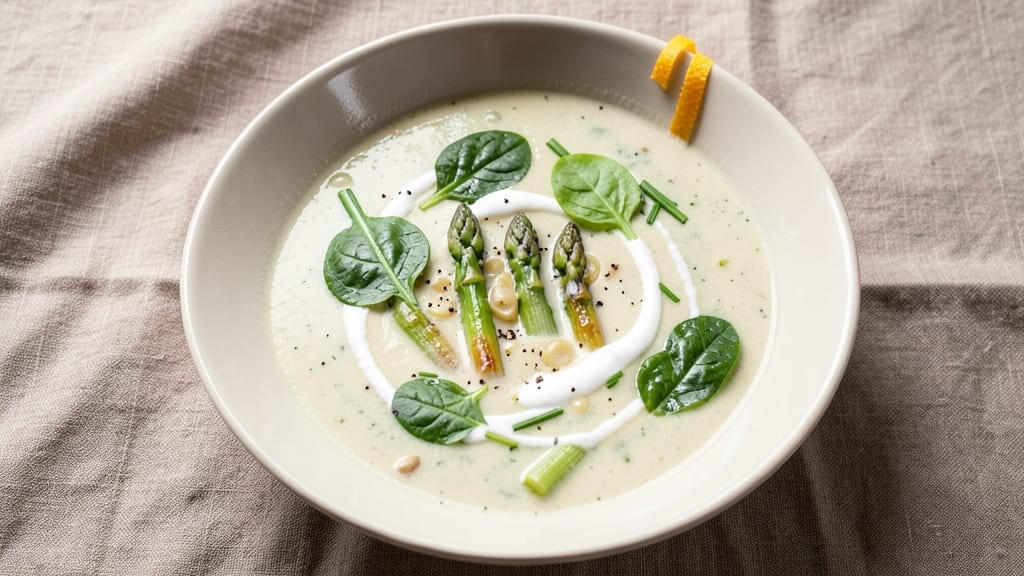
This asparagus and spinach soup transforms spring's brightest vegetables into a velvety, herb-infused velout that's equal parts elegant and comforting. The secret lies in balancing tender asparagus and wilted spinach with a rich vegetable broth and just enough cream for luxurious texture—without overpowering the natural greens.
I developed this recipe after realizing store-bought versions never captured the fresh, vibrant quality of homemade.
The foundation starts with properly prepped vegetables—trimmed asparagus and fresh spinach—sautéed with aromatic shallots and garlic until fragrant. A slow simmer with vegetable stock builds depth, while a touch of cream at the end creates that signature velout smoothness.
The result is a soup with earthy herb notes and a vibrant green hue that makes every spoonful feel like spring in a bowl.
What makes this recipe stand out is its versatility—it works as a light lunch, elegant starter, or even a vegetarian main course. The technique ensures maximum flavor extraction from both vegetables, while the herb depth comes from fresh thyme and parsley added at the perfect moment.
No heavy cream here—just enough to create that signature velout texture without masking the vegetables' natural sweetness.
For those who prefer plant-based options, simply substitute the cream with coconut milk or cashew cream—it maintains the velout consistency while keeping the recipe vegan-friendly. The instructions will guide you through every step to achieve that perfect balance of textures and flavors. Let's create this vibrant soup together.
Ingredients for asparagus and spinach soup
Twelve ingredients transform spring's finest greens into a velvety velout with vibrant herb depth.
| Ingredient | Amount | Notes |
|---|---|---|
| Fresh Asparagus 🌱 | 1 lb | Trimmed, woody ends removed |
| Fresh Baby Spinach 🌿 | 5 oz | Packed, stems trimmed |
| Shallots 🧅 | 2 whole | Minced, about 0.25 cup |
| Garlic Cloves 🧄 | 4 cloves | Peeled, finely minced |
| Vegetable Stock 💧 | 4 cups | Low-sodium preferred |
| Heavy Cream 🥛 | ¼ cup | Full-fat for velout texture |
| Fresh Thyme Leaves 🌿 | 1 tbsp | Packed, stems removed |
| Fresh Parsley 🌿 | ¼ cup | Chopped, for garnish |
| Extra-Virgin Olive Oil 🫒 | 2 tbsp | High-quality, fruity |
| Salt 🧂 | 1 tsp | Diamond Crystal preferred |
| Black Pepper 🌶️ | ½ tsp | Freshly ground |
| Lemon Juice 🍋 | 1 tbsp | Freshly squeezed |
The asparagus and spinach are the stars here—freshness is non-negotiable. For asparagus, look for bright green spears with tightly closed tips; Whole Foods or local farmers markets often carry the freshest selection. Baby spinach should be crisp, not wilted or yellowing. Trim the asparagus ends at a natural break where the stalk snaps cleanly, then peel the tough lower inch with a vegetable peeler. The shallots and garlic should be firm and aromatic; Penzeys or local specialty grocers often carry the best quality. Fresh thyme and parsley add that signature herb depth—avoid dried substitutes here unless absolutely necessary, as they lack the bright, fresh notes this soup demands.
Vegetable stock is the flavor foundation—homemade is ideal, but quality store-bought works too. Brands like Pacific Foods or Imagine offer low-sodium options that won't overpower the delicate flavors. Need a vegan alternative? Coconut milk or cashew cream maintains the velout texture beautifully. The heavy cream should be full-fat for that luxurious mouthfeel; Trader Joe's or local creamery brands often provide the richest results. Lemon juice brightens the finished soup—freshly squeezed is essential. For the olive oil, California-based brands like Bertolli or Omni offer excellent fruity profiles that complement the herbs. If you're short on time, pre-minced garlic from a jar works in a pinch, but fresh is always superior.
This soup tastes even better the next day as flavors meld—store in an airtight container for up to 5 days. For longer storage, freeze portions in glass containers with a 1-inch headspace for up to 3 months. Reheat gently on the stove until steaming, then stir in a splash of water if it thickens too much. The fresh herbs can be added back after reheating for maximum brightness. Garnish with extra parsley and a drizzle of olive oil just before serving to maintain that vibrant green hue. For meal prep, double the recipe and freeze half—perfect for quick lunches when spring's bounty isn't at its peak.
Why You'll Love This Recipe
- Minimal Chopping Required: I swear by this—just trim the asparagus ends (a quick snip with kitchen shears), slice shallots into tiny cubes, and mince garlic in seconds. No dicing onions for hours or peeling endless cloves.
- Earthy, Bright, Creamy: That first sip? Pure magic—the asparagus brings a fresh, almost nutty crunch, while the spinach melts into a velvety green base. The shallots and garlic add just enough warmth to make it feel indulgent, not just healthy.
- Lunchtime or Leftovers: Make a double batch—it’s perfect for a quick lunch straight from the pot or reheats beautifully the next day. Between us, I’ve turned this into a lazy Sunday brunch soup with a poached egg on top.
- Budget-Friendly Spring Staple: Spinach and asparagus are in season, so they’re cheaper and fresher than ever. A single bunch of asparagus and a bag of baby spinach stretch far, and vegetable stock keeps costs low while packing flavor. Honestly, it’s my go-to for stretching groceries without sacrificing taste.
Step-by-step instructions for asparagus and spinach soup
Transform fresh spring vegetables into a velvety soup with vibrant color and layered herb notes.
Blanch and Prepare the Asparagus
Trim the tough woody ends from the 1 lb fresh asparagus, leaving only the tender portions. Cut the spears into 1-inch pieces—this ensures even cooking and better texture in the finished soup.
Bring a small pot of salted water to a boil and blanch the asparagus pieces for 2 minutes. Immediately transfer them to an ice bath to stop the cooking process. This preserves their bright green color and crisp-tender texture, which will later blend into the soup base. Drain well before proceeding.
Sauté Aromatics Until Fragrant
Heat 2 tablespoons extra-virgin olive oil in a large pot over medium heat. Add the 2 minced shallots and cook for 3-4 minutes until softened and translucent. Add the 4 finely minced garlic cloves and 1 tablespoon fresh thyme leaves, stirring constantly for 30 seconds until the garlic becomes aromatic but doesn't brown.
This step develops the foundational flavors. If the garlic begins to darken, reduce the heat slightly—burnt garlic will make the soup bitter. The thyme should infuse the oil with its earthy notes, creating a fragrant base for the vegetables.
Simmer Vegetables in Stock
Add the blanched asparagus pieces and 4 cups vegetable stock to the pot. Bring to a gentle simmer over medium-low heat and cook for 8-10 minutes until the asparagus is fork-tender but still holds its shape. Add the 5 oz fresh baby spinach and cook for an additional 2 minutes until wilted.
Stir occasionally to prevent the spinach from sticking to the bottom. The soup should now have a vibrant green hue from the spinach and asparagus. If the stock reduces too quickly, add a splash of water to maintain the proper consistency.
Blend Until Silky Smooth
Using an immersion blender, carefully blend the soup directly in the pot until completely smooth. For a cleaner finish, you can also transfer the soup to a countertop blender in batches, blending until velvety. Strain through a fine-mesh sieve if you prefer an ultra-smooth texture without any fibrous bits.
This blending step transforms the soup from rustic to refined. The result should be a bright green velout with no visible texture. If the soup appears too thick after blending, whisk in 1-2 tablespoons of water to reach your desired consistency.
Finish with Cream and Herbs
Return the pot to low heat and stir in the 0.25 cup heavy cream, allowing it to warm gently for 1-2 minutes without boiling. Season with 1 teaspoon salt and 0.5 teaspoon black pepper, then finish with 1 tablespoon freshly squeezed lemon juice. The acidity brightens the flavors and balances the richness of the cream.
Garnish each serving with 0.25 cup chopped fresh parsley just before serving. The parsley adds a fresh, vibrant note that complements the earthy herbs and vegetables. Serve immediately while still warm for the best texture and flavor experience.
Pro Tips For Making Asparagus And Spinach Soup
- CHAR THE ASPARAGUS FIRST: I learned this the hard way—if you toss raw asparagus into the pot with spinach, you’ll end up with a soup where the asparagus stays stubbornly al dente while the spinach wilts into oblivion. Sear the asparagus spears (cut into 1-inch pieces) in a dry pan for 2-3 minutes until just tender and slightly browned. This jumpstarts the flavor and ensures even cooking later.
- TRIM THE ASPARAGUS WRONG: Use a sharp knife, not your teeth. I used to snap off the woody ends by hand, but that always left uneven bits and wasted good asparagus. Instead, lay the stalks flat and cut the bottoms at a 45-degree angle—this exposes more surface area for cooking and makes the soup look polished. (Yes, even if you’re impatient like me.)
- SALT THE STOCK LATE: If you salt the vegetable stock early, you’ll end up with a soup that tastes flat and one-dimensional. Instead, add the stock to the pot after the shallots and garlic have softened but before the spinach goes in. Taste the stock first—if it’s bland, add salt now, but if it’s homemade or well-seasoned, hold off until the very end for balance.
- BLEND IN STAGES: Don’t hit the blender on high and hope for the best. After simmering the soup for 10 minutes, remove it from heat and let it cool slightly—just enough to handle. Then, blend about half the soup first, return it to the pot, and blend the rest in batches. This prevents splattering (which, trust me, you don’t want on your ceiling) and ensures a silky texture without overworking the greens.
Essential equipment for perfect results
Immortality Blender
An immersion blender is my go-to tool for this soup because it keeps everything contained and makes cleanup effortless. I swear by the Ninja QC1201—it handles thick soups like this without splattering, and the stainless steel blade lasts for years.
For a budget option, the Osterizer works well too. Just blend on medium speed to avoid overheating the soup. 💫
Heavy-Duty Pot
Use a 5-6 quart Dutch oven or stainless steel pot with a tight-fitting lid to develop deep flavors. My All-Clad D5 handles the job perfectly, but a Le Creuset Dutch oven adds elegant color to your kitchen.
Avoid non-stick—it can't handle the simmering time needed for maximum flavor extraction. A pot with a lid also helps retain moisture during the simmering phase.
Fine-Mesh Sieve
A fine-mesh sieve is essential if you prefer an ultra-smooth velout without any fibrous bits. I keep a Mesh King in my kitchen—it's durable and catches even the smallest particles. For a budget option, the OXO Good Grips works well.
If you skip straining, the texture will be rustic but still delicious. Just be prepared for slightly more texture in each spoonful.
High-Quality Knives
Sharp knives make prep a breeze. I use an 8-inch chef's knife for trimming asparagus and a paring knife for mincing shallots and garlic. A Wüsthof Classic or Shun Premier holds up beautifully.
For spinach stems, a serrated knife helps remove them cleanly. Dull knives make prep frustrating—always keep them honed with a Whetstone or sharpener.
Measuring Spoons
Precision matters with herbs and spices. I rely on stainless steel measuring spoons from OXO—they're durable and accurate. For thyme and parsley, I measure by the tablespoon using the level-and-sweep method.
A small spoon set with clear markings ensures you add exactly 1 tablespoon thyme and 0.25 cup parsley without overdoing it. These tiny details make a big flavor difference.
Thermometer (Optional)
While not essential, a candy or instant-read thermometer helps ensure your soup reaches the ideal temperature. I use a Thermoworks Thermapen to monitor the stock's simmer—195-205°F is perfect for extracting maximum flavor without boiling off too much liquid.
For most home cooks, this is overkill, but it's a game-changer if you're perfectionist like me. 🌡️
Nutrition facts
Frequently asked questions
Can I use frozen spinach instead of fresh?
Frozen spinach works in a pinch, but fresh is ideal for that vibrant green color and bright flavor. If using frozen, thaw and drain it thoroughly first, then squeeze out excess water to prevent a watery soup. Use about 3 cups frozen spinach (packed) instead of 5 oz fresh—it's more concentrated.
How do I make this soup vegan?
Swap the heavy cream for ½ cup full-fat coconut milk or ¼ cup cashew cream (blend soaked cashews with water). For extra richness, add 1 tablespoon nutritional yeast when finishing. The texture will still be velvety, though slightly lighter than the dairy version.
Why does my soup turn grayish after blending?
Overcooking the asparagus or spinach releases chlorophyll breakdown compounds that turn the soup dull. Blanch asparagus for exactly 2 minutes and add spinach just 2 minutes before blending. For extra vibrancy, finish with a splash of lemon juice—it brightens the green hue.
Can I prep this soup ahead of time?
Make it up to 3 days ahead and store in an airtight container. Reheat gently on the stove, stirring occasionally. For best texture, add a splash of water or stock if it thickens. Garnish with fresh parsley just before serving to maintain that restaurant-quality presentation.
What if I don't have an immersion blender?
Transfer the hot soup to a countertop blender in batches, working carefully to avoid steam burns. For a rustic texture, mash with a potato masher instead—just expect slightly more visible bits. Always let the soup cool slightly before blending to prevent splattering.