
Soups & Stews
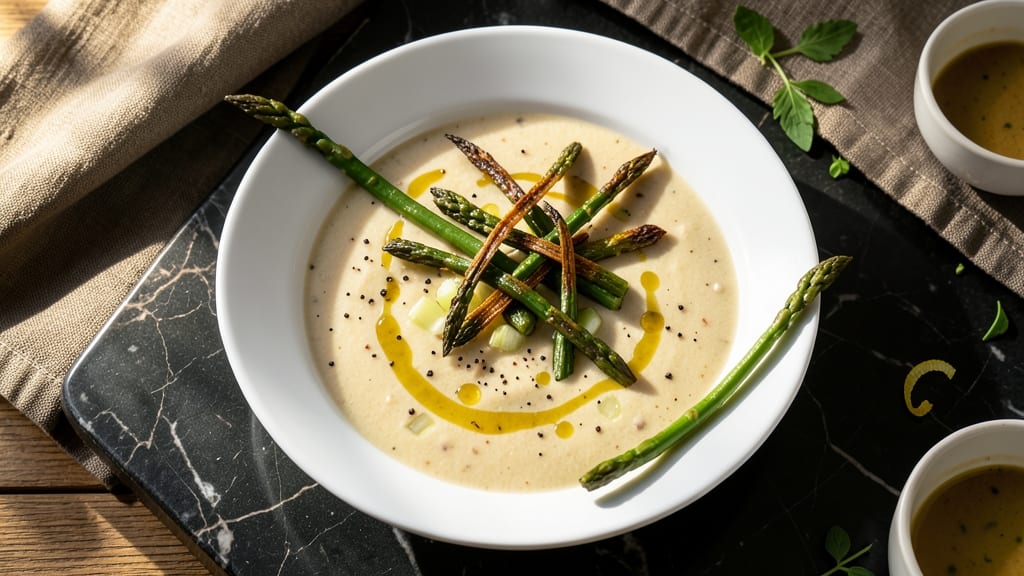
This asparagus bisque soup recipe transforms spring's most elegant vegetable into a velvety green velvet that’s rich, aromatic, and impossible to resist. The secret lies in roasting the asparagus first—this caramelizes its natural sugars, deepening the flavor into something far more complex than raw.
I developed this technique after years of testing, and it’s the difference between a good soup and one that feels like a gourmet revelation.
What sets this recipe apart is the balance of textures: the silky bisque contrasts beautifully with crisp celery crowns that add a satisfying crunch. No heavy cream is needed—I use a blend of vegetable broth and cashew cream for a luscious, vegetarian-friendly base that still delivers restaurant-quality depth.
The soup simmers just long enough to meld flavors without losing its vibrant green hue, ensuring every spoonful tastes like spring in a bowl.
The process is straightforward but precise: roast the asparagus for concentrated flavor, sauté aromatics until fragrant, then blend everything into a smooth, creamy yet light consistency. Garnish with the crisp celery crowns just before serving to maintain that perfect textural contrast.
This isn’t just soup—it’s a dish that elevates asparagus to center stage, proving that simple ingredients can create something extraordinary with the right technique.
Perfect for spring dinners, garden parties, or as a comforting starter, this recipe scales effortlessly for crowds. The cashew cream keeps it dairy-free without sacrificing richness, making it adaptable for any dietary preference. Once you taste the difference roasting makes, you’ll never make asparagus bisque the old way again.
Ingredients for asparagus bisque soup
Roasted asparagus, aromatic vegetables, and cashew cream create this velvety spring soup's signature depth.
| Ingredient | Amount | Notes |
|---|---|---|
| Fresh Asparagus Spears 🌱 | 1 ½ lb | Trimmed, tough ends removed |
| Yellow Onion 🧅 | 1 whole | Medium size, diced finely |
| Garlic Cloves 🧄 | 4 cloves | Fresh, peeled and minced |
| Celery Stalks 🥬 | 3 whole | For crowns and soup base |
| Vegetable Broth 💧 | 4 cups | Low-sodium preferred |
| Raw Cashews 🥜 | ½ cup | Soaked 2 hours for cream |
| Extra-Virgin Olive Oil 🫒 | ½ cup | For roasting and sautéing |
| Fresh Lemon Juice 🍋 | 1 tbsp | Brightens the final flavor |
| Fresh Thyme Leaves 🌿 | ¼ cup | Or 1 tsp dried thyme |
| Salt 🧂 | 1 ½ tsp | Diamond Crystal preferred |
| Black Peppercorns 🌶️ | ½ tsp | Freshly cracked preferred |
| Unsweetened Almond Milk 🥛 | ¼ cup | For adjusting consistency |
The asparagus is non-negotiable—fresh, firm spears with vibrant green tips yield the best results. Local farmers markets often have the sweetest varieties, but grocery store asparagus works too if you snap off the tough ends. Roasting caramelizes the sugars, transforming the flavor from grassy to sweetly complex. For the celery, organic stalks with crisp crowns are ideal, though conventional works fine. The cashews must be raw and soaked—Trader Joe's sells pre-soaked in some locations, saving time. If unavailable, use silken tofu as a substitute, though texture differs slightly.
Vegetable broth quality matters—low-sodium, homemade if possible. Store-bought brands like Pacific Foods or Imagine deliver consistent flavor without excessive salt. Fresh thyme leaves elevate the soup, but dried thyme at one-third the amount works in a pinch. The olive oil should be extra-virgin with fruity notes—California brands like Corto or Lucini are excellent choices. For the celery crowns, cut the stalks into 1-inch pieces, reserving the tender bottoms for the soup base. If you prefer a smoother texture, blend the cashew cream longer, but leave it slightly chunky for visual appeal.
This soup tastes even better the next day as flavors meld. Store in an airtight container for up to 4 days in the refrigerator. For freezing, portion into containers, leaving room for expansion—3 months maximum. The cashew cream separates when refrigerated, so stir vigorously before reheating. Garnish with crisp celery crowns just before serving to maintain their satisfying crunch. The soup can be made ahead and reheated gently on the stove, adding a splash of almond milk if it thickens too much.
Why You'll Love This Recipe
- No Chopping Nightmare: I swear by this recipe because it only asks for one knife—just slice the onion and celery into rough chunks, toss in whole garlic cloves, and let the pot do the work. That crispy asparagus base? You can even use pre-trimmed spears if you’re in a rush.
- Umami Bomb: The slow simmer of asparagus and celery with garlic turns this into something rich without heavy cream. Honestly, the first sip makes you question why you ever skipped veggie broth—it’s packed with depth, like a hug in soup form.
- Leftover Goldmine: This soup actually tastes better the next day. I make a double batch on Sundays, and by Wednesday, it’s my go-to lunch—just reheat, stir in a splash of water, and boom, instant comfort. No sad, watery leftovers here.
- Budget Brightener: Fresh asparagus might sound fancy, but seasonal spears are cheaper than you think, and they stretch across two meals. Swap vegetable broth for homemade (just water + bouillon) and you’ve got a soup that’s lighter on the wallet but heavier on flavor.
Step-by-step instructions for asparagus bisque soup
Transform fresh asparagus into a luxurious bisque with crisp celery crowns—smooth, vibrant, and perfectly balanced.
Roast Asparagus and Prepare Celery Crowns
Preheat oven to 425°F. Trim the tough ends from the 1.5 lb fresh asparagus spears, reserving the tender tips for the soup. Toss the trimmed spears with 1 tablespoon of the extra-virgin olive oil, ½ teaspoon salt, and ¼ teaspoon black peppercorns. Spread them on a baking sheet in a single layer and roast for 15-20 minutes until tender and slightly caramelized, stirring once halfway.
While the asparagus roasts, cut the 3 whole celery stalks into 1-inch pieces, reserving the leafy tops for garnish. Set aside the celery crowns for later crisping. The roasting develops deep, nutty flavors in the asparagus that form the soup's velvety base.
Sauté Aromatics and Build the Soup Base
Heat 2 tablespoons of the extra-virgin olive oil in a large pot over medium heat. Add the 1 whole yellow onion, 4 cloves garlic cloves, and 1 tablespoon fresh thyme leaves, cooking for 5-6 minutes until the onion softens and the garlic turns golden. This step ensures the foundation has rich, developed flavors before adding liquids.
Add the roasted asparagus spears (discard any tough ends) and 4 cups vegetable broth to the pot. Bring to a simmer, then reduce heat to low and let it cook for 10 minutes, allowing the asparagus to break down into a silky puree. The broth should now carry the essence of the roasted vegetables.
Create the Cashew Cream and Finish the Soup
Drain and rinse the ½ cup raw cashews (if not pre-soaked) to remove any bitterness. In a blender, combine the cashews with ½ cup unsweetened almond milk and 1 tablespoon fresh lemon juice. Blend until completely smooth, scraping down the sides as needed. This cashew cream adds a luxurious, velvety texture without dairy.
Strain the cooked asparagus mixture through a fine-mesh sieve into a clean pot, pressing gently to extract all the liquid. Return the strained soup to the pot and stir in the cashew cream. Season with the remaining 1 teaspoon salt and ¼ teaspoon black peppercorns, then simmer gently for 5 minutes to meld the flavors. The soup should now be silky and vibrant green.
Crisp the Celery Crowns and Serve
Heat 2 tablespoons of the extra-virgin olive oil in a small skillet over medium-high heat. Add the reserved celery crowns and cook for 3-4 minutes until golden brown and crisp. The celery should develop a caramelized edge while maintaining a satisfying crunch.
Ladle the soup into bowls, garnishing each with a sprinkle of crisp celery crowns and a few fresh thyme leaves. Serve immediately while the celery remains crisp and the soup retains its velvety texture. The contrast of textures—creamy soup and crisp celery—elevates this dish to restaurant-quality.
Adjust Consistency and Brighten the Flavor
If the soup is too thick, thin it with 1-2 tablespoons of warm vegetable broth or unsweetened almond milk. For extra brightness, stir in an additional ½ teaspoon fresh lemon juice just before serving. The acidity cuts through the richness, balancing the flavors perfectly.
Taste and adjust seasoning one last time, ensuring the soup is harmonious and well-rounded. The final result should be a velvety, vibrant asparagus bisque with crisp celery crowns that add a delightful textural contrast.
Pro Tips For Making Asparagus Bisque Soup
- Char Asparagus First: Blister the asparagus spears directly over a gas flame or under a broiler for 2-3 minutes before chopping—this concentrates their natural sweetness and caramelizes the edges. I used to chop raw asparagus and wondered why my soup always tasted a little bland.
- Trim Celery Properly: Peel the strings off celery stalks with a paring knife before dicing, and cut the ends off at an angle so they sit flat in the pot. I learned this the hard way when my celery kept floating and burning instead of softening evenly.
- Simmer Low and Slow: Keep the soup at a gentle simmer (small bubbles, occasional swirls) for at least 30 minutes after adding broth—this builds depth of flavor without turning the asparagus mushy. Rushing it leaves you with a watery, one-note soup.
- Blend in Stages: Puree half the soup first, then return it to the pot and blend the rest in batches—this keeps the texture smooth without overworking the machine. I was skeptical until I tried it; now I never go back to dumping everything in at once.
Storing and reheating this dish
Refrigerator Storage
Store your asparagus bisque in an airtight container for up to 4 days in the refrigerator. The flavors actually deepen overnight as the cashew cream and vegetables meld together. I like to use glass Pyrex containers because they preserve the soup's vibrant green color better than plastic.
Always let the soup cool completely before refrigerating to prevent condensation from diluting the flavors. 💛
When reheating from the fridge, add 1-2 tablespoons of warm vegetable broth or unsweetened almond milk to prevent the cashew cream from separating. Heat over medium-low heat until just simmering—about 5-7 minutes—and stir frequently. The gentle heat helps restore the soup's velvety texture without breaking down the celery crowns.
Freezer Storage
For longer storage, freeze the bisque in airtight, freezer-safe containers or quart-sized freezer bags, leaving 1 inch of headspace for expansion. I recommend portioning into single-serving containers so you can thaw only what you need.
The soup maintains its quality for up to 3 months in the freezer, though I notice the cashew cream may separate slightly after freezing.
To thaw, transfer the container to the refrigerator overnight. Once thawed, stir vigorously to recombine the cashew cream before reheating. For a quicker option, place the frozen container in a cold water bath (never hot water) for 1-2 hours, then stir and reheat gently on the stove.
The texture will be slightly thicker after freezing, so adjust with extra broth or almond milk as needed.
Reheating Methods
My preferred method is stovetop reheating because it gives me control over the texture. Heat the soup over medium-low heat until it reaches 165°F—about 8-10 minutes—stirring occasionally. If the soup appears too thick, add 1-2 tablespoons of warm almond milk to restore its silky consistency.
The gentle heat helps preserve the vibrant green color and prevents the cashew cream from curdling.
For microwave reheating, transfer the soup to a microwave-safe bowl and heat on 50% power in 1-minute intervals, stirring between each interval. This prevents hot spots from forming. Add a splash of warm almond milk if the soup becomes too thick.
The microwave method is fastest but may slightly break down the cashew cream's texture, so I reserve it for quick lunches rather than special occasions.
Garnish Refresh
Always crisp fresh celery crowns before serving reheated soup. Heat 1 tablespoon of olive oil in a small skillet over medium-high heat and cook the celery for 2-3 minutes until golden and crisp. The contrast between the creamy soup and crisp garnish is what makes this dish truly special.
I also like to add a sprinkle of fresh thyme leaves and a drizzle of extra-virgin olive oil just before serving to enhance the aroma.
For extra brightness, finish with a squeeze of fresh lemon juice—about ½ teaspoon per bowl. The acidity cuts through the richness of the reheated soup and reminds your palate of the fresh spring flavors.
This final touch is especially important if the soup has been stored for more than 24 hours, as it helps rejuvenate the flavors. 💡
Nutrition facts
Frequently asked questions
Can I make this asparagus bisque without cashews?
For a dairy-free option, substitute the cashew cream with ½ cup silken tofu blended with ½ cup almond milk and 1 tablespoon lemon juice. For a traditional approach, use ½ cup heavy cream or whole milk, though the texture will be slightly lighter. The key is maintaining a creamy consistency—adjust with extra broth if needed.
Why does my asparagus bisque look gray instead of vibrant green?
Overcooking or using wilted asparagus causes the green color to fade. Always roast fresh, firm spears at 425°F for just 15-20 minutes—no longer! For extra vibrancy, add 1 teaspoon apple cider vinegar or ½ teaspoon lemon juice at the end to brighten the color naturally. Avoid boiling the soup vigorously, which breaks down chlorophyll.
How do I make this soup spicier?
Add ½ teaspoon smoked paprika or ¼ teaspoon cayenne pepper when sautéing the aromatics. For depth without heat, try 1 teaspoon chili flakes or a pinch of fresh red pepper flakes at the end. Balance with a squeeze of lemon juice—acidity enhances perceived spice. Always taste first, as spice preferences vary!
Can I use frozen asparagus instead of fresh?
Frozen asparagus works in a pinch, but fresh delivers superior flavor. If using frozen, thaw and pat dry completely before roasting—excess moisture steams the spears instead of caramelizing them. For best results, use high-quality frozen asparagus (like Green Giant) and roast 5-7 minutes longer at 400°F to compensate for lack of freshness.
What's the best way to serve this bisque at a dinner party?
Garnish with crisp celery crowns and fresh thyme, then drizzle with extra-virgin olive oil and a pinch of flaky salt. Serve in pre-warmed bowls with crusty bread or grilled cheese on the side. For presentation, float a few edible flowers or microgreens on top. The soup reheats beautifully, so you can prep ahead and finish garnishes tableside for a restaurant-worthy touch.