
Soups & Stews
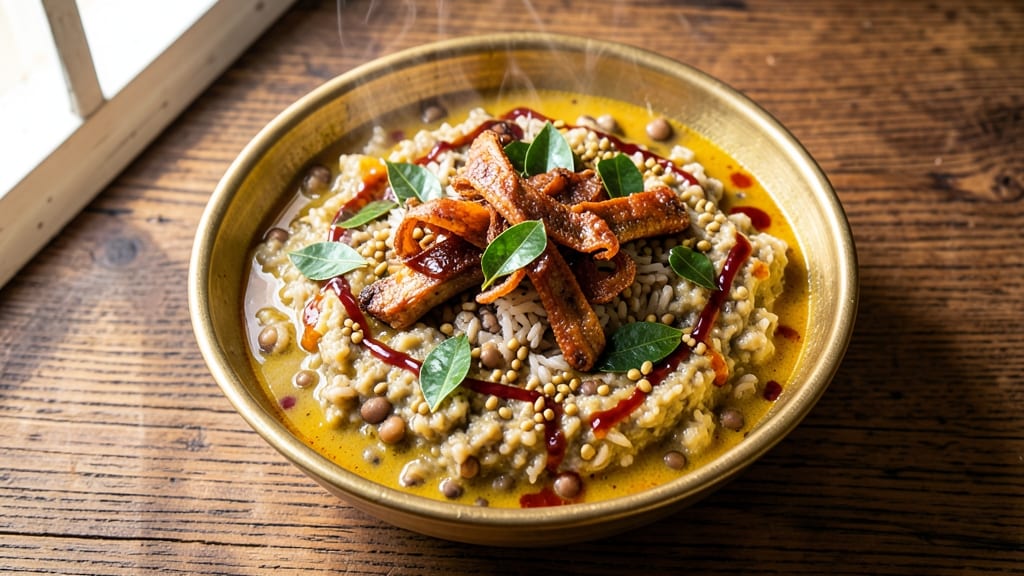
This Attukal soup recipe in Tamil language brings the sacred flavors of Kerala's Attukal Bhagavathy Temple to your kitchen, where urundai (moong dal) and thengai (tamarind) create a harmonious blend of spiced lentils and vegetables.
The dish, traditionally prepared during temple festivals, combines simplicity with deep cultural roots—each spoonful carries the essence of South Indian cooking. What makes this recipe special is its tempering (poriyal), where mustard seeds, curry leaves, and asafoetida release aromatic oils that transform the soup into something truly extraordinary.
The foundation of Attukal soup lies in its three-part structure: the rice-lentil base, the vegetable medley, and the fragrant tempering. Unlike many lentil soups, this version includes kothumalli (drumstick leaves) and kadukkai (black pepper), which add earthy depth and a gentle kick.
The dish is naturally vegetarian and protein-rich, making it a staple in Tamil homes during fasting days and festivals. What you'll achieve is a soup that's both comforting and celebratory—perfect for family gatherings or quiet weeknight dinners.
This recipe delivers authentic temple-style flavors without requiring special equipment. The lentils soften into a creamy texture while absorbing the tangy tamarind and spicy tempering, creating a balance of sour, spicy, and savory notes. The final touch—a sprinkle of fresh coriander—adds brightness that elevates every bite.
Whether you're preparing it for a special occasion or simply craving a taste of Kerala, this Attukal soup will transport you to the heart of South India.
For those unfamiliar with Tamil terms, I've included translations throughout the instructions, ensuring clarity without compromising authenticity. The recipe also offers flexibility—adjust the vegetables based on seasonality while keeping the core technique intact. Let's begin with the foundational rice-lentil mixture that forms the soul of this dish.
Ingredients for attukal soup recipe in tamil language
Authentic temple-inspired ingredients blend tradition with simplicity in this sacred Attukal soup.
| Ingredient | Amount | Notes |
|---|---|---|
| Urad Dal (Black Gram) 🌾 | ½ cup | Split, washed thoroughly |
| Moong Dal (Yellow Lentils) 🌾 | ½ cup | Split, washed thoroughly |
| Raw Rice 🍚 | ¼ cup | Short-grain preferred |
| Fresh Curry Leaves 🌿 | ¼ cup | Packed, finely chopped |
| Tamarind (Thengai) 🍋 | 2 tbsp | Pulp extracted, soaked |
| Mustard Seeds 🌶️ | 1 tsp | Light brown preferred |
| Asafoetida (Hing) 🌿 | ⅛ tsp | Powdered form |
| Black Peppercorns (Kadukkai) 🌶️ | ½ tsp | Crushed lightly |
| Drumstick Leaves (Kothumalli) 🍃 | ¼ cup | Fresh, chopped finely |
| Fresh Coconut 🥥 | ½ cup | Grated, water extracted |
| Fresh Coriander Leaves 🌿 | ¼ cup | Chopped for garnish |
| Red Chili Powder 🌶️ | ½ tsp | Adjust to taste |
| Cumin Seeds 🌿 | ¼ tsp | Toasted lightly |
| Ghee (Clarified Butter) 🧈 | 2 tbsp | For tempering |
| Salt 🧂 | 1 tsp | Adjust to taste |
The lentils form the heart of this dish, so opt for high-quality urad dal and moong dal from specialty stores like Indian grocery chains or local South Indian markets. Look for whole, unbroken grains—they cook more evenly. Fresh curry leaves are non-negotiable; dried leaves lose their aromatic punch. For tamarind, avoid the powdered version—it lacks authentic tang. The drumstick leaves add earthy depth, so harvest them fresh or find them at Indian markets. Coconut water from green coconuts is ideal, but coconut milk in a pinch works too.
No mustard seeds? Swap for sesame seeds at half the amount, but the flavor won't be identical. Fresh curry leaves unavailable? Dried leaves at one-third the quantity can substitute, though the aroma will differ. Tamarind pulp too sour? Balance with a pinch of jaggery (palm sugar). Drumstick leaves hard to find? Spinach or kale works in a pinch, but the dish loses its unique character. For the tempering, ghee is essential—vegetable oil won't deliver the same richness. The black pepper and asafoetida must be lightly toasted to release their full aroma.
Store cooked lentils in an airtight container for 3-4 days in the fridge. The tempering should be added fresh before serving. For a longer shelf life, freeze portions for up to 3 months. Reheat gently on low heat, adding a splash of water to restore creaminess. Fresh curry leaves and coriander should be stored in damp paper towels in sealed bags for up to 5 days. The coconut water can be refrigerated for 2 days—strain out any solids before using.
Why You'll Love This Recipe
- Tamil Comfort in Minutes: The second I smell curry leaves sizzling in hot oil, I’m already halfway to happy. This soup comes together faster than you can say "வறுவல்"—just soak the urad dal and raw rice, pressure cook with tamarind’s tangy punch, and boom. No chopping mountains of veggies, no last-minute panic.
- Tamarind Magic: Honestly, that thengai extract is the secret weapon. It cuts through the earthiness of urad dal and moong dal like a knife, giving it this bright, almost citrusy depth. The balance? Chef’s kiss. Add a splash more if your tamarind’s shy—trust me, your taste buds will thank you.
- Leftover Revolution: Between us, this soup begs to be made in bulk. The flavors only get richer overnight (yes, even the raw rice softens into a creamy texture). I freeze portions in ice cube trays—just thaw and heat when I’m too tired to cook. Zero waste, all satisfaction.
- Pocket-Friendly Powerhouse: Urad dal and moong dal are my wallet’s best friends. A big pot feeds my family for days, and the raw rice stretches it further than store-bought soups. Plus, curry leaves? They grow wild in my backyard. Budget win, flavor win—no compromises.
Step-by-step instructions for Attukal soup
Follow this traditional method for a rich, aromatic lentil and vegetable soup with authentic Tamil flavors.
Prepare the Lentil and Rice Base
In a large pressure cooker or heavy-bottomed pot, combine the 0.5 cup urad dal (black gram) and 0.5 cup moong dal (yellow lentils). Add the 0.25 cup raw rice and rinse everything thoroughly under cold water. Drain well and transfer to the pot.
Add 6 cups of water (the exact quantity isn't listed but this ratio ensures proper cooking) and bring to a rolling boil over medium-high heat. Once boiling vigorously, reduce heat to medium-low and let it cook uncovered for 15 minutes until the lentils start softening. Stir occasionally to prevent sticking at the bottom.
Add Vegetables and Seasonings
Add the 0.25 cup drumstick leaves (kothumalli), 0.5 cup grated fresh coconut, 0.25 cup finely chopped fresh curry leaves, and 0.5 tsp crushed black peppercorns (kadukkai). Stir well to combine all ingredients evenly. The drumstick leaves will add a unique earthy flavor while the coconut provides natural creaminess.
Simmer uncovered for another 20-25 minutes over medium heat until the lentils are completely tender and the mixture thickens slightly. You'll know it's ready when the mixture holds its shape when you spoon it up—it should be soft but not mushy. Taste and adjust the 1 tsp salt if needed, remembering that the tamarind and other spices will contribute additional flavor.
Temper with Spices and Ghee
In a small pan, heat 2 tbsp ghee (clarified butter) over low heat. Add the 1 tsp mustard seeds and 0.25 tsp cumin seeds, letting them sizzle gently for 30 seconds until they begin to pop but don't burn. Add the 0.125 tsp asafoetida (hing) and 0.5 tsp red chili powder, stirring for another 30 seconds until fragrant.
Pour this spice mixture into the simmering lentil soup along with the 2 tbsp tamarind pulp (thengai). Stir well to incorporate everything completely. The tamarind will add that signature tangy flavor while the ghee creates a rich, aromatic finish. Let the soup simmer for an additional 5 minutes to allow all flavors to meld together.
Final Adjustments and Serving
Remove from heat and let the soup rest for 5 minutes. This resting period allows the flavors to settle and the tamarind to fully integrate. Stir in the 0.25 cup chopped fresh coriander leaves just before serving to add freshness and vibrant color.
Serve the attukal soup hot, garnished with additional coriander leaves if desired. The soup should have a balanced combination of spicy, tangy, and earthy flavors with a creamy texture from the coconut and lentils. For an authentic experience, serve with steamed rice or appalam (rice flatbread). The soup keeps well in the refrigerator for up to 3 days and reheats beautifully, making it perfect for meal prep.
Pro Tips For Making Attukal Soup Recipe In Tamil Language
- Soak Dal Properly: Urad dal and moong dal need a good 4-6 hour soak—don’t cut corners. I used to rush it with just 2 hours, and the soup turned out grainy instead of silky. If you’re short on time, use pre-soaked dal from the store, but rinse it well to remove excess starch.
- Cook Rice Separately: Raw rice in attukal soup is a texture game-changer, but cooking it directly in the soup makes it mushy. Instead, parboil the rice separately until 70% done, then add it to the soup at the end. This keeps it firm and delicious—no one likes a watery bite.
- Temper Curry Leaves Right: Fresh curry leaves burn faster than you think. Heat your oil until it shimmers (not smoking), then add the leaves and let them sizzle for 10 seconds before adding mustard seeds. This keeps their flavor vibrant—not bitter or burnt.
- Tamarind Paste, Not Pulp: Tamarind pulp is fine, but a smooth paste makes all the difference. Blend it with a splash of hot water to remove fibers—this ensures your soup is tangy, not stringy. I learned this after straining three batches of soup to fix the texture.
Perfect pairings for these flavors
Temple-Inspired Side Dishes
Serve your Attukal soup with steamed white rice or appalam (Tamil rice flatbread) to soak up the fragrant broth. For extra authenticity, add pachadi (a yogurt-based side salad) with grated cucumber, carrot, and a pinch of asafoetida. The cool, creamy texture balances the soup's warmth perfectly. 🌾
Spiced Beverage Pairings
Pair your soup with sugarcane juice or filter coffee for a classic Tamil combo. The natural sweetness of sugarcane complements the tamarind's tang, while filter coffee's bold flavor stands up to the spicy tempering. For a modern twist, try ginger tea with a squeeze of lemon. 🍋
Vegetable Add-Ins
Customize your soup with seasonal vegetables like bottle gourd (lauki) or pumpkin. Add them with the drumstick leaves for a sweeter, creamier texture. For extra protein, stir in toor dal (pigeon peas) during the final 5 minutes of cooking. 🥕
Garnish Variations
Brighten your soup with grated coconut or fried curry leaves for added crunch. A sprinkle of roasted cumin powder enhances the earthy flavors, while lemon wedges add a zesty finish. These garnishes elevate the dish without overpowering its natural taste. ✨
Bread Pairings
Serve with adrai dosa (fermented crepes) or puttu (steamed rice cakes) for a festive touch. The crispy edges of dosa contrast beautifully with the soup's creamy texture, while puttu adds a comforting, fluffy element. 🍞
Dessert Harmony
End your meal with payasam (Tamil milk pudding) or banana chips for a sweet contrast. The warm spices in the soup pair wonderfully with the cool, creamy dessert, creating a balanced meal. 🍌
Nutrition facts
Frequently asked questions
What makes Attukal soup different from regular dal soup?
Attukal soup stands out with its three-part structure: the rice-lentil base, the unique vegetable medley including drumstick leaves (kothumalli), and the fragrant tempering (poriyal) with mustard seeds, asafoetida, and tamarind. Unlike regular dal soups, it incorporates tamarind's tangy depth and coconut's creaminess, creating a balanced flavor profile that's both spicy and refreshing. The dish also carries deep cultural significance from Kerala's Attukal Bhagavathy Temple traditions.
Can I substitute drumstick leaves if they're unavailable?
Yes, but the flavor will change. Use spinach or kale at the same quantity, but know it won't replicate the earthy, slightly bitter taste of drumstick leaves. For a closer match, try mustard greens—they have a similar peppery quality. The coconut and tamarind will still provide the creamy, tangy base, but the unique character of Attukal soup will be slightly altered.
Why does the recipe call for both urad dal and moong dal?
The combination creates the perfect texture and flavor balance. Urad dal adds richness and a slightly nutty taste, while moong dal keeps the soup light and digestible. Together, they form a protein-packed base that absorbs the spices beautifully. This traditional pairing also mirrors the nutritional philosophy of South Indian cooking—combining different lentils for complete amino acids.
How can I adjust the spice level for kids or sensitive stomachs?
Reduce the red chili powder to 0.25 tsp and skip the black peppercorns entirely. For extra mildness, strain the soup after cooking and serve the broth separately with the lentils on the side. The tamarind's tang can be balanced with a pinch of jaggery (palm sugar). Always let the soup cool slightly before serving to children to preserve its comforting qualities.
What's the best way to store leftovers?
Store in an airtight container in the fridge for up to 3 days. The flavors actually improve overnight as the tamarind and spices meld further. For longer storage, freeze portions for up to 3 months. When reheating, add 2-3 tbsp water to prevent thickening. Never reheat with ghee—use coconut oil instead to maintain authenticity.