
Soups & Stews
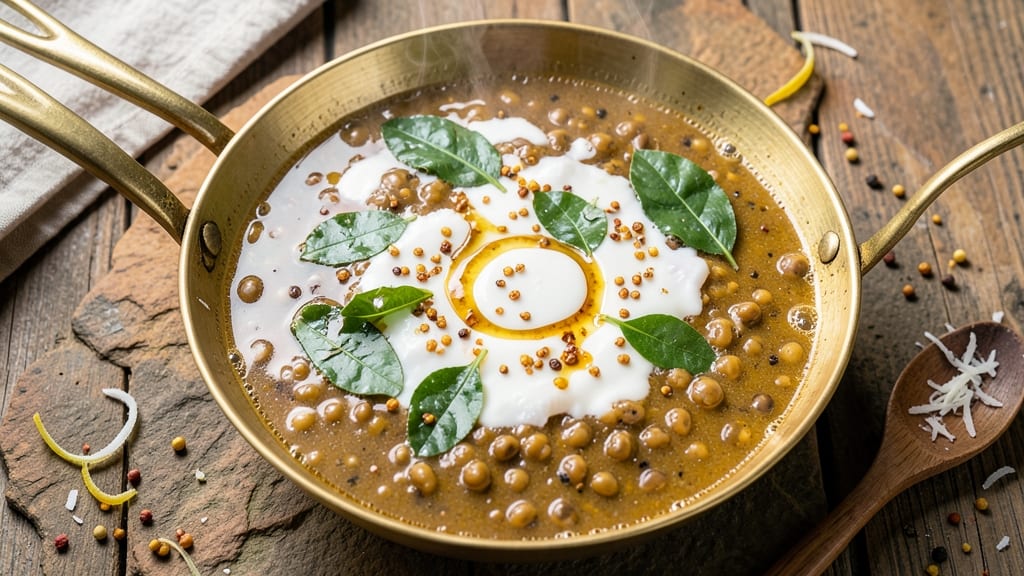
This Attukal soup recipe in Tamil brings the heart of Tamil Nadu's sacred traditions to your kitchen, where pigeon peas and coconut cream create velvety bliss. 🌿 Rooted in the Attukal Pongal festival's offerings, this dish honors simplicity and flavor—just like the sacred rice and lentil preparations made during the 10-day pilgrimage.
The key lies in slow-cooking the dal until it dissolves into a silky texture, then elevating it with a fragrant tempering of mustard seeds, curry leaves, and ghee.
What makes this recipe special is its balance of earthy spices and creamy coconut—traditionally prepared in clay pots to deepen flavors. The pigeon peas (toor dal) provide protein and a subtle sweetness, while coconut milk adds richness without overpowering the dish's natural taste.
This version stays true to Tamil traditions while being approachable for home cooks, with no complicated techniques required.
By the time you serve this soup, you'll have a dish that's both comforting and culturally rich—perfect for festival celebrations or everyday meals.
The aroma of tempered spices and the smooth, velvety texture of the dal will transport you to Tamil Nadu's streets, where this dish is cherished as a symbol of devotion and community. Serve it with steamed rice, sambar, or a side of coconut chutney for the full experience.
This recipe is more than just food; it's a connection to tradition. The slow-cooked dal absorbs the flavors of the tempering, creating a dish that's deeply satisfying and full of meaning.
Whether you're celebrating Attukal Pongal or simply craving a taste of Tamil Nadu, this soup delivers warmth, tradition, and the essence of South Indian hospitality in every spoonful.
Ingredients for attukal soup recipe in tamil
Toor dal, coconut cream, and sacred spices—this is the soul of Tamil Nadu in a bowl.
| Ingredient | Amount | Notes |
|---|---|---|
| Pigeon Peas (Toor Dal) 🌾 | 1 ½ cups | Dry, rinsed and picked over |
| Coconut Milk 🥥 | 1 can | Full-fat, 13.5 oz can |
| Fresh Coconut (optional) 🥥 | 1 cup | Grated, for extra richness |
| Ghee 🧈 | ½ cup | Clarified butter for tempering |
| Mustard Seeds 🌶️ | 1 tbsp | Brown or black preferred |
| Curry Leaves 🌿 | ¼ cup | Fresh, lightly crushed |
| Dried Red Chilies 🌶️ | 4 whole | Split lengthwise for tempering |
| Ginger 🧄 | 1 inch | Fresh, peeled and sliced |
| Garlic Cloves 🧄 | 6 cloves | Peeled and lightly crushed |
| Cumin Seeds 🌿 | 1 tsp | Toasted for aroma |
| Turmeric Powder 🧂 | ½ tsp | Freshly ground preferred |
| Asafoetida (Hing) 🌶️ | ⅛ tsp | Pinch for authentic flavor |
| Salt 🧂 | 1 tsp | Adjust to taste |
| Water 💧 | 4 cups | For soaking and cooking |
The pigeon peas are the heart of this dish. Look for yellow toor dal at Indian grocery stores like Patel Brothers or Apna Bazaar—avoid the red variety, which has a different texture. For coconut milk, full-fat canned brands like Goya or Aroy-D work best, but if you're feeling adventurous, freshly grated coconut (about 1 cup) gives a richer taste. The ghee matters too—Kerala Gold or Amul are reliable choices. Mustard seeds should be brown or black for that authentic pop, and curry leaves? Fresh is non-negotiable—dried just won't cut it here.
No fresh curry leaves? Substitute with 1 tbsp dried curry leaf powder, but it won't be the same. Running low on ghee? Olive oil works in a pinch, though it lacks that buttery depth. The ginger and garlic can be swapped for 1 tbsp each of ginger-garlic paste if you're short on time. For heat control, remove the seeds from the red chilies before tempering—keep the stems intact for maximum flavor without scorching. And that asafoetida? It's the secret ingredient—don't skip it, even if it's strong!
The dal keeps beautifully—3-4 days in the fridge if stored in an airtight container. For longer storage, freeze portions for up to 3 months. I like to make extra and reheat it with a splash of water to restore creaminess. The tempering spices lose potency after 2 weeks, so store them separately in a small jar. This soup tastes even better the next day as flavors meld—perfect for meal prep when you're celebrating Attukal Pongal or just craving comfort.
Why You'll Love This Recipe
- No-Soaking Needed: I’ll be real—skipping the soak on toor dal saves me time, but the secret’s in the slow simmer. Just rinse, pressure cook with turmeric and ghee until it’s just tender, and you’ve got that signature creamy texture without fuss. (Yes, even on a Tuesday night.)
- Coconut Cream Magic: That first splash of coconut milk? It’s not just flavor—it’s the velvety backbone. The mustard seeds sizzle in ghee, then the coconut smooths it all out, rich and warm like a hug. Honestly, the taste alone makes me want to eat it straight from the pot.
- Leftover Luxury: This soup gets better the next day. The flavors meld into something deeper, and reheating it with a splash of water keeps it luscious. I meal prep it for the week—pair it with rice or roti, and suddenly you’ve got effortless lunches covered.
- Budget-Friendly Feast: Toor dal and coconut milk are my pantry’s best-kept secrets. A single batch feeds four, costs next to nothing, and still feels special enough for guests. Between us, it’s the kind of dish that makes you look like a pro without breaking the bank.
Step-by-step instructions for Attukal soup
Here's how to create this velvety Tamil classic with perfect spice balance and creamy texture.
🍳 Step 1: Soak and Cook the Pigeon Peas
Rinse the 1.5 cups pigeon peas (toor dal) thoroughly under cold water, picking out any debris. Soak them in 4 cups water for at least 4 hours or overnight—this ensures they cook evenly and become tender without turning mushy. I like to soak them in a colander so they don't absorb too much water.
After soaking, drain and rinse the peas again. In a pressure cooker or heavy pot, combine the soaked peas with 3 cups fresh water (reserve the remaining 1 cup water for later). Cook until the peas are fork-tender—about 3-4 whistles in a pressure cooker or 45-60 minutes in a pot until they're soft but not falling apart. The peas should be creamy when mashed slightly between your fingers.
🔥 Step 2: Prepare the Tempering (Tadka)
In a separate heavy-bottomed pan, heat 0.5 cup ghee over medium-low heat. Add 1 tsp cumin seeds and let them sizzle for 30 seconds until they release their aroma—you'll smell that earthy, toasty scent. Then add 1 tbsp mustard seeds and let them pop and turn golden.
Next, add the 4 whole dried red chilies (split lengthwise), 1 inch ginger (sliced), and 6 cloves garlic (lightly crushed). Sauté for 1-2 minutes until the garlic turns golden and fragrant. Add 0.25 cup curry leaves and 0.125 tsp asafoetida (hing), stirring constantly for 30 seconds until the leaves wilt and release their citrusy aroma. This is the flavor foundation of your soup—don't rush this step.
🥘 Step 3: Combine and Simmer the Soup
Add the cooked pigeon peas and their cooking water to the tempered ghee mixture. Stir well to combine, then add the 1 can coconut milk and 0.5 tsp turmeric powder. Bring to a gentle simmer over medium heat, stirring occasionally to prevent sticking. Let it cook for 10-12 minutes until the flavors meld together and the soup thickens slightly.
If using, stir in the 1 cup grated fresh coconut during the last 5 minutes of cooking. This adds a luxurious creaminess that's characteristic of special occasions. Taste and adjust seasoning with 1 tsp salt, adding more if needed—remember, the coconut milk is naturally salty. The soup should be velvety with a delicate balance of spice and creaminess.
⏰ Step 4: Finish and Serve Warm
Once the soup reaches your desired consistency (it should coat the back of a spoon but still be pourable), remove from heat. Let it sit for 5 minutes to allow the flavors to settle—this resting period makes a big difference in the final taste. I like to give it one final taste and adjust seasoning if needed, especially if I'm using fresh coconut which can vary in sweetness.
Serve the soup warm in bowls, garnished with a sprinkle of curry leaves and a drizzle of ghee. The perfect bowl of Attukal soup should have a rich, aromatic broth with tender pigeon peas swimming in creamy coconut goodness. Pair it with steamed rice or appalam for the full Tamil experience.
Pro Tips For Making Attukal Soup Recipe In Tamil
- Split the Dal First: Soak your toor dal for at least 4 hours (or overnight if you’re not in a rush), then split the skins before cooking—yes, it’s tedious, but it guarantees a creamy, silky texture instead of that chalky mouthfeel you get when you skip it. I used to cut corners here, and the soup always felt "off" until I tried this.
- Temper Mustard Seeds Right: Bloom your mustard seeds in ghee on medium-low heat—if you crank it too high, they’ll burn before they pop, and that bitter smoke ruins the whole dish. Let them sizzle gently for 30 seconds until they dance like tiny fireworks, then add curry leaves. Trust me, this is where the magic starts.
- Simmer, Don’t Boil: Once your dal is cooked and you’ve added coconut milk, reduce the heat to the lowest setting and let it bubble barely—just tiny, occasional ripples. Boiling splits the milk and makes the soup separate, and nobody wants a sad, oily layer on top. This is the thing that matters most after the dal prep.
- Grate Coconut Wet: If you’re using fresh coconut, grate it while still wet from the shell—it’s easier on your hands and yields finer shavings. Skip the food processor unless you want a paste; hand-grating gives that traditional, textured bite. (Yes, even if you’re impatient like me.)
Best sauces and condiments for this dish
Coconut Chutney
The creamy richness of Attukal soup pairs perfectly with a simple coconut chutney that balances its earthy spices. Blend 1 cup fresh grated coconut, 2 tbsp roasted chana dal, 1 green chili, ½ tsp salt, and 2 tbsp water until smooth.
The chutney's cool, sweet contrast enhances the soup's spicy depth while adding a refreshing texture. 🥥
Tamarind Sambar
For a tangy, savory complement, prepare a tamarind sambar with 1 cup tamarind pulp, ½ cup tomato puree, 1 tbsp sambar powder, and 1 cup mixed vegetables.
Simmer until thickened, then temper with mustard seeds, curry leaves, and asafoetida—just like the soup's tadka. The sour notes cut through the coconut cream beautifully.
Spicy Tomato Onion Sauce
A quick tomato-onion sauce adds brightness to the meal. Sauté 1 chopped onion and 2 chopped tomatoes until soft, then blend with 1 tsp red chili powder, ½ tsp turmeric, and ½ tsp salt.
Simmer for 5 minutes—this vibrant red sauce cleanses the palate between bites of creamy soup.
Mango Pickle
Balance the soup's richness with a mango pickle made from 1 cup grated raw mango, 1 tsp mustard seeds, 1 tsp fenugreek seeds, ½ tsp turmeric, and 1 tsp salt. Ferment for 3-4 days—the tangy, spicy kick contrasts the coconut cream perfectly. 🌶️
Ghee Roasted Rice
Elevate the meal with ghee-roasted rice—heat 2 tbsp ghee in a pan, add ½ cup rice, and toast until golden. Cook with 1.5 cups water and ½ tsp salt—the nutty aroma complements the soup's spices. Serve warm alongside for a complete Tamil feast.
Yogurt Raita
Cool down the meal with a cucumber-mint raita. Mix 1 cup yogurt, ½ cup grated cucumber, 2 tbsp chopped mint, ½ tsp roasted cumin powder, and ½ tsp salt. The probiotics and coolness refresh your palate after the rich, spiced soup. ✨
Nutrition facts
Frequently asked questions
What makes this Attukal soup different from regular dal?
This Attukal soup stands out because of its creamy coconut milk base and special tempering that includes mustard seeds, curry leaves, and asafoetida. Unlike regular dal, it's cooked until the pigeon peas dissolve into a velvety texture, creating a luxurious, festival-worthy dish rather than a simple lentil preparation.
Can I substitute pigeon peas with other lentils?
While you can try toor dal substitutes like masoor dal or moong dal, pigeon peas give this soup its authentic texture and mild sweetness. For best results, stick with toor dal—it's the traditional choice that creates the perfect creamy consistency when cooked with coconut milk.
How do I adjust the spice level for kids?
For milder flavor, reduce the dried red chilies to 2-3 and remove the seeds before tempering. You can also skip the mustard seeds if your kids dislike their strong flavor. The coconut milk will naturally mellow the spices, so the overall dish will still be delicious but gentler on sensitive palates.
Why does my soup look too thin or too thick?
The ideal consistency should coat the back of a spoon but still be pourable. If too thin, simmer uncovered for 5-10 minutes to reduce. If too thick, stir in 2-3 tbsp warm water or coconut milk gradually. Remember, the soup thickens as it cools, so adjust while it's still hot.
Can I make this soup in an Instant Pot?
Cook the soaked pigeon peas with 4 cups water on high pressure for 12 minutes, then quick-release. For tempering, use the sauté function on medium heat for 3-4 minutes. The Instant Pot will give you the same creamy texture in about half the time of stovetop cooking.