
Soups & Stews
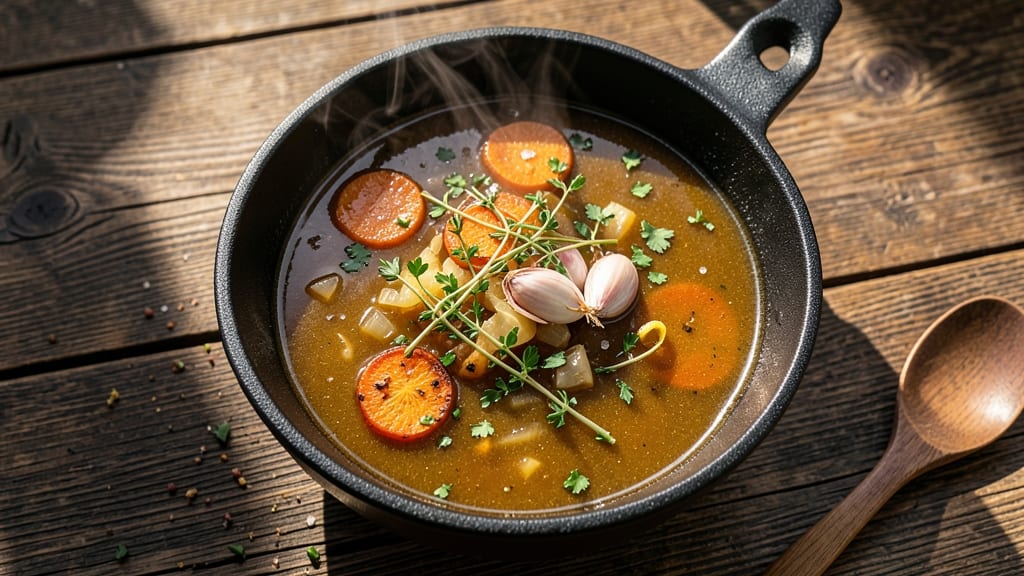
This au jus soup recipe transforms simple pan drippings into a rich, savory broth that elevates any roasted meat. The secret lies in reducing meaty juices with aromatic vegetables and herbs, creating a depth of flavor that's impossible to replicate with store-bought versions.
I developed this method after years of perfecting holiday roasts, where the difference between good and extraordinary comes down to the sauce.
What makes this recipe truly special is its versatility and simplicity—just a few pantry staples and 30 minutes of active time yield restaurant-quality results.
The process involves deglazing the roasting pan to capture all those flavorful browned bits, then simmering with vegetables until the broth reaches that perfect balance of richness and clarity. No fancy techniques required, just patience and attention to detail.
By the time you're done, you'll have a velvety, meaty broth that's packed with umami flavor and just the right amount of seasoning. It's the kind of sauce that makes every bite of roasted beef or pork feel like a special occasion.
The best part? Leftovers reheat beautifully, making it perfect for meal prep or feeding a crowd.
Serve alongside your favorite roasted meats, or use it as a base for gravy to drizzle over mashed potatoes or roasted vegetables. This is comfort food at its finest—simple, flavorful, and impossible to resist. Let's get started on creating your own rich, savory au jus.
Ingredients for au jus soup
Transform humble pan drippings into velvety au jus using these simple, flavor-packed ingredients.
| Ingredient | Amount | Notes |
|---|---|---|
| Pan Drippings 🥩 | 2 cups | From roasted beef or pork |
| Yellow Onion 🧅 | 1 whole | Chopped into small pieces |
| Carrots 🥕 | 2 medium | Peeled and sliced into rounds |
| Garlic Cloves 🧄 | 4 cloves | Minced for depth of flavor |
| Fresh Thyme 🌿 | 1 tbsp | Leaves only, chopped finely |
| Fresh Parsley 🌿 | ¼ cup | Chopped for freshness |
| Beef Broth 💧 | 1 cup | Low-sodium preferred |
| Red Wine 🍷 | ½ cup | Dry variety like Cabernet |
| Tomato Paste 🍅 | 1 tbsp | For subtle sweetness |
| Olive Oil 🫒 | 2 tbsp | For deglazing pan |
| Salt 🧂 | 1 tsp | Kosher or sea salt |
| Black Pepper 🌶️ | ½ tsp | Freshly ground |
| Worcestershire Sauce 🍶 | 1 tbsp | For umami depth |
The pan drippings are non-negotiable here—this is where the magic happens. Save every drop from roasting beef or pork, and don't skip scraping up those browned bits from the bottom of the pan. For the vegetables, Carrots Express from Trader Joe's save prep time, but regular grocery store carrots work just fine. Fresh thyme and parsley make all the difference—Penzeys Spices has great quality if you want to splurge, but the grocery store stuff is fine too. Look for thyme sprigs with vibrant green leaves, not dried-out stems. The garlic? Four cloves is perfect—don't overdo it, or you'll overpower the delicate meaty flavor.
No red wine? Substitute with extra beef broth—just add 1/2 cup more. Fresh herbs wilt fast, so dried thyme at half the amount works in a pinch. Short on Worcestershire? Soy sauce or balsamic vinegar adds umami, though neither is identical. The tomato paste can be skipped if you're avoiding sweetness, but it adds a nice balance. For the broth, low-sodium is key—you'll be adding plenty of salt later. If your pan drippings are particularly fatty, skim them carefully before adding to the pot. A fine-mesh skimmer works best.
This au jus tastes even better the next day as flavors meld. Store in an airtight container in the fridge for up to 5 days, or freeze for 3 months in ice cube trays for perfect portions. To reheat, warm gently on the stove—never microwave, or it'll get grainy. I always make extra because it disappears fast. The leftovers make an amazing gravy base too—just thicken with a cornstarch slurry if needed. For a restaurant-style touch, finish with a sprinkle of fresh parsley right before serving.
Why You'll Love This Recipe
- No-Waste Magic: I swear by this trick—those pan drippings you’d normally toss? Pure gold. Just deglaze with a splash of water, and boom: rich, savory base. No extra shopping, no fuss.
- Thyme for Comfort: That single sprig of fresh thyme? It’s the secret weapon. Earthy, bright, and just enough to make the whole pot smell like a Sunday dinner. Honestly, I’ll add it to anything now.
- Stealthy Meal Upgrade: Tired of sad leftovers? This soup turns dry roast chicken or beef into something luscious—no extra cost, just better flavor. My freezer’s full of it, and I never regret it.
- 20-Minute Rescue: Burning dinner? Overcooked roast? Not here. Toss in onion, carrots, and garlic, simmer for 15, and suddenly everything’s saved. (Yes, even on a Tuesday night.)
Step-by-step instructions for transforming pan drippings into au jus soup
This rich, flavorful au jus transforms simple pan drippings into a velvety, savory masterpiece.
Sauté Aromatics Until Fragrant
Heat the 2 tablespoons olive oil in a large pot over medium heat. Add the 1 whole yellow onion and 2 medium carrots that have been peeled and sliced into rounds. Cook for 8-10 minutes, stirring occasionally, until the onions soften and the carrots begin to caramelize slightly. You'll know they're ready when the onions are translucent and the carrots release their natural sweetness.
Add the 4 cloves garlic cloves that have been minced, along with the 1 tablespoon fresh thyme. Cook for another 1-2 minutes until the garlic becomes fragrant and lightly golden. This step builds the aromatic foundation that will infuse the entire soup with deep, savory notes. Be careful not to let the garlic burn—it should smell heavenly, not bitter.
Deglaze and Build the Base
Pour in the 2 cups pan drippings directly from the roasting pan, scraping up any browned bits from the bottom of the pot with a wooden spoon. These bits are packed with flavor and will create a rich, caramelized base for your soup. Add the 0.5 cup red wine and bring the mixture to a gentle simmer over medium-high heat. Let it bubble away for 5 minutes, allowing the alcohol to cook off and the flavors to meld.
Stir in the 1 tablespoon tomato paste and the 1 cup beef broth. The tomato paste adds a subtle sweetness that balances the richness of the drippings. Let the mixture simmer for 10 minutes until it thickens slightly and the flavors deepen. You'll notice the soup becoming more concentrated as the liquid reduces—this is when the magic happens.
Season and Simmer to Perfection
Add the 1 tablespoon Worcestershire sauce, 1 teaspoon salt, and 0.5 teaspoon black pepper to the pot. Stir well to combine, then add the 0.25 cup fresh parsley that has been chopped finely. The parsley not only adds freshness but also brightens the overall flavor profile. Let the soup simmer gently for 15-20 minutes, uncovered, to allow the flavors to develop fully.
Taste the soup and adjust the seasoning if needed. You want a balance of richness from the drippings, acidity from the wine, and depth from the Worcestershire sauce. The soup should be velvety and well-seasoned, with a hint of sweetness from the carrots and tomato paste. If it's too thick, add a splash of water or broth to reach your desired consistency.
Strain and Serve Warm
Once the soup has simmered to perfection, remove it from the heat and let it cool slightly for 5 minutes. Line a fine-mesh strainer with cheesecloth or a clean kitchen towel and strain the soup into a clean pot or bowl. This step ensures a smooth, silky texture without any bits of vegetable or herb. Discard the solids in the strainer.
Return the strained soup to the pot and warm it gently over low heat for 2-3 minutes until it's heated through. Serve the au jus warm, drizzled over roasted meats or used as a base for stews and braises. The result is a luxurious, restaurant-quality broth that elevates any meal. Enjoy immediately while it's still steaming and full of flavor!
Pro Tips For Making Au Jus Soup
- Scrape the Pan First: Don’t just pour those drippings straight into your pot—give the pan a quick scrape with a wooden spoon while it’s still warm. You’ll catch all the browned bits stuck to the bottom, and those bits are pure flavor gold for your au jus. I used to miss this step and wondered why my soup never tasted as rich as the restaurant versions.
- Sweat, Don’t Burn: When cooking the onions and carrots, keep the heat low and let them sweat for 8-10 minutes before adding garlic. If you rush it, those veggies will turn gray and bitter—trust me, I’ve done it. A splash of cold water can revive them, but it’s better to just slow down.
- Crush That Garlic: Don’t just mince those garlic cloves—give them a light crush with the flat side of your knife first. This releases more flavor, and since you’re using fresh thyme too, you’ll get a deeper, more aromatic base. (Yes, even if you’re impatient like me.)
- Strain for Silky Smooth: If you want that restaurant-quality finish, strain the soup through a fine-mesh sieve before serving. It removes any stray bits of thyme or carrot that might make it gritty—especially important if you’re using fresh thyme sprigs instead of dried. Takes 30 seconds but makes a real difference.
Best sauces and condiments for this au jus soup
Classic Horseradish Cream
This tangy, creamy condiment is a must-have with au jus—it cuts through the richness beautifully. Mix ½ cup sour cream with 1 tbsp prepared horseradish, 1 tsp Dijon mustard, and a pinch of salt.
Adjust the horseradish to taste (I like mine bold but not overwhelming). Serve chilled in a small bowl alongside your roasted meats and au jus for dipping. 🌟
Garlic-Herb Butter
For an extra layer of flavor, whip up a batch of garlic-herb butter to melt over your roasted meats. Combine ½ cup softened butter with 1 tbsp minced garlic, 1 tbsp chopped parsley, 1 tsp chopped thyme, and a pinch of salt.
Roll into a log, chill until firm, and slice before serving. The melted butter adds richness that pairs perfectly with the au jus. 🧈
Fresh Herb Garnishes
Brighten your au jus with fresh herbs that add color and freshness. I love a mix of chopped parsley and chives sprinkled on top just before serving. For a pop of color, add thinly sliced scallions.
These herbs not only look beautiful but also balance the deep, savory flavors of the au jus. 🌿
Crusty Bread for Dipping
No au jus experience is complete without a basket of warm, crusty bread for dipping. I recommend a baguette or sourdough toasted until golden and crisp. The bread soaks up the au jus beautifully, making every bite even more satisfying.
For extra flavor, brush the bread with garlic-infused olive oil before toasting. 🥖
Spicy Mustard Aioli
For those who love a kick, this spicy mustard aioli is a game-changer. Blend ½ cup mayonnaise with 1 tbsp yellow mustard, 1 tsp hot sauce, and ½ tsp smoked paprika.
Thin with a splash of water if needed. The heat and creaminess complement the au jus perfectly, especially when drizzled over roasted meats. 🌶️
Red Wine Reduction
If you want to elevate your au jus further, try a quick red wine reduction. Simmer ½ cup red wine with 1 tbsp brown sugar and 1 tsp balsamic vinegar until reduced by half.
Drizzle this glossy reduction over the au jus or directly onto the roasted meats for a sophisticated touch. The sweetness and acidity balance the richness beautifully. 🍷
Nutrition facts
Frequently asked questions
Can I make au jus without pan drippings?
Yes, but the flavor will be less rich. Use 2 cups beef broth instead, and add 1 tablespoon soy sauce or 1 teaspoon beef bouillon powder for depth. For extra umami, stir in 1 tablespoon tomato paste and 1 teaspoon Worcestershire sauce during simmering. The texture will be lighter but still delicious!
How do I thicken au jus if it's too thin?
For a quick fix, stir in 1 tablespoon cornstarch mixed with 2 tablespoons cold water while simmering. For a smoother texture, whisk 1 egg yolk with 2 tablespoons cream and temper it into the hot soup. Simmer for 2-3 minutes until thickened. Avoid over-thickening—au jus should coat a spoon but still be pourable.
What's the best meat to use for au jus?
Beef and pork create the richest au jus due to their natural fat content. For beef, use ribeye, sirloin, or chuck roast—these cuts release flavorful drippings. For pork, pork shoulder or tenderloin work well. Chicken or turkey au jus will be lighter; add 1 extra tablespoon tomato paste or ½ cup chicken broth to compensate.
Can I make au jus ahead of time?
Au jus tastes even better the next day as flavors meld. Store in an airtight container in the fridge for up to 5 days. For longer storage, freeze in ice cube trays—thaw overnight in the fridge before reheating. Gently warm on the stove (never microwave) to preserve its silky texture. Reheat leftovers by simmering for 3-5 minutes.
Why did my au jus turn cloudy?
Cloudiness usually means the soup cooled too quickly or contains too much fat. Strain through a fine-mesh sieve lined with cheesecloth to remove impurities. For future batches, skim excess fat before simmering, and avoid rapid temperature changes. If it's still cloudy, whisk in 1 tablespoon cold butter while warm—this helps clarify the broth naturally.