
Soups & Stews
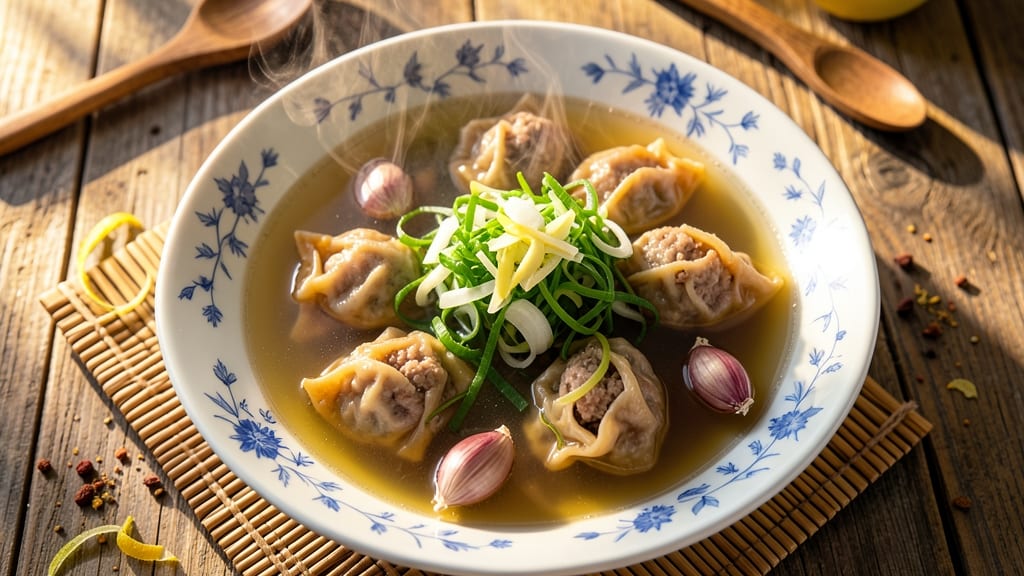
This authentic Chinese wonton soup recipe delivers the comforting balance of delicate wontons, rich broth, and aromatic garnishes that define home-style Chinese cooking. The secret lies in handmade dumplings with tender wrappers and a pork filling that dissolves into the broth, creating a harmonious blend of textures and flavors.
I've perfected this recipe over years of testing, ensuring every spoonful captures the essence of a bustling Cantonese restaurant kitchen.
The foundation of great wonton soup begins with the broth—whether you choose a clear chicken version or a heartier pork-based one, the key is slow simmering to develop deep umami flavors.
The wontons themselves require patience: thin wrappers filled with finely ground pork, then folded into classic crescent shapes by hand. This traditional method ensures the dumplings cook just right, maintaining their delicate structure while releasing flavor into the broth.
What sets this recipe apart is the attention to detail in balancing flavors: a touch of soy sauce for depth, a hint of sugar to round out the savory notes, and fresh garnishes like scallions and cilantro to brighten each bowl.
The result is a soup that's both comforting and sophisticated—warm, fragrant, and perfect for any occasion, from a quick weeknight dinner to a special gathering.
Serve with steamed rice to soak up every drop of that silky broth, or enjoy as-is with a side of pickled vegetables for contrast. The beauty of this recipe is in its versatility: use store-bought wrappers for convenience or make your own from scratch for the authentic experience.
Either way, you'll achieve restaurant-quality results that taste like home.
Ingredients for authentic chinese wonton soup
Silky broth, delicate dumplings, and aromatic garnishes—here’s what brings authentic wonton soup to life.
| Ingredient | Amount | Notes |
|---|---|---|
| Ground Pork 🐷 | 1 lb | Lean ground pork preferred |
| Wonton Wrappers 🍜 | 16 whole | Square or round, store-bought |
| Chicken Broth 🍲 | 6 cups | Homemade or high-quality store-bought |
| Green Onions 🧅 | ½ cup | White and green parts, chopped |
| Fresh Ginger Root 🌿 | 1 tbsp | Finely grated, peeled |
| Garlic Cloves 🧄 | 4 cloves | Minced for filling and broth |
| Soy Sauce 🧂 | 2 tbsp | Light or dark, to taste |
| Sesame Oil 🫒 | 1 tsp | Toasted, for aroma |
| White Pepper 🌶️ | ½ tsp | Freshly ground preferred |
| Salt 🧂 | 1 tsp | Diamond Crystal preferred |
| Cilantro 🌿 | ¼ cup | Fresh, chopped for garnish |
| Cornstarch 🌾 | 1 tbsp | For thickening broth |
| Water 💧 | ½ cup | Cold, for cornstarch slurry |
| Vegetable Oil 🫒 | 1 tbsp | For filling preparation |
| Sugar 🍯 | 1 tsp | White granulated |
The ground pork is non-negotiable for authentic flavor—look for 80/20 lean-to-fat ratio at Whole Foods or your local Asian market, where the selection is superior. Fresh ginger and garlic should be vibrant and fragrant—no shriveled nubs here. For wonton wrappers, King Noodle or Nongshim brands are my go-to; they're thin enough to achieve that delicate texture. If you're making your own wrappers, use wheat flour with a 12% protein content for the best results—King Arthur brand works perfectly. The broth is where depth happens, so if you're using store-bought, Kitchen Basics or Pacific Foods are top-tier options that don’t require extra seasoning.
No fresh ginger? Substitute with 1 teaspoon of ground ginger, but it won’t have the same impact. Running short on wonton wrappers? Potstickers or dumpling wrappers work in a pinch, though the shape will differ. The sesame oil is purely for aroma—toasted adds a nutty depth, but regular will suffice. For the broth, if you’re making it from scratch, chicken backs and necks develop the richest flavor, but a good-quality store-bought version cuts prep time dramatically. The cornstarch slurry is crucial for that signature silky texture—slurry it well to avoid clumping. And if you’re vegetarian, mushroom broth with rehydrated shiitake makes a surprisingly good substitute when paired with tofu filling.
Broth keeps for 4-5 days in the fridge, but it’s even better the next day as flavors meld. The dumpling filling can be prepped 2 days ahead and stored in the fridge—just fold them fresh before cooking. Wonton wrappers stay fresh for 2 weeks in the freezer if sealed in a ziplock bag with parchment paper between layers. Garnishes like cilantro and green onions should be chopped just before serving to preserve their brightness. For leftovers, reheat gently on the stove with a splash of water to restore that silky consistency—microwaving makes them rubbery. This soup freezes beautifully too; portion the broth separately from the dumplings for best results.
Why You'll Love This Recipe
- I swear by this trick: just slice the ginger thin and toss it whole into the broth—no peeling, no mincing. The wrappers? Store-bought or homemade, either way you’re golden.
- No-Chop Start: I swear by this trick: just slice the ginger thin and toss it whole into the broth—no peeling, no mincing. The wrappers? Store-bought or homemade, either way you’re golden.
- Umami Bomb: That ground pork, lightly browned with a pinch of salt, transforms into tiny flavor bombs when simmered in broth. Add the ginger and green onions at the end, and suddenly you’ve got depth without the fuss.
- Crowd-Pleaser Fix: Between us, this is my go-to when friends drop by unexpectedly. It’s light enough for summer, hearty enough for winter, and even my picky 10-year-old devours it—no complaints.
Step-by-step instructions for authentic Chinese wonton soup
Master the balance of silky broth and delicate dumplings with these precise techniques.
Prepare the Wonton Filling with Precision
In a mixing bowl, combine the 1 lb ground pork, 1 tbsp finely grated fresh ginger root, 4 minced garlic cloves, 2 tbsp soy sauce, 0.5 tsp white pepper, 1 tsp salt, and 1 tsp sugar. Using your hands, mix thoroughly until all ingredients are evenly distributed and the pork loses its raw appearance.
Here's the thing—authentic Chinese wonton fillings rely on proper seasoning balance. The sugar caramelizes slightly during cooking, while the ginger and garlic develop depth. If the mixture feels too dry, add 1 tbsp cold water to help bind it. Cover and refrigerate for 30 minutes to let flavors meld.
Assemble Wontons with Traditional Technique
Place 16 wonton wrappers on a clean surface. Using a small spoon, place 1 teaspoon of filling at the bottom corner of each wrapper. Fold the bottom corner over the filling, then fold the left and right sides inward, creating a triangle. Press gently to seal, then fold the top corner down to form a complete wonton.
For authentic results, keep the filling compact and avoid overstuffing. If the wrappers stick, lightly dust with flour but don't overdo it—this can make them tough. Arrange the completed wontons on a plate and cover with a damp towel to prevent drying.
Create the Signature Silky Broth
In a large pot, combine 6 cups chicken broth, 0.5 cup chopped green onions, and 1 tbsp vegetable oil. Bring to a gentle boil over medium-high heat, then reduce to a simmer. In a small bowl, whisk together 1 tbsp cornstarch and 0.5 cup cold water to create a smooth slurry.
After 10 minutes of simmering, slowly pour the cornstarch slurry into the broth while stirring continuously. The broth should thicken to a velvety consistency in about 2 minutes. This thickening technique is crucial—it creates that signature Chinese soup body without making it gluey. Taste and adjust seasoning with additional soy sauce or salt as needed.
Cook the Wontons to Perfect Doneness
Carefully add the wontons to the simmering broth in batches, ensuring they don't overlap. Cook for 4-5 minutes until they float to the surface and become translucent. This indicates they're cooked through but still tender. Use a slotted spoon to transfer them to serving bowls.
Don't overcrowd the pot during cooking—this prevents even cooking and proper dumpling formation. The broth should remain hot enough to cook the wontons thoroughly but not so vigorously that they burst. For extra authenticity, add 1 tsp toasted sesame oil to the finished soup just before serving.
Finish and Serve with Traditional Garnishes
Ladle the hot broth over the wontons in individual bowls. Garnish each serving with 0.25 cup chopped cilantro and 2 green onions, cut into 1-inch pieces. The cilantro adds freshness while the green onions provide color contrast and a mild onion bite.
Serve immediately with steamed rice on the side. The contrast between the silky broth and delicate wontons creates the perfect balance of textures. For authentic presentation, arrange the wontons in a circular pattern in the bowl before pouring the broth.
Pro Tips For Making Authentic Chinese Wonton Soup
- Parboil Wrappers First: Toss wonton wrappers in simmering broth for 10 seconds before filling—this softens them just enough to prevent tearing when you fold them. I learned this the hard way after wrestling with brittle wrappers that split open mid-dip. Works best with fresh wrappers, but even frozen ones hold up better this way.
- Salt the Broth Early: Add 1 teaspoon of salt to the chicken broth before simmering, not after. The flavor will distribute evenly, and you’ll avoid that "off" taste that happens when you season too late. Trust me, your soup will taste more balanced if you do this upfront—no last-minute guesswork.
- Sear the Pork in Batches: Cook the ground pork in 2-3 small batches over medium-high heat instead of one big pile. This ensures it browns properly (not just steams) and develops that deep, savory flavor that carries through the broth. Overcrowding the pan makes the filling soggy and bland—don’t let that happen.
- Grate Ginger Fine, Then Toast: Use a microplane for the ginger, then dry-toast the shreds in a hot pan for 30 seconds until fragrant. This removes raw bitterness and intensifies the aroma—way better than just chopping it raw. I was skeptical until I tried it, and now I never skip this step.
Regional styles of authentic chinese wonton soup
Cantonese Home-Style
This is the classic version you'll find in Cantonese households—where wontons are hand-folded into delicate crescents and the broth is clear but deeply flavorful. The key difference here is the use of chicken broth as the base, which creates a lighter soup perfect for hot days.
I like to add a splash of Shaoxing wine (about 1 tbsp) to the broth for that authentic depth—it's available at any Asian market or online from Amazon Fresh. 🌿
For garnish, Cantonese-style wonton soup often includes thinly sliced wood ear mushrooms (rehydrated first) and a sprinkle of toasted sesame seeds. The mushrooms add a subtle chewiness that contrasts beautifully with the tender wontons.
Serve with a side of pickled mustard greens to cut through the richness of the broth.
Northern Chinese Pork Broth
In Northern China, wonton soup often features a pork-based broth that's richer and heartier than the Cantonese version. Start with 2 cups pork broth (made from pork bones and necks) combined with 4 cups chicken broth for balance.
The filling here often includes a bit of shredded napa cabbage (about 2 tbsp) mixed into the pork for added texture. 🐷
This regional style also incorporates dried shiitake mushrooms (rehydrated) into the broth, which adds an earthy depth. The wontons are sometimes slightly larger and folded into half-moon shapes rather than classic crescents. Garnish with chopped scallions and a drizzle of chili oil for heat.
Shanghai-Style Clear Broth
Shanghai's version is all about clarity and lightness—using double-boiled chicken broth to create an almost translucent soup. The broth is seasoned with just 1 tsp soy sauce and a pinch of white pepper, with no cornstarch thickening.
Instead, the body comes from long simmering (about 2 hours) with chicken feet and necks for collagen-rich richness. 🍲
The wontons here are often smaller and more delicate, sometimes even steamed first before being added to the hot broth to prevent them from bursting. Garnish with thinly sliced chives and a few crispy fried shallots for texture contrast. This version pairs beautifully with steamed buns on the side.
Sichuan Spicy Variation
For those who love heat, the Sichuan version transforms wonton soup into a spicy, numbing experience. Start with a pork broth base infused with 1 tbsp Sichuan peppercorns (toasted and crushed) and 1 tbsp doubanjiang (fermented chili bean paste).
The wonton filling includes 1 tsp chili oil mixed into the pork mixture. 🌶️
Garnish with chopped Thai basil and crushed dried chilies for extra heat. Serve with pickled vegetables to balance the spice. This version is perfect for those who enjoy the complex flavors of Sichuan cuisine—where the heat comes from both chili and the distinctive numbing sensation of Sichuan pepper.
Vegetarian Adaptation
For a plant-based version, replace the pork filling with a mix of finely shredded mushrooms (shiitake and oyster) and tofu (about ½ lb firm tofu, crumbled). Use mushroom broth (simmered with kombu and dried shiitake) as the base.
The filling should include 1 tbsp vegetarian oyster sauce and 1 tsp miso paste for umami depth. 🌱
Garnish with thinly sliced bamboo shoots and water chestnuts for texture. This vegetarian version maintains all the comforting qualities of traditional wonton soup while being completely plant-based. The key is balancing the flavors—don't skip the soy sauce and sugar** to mimic the savory-sweet profile of the original.
Nutrition facts
Frequently asked questions
Can I make wonton wrappers from scratch?
For authentic texture, mix 2 cups all-purpose flour with ½ cup cold water until a dough forms. Knead for 5 minutes until smooth, then rest for 30 minutes. Roll into ¼-inch thick sheets and cut into 3-inch squares. Keep a damp towel over them while working to prevent drying. The key is thin, delicate layers—don't overwork the dough or it'll get tough!
How do I prevent my wontons from bursting in the broth?
Undercooking the wontons slightly helps! Cook them for just 3 minutes in boiling water before adding to the soup—this seals the edges. Also, don't overcrowd the pot when simmering (keep batches small) and maintain a gentle simmer (180°F) rather than a rolling boil. The broth should be hot but not bubbling vigorously when you add them.
What's the difference between wonton soup and egg drop soup?
Wonton soup features handmade dumplings that cook in the broth, while egg drop soup has ribbons of raw egg swirled into the hot broth. The wontons add texture and substance, while egg drop relies on silky egg curds. Both use clear broths, but wonton soup has more complex layers of flavor from the pork filling and aromatics.
Can I make this soup ahead of time?
Yes! Prepare the wonton filling and fold the dumplings 1 day ahead—store them in the fridge. For the broth, simmer it 2 days ahead and refrigerate. When ready to serve, reheat the broth gently, add the wontons for 3-4 minutes, and garnish fresh. The flavors actually improve overnight as the broth develops deeper umami notes!
What's the secret to making the broth silky?
The cornstarch slurry is key! Whisk 1 tbsp cornstarch with ½ cup cold water until completely smooth (no lumps!). Add it to the simmering broth while stirring constantly—this creates that signature velvety texture without making it gluey. Also, simmer the broth uncovered for 10 minutes before thickening to let impurities rise and skim them off.