
Soups & Stews
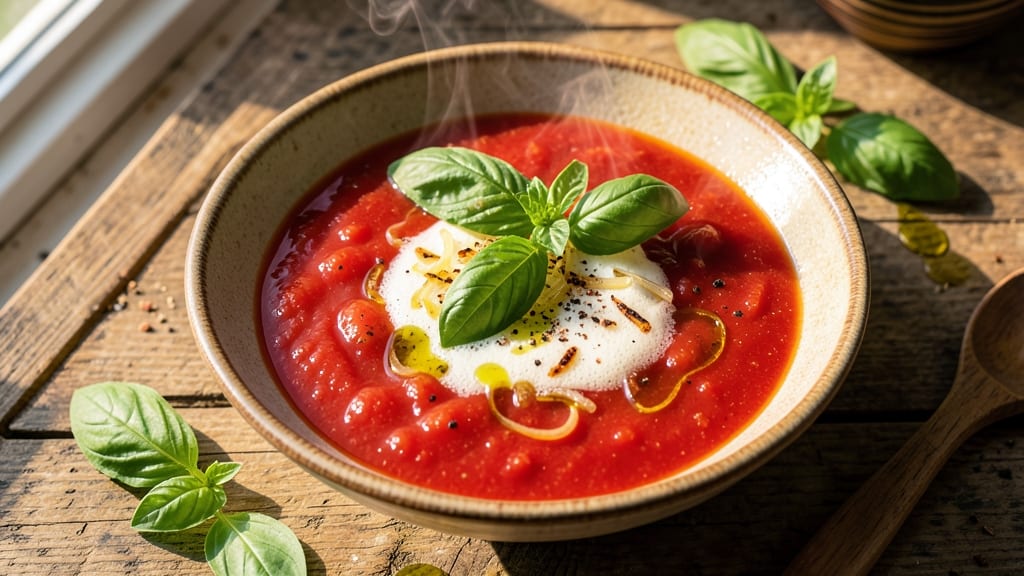
This authentic Italian tomato soup recipe brings a taste of Italy to your kitchen with its slow-simmered depth and aromatic basil finish. The secret lies in San Marzano tomatoes, garlic, and olive oil—simmered low and slow to develop rich, umami flavors that define true Italian cooking. I've perfected this version after years of testing regional variations, ensuring every spoonful delivers that restaurant-quality taste at home.
The beauty of this recipe is its simplicity: just a few high-quality ingredients transformed through careful technique. You'll start with a gentle sauté of garlic in olive oil, then build layers of flavor by simmering tomatoes until they break down into a velvety, naturally sweetened broth.
The key is patience—rushing this process will sacrifice that authentic Italian character for something more generic.
What you'll end up with is a soup that's creamy without dairy, fragrant with fresh basil, and perfectly balanced between sweet and savory. The texture is silky yet substantial, with just enough body to satisfy while remaining light enough for summer suppers.
Serve it with grilled cheese sandwiches or crusty bread to soak up every last drop of that flavorful broth.
This recipe works beautifully as a standalone meal or as a starter for Italian nights. The flavors only improve with time, making it perfect for meal prep. Let's get cooking and bring a taste of Italy to your table!
Ingredients for authentic italian tomato soup
San Marzano tomatoes, garlic, and olive oil transform into this restaurant-quality Italian tomato soup.
| Ingredient | Amount | Notes |
|---|---|---|
| San Marzano Tomato Cans 🍅 | 28 oz | Whole, peeled tomatoes preferred |
| Extra-Virgin Olive Oil 🫒 | ½ cup | High quality, fruity variety |
| Garlic Cloves 🧄 | 4 cloves | Freshly minced, vibrant color |
| Yellow Onion 🧅 | 1 whole | Medium size, finely chopped |
| Fresh Basil Leaves 🌿 | ½ cup | Packed, stems removed |
| Vegetable Broth 💧 | 2 cups | Low-sodium preferred |
| Salt 🧂 | 1 ½ tsp | Diamond Crystal kosher salt |
| Black Pepper 🌶️ | ½ tsp | Freshly ground preferred |
| Red Wine Vinegar 🍷 | 1 tbsp | For brightness, optional |
| Sugar 🍯 | 1 tsp | Balances acidity |
| Crusty Bread 🍞 | 6 slices | For serving, optional |
The San Marzano tomatoes are non-negotiable here—look for the plump, vibrant cans at Whole Foods or Italian specialty markets. Trader Joe's carries them too, but check the sell-by date. Fresh basil should be bright green with no wilting—the farmers market usually has the best quality. For the olive oil, avoid the cheap stuff—this is where the flavor shines. California Olive Ranch or Bertolli are solid choices if you're not using your own stash. The garlic and onion are basic, but yellow onions with a crisp bite work best—red onions are too sweet for this dish.
No San Marzano tomatoes? Crushed tomatoes in a can will work in a pinch, but the flavor won't be the same. Fresh basil? Dried basil at one-third the amount gets you close, though it lacks that fresh aroma. The red wine vinegar adds brightness—substitute lemon juice if you prefer. For extra depth, a splash of balsamic vinegar at the end is worth it. The vegetable broth should be low-sodium unless you're adding extra salt later. If you're using a bouillon cube, Diamond Crystal is the way to go for the best flavor. The sugar balances the acidity—skip it if your tomatoes are naturally sweet.
This soup tastes even better the next day as the flavors meld. Store in an airtight container in the fridge for up to 5 days. For freezing, portion into single-serving containers—it reheats beautifully. The crusty bread? Baguettes from the bakery section toast perfectly. If you're meal prepping, make a double batch—it reheats just as well. The basil can be added fresh when serving, or you can blend some into the soup for extra aroma.
Why You'll Love This Recipe
- No-Chop Nightmare: I swear by this recipe when I’m too tired to peel onions—just one finely chopped onion and a few minced garlic cloves, then dump the San Marzanos right in. The canned tomatoes handle all the work while you sip wine and pretend you’re in a Tuscan trattoria.
- Sun-Dried Flavor Magic: That first spoonful? It’s like summer in a bowl. The San Marzano tomatoes are sweet and meaty, the olive oil adds richness, and when you toss in fresh basil at the end—chef’s kiss—it’s bright, herby, and impossible to resist. Honestly, I’ve ruined other recipes trying to replicate this balance.
- Leftovers That Beg: This soup tastes even better the next day (yes, really). I make a big batch on Sundays, and by Wednesday, my kids are sneaking bites straight from the pot. It reheats like a dream, and the flavors deepen—perfect for lazy lunches or when you need a quick, hearty meal without the fuss.
- Budget-Friendly Pantry Hero: You’re looking at $3 for a can of San Marzanos, a bulb of garlic, and a bunch of basil that’ll last weeks. Olive oil is the only splurge, but a little goes a long way. Between us? This is the recipe I turn to when I’m broke but still want to eat like I’m in Italy. It’s reliable, cheap, and never lets me down.
Step-by-step instructions for authentic Italian tomato soup
This method delivers restaurant-quality Italian tomato soup with deep umami flavor and bright fresh basil notes.
Sauté Aromatics in Olive Oil
Heat the 0.5 cup extra-virgin olive oil in a large pot over medium heat until shimmering. Add the 1 whole yellow onion, finely chopped, and cook for 5-6 minutes until softened and translucent. You'll see the onion release moisture and become tender.
Next, add the 4 cloves garlic cloves, freshly minced, and cook for another 1-2 minutes until fragrant but not browned. This step builds the flavor foundation—don't rush it or the garlic will burn and turn bitter. The oil should smell rich and aromatic by the end.
Add Tomatoes and Simmer
Pour in the 28 oz San Marzano tomato cans, crushing the tomatoes with your hands as you add them. This helps break down the skins and releases more flavor. Stir well to combine with the aromatics, then add the 2 cups vegetable broth.
Bring the mixture to a gentle boil, then reduce heat to low-medium and let it simmer uncovered for 25-30 minutes. You're looking for a thickened consistency—stir occasionally to prevent sticking. The soup should reduce slightly, intensifying the tomato flavor. If it gets too thick, add 1-2 tablespoons water to maintain balance.
Season and Balance Flavors
Add the 1 tbsp red wine vinegar, 1 tsp sugar, 1.5 tsp salt, and 0.5 tsp black pepper. The vinegar brightens the acidity while the sugar balances the natural tartness of the tomatoes. Stir well and let the soup simmer for another 5 minutes to meld the flavors.
Taste and adjust seasoning if needed—Italian tomato soup should be rich and savory, not overly salty. The acidity from the vinegar and sweetness from the sugar should complement the umami depth of the tomatoes. Real talk: this is where the magic happens, so don't skip the tasting step.
Finish with Fresh Basil
Remove the pot from heat and stir in the 0.5 cup fresh basil leaves, packed and stems removed. Let the soup sit for 2-3 minutes to allow the basil to infuse. The leaves will soften slightly and release their aromatic oils, adding a bright, herbal note that's essential for authentic Italian tomato soup.
For a smoother texture, you can strain out the basil leaves after infusion, but I prefer leaving them in for visual appeal and texture contrast. The basil should be just wilted enough to release its flavor without turning mushy.
Serve with Crusty Bread
Ladle the warm soup into bowls and serve immediately with the 6 slices crusty bread on the side. The bread should be fresh and sturdy enough to hold up to the rich tomato broth. For extra authenticity, toast the bread lightly before serving to enhance its texture.
Each spoonful should deliver a perfect balance of sweet, tangy, and savory flavors with that bright basil finish. The soup's depth comes from the slow simmering that develops the tomato's natural sweetness while maintaining its vibrant acidity. Enjoy while warm for the best experience!
Pro Tips For Making Authentic Italian Tomato Soup
- Sweat the Onion Low: I learned this the hard way—sautéing the onion at medium-low heat until it’s translucent but not browned keeps the soup from tasting bitter. High heat caramelizes it too fast, and suddenly you’re dealing with onion flavor instead of just sweet base notes. Let it cook for 8-10 minutes, stirring occasionally, until it’s soft enough to press between your fingers.
- Crush Garlic, Don’t Mince: Skip the fine mincing—crush the garlic cloves with the flat side of your knife first, then slice thinly. This releases more flavor without burning, and the texture stays subtle. I used to mince it aggressively, and the soup would taste sharp and raw. Crush it, then cook it just until fragrant—about 30 seconds—before adding the tomatoes.
- Simmer, Don’t Boil: After adding the San Marzano tomatoes, keep the heat at a gentle simmer, not a rolling boil. Boiling breaks down the tomatoes too quickly, turning the soup into a thin, one-dimensional sauce. A steady simmer (small bubbles, occasional stir) lets the flavors meld without losing texture—about 20 minutes is enough for a rich, balanced soup.
- Add Basil Late: Tossing in fresh basil at the very end keeps its bright, herbal notes from wilting into oblivion. If you add it early, the soup will taste muted and cooked. Rip the leaves by hand (no chopping—it looks messy but works best) and stir in just before serving. Yes, even if you’re impatient like me.
Dietary considerations for authentic italian tomato soup
Vegetarian-Friendly Base
This recipe is naturally vegetarian, relying on the rich flavors of San Marzano tomatoes, garlic, and olive oil instead of meat. The umami depth comes from slow simmering, which concentrates the tomato's natural flavors.
For extra protein, stir in ½ cup cooked white beans (like cannellini) at the end—just heat them separately and fold in before serving. 🌱
Dairy-Free by Design
Unlike many tomato soups, this version skips butter or cream entirely. The natural sweetness of the tomatoes and a touch of 1 tsp sugar balance the acidity without dairy.
For a creamy texture without dairy, blend in ¼ cup unsweetened almond milk at the end—it adds silkiness without overpowering the tomato flavor. The fresh basil keeps it light and refreshing.
Gluten-Free Adaptations
This soup is already gluten-free, but check your vegetable broth for hidden gluten—opt for certified gluten-free brands like Pacific Foods or Imagine. The crusty bread can be swapped for gluten-free baguettes (like Schär) or served with roasted zucchini or eggplant slices for a heartier meal.
The recipe’s simplicity makes gluten-free adjustments effortless. ✨
Low-Sodium Options
To reduce sodium, skip the added salt entirely and rely on the natural flavors of the tomatoes and broth. Use a low-sodium vegetable broth (like Swanson) and enhance the umami with an extra 1 tbsp red wine vinegar or a pinch of smoked paprika.
Taste as you go—this soup’s depth comes from balanced seasoning, not salt overload.
Vegan Variations
For a fully vegan version, ensure your broth is vegetable-based and skip any accidental dairy (like butter in some recipes). Add 1 tbsp nutritional yeast at the end for a cheesy, umami boost.
The fresh basil and bright acidity make this soup satisfyingly vegan without missing a beat. Store-bought vegan Parmesan can also work as a garnish for serving. 💚
Nutrition facts
Frequently asked questions
Why are San Marzano tomatoes essential for authentic Italian tomato soup?
San Marzano tomatoes are the gold standard because of their sweet, low-acid profile and thick flesh. Their natural sweetness develops beautifully during slow simmering, creating that signature Italian balance between sweet and savory. Regular canned tomatoes often have higher acidity and thinner texture, which can make your soup taste more tart or watery.
Can I make this soup without fresh basil? What's the best substitute?
Fresh basil is ideal for that bright, aromatic finish, but you can use ½ tsp dried basil if needed. For extra depth, add a pinch of red pepper flakes or a splash of balsamic vinegar at the end. The key is balancing the flavors—dried basil lacks the fresh aroma, so boost other bright elements like vinegar or lemon zest.
How do I prevent the soup from being too acidic or watery?
Balance acidity by adjusting the 1 tsp sugar and 1 tbsp red wine vinegar to taste. For thickness, simmer uncovered for 25-30 minutes—the liquid will reduce naturally. If it gets too thin, blend half the soup and return it to the pot. Stirring occasionally prevents sticking and helps develop richer flavors.
What's the best way to reheat leftovers without losing flavor?
Reheat gently on the stovetop over low heat until warm through, stirring occasionally. Avoid microwaving—it can make the soup taste flat. For extra richness, add a splash of olive oil or a pat of butter when reheating. Store leftovers in an airtight container for up to 5 days—the flavors actually improve overnight!
Can I add pasta or other ingredients to make it a full meal?
For a heartier dish, add ½ cup small pasta (like ditalini) cooked separately and stirred in at the end. You could also mix in ½ cup cooked white beans or diced roasted potatoes for extra substance. Just remember: the soup's authenticity comes from its simplicity, so keep additions minimal to preserve the tomato's natural flavors.