
Soups & Stews
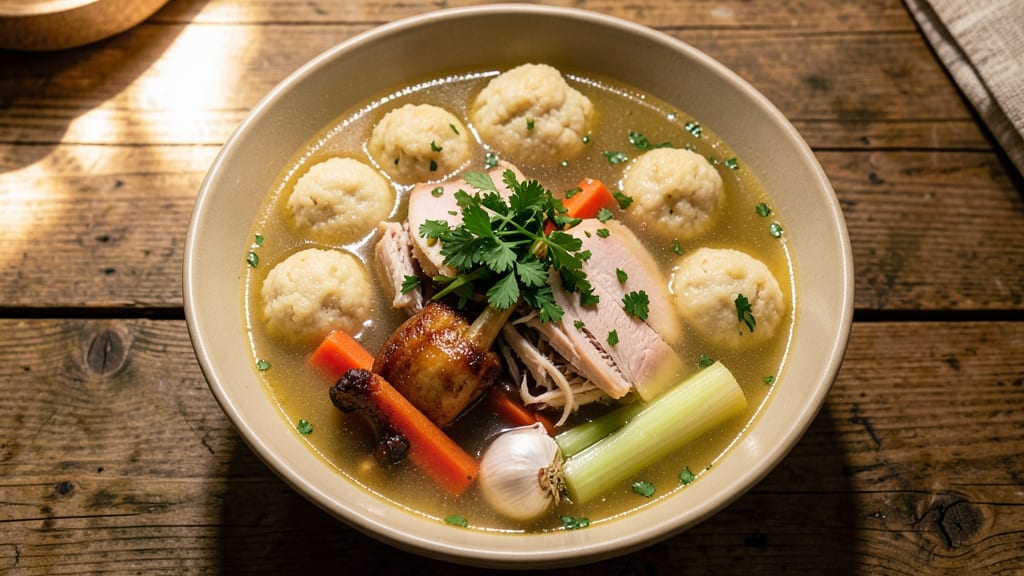
This authentic matzo ball soup recipe delivers the comfort of Ashkenazi Jewish tradition—fluffy, light-as-air dumplings floating in a rich, clarified broth that tastes like home. The secret lies in precise technique: poaching the matzo balls just until they're tender, not dense, while clarifying the broth for a crystal-clear finish.
After years of perfecting this dish, I've developed a method that balances tradition with foolproof execution.
The matzo ball dough requires just five ingredients—egg, matzo meal, schmaltz, and a blend of savory seasonings—but the magic happens in the mixing and poaching. Unlike heavier dumplings, these float effortlessly while absorbing the broth's flavor, creating that signature melt-in-your-mouth texture.
The broth, simmered low and slow, develops deep umami notes from chicken bones and aromatic vegetables.
What you'll end up with is a bowl of matzo ball soup that transports you to a cozy kitchen in Brooklyn or a Sabbath table—warm, aromatic, and deeply satisfying. The dumplings stay light, the broth is rich yet clear, and every spoonful delivers that perfect harmony of flavors.
This is the kind of soup that becomes a family heirloom, passed down through generations.
Serve with a sprinkle of fresh parsley or a pinch of paprika for color, and pair with crusty bread to soak up every last drop. Whether you're preparing for Shabbat or simply craving comfort, this recipe delivers restaurant-quality results at home.
Let's get started with the broth—it's the foundation of everything.
Ingredients for authentic matzo ball soup
Sixteen ingredients transform into a bowl of tradition—fluffy dumplings in a crystal-clear, aromatic broth.
| Ingredient | Amount | Notes |
|---|---|---|
| Chicken Bones 🍗 | 3 lb | Neck and backbones for deep flavor |
| Yellow Onions 🧅 | 2 whole | Medium size, roughly chopped |
| Carrots 🥕 | 4 whole | Medium size, cut into chunks |
| Celery Stalks 🌿 | 4 whole | Fresh, cut into 2-inch pieces |
| Fresh Parsley 🌿 | ¼ cup | Chopped, for garnish and broth |
| Whole Garlic Cloves 🧄 | 8 cloves | Peeled, lightly smashed |
| Large Eggs 🥚 | 2 whole | Fresh, room temperature |
| Matzo Meal 🍞 | 1 cup | Finely ground, not cake-style |
| Schmaltz 🧈 | ½ cup | Rendered chicken fat, clarified |
| Diamond Crystal Kosher Salt 🧂 | 1 ½ tsp | Adjust to taste, don't over-salt |
| Ground Black Pepper 🌶️ | ½ tsp | Freshly ground, coarse |
| Ground White Pepper 🌶️ | ¼ tsp | Traditional for Ashkenazi dishes |
| Fresh Dill 🌿 | 1 tbsp | Chopped, optional for brightness |
| Fresh Matzo 🍞 | 2 slices | For soaking, optional |
The chicken bones form the soul of this broth. Necks and backbones yield the richest gelatin and flavor—never use just white meat. For optimal results, roast them at 425°F for 20 minutes before simmering to deepen the umami. Local butchers or the kosher section at Whole Foods carry these cuts reliably. The schmaltz, rendered from chicken fat, should be clarified to avoid a greasy texture—strain it through a fine-mesh sieve after melting. If schmaltz isn't available, duck fat or olive oil works in a pinch, though purists insist on the traditional choice.
Matzo meal is non-negotiable for authentic texture—cake-style matzo contains additives that alter the dumpling's lightness. For the broth, carrots and celery should be organic when possible to avoid bitterness from pesticides. The garlic cloves must be peeled but left whole during simmering to infuse flavor without overpowering. Fresh parsley and dill add brightness, but dried works at one-third the amount if fresh isn't available. The matzo slices, if using, should be torn into small pieces and soaked in warm water for 10 minutes to create a natural thickener—this step elevates the broth's body without dairy.
Store the cooked broth in airtight containers for up to 5 days in the refrigerator, or freeze for 3 months—it only improves with time. The matzo ball dough can be prepped a day ahead and refrigerated, covered. For reheating, simmer gently to avoid breaking the dumplings. This soup tastes even better the next day as flavors meld, making it ideal for meal prep. Garnish with extra parsley or a sprinkle of smoked paprika just before serving for visual appeal and depth.
Why You'll Love This Recipe
- One-Pot Magic: I swear by this recipe—simply toss chicken bones, onions, carrots, and celery into a pot, simmer for hours, and boom, you’ve got rich broth without extra pots or fuss. The bones do all the work while you chop the veggies in five minutes flat.
- Umami Bomb: That slow-simmered chicken bone broth? Pure flavor gold. The onions caramelize just enough to deepen the taste, while the parsley brightens it at the end—like a hug in a bowl. (Yes, even on a Tuesday night.)
- Weeknight to Holiday: Make a double batch on Sunday, and you’ve got dinner covered for the week—or impress guests with zero extra effort. The matzo balls freeze beautifully, so I always keep a stash for lazy nights or unexpected company.
- Budget-Friendly Luxury: Chicken bones are cheap, and this recipe stretches them into something ridiculously satisfying. No fancy ingredients, just honest, hearty flavor that tastes like you slaved over it—when really, you just let time do the work.
Step-by-step instructions for authentic matzo ball soup
This method delivers the signature lightness and rich flavor of traditional Ashkenazi matzo ball soup.
Prepare the Chicken Broth
Rinse the 3 lb chicken bones thoroughly under cold water to remove any blood or impurities. Place them in a large stockpot and cover with cold water by about 2 inches. Bring to a boil over high heat, then immediately reduce to a gentle simmer—this removes impurities that rise to the surface. Skim off any foam or scum that forms for the first 10 minutes using a fine-mesh skimmer.
Add the 2 whole yellow onions, 4 whole carrots, and 4 whole celery stalks to the pot. These vegetables form the base of the broth, known as saltz in Yiddish. Simmer uncovered for 3 hours, maintaining a barely bubbling surface. This slow extraction develops deep umami flavors without overcooking the vegetables.
About 1 hour before finishing, add the 8 cloves whole garlic cloves and 1.5 tsp diamond crystal kosher salt. Strain the broth through a fine-mesh sieve into a clean pot, pressing gently on the vegetables to extract maximum flavor. Discard the solids. The broth should yield about 6-8 cups of rich, golden liquid—this is your foundation for the matzo balls.
Create the Matzo Ball Dough
In a medium bowl, combine the 1 cup matzo meal, 0.5 tsp ground black pepper, and 0.25 tsp ground white pepper. Add 2 whole large eggs and mix vigorously with a fork until the mixture resembles coarse crumbs with moist clumps. The texture should be shaggy but hold together when pressed—this is crucial for light matzo balls.
Gradually add ½ cup cold water (measured precisely) while mixing. The dough should form a soft, slightly sticky mass that clings to the fork but isn't wet. If it's too dry, add 1 teaspoon water at a time. Here's the thing—matzo meal absorbs moisture differently than flour, so don't overmix or the balls will be dense. The dough should resemble wet sand when squeezed.
Cover the bowl and refrigerate for at least 30 minutes. This resting period allows the matzo meal to hydrate fully and the gluten to relax slightly, preventing the balls from becoming tough when cooked. I find the longer it rests (up to 2 hours), the lighter the finished texture.
Shape and Poach the Matzo Balls
Divide the dough into 6 equal portions (about 1.5 ounces each) and roll them gently between your palms into smooth balls. Wet your hands slightly to prevent sticking—this ensures clean shaping. Place the balls on a parchment-lined plate and cover with plastic wrap. Refrigerate for another 15 minutes to firm up slightly.
Bring the strained chicken broth to a gentle simmer in a large pot. The water should barely ripple—any vigorous boiling will cause the matzo balls to expand unevenly. Gently lower the matzo balls into the broth using a slotted spoon. They should float just below the surface. If they sink, they're too dense—add a pinch more matzo meal to the next batch.
Simmer uncovered for 20-25 minutes, maintaining a barely simmering state. Here's the critical part: the matzo balls are done when they're puffed, light golden brown, and register 165°F internally. They should feel springy to the touch and leave a clean trail in the broth when gently nudged with a spoon. Remove them with a slotted spoon and transfer to a serving bowl.
Finish the Soup and Serve
Return the broth to a simmer and reduce it slightly if needed to yield about 6 cups of flavorful liquid. Stir in the 0.5 cup schmaltz and 1 tbsp fresh dill, warming through but not boiling. The schmaltz adds richness while the dill brightens the broth. Taste and adjust seasoning with additional diamond crystal kosher salt if needed—remember, the matzo balls are slightly salty.
To serve, ladle the hot broth over the matzo balls. Garnish each bowl with a sprinkle of 0.25 cup chopped fresh parsley and, if using, tear the 2 slices fresh matzo into pieces and float them on top for texture. The matzo strips absorb the broth beautifully, adding another layer of flavor with each bite. Serve immediately with crusty rye bread to soak up every last drop of that golden, herb-infused liquid.
Pro Tips For Making Authentic Matzo Ball Soup
- Roast the Bones First: Don’t just dump bones in water—they need a head start. Roast them at 400°F for 30 minutes first (skin-side up if you’re using whole chicken pieces) to deepen the flavor. The crust that forms? That’s where the magic happens. I used to skip this and wonder why my broth tasted like "chicken water" instead of something my grandparents would serve.
- Sear the Aromatics Hard: Your onions, carrots, and celery won’t just sit in the pot—they need to dance. After roasting the bones, remove them and sear the chopped veggies in the same pan (or a separate one if you’re impatient) with 2 tablespoons of oil until the onions turn a deep golden brown. This isn’t just about color; it’s about locking in that sweet, caramelized flavor that makes the soup sing. I burned my first batch of veggies trying to rush this, and let me tell you, no one wants bitter soup.
- Strain the Broth Twice: The first strain is obvious—get rid of the bones and big chunks. But here’s where people mess up: they stop there. Strain the broth through a fine-mesh sieve (or even cheesecloth) a second time to catch the fine sediment that’s packed with flavor. I’ve seen recipes skip this, and honestly? It’s like drinking watered-down soup. Your future self will thank you for the extra 5 minutes.
- Use Matzo Meal, Not Crumbs: This isn’t the time to grab the leftover matzo from your bag. For authentic matzo balls, you need matzo meal—the fine, dry powder you can find in the Jewish section or make by pulsing matzo in a food processor. Crumbs will turn your balls into gummy disappointments. I learned this the hard way after my first batch fell apart like wet sandcastles. Trust the meal.
Perfect pairings for this dish
Classic Garnishes
Fresh parsley is my go-to garnish for its bright, clean flavor that cuts through the richness of the broth. I chop ¼ cup finely and sprinkle it over each bowl just before serving—this adds a pop of color and freshness.
For a more rustic touch, add 2 slices fresh matzo torn into pieces and floated on top. These strips absorb the broth beautifully, creating a delightful textural contrast. 🌿
Bread Pairings
Crusty rye bread is the perfect companion to matzo ball soup, providing a sturdy base for soaking up every last drop of that flavorful broth. I recommend a dark rye from Lender's or Pumpernickel for its hearty texture.
For a lighter option, serve with challah or pumpernickel rolls, which pair beautifully with the soup's traditional flavors.
Herb-Infused Oils
Drizzle a high-quality infused olive oil over the soup for an elegant touch. I love using garlic-infused olive oil or a blend of lemon and parsley oil—just 1 teaspoon per bowl adds a luxurious finish.
For a more traditional touch, try schmaltz-infused oil, which enhances the soup's rich, savory notes. 💫
Spicy Kick
For those who enjoy a bit of heat, add a pinch of smoked paprika or a few drops of hot sauce to each bowl. I like Annie's Original Hot Sauce or Valentina Hot Sauce for its balanced spiciness.
This subtle kick complements the soup's comforting flavors without overpowering them, adding a modern twist to a classic dish.
Vegetable Additions
For a lighter, vegetable-forward variation, stir in shredded carrots or thinly sliced cabbage during the final 10 minutes of simmering. These additions add color and a touch of crunch, making the soup even more vibrant.
I also like adding a handful of spinach just before serving—it wilts beautifully in the hot broth while retaining its nutrients.
Dairy Touches
For a richer experience, top each bowl with a dollop of sour cream or a sprinkle of crumbled feta cheese. These dairy elements add creaminess and depth, balancing the soup's savory notes. I especially love this pairing during colder months when a touch of dairy feels extra comforting. 🥛
Nutrition facts
Frequently asked questions
Why do traditional matzo balls float instead of sink?
The secret lies in the dough's texture and proper poaching technique. Authentic matzo balls use matzo meal (not cake-style) and are poached in a gentle simmer, not a rolling boil. If they sink, they're too dense—add a pinch more matzo meal to the next batch. The air pockets created during mixing and the right water-to-meal ratio ensure they float effortlessly.
Can I make matzo balls ahead of time?
Shape the dough balls and refrigerate them on a parchment-lined plate for up to 24 hours before poaching. For even better results, freeze uncooked balls on a tray first, then transfer to a bag. Cook directly from frozen in the broth—just add 5 extra minutes to the poaching time. The resting period enhances flavor and texture.
What's the difference between matzo meal and matzo cake crumbs?
Matzo meal is finely ground from plain matzo crackers (no additives), while matzo cake crumbs contain oils and sweeteners. For authentic lightness, use only matzo meal—it creates airy dumplings. Cake crumbs will make your matzo balls dense and greasy. Check the label: true matzo meal should list only "matzo" as an ingredient.
How do I fix broth that's too cloudy?
Cloudiness usually means unclarified fat or impurities. Strain the broth through a cheesecloth-lined sieve again, pressing gently. For extra clarity, chill the broth overnight—the fat will solidify on top, and you can skim it off. If the broth still looks murky, add 1 egg white per quart while simmering to help bind impurities. Clarified broth is key for that restaurant-quality look!
Can I make this soup vegetarian?
Yes! Replace chicken bones with mushroom stems and vegetable scraps (carrot tops, celery ends) for umami. Use vegetable broth and add 1 tsp soy sauce or miso paste to the broth. For the matzo balls, keep the original recipe—they're naturally vegetarian. The flavor will be lighter but still delicious. For extra richness, stir in 1 tbsp nutritional yeast at the end.