
Soups & Stews
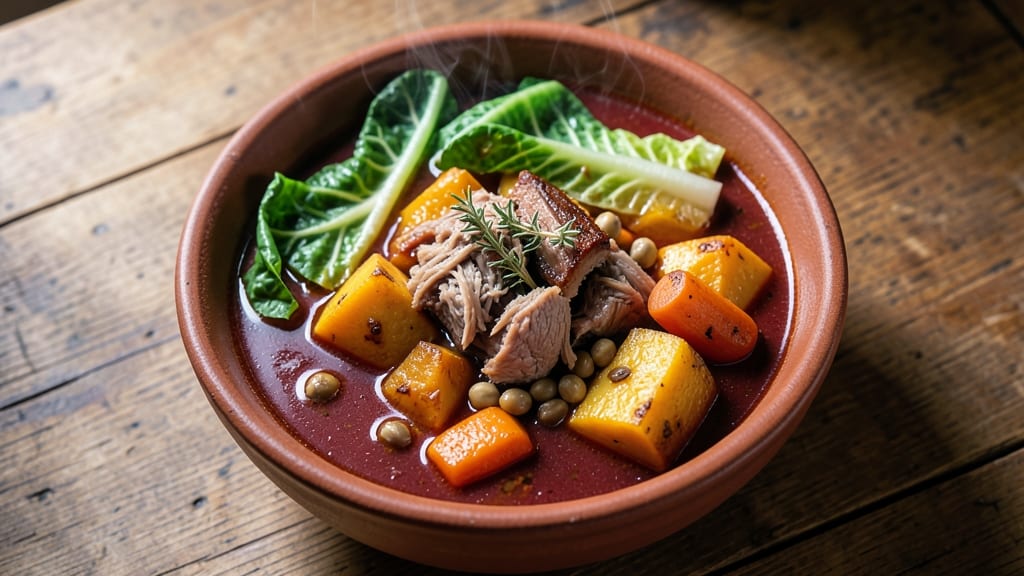
This authentic Soup Joumou recipe celebrates Haiti's Independence Day with deep cultural roots and rich flavors that honor the nation's history. 💛 The traditional dish features tender pork, pigeon peas, and fresh vegetables simmered into a hearty broth, served with crispy dumplings—a centerpiece for celebrations. Every spoonful carries the legacy of freedom and resilience, making it more than just a meal. The recipe stays true to Haitian traditions by using slow-cooked pork, dried pigeon peas, and a blend of vegetables like cabbage, carrots, and pumpkin. The dumplings, made from cornmeal and flour, add a satisfying crunch that contrasts beautifully with the creamy broth. This is a dish that requires patience—simmering for hours to let flavors meld—but the result is worth every moment. What makes this Soup Joumou special is its ability to bring people together, just as it has for generations on January 1st. The aroma of spices like thyme and garlic fills the air, while the tender meat and vegetables create a comforting, soul-warming experience. It’s a celebration of Haitian heritage, served with pride and shared with love. Perfect for Independence Day gatherings or special occasions, this recipe honors tradition while bringing warmth to your table. Let’s make history taste delicious.
Ingredients for authentic soup joumou
Six pounds of pork shoulder and a symphony of Haitian spices create this soulful Independence Day centerpiece.
| Ingredient | Amount | Notes |
|---|---|---|
| Pork Shoulder 🥩 | 3 lb | Bone-in for flavor, cut into 2-inch chunks |
| Dried Pigeon Peas 🌾 | 1 ½ cups | Soaked overnight, rinsed well |
| Fresh Cabbage 🥬 | 1 medium | Green or red, shredded into bite-sized pieces |
| Carrots 🥕 | 3 medium | Whole, scrubbed clean |
| Sweet Potatoes 🍠 | 2 medium | Peeled, cubed into 1-inch pieces |
| Pumpkin 🎃 | 2 cups | Cubed, fresh or canned (no syrup) |
| Fresh Thyme 🌿 | 2 tbsp | Leaves only, stems removed |
| Garlic Cloves 🧄 | 6 cloves | Peeled, lightly crushed |
| Scotch Bonnet Peppers 🌶️ | 2 whole | Seeds removed, chopped (handle with care) |
| Fresh Cilantro 🌿 | ½ cup | Chopped, for garnish |
| Yellow Onion 🧅 | 1 whole | Diced into small pieces |
| Cornmeal 🌽 | 2 cups | For dumplings, fine grind preferred |
| All-Purpose Flour 🌾 | 1 cup | For dumplings, sifted |
| Baking Powder 🍞 | 1 tsp | For dumplings, aluminum-free |
| Salt 🧂 | 2 tbsp | Kosher or sea salt, for seasoning |
| Black Peppercorns 🌶️ | 1 tsp | Freshly cracked |
| Vegetable Oil 🫒 | ½ cup | For dumpling frying |
The pork shoulder is the heart of this dish—bone-in cuts from a trusted butcher add depth to the broth. Look for well-marbled meat at local Haitian markets or specialty grocers like Whole Foods for authentic quality. Dried pigeon peas should be light-colored with no off smells—avoid those pre-soaked in bags, as they lose flavor. Fresh thyme and Scotch bonnet peppers are non-negotiable; Caribbean Market or Penzeys Spices carry excellent varieties. The pumpkin should be firm with no soft spots, and sweet potatoes must be firm and heavy for their size—the signature orange Haitian variety if available.
No Scotch bonnet? Habanero at half the amount delivers similar heat, though the flavor won't be identical. Substitute canned pumpkin (no added sugar) if fresh isn't available, but drain it well. For the dumplings, cornmeal from Bob's Red Mill yields the best texture—avoid pre-mixed varieties. The flour should be all-purpose, not self-rising, and baking powder must be fresh (test by mixing with water—it should bubble vigorously). Fresh cilantro can be swapped for dried at one-fifth the amount, but the bright flavor is worth seeking out. Pre-grated cheese or pre-minced garlic won't cut it here—freshly grated and minced makes all the difference.
Pork chunks keep best in the coldest part of your fridge for 3 days before cooking. Soaked pigeon peas can be refrigerated in their soaking water for up to 2 days—drain and rinse before using. Dumpling dough should be made fresh but can be shaped and refrigerated for 1 hour before frying. The finished soup freezes beautifully—portion into containers with 1-inch headspace and freeze for up to 3 months. Reheat gently on the stove, adding a splash of water if needed. The dumplings are best served fresh but can be reheated in the oven at 350°F for 5-7 minutes to restore crispiness.
Why You'll Love This Recipe
- One-Pot Magic: I swear by this recipe—just toss everything in one pot, and let it simmer. No fancy techniques, no last-minute scrambling. The pork shoulder falls apart on its own, and the pigeon peas soak up all the rich flavors while you handle the rest of dinner.
- Pork-Pea Perfection: That deep, smoky pork shoulder paired with the nutty pigeon peas? It’s a match made in heaven. The sweet potatoes add a caramelized sweetness that balances the earthy cabbage, and honestly, I’ve never tasted a soup where every bite feels like a hug.
- Potluck Hero: Bring this to a gathering, and you’ll be the star. It’s hearty enough for a crowd but still feels special—perfect for holidays or just a Sunday lunch with friends. Plus, the leftovers? Even better the next day, if you can resist eating it all straightaway.
- Budget-Friendly Feast: Pork shoulder is affordable, and dried pigeon peas stretch the meal without breaking the bank. I’ve made this for under $15 and fed six people—no compromises on taste, just smart shopping. It’s my go-to when I need a filling, satisfying meal without overspending.
Step-by-step instructions for authentic soup Joumou preparation
This traditional Haitian dish requires patience and precision—each element builds upon the last.
🔥 Step 1: Sear the Pork Shoulder for Deep Flavor
Pat the 3 lb pork shoulder dry with paper towels and season generously with 2 tbsp salt and 1 tsp freshly cracked black peppercorns. Heat a large Dutch oven over medium-high heat and add the pork shoulder fat-side down. Let it sear undisturbed for 8-10 minutes until a deep golden crust forms.
Here's the thing—this initial sear locks in juices and creates the foundational flavor for the entire soup. Flip the pork and continue searing for another 8-10 minutes until evenly browned. Remove the pork and set it aside, leaving all the rendered fat in the pot. This fat will later form the rich base of your soup.
🍳 Step 2: Sauté Aromatics and Build the Base
In the same Dutch oven, add 1 whole yellow onion and 3 medium carrots (cut into chunks) to the rendered pork fat. Cook over medium heat for 5-7 minutes until the onions soften and the carrots begin to caramelize. Add 6 cloves garlic and 2 whole Scotch bonnet peppers (seeds removed and chopped), cooking for another 2 minutes until fragrant.
Stir in 2 tbsp fresh thyme and 1 medium fresh cabbage (shredded). The cabbage should wilt slightly but still maintain some texture. Sprinkle the pork back into the pot and pour in 8 cups water (enough to cover all ingredients). Bring to a boil, then reduce heat to low and simmer uncovered for 1 hour, skimming any foam that rises to the surface.
🥘 Step 3: Add Vegetables and Simmer the Broth
Add 2 medium sweet potatoes (cubed) and 2 cups pumpkin (cubed) to the simmering pot. Stir in the 1.5 cups dried pigeon peas (previously soaked overnight). The peas should be fully submerged—add a little more water if needed. Return to a gentle simmer and cook uncovered for 1.5 hours, stirring occasionally.
This long simmering time is crucial—it allows all the flavors to meld together while the vegetables soften perfectly. The broth should reduce slightly, intensifying the pork and vegetable flavors. Taste and adjust seasoning with additional salt if needed, but resist the urge to over-season at this stage.
👨🍳 Step 4: Prepare the Cornmeal Dumplings
In a medium bowl, whisk together 2 cups cornmeal, 1 cup all-purpose flour, 1 tsp baking powder, 1 tbsp salt, and 1 tsp black peppercorns. Gradually add 1.5 cups cold water while whisking until a thick, dough-like batter forms. The consistency should be similar to pancake batter—thick enough to hold its shape when dropped.
Heat 0.5 cup vegetable oil in a small skillet over medium heat. Drop spoonfuls of the cornmeal mixture into the oil, flattening slightly with the back of the spoon. Fry for 2-3 minutes per side until golden brown. Remove and set aside on a paper towel-lined plate. These dumplings will absorb soup beautifully and add a delightful textural contrast.
⏰ Step 5: Finish and Serve with Traditional Garnish
Once all vegetables are tender and the pork easily pulls apart with a fork, remove the pork shoulder and shred it directly into the pot. Return everything to a simmer for 10 minutes to heat through. Ladle the soup into bowls, placing 2-3 cornmeal dumplings in each serving. Garnish each bowl with 0.5 cup chopped fresh cilantro just before serving.
The final dish should have a rich, hearty broth with tender pork, perfectly cooked vegetables, and those crispy dumplings adding a satisfying bite. Serve immediately with warm bread to soak up every last drop of that flavorful broth—this is how Soup Joumou should be enjoyed on Haitian Independence Day.
Pro Tips For Making Authentic Soup Joumou
- SOAK PEAS OVERNIGHT: Dried pigeon peas need a good long soak—at least 8 hours, preferably 12—otherwise they’ll stay tough no matter how long you simmer. I learned this the hard way when my first batch turned out like eating sand. Use a big pot and cold water, then drain and rinse before cooking.
- SEAR PORK IN BATCHES: Crowd the pork shoulder in one go and you’ll steam it instead of brown it. Work in 2–3 batches over medium-high heat, letting each layer develop a deep crust before adding more. That crust? It’s what carries the flavor through hours of simmering.
- ADD SWEET POTATOES LAST: Toss them in too early and they’ll turn to mush before the cabbage and carrots are tender. Instead, wait until the pork’s falling apart—about 1.5 hours in—and add them whole so they soften just enough to hold shape. Cut them into 2-inch chunks for even cooking.
- SALT THE WATER LIKE THE SEA: Skip this and the pigeon peas will taste bland no matter how much seasoning you add later. Use about 3 tablespoons of salt per gallon of water when soaking them—yes, it sounds extreme, but trust me, it makes a real difference. The peas absorb the flavor, and you’ll taste it in every spoonful.
Regional styles of authentic soup joumou
Haitian Independence Day Tradition
Soup Joumou is the heart of Haitian Independence Day celebrations, served nationwide on January 1st to honor the nation's 1804 revolution. The name "Joumou" comes from the French "jour de l'an" (New Year's Day), reflecting its historical significance.
Families gather to share this dish, often preparing it in large pots that feed dozens—a symbol of unity and resilience. 💛
The tradition dates back to 1804 when enslaved Haitians declared independence from France. Legend says the first Soup Joumou was made with whatever ingredients were available after liberation, creating a dish that represents both struggle and celebration. Today, it's served with pride at gatherings, often accompanied by music and storytelling.
Port-au-Prince vs. Rural Variations
In Port-au-Prince, the capital, Soup Joumou often includes seafood like shrimp or crab, reflecting coastal influences. The broth is lighter, with more citrus and herbs to balance the rich pork. Look for green Scotch bonnet peppers in these versions, adding a distinct tangy heat. 🌶️
In rural areas, the dish leans heavier on pork and root vegetables like yams or dasheen (taro). The dumplings might be made with cassava flour instead of cornmeal, creating a denser texture. The broth is richer, with longer simmering times to develop deeper flavors from slow-cooked meats.
Dominican Republic Adaptation
Across the border in the Dominican Republic, this dish is called "Sancocho de Habichuelas" and features black beans instead of pigeon peas. The broth is often spiced with culantro (recao) and aji dulce peppers, giving it a distinct Caribbean flair.
The dumplings are sometimes replaced with yuca fries for a crispy contrast. 🌴
While the Dominican version uses chicken or beef instead of pork, the cooking method remains similar: long simmering with aromatic vegetables. The dish is equally important during national holidays, showing how Soup Joumou has inspired neighboring cultures while maintaining its Haitian roots.
Seasonal Vegetable Swaps
In summer, when pumpkin is scarce, Haitians substitute with squash or eggplant for similar texture. The dish remains hearty but lighter, perfect for warm weather gatherings. I've seen versions with okra in coastal regions, adding a slimy texture that balances the broth. 🍉
During winter, when sweet potatoes are at their peak, they become the star vegetable. The natural sweetness complements the savory pork beautifully. Some families add plantains (ripe or green) for a tropical touch that pairs perfectly with the spicy Scotch bonnet peppers.
Modern Celebrity Twists
Chef Michel Nischan (of Haitian descent) modernized the dish by adding smoked paprika and ginger to his version, creating a deeper complexity. His restaurant, The Modern, serves a lighter version with quinoa mixed into the dumplings for added protein. 🍽️
Food blogger Jacqueline Herculano popularized a slow-cooker version that maintains authenticity while making it accessible for busy families. She recommends using apple cider vinegar (1 tbsp) at the end to brighten the broth—a technique I've adopted for restaurant-quality results at home.
Nutrition facts
Frequently asked questions
Why is Soup Joumou traditionally served on Haitian Independence Day?
This hearty dish became a symbol of liberation after Haiti's 1804 revolution. The name "Joumou" comes from French "jour de l'an" (New Year's Day), but it represents the freedom gained when enslaved Haitians declared independence. Families serve it to honor this historic victory while celebrating togetherness.
Can I substitute pigeon peas if I can't find them?
Yes! Use black-eyed peas or gungo peas (if available) as direct substitutes. For a similar texture, dried lima beans work well, though the flavor won't be identical. Soak them overnight just like the pigeon peas—this ensures they cook properly and absorb the broth's flavors.
How do I make the dumplings extra crispy?
Fry them at medium heat in small batches to avoid overcrowding the pan. Use a slotted spoon to drain them well on paper towels, then transfer to a 200°F oven for 5 minutes to keep them crispy while you finish the soup. The key is hot oil and quick cooking!
Is there a vegetarian version of Soup Joumou?
While traditional Soup Joumou includes pork, you can create a plant-based version by replacing the meat with smoked tofu or mushrooms for umami depth. Use vegetable broth instead of water and add seaweed flakes for a savory boost. The dumplings remain the same—just omit the meat entirely.
How far ahead can I prepare the soup?
The soup actually tastes better the next day! Store it in an airtight container in the fridge for up to 3 days. Reheat gently on the stove, adding a splash of water if needed. The dumplings are best served fresh but can be reheated in the oven at 350°F for 5-7 minutes to restore crispiness.