
Soups & Stews
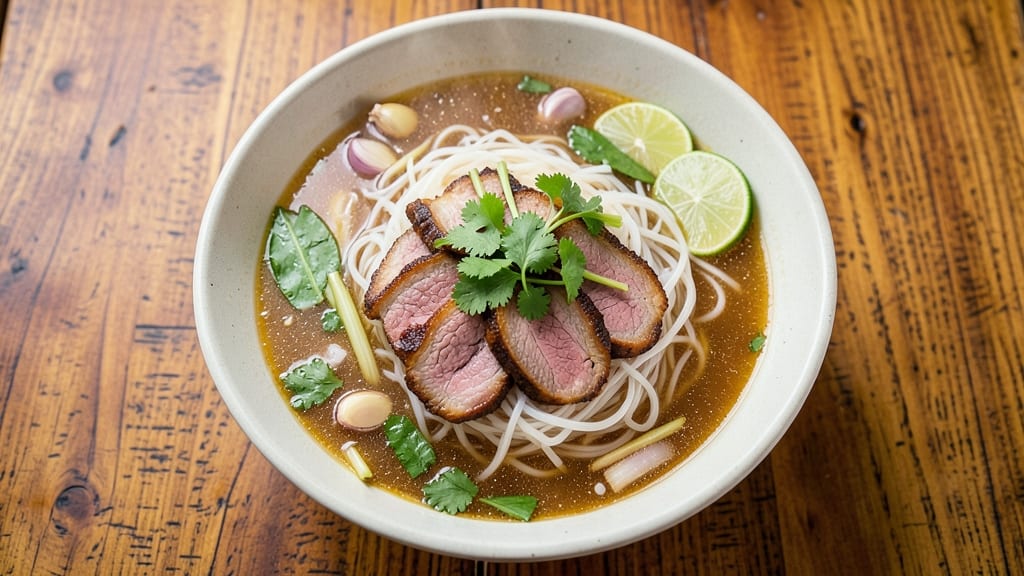
This authentic Thai beef noodle soup delivers the fragrant, spicy-sweet harmony of street-side Tom Yum and Tom Kha in one bowl. The secret lies in the aromatic broth—simmered with lemongrass, galangal, and kaffir lime leaves—where every ingredient transforms into layers of complex flavor.
I've perfected this recipe through years of testing, balancing traditional techniques with approachable home-cooking methods.
The beef slices cook just until tender, absorbing the bright, tangy broth while rice noodles soak up the essence of the spices.
What makes this recipe truly special is the balance: a touch of coconut milk for creaminess, bird's eye chilies for heat, and lime juice for that signature Thai brightness. The result is a soup that's both comforting and vibrant—perfect for chilly evenings or when you crave a taste of Thailand.
You'll start with a fragrant paste of lemongrass, galangal, and garlic, then build the broth layer by layer, ensuring each ingredient contributes its unique depth. The beef cooks in the broth until fork-tender, while the noodles soften just enough to hold their shape.
Garnishes like fresh cilantro, bean sprouts, and lime wedges add freshness and texture, making every bowl feel restaurant-quality.
This recipe preserves the soul of Thai cuisine while offering flexibility—add a splash of coconut milk for Tom Kha or keep it lighter for Tom Yum. The instructions guide you through each step, ensuring your broth develops the right balance of spice, sourness, and umami.
Ready to bring the flavors of Thailand to your kitchen?
Ingredients for authentic thai beef noodle soup
Fragrant herbs, tender beef, and creamy coconut—this is your Thai pantry raid checklist.
| Ingredient | Amount | Notes |
|---|---|---|
| Thinly Sliced Beef Top Round 🥩 | 1 ½ lb | Cut against the grain for tenderness |
| Rice Noodles 🍜 | 8 oz | Thin, flat rice noodles (vermicelli) |
| Lemongrass Stalks 🌿 | 3 whole | Bruised and cut into 2-inch pieces |
| Galangal 🌿 | 1 piece | About 3 inches long, peeled |
| Kaffir Lime Leaves 🍋 | 4 whole | Fresh, torn into strips |
| Garlic Cloves 🧄 | 6 cloves | Peeled and smashed |
| Shallots 🧅 | 6 whole | Peeled and halved |
| Coconut Milk 🥥 | 1 cup | Full-fat for creaminess |
| Bird's Eye Chilies 🌶️ | 3 whole | Seeds removed for moderate heat |
| Fish Sauce 🐟 | 1 tbsp | Red Boat preferred |
| Lime Juice 🍋 | ½ cup | Freshly squeezed |
| Fresh Cilantro 🌿 | ¼ cup | Chopped for garnish |
| Bean Sprouts 🌱 | 1 cup | Fresh or frozen |
| Sugar 🍚 | 2 tbsp | White or brown |
| Salt 🧂 | 1 tsp | Kosher or sea salt |
Lemongrass and galangal are the soul of this soup—find them at Asian markets or the international aisle. Look for stalks with vibrant green leaves and firm, white roots. Red Boat fish sauce is a must for authentic umami (the regular grocery store stuff works in a pinch, but you'll taste the difference). Kaffir lime leaves? If you can't find them fresh, dried works at half the amount, but fresh is ideal. The beef should be thinly sliced against the grain—ask your butcher to do this if you're not comfortable with it yourself. For the noodles, vermicelli rice noodles are essential—they're thin, flat, and soak up the broth perfectly.
No lemongrass? Substitute with 1 tbsp lemongrass paste or extra lime zest. Galangal missing? Ginger at half the amount works in a bind, though it won't taste identical. Bird's eye chilies too spicy? Swap for 1 Thai chili or 1 tsp red pepper flakes. The coconut milk can be light or full-fat—just know full-fat gives that rich, creamy texture. For the fish sauce, soy sauce is a non-vegan substitute, but it lacks that signature funk. The sugar balances the acidity, so don't skip it—even if you're using a sweet coconut milk, you'll need it.
This soup tastes even better the next day as the flavors meld. Store leftovers in the fridge for 3-4 days or freeze for up to 3 months. To reheat, add a splash of water or broth—it thickens as it cools. The noodles will soften further, so soak them in hot water for 30 seconds before serving if they're too firm. Garnishes like cilantro and bean sprouts add freshness, so keep them separate until serving. Make a double batch—it disappears fast when you're testing the perfect balance of spice and sweetness.
Why You'll Love This Recipe
- No Fuss Prep: The beef slices in 10 minutes flat—just a sharp knife and no fancy technique. Lemongrass and galangal bruise easily, so I toss them in whole and let the broth work its magic.
- Herb-Packed Punch: That first sip? Citrusy, spicy, with a depth from galangal that’s almost like ginger but way more complex. Kaffir lime leaves add a floral whisper—trust me, it’s the secret weapon.
- Leftovers That Save: Doubles easily, and the flavors get better the next day. I freeze portions too—just reheat with a splash of water, and it’s restaurant-quality without the wait.
- Budget-Friendly Feast: Top round is lean but packed with flavor, and rice noodles stretch into bowls for everyone. Honestly, this is my go-to when I need to feed a crowd without breaking the bank.
Step-by-step instructions for authentic Thai beef noodle soup
Here's how to build this fragrant, balanced soup with layer upon layer of authentic Thai flavors.
Prepare the Aromatic Base
In a large pot, combine the 3 whole lemongrass stalks (bruised and cut into 2-inch pieces), 1 piece galangal (peeled and sliced), 4 whole kaffir lime leaves (torn into strips), 6 cloves garlic cloves (smashed), and 6 whole shallots (peeled and halved). Add 2 tablespoons sugar and 1 teaspoon salt to balance the flavors. Cook over medium heat for 5 minutes, stirring occasionally, until the shallots soften and the mixture releases its essential oils.
Real talk: this is where the magic happens. The galangal and lemongrass should perfume the kitchen with their citrusy, piney aroma. If you can't find galangal, ginger works in a pinch—but it won't be exactly the same. Keep the heat moderate; you're not trying to brown these ingredients, just coax out their flavors.
Build the Coconut-Lime Broth
Pour in 1 cup coconut milk and stir well to combine with the aromatics. Add 1 cup water and bring to a gentle simmer. Once simmering, add the 1.5 lb thinly sliced beef top round and cook for 8-10 minutes until the beef is just cooked through but still tender. Remove the beef with a slotted spoon and set aside.
Strain the broth through a fine-mesh sieve into a clean pot, pressing gently on the solids to extract maximum flavor. Discard the aromatics. Return the broth to the pot and stir in 1 tablespoon fish sauce and 0.5 cup lime juice. Taste and adjust seasoning—you want a balance of salty, sweet, and tangy. The broth should be fragrant with coconut notes and brightened by the lime.
Cook the Rice Noodles
While the broth simmers, prepare the 8 oz rice noodles according to package instructions—usually soaking in hot water for 5-7 minutes until pliable but still slightly firm. Drain and rinse briefly under cold water to stop the cooking process. The noodles should be tender but not mushy; they'll finish cooking in the hot broth.
Don't overcook them here. You want them to absorb the flavorful broth when added later. If they're too soft now, they'll turn to mush when combined with the hot liquid. Keep them covered with a damp towel to prevent drying while you finish the soup.
Assemble and Finish the Soup
Return the beef to the broth and bring everything to a gentle simmer. Add the cooked rice noodles and stir gently to distribute them evenly. Cook for an additional 2-3 minutes just to warm through—no longer, or the noodles will turn to paste. Divide the soup among bowls, creating a nest of noodles in each.
Here's where it gets fun: top each serving with 1 cup bean sprouts, 0.25 cup chopped fresh cilantro, and 3 whole bird's eye chilies (seeds removed for moderate heat). The sprouts add crunch, the cilantro brightens the dish, and the chilies deliver that essential Thai heat. Serve immediately while everything is hot and the flavors are at their peak.
Serve with Traditional Garnishes
Let each person customize their bowl by adding extra lime wedges, fish sauce, or chili for more heat. The balance of rich coconut broth, tender beef, and fresh herbs creates that perfect Thai harmony. I like to serve this with a side of quick-pickled vegetables to cut through the richness and add another layer of acidity.
This soup tastes even better the next day as the flavors meld further, but the noodles will be softer. If you're making it ahead, cook the beef and broth separately, then assemble just before serving to maintain the perfect texture. The key to authentic Thai beef noodle soup lies in that perfect balance of sweet, salty, sour, and spicy—each element must play its part.
Pro Tips For Making Authentic Thai Beef Noodle Soup
- BLANCH THE BEEF FIRST: Toss the sliced beef in boiling water for 30 seconds before searing—this tightens the fibers so they stay tender, not chewy. I learned this the hard way after serving rubbery beef to a skeptical friend who now swears by it.
- SLICE GALANGAL THINLY: Use a sharp knife to shave galangal into matchsticks (about 1/8-inch thick), not chunks—this releases its citrusy punch evenly. Thick slices? They’ll just sit there like decorative wallpaper.
- LOW AND SLOW FOR BROTH: After searing aromatics, reduce heat to just a simmer (barely bubbling) and cover the pot. High heat burns the broth before the beef is done, and you’ll end up with a bitter, murky mess instead of that rich, clear gold.
- SOAK NOODLES SEPARATELY: Toss rice noodles in warm (not boiling) water for 5–8 minutes, then drain and rinse with cold water to stop cooking. Adding them directly to the hot soup turns them into glue—no one wants a bowl of noodle paste.
Essential equipment for this dish
Wok Essentials
The heart of Thai cooking is the wok, and for this soup, a 14-inch carbon steel wok is ideal. I swear by De Buyer or Made In brands—their flat bottoms heat evenly on stovetops.
If you don’t own one, a heavy-bottomed stainless steel pot works too, though it won’t give the same searing power. Preheat your wok over high heat for 5 minutes before adding aromatics to maximize flavor extraction. 🔥
Fine-Mesh Strainer
You’ll need a fine-mesh strainer (like the OXO Good Grips) to remove the aromatic solids after simmering. The strainer should be stainless steel with a tight weave to catch even the smallest galangal or lime leaf particles.
Press the solids gently with a wooden spoon to extract every drop of flavor—don’t skip this step! The broth’s clarity and depth depend on it.
Chef’s Knife
A sharp 8-inch chef’s knife is non-negotiable for this recipe. You’ll need it to bruise lemongrass, slice galangal, and mince garlic/shallots efficiently. I recommend Shun Premier or Wüsthof Classic—both hold their edge well.
Dull knives make prep frustrating and dangerous. For the beef, ask your butcher to slice top round against the grain into ⅛-inch strips for perfect tenderness.
Measuring Tools
Precision matters in Thai cooking, so invest in stainless steel measuring spoons (like OXO Stainless Steel) and a digital kitchen scale for ingredients like fish sauce and lime juice. The 1 tablespoon fish sauce and ½ cup lime juice are critical—they balance the broth’s sweetness and heat.
A scale ensures accuracy, especially when substituting ingredients like coconut milk or sugar.
Tongs and Slotted Spoon
Use heat-resistant silicone tongs (like OXO Good Grips) to handle the bird’s eye chilies and kaffir lime leaves—they’re delicate and can tear easily. A long-handled slotted spoon (like Cuisinart) helps remove the beef from the broth without overcooking it.
These tools keep your hands safe from the high heat and spicy chilies while maintaining control.
Serving Essentials
For presentation, grab wide, shallow bowls (like Thai soup bowls or stoneware ramekins) to showcase the noodles and garnishes. Keep lime wedges, chopped cilantro, and bean sprouts in small bowls for customization.
A small plate with extra fish sauce and chili flakes lets diners adjust spice levels to taste. Don’t forget wooden serving spoons—they’re traditional and add a rustic touch. 🌿
Nutrition facts
Frequently asked questions
Can I make this soup without coconut milk for a lighter broth?
For a lighter, Tom Yum-style version, omit the coconut milk and increase the water to 2 cups. Add an extra 1 tablespoon fish sauce and 1 tablespoon lime juice to compensate for the missing richness. The broth will be brighter and more acidic, with a sharper kick from the aromatics.
What beef cut works best for this recipe?
The ideal cut is top round or sirloin, sliced ⅛-inch thick against the grain for maximum tenderness. Flank steak also works well if sliced thinly. Avoid tougher cuts like chuck—they won’t become tender enough in the short cooking time. Ask your butcher to slice it professionally for the best results.
How do I adjust the spice level for kids or sensitive eaters?
Remove the seeds and membranes from the bird's eye chilies before adding them to the broth. For a milder version, reduce the number to 1-2 chilies or swap them for ½ teaspoon red pepper flakes. Serve extra lime wedges and cilantro on the side so kids can add freshness without spice. The broth can be made spicier and then diluted with water when serving.
Can I use dried lemongrass or galangal instead of fresh?
Fresh is always best, but if you must use dried, reduce the amount by ⅓. For lemongrass, 1 teaspoon dried powder replaces 1 stalk fresh. Galangal is trickier—substitute with ½ teaspoon ground ginger and a pinch of cardamom for depth, though it won’t taste identical. Fresh aromatics develop more complex flavors during simmering.
Why did my noodles turn mushy when added to the broth?
This happens when noodles are overcooked before adding to the broth or simmered too long afterward. Soak them for just 5-7 minutes until pliable but still firm. When adding to the hot broth, cook for only 2-3 minutes—any longer and they’ll absorb too much liquid. Keep them separate until serving if making ahead, then toss in hot broth for 1 minute before eating.