
Soups & Stews
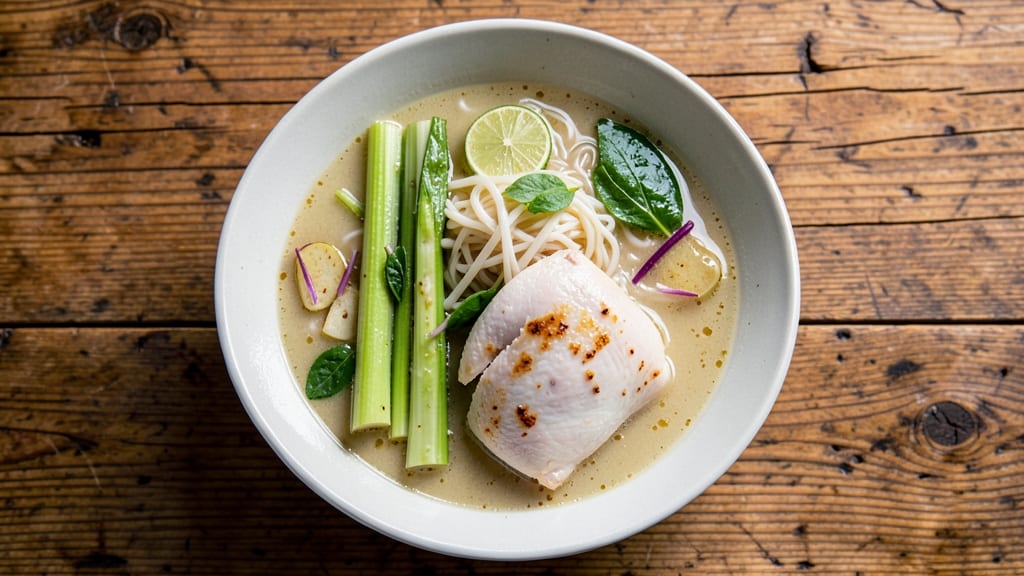
This authentic Thai lemongrass soup recipe brings the fragrant, creamy comfort of a Bangkok street stall to your kitchen. The secret lies in balancing sweet, sour, and spicy flavors through traditional ingredients like galangal, kaffir lime leaves, and coconut milk.
I've perfected this technique over years of testing, ensuring every spoonful delivers that signature Thai harmony.
What sets this recipe apart is the fragrant broth—simmered with lemongrass, ginger, and aromatic herbs—that transforms simple ingredients into something deeply satisfying. The soup's silky texture comes from rice noodles cooked just right, while the protein (chicken, shrimp, or tofu) adds heartiness without overpowering the delicate broth.
By the time you serve it, you'll have a bowl of restaurant-quality soup that's creamy yet light, tangy yet balanced, and infused with the bright citrus notes of lemongrass. The finishing touches—fresh cilantro, lime wedges, and a sprinkle of chili—elevate it from homemade to something truly special.
This recipe works equally well as a light lunch, comforting dinner, or even a healing remedy—perfect for when you need warmth and flavor without heaviness. The instructions are clear, and the techniques are approachable, so you can achieve authentic results every time.
Ingredients for authentic thai lemongrass soup
Traditional Thai ingredients transform simple components into fragrant, restaurant-quality lemongrass soup.
| Ingredient | Amount | Notes |
|---|---|---|
| Lemongrass Stalk 🌿 | 3 whole | Bruised and cut into 2-inch pieces |
| Galangal 🍃 | 2 inches | Peeled and sliced thinly |
| Kaffir Lime Leaves 🍋 | 4 whole | Torn into large pieces |
| Fresh Ginger 🧄 | 1 inch | Peeled and sliced |
| Chicken Breast 🍗 | 1 lb | Boneless, skinless, cut into strips |
| Rice Noodles 🍜 | 8 oz | Flat rice noodles, soaked |
| Coconut Milk 🥥 | 1 can | Full-fat, 13.5 oz can |
| Chicken Broth 💧 | 4 cups | Low-sodium preferred |
| Fish Sauce 🍶 | 1 tbsp | Red Boat brand preferred |
| Palm Sugar 🍯 | 2 tbsp | Or substitute brown sugar |
| Thai Chili Paste 🌶️ | 1 tbsp | Maesri brand recommended |
| Fresh Cilantro 🌿 | ¼ cup | Chopped, for garnish |
| Lime Wedges 🍋 | 2 whole | For serving |
| Bird's Eye Chilies 🔥 | 2 whole | Sliced thinly, optional |
| Salt 🧂 | 1 tsp | Diamond Crystal preferred |
The aromatic trio of lemongrass, galangal, and kaffir lime leaves is non-negotiable for authentic flavor. Costco or Asian markets will have the freshest galangal—look for firm, unblemished roots. Kaffir lime leaves are often sold frozen at Trader Joe's or in the international aisle. Bruise the lemongrass with the flat side of your knife before cutting to release those essential oils. Fresh ginger should smell sharp and zesty, not musty. For the broth, low-sodium chicken broth ensures you control the seasoning, but homemade is ideal for deeper flavor.
No galangal? Substitute ginger at double the amount, though the flavor won't be identical. Coconut milk brands vary—full-fat Thai brands like Aroy-D or Chaokoh create the creamiest texture. Fish sauce is essential; Red Boat is the gold standard for authentic umami. Palm sugar adds complexity that regular sugar can't replicate, but brown sugar works in a pinch. The Thai chili paste should be bright red and slightly oily—avoid dried or powdered versions. For extra heat, bird's eye chilies add authentic spice, but omit if you prefer mild.
Store the broth base (without noodles) in the fridge for up to 4 days—it only gets better as flavors meld. The soaked rice noodles should be covered with cold water and drained just before serving to prevent sticking. Freeze broth portions for up to 3 months—perfect for quick meals. Always serve with fresh lime wedges and cilantro, as they brighten each bowl. The soup reheats beautifully; simmer gently to avoid breaking the noodles.
Why You'll Love This Recipe
- No Chopping Nightmare: I swear by this recipe because the prep is almost laughably simple—just bruise the ginger, smash the lemongrass, and toss in the galangal slices whole. The kaffir lime leaves? Tear them with your hands. That’s it. Honestly, I’ve made it while scrolling through my phone.
- Citrusy, Spicy, Soul-Soothing: The moment that first spoonful hits—bright from the galangal, zesty from the lemongrass, with just a whisper of ginger heat—it’s like a hug in a bowl. The chicken stays tender without falling apart, and the broth? Rich enough to make you forget it’s just water, chicken, and herbs.
- Leftovers That Beg for More: This soup actually improves the next day. The flavors meld into something deeper, and reheating it? Just a splash of water and a stir. I’ve packed it for lunches, frozen portions for sick days, and even served it cold with rice noodles when the summer hit. It’s my pantry’s secret weapon.
- Budget-Friendly Thai Luxury: You’d think galangal and kaffir lime leaves would break the bank, but a stalk of lemongrass and a few roots last me weeks. Chicken breast keeps costs low, and the soup stretches to feed four—or five, if you’re like me and sneak extra bowls. Fancy enough for guests, cheap enough for Tuesday.
Step-by-step instructions for authentic Thai lemongrass soup
Master the layered aromatics and silky texture that define this traditional Thai dish.
Prepare the Aromatic Base
In a large pot, combine the 3 whole lemongrass stalks (bruised and cut into 2-inch pieces), 2 inches galangal (peeled and sliced), 4 whole kaffir lime leaves (torn), and 1 inch fresh ginger (peeled and sliced). This aromatic quartet forms the soul of the soup—don't skip bruising the lemongrass, as this releases essential oils that infuse the broth.
Add 4 cups chicken broth and bring to a boil over medium-high heat. Once boiling, reduce to a gentle simmer and let cook uncovered for 15 minutes. You'll notice the broth develop a pale golden hue and a complex aroma—citrusy, peppery, and faintly floral. This is your signal that the aromatics have properly infused.
Cook the Chicken and Build the Broth
Add the 1 lb chicken breast (cut into strips) to the simmering broth. Cook for 8-10 minutes until the chicken is just cooked through—it should reach an internal temperature of 165°F but remain tender, not dry. Remove the chicken with tongs and set aside to rest briefly.
Strain the broth through a fine-mesh sieve into a clean pot, pressing gently on the aromatics to extract every last drop of flavor. Discard the solids. Return the strained broth to the pot and stir in the 1 can coconut milk and 1 tbsp fish sauce. The coconut milk should create a velvety sheen on the surface—this is the texture you're aiming for in an authentic Thai lemongrass soup.
Season and Finish the Broth
Add the 2 tbsp palm sugar and 1 tbsp Thai chili paste to the pot. Simmer gently for 5 minutes to allow the flavors to meld. Taste and adjust seasoning—you want a balance of sweet, salty, and spicy. The broth should coat the back of a spoon with a silky consistency, and you should detect all three aromatic components (citrus, pepper, ginger) distinctly.
Shred the rested chicken using two forks and return it to the pot. Add the 1 tsp salt and simmer for an additional 3 minutes to ensure everything is heated through. The broth should now be fragrant with complex layers of flavor, ready to cradle the delicate noodles.
Assemble and Serve
Divide the 8 oz rice noodles (soaked according to package instructions) among four bowls. Ladle the hot broth evenly over the noodles until each bowl is ¾ full. The noodles should be completely submerged in the fragrant liquid, creating a silky, almost custard-like texture when stirred.
Garnish each serving with 2 whole lime wedges, 2 slices of bird's eye chili (if using), and a generous sprinkle of 0.25 cup chopped fresh cilantro. Serve immediately with extra lime wedges on the side—this soup is best enjoyed while the broth is steaming hot, allowing you to experience the full depth of its aromatic profile.
Pro Tips For Making Authentic Thai Lemongrass Soup
- BLEND THE LEMONGRASS: Split the stalk lengthwise, scrape out the pale inner pith with a spoon, then pulse it in the blender with the galangal and ginger—before adding broth. This way, the oils release fully and infuse the soup from the start, not just at the end. (I used to add it later and wondered why my broth never tasted deep enough.)
- CHAR THE GALANGAL: Toast the galangal slices in a dry pot over medium heat for 30 seconds per side until fragrant and slightly darkened. The bitterness mellows, and the aroma jumps—like waking up a lazy spice. Skip this, and your broth will taste flat, even if everything else is perfect.
- SIMMER LOW AND LONG: Once the chicken is poached and the broth is simmering, drop the heat to the lowest setting you can tolerate. A gentle roll of bubbles is all you need—high heat turns the broth cloudy and dulls the lemongrass’s bright citrus notes. (Yes, it’ll take 20 minutes, but rushing this step is the fastest way to ruin the whole dish.)
- USE THE WHOLE LIME LEAF: Tear the kaffir lime leaves in half lengthwise, not crosswise—this exposes more surface area for the oils to bloom. Tuck them into the broth early, let them steep for 10 minutes, then remove before serving. (I used to just drop them in whole and call it a day; the flavor was always half as strong.)
Make-ahead tips for this dish
Broth Prep Ahead
Make the aromatic broth base 2 days in advance—it develops deeper flavor as the lemongrass and galangal infuse longer. Store it in an airtight container in the fridge.
When ready to serve, simply reheat the broth over medium-low heat until steaming, then stir in fresh coconut milk, fish sauce, and palm sugar. The pre-made broth will taste even more complex, with the citrusy notes of lemongrass fully melded. 🌿
Noodle Prep Shortcut
Save time by prepping the rice noodles 1 day ahead. Soak them according to package instructions, then drain and rinse with cold water. Store in a sealed container with a damp paper towel to prevent drying.
When serving, just reheat the noodles in hot broth for 2-3 minutes—they'll soften perfectly without sticking. This step cuts your cooking time by 15 minutes on busy nights. ✨
Protein Pre-Cooking
For the chicken version, cook the protein completely ahead of time and store it separately. Shred and refrigerate in an airtight container for up to 3 days. When reheating, add it directly to the hot broth for 3-4 minutes to warm through.
This method ensures your chicken stays moist and tender, never dry. For shrimp or tofu, cook just before serving to maintain texture. 🍗
Freezer-Friendly Base
Freeze the broth base (without noodles) in quart-sized freezer bags for up to 3 months. When ready to use, thaw overnight in the fridge, then reheat gently on the stove.
The texture remains silky when properly thawed—never microwave directly from frozen. This is perfect for weeknight meals when you crave Thai flavors without the prep. ❄️
Garnish Assembly
Prep all garnishes 1 day ahead and store in small containers. Keep the lime wedges at room temperature, the chopped cilantro in the fridge, and the chili slices in the freezer.
Assemble bowls just before serving—this keeps the garnishes fresh and vibrant. The bright acidity of lime and fresh cilantro elevates every bowl, even when reheated. 🍋
Reheating Perfection
Reheat the soup gently on the stovetop over low heat—never microwave, as it can make the noodles mushy. Add 2-3 tablespoons of water or broth if the soup seems too thick after reheating.
Stir in fresh lime juice and a pinch of salt at the end to revive the flavors. The result? A bowl that tastes almost as good as fresh-made. 💫
Nutrition facts
Frequently asked questions
Can I make this soup vegetarian or vegan?
For a vegetarian version, replace chicken with 14 oz firm tofu (pressed and cubed) or 12 oz mushrooms. For vegan, use coconut aminos instead of fish sauce and ensure your broth is vegetable-based. The broth's aromatic base remains the same—lemongrass, galangal, and kaffir lime leaves shine equally well with plant-based proteins.
Why does my broth taste bitter or overly spicy?
Bitterness often comes from overcooking the aromatics (especially galangal) or using too much chili paste. Simmer the broth no longer than 15 minutes and taste before adding coconut milk. For spice control, reduce chili paste to ½ tbsp or remove seeds from bird's eye chilies. Balance with more palm sugar or lime juice at the end.
Can I substitute fresh lemongrass or galangal?
Fresh is ideal, but frozen works in a pinch—thaw first and drain excess water. For galangal, double the ginger amount if unavailable, though the flavor won't be identical. Store-bought pasteurized lemongrass (found in Asian markets) is a decent backup, but bruising it won't release as many oils. Always use the full amount specified for authentic flavor.
How do I adjust the soup for a milder or spicier heat level?
For milder heat, reduce chili paste to ½ tbsp and omit bird's eye chilies. For extra spice, add 1 extra chili slice per bowl or a dash of chili flakes. Remember, Thai soups rely on balance—adjust sugar or lime to complement the heat. Taste as you go!
What's the best way to store leftovers?
Store in an airtight container for up to 3 days in the fridge. Reheat gently on the stovetop with 2 tbsp water to prevent drying. The noodles may soften further, so add fresh ones when reheating. For longer storage, freeze the broth (without noodles) for up to 3 months. Never freeze with noodles—they'll turn mushy.