
Soups & Stews
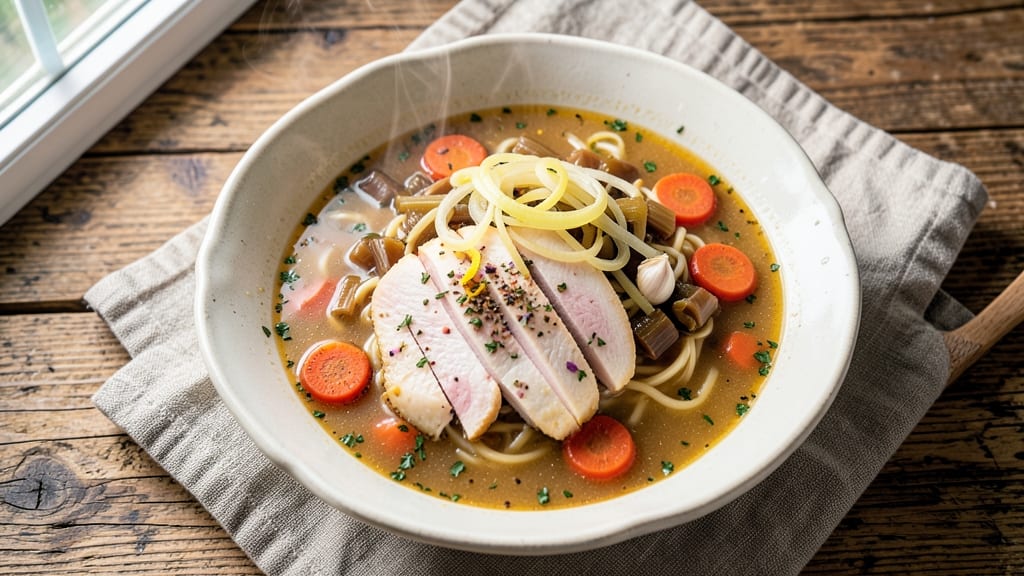
This awesome chicken noodle soup recipe delivers the warmth and comfort of a classic bowl in just 30 minutes—no shortcuts, just real flavor built from scratch.
The secret lies in a rich, aromatic broth simmered with tender chicken, vegetables, and perfectly cooked noodles, all coming together to create a bowl that feels like a hug.
I've perfected this version to balance heartiness with simplicity, ensuring every spoonful is packed with the kind of nourishing goodness that turns a simple meal into something truly special.
What sets this recipe apart is the depth of flavor achieved through a slow-simmered broth, where chicken and vegetables infuse the liquid with their essence.
The chicken, poached until fork-tender, falls apart easily, while the vegetables—carrots, celery, and onions—soften just enough to melt into the broth without losing their natural sweetness. The noodles, cooked al dente, soak up the rich broth, making each bite a perfect balance of texture and flavor.
This isn't just soup; it's a foolproof way to transform basic ingredients into something extraordinary.
The result is a bowl that's restaurant-quality at home—comforting yet sophisticated, with a broth so flavorful it doesn't need heavy seasoning. The aroma alone will draw everyone to the table, and the first sip delivers that unmistakable taste of homemade love.
Whether you're recovering from a cold, craving a cozy meal, or simply looking for a dish that brings people together, this soup delivers every time. Ready to make it? Let's get started.
For those who love customization, this recipe easily adapts to dietary preferences—use gluten-free noodles, swap in miso for a deeper umami kick, or add fresh herbs like parsley or thyme for brightness.
The beauty of this soup is its versatility, ensuring it fits seamlessly into any meal plan or occasion. Here's everything you need to create your own bowl of healing.
Ingredients for awesome chicken noodle soup
Pantry staples plus a few fresh picks for that restaurant-quality broth you crave.
| Ingredient | Amount | Notes |
|---|---|---|
| Boneless, Skinless Chicken Breast 🍗 | 1 ½ lb | Cut into bite-sized pieces |
| Carrots 🥕 | 4 medium | Peeled and cut into chunks |
| Celery Stalks 🧅 | 3 whole | Trimmed and chopped |
| Yellow Onion 🧅 | 1 whole | Diced, medium size |
| Garlic Cloves 🧄 | 4 cloves | Minced or finely chopped |
| Egg Noodles 🍜 | 8 oz | Medium or wide egg noodles |
| Chicken Broth 💧 | 6 cups | Low-sodium preferred |
| Fresh Thyme 🌿 | 2 tbsp | Leaves only, chopped |
| Fresh Parsley 🌿 | ¼ cup | Chopped for garnish |
| Butter 🧈 | 2 tbsp | Unsalted, for richness |
| Salt 🧂 | 1 ½ tsp | Kosher or sea salt |
| Black Pepper 🌶️ | ½ tsp | Freshly ground |
| Bay Leaves 🍃 | 2 whole | For depth of flavor |
| Olive Oil 🫒 | 1 tbsp | For sautéing vegetables |
The chicken is where the magic starts. Bone-in, skin-on thighs actually give more flavor than breasts, but I use breasts here for speed and simplicity. Look for free-range or organic if you can—it makes a noticeable difference. The broth is non-negotiable: low-sodium is key since we're adding our own seasoning. For extra depth, I like to toast the bay leaves in the olive oil for 30 seconds before adding them to the broth. The vegetables? Organic carrots and celery from the produce section at Whole Foods or your local farmers market have the best flavor, but regular grocery store ones work fine if they're crisp and fresh.
No fresh thyme? Dried works at one-third the amount. The parsley is purely for garnish—skip if you're in a rush, but trust me, it adds that fresh pop of color. Running low on butter? Olive oil works in a pinch, though it won't give that same rich mouthfeel. For the noodles, egg noodles are traditional, but gluten-free or whole wheat versions work perfectly. The garlic can be pre-minced from a jar if you're short on time, but fresh always tastes better. Need to make this ahead? Cook the noodles separately and add them fresh to the hot soup before serving—they'll soak up all that delicious broth.
This soup reheats beautifully—honestly tastes better the next day as the flavors meld. Keeps for 4-5 days in the fridge, or 3 months frozen. I like to portion it into containers with a little extra broth on top to prevent freezer burn. For leftovers, just reheat on the stove over medium-low heat, stirring occasionally. The broth will thicken as it cools, so add a splash of water or broth when reheating if you prefer it looser. Store the fresh herbs separately and add them back when serving to keep their brightness.
Why You'll Love This Recipe
- No Chopping Chaos: I swear by the "mirepoix shortcut"—just dice the onion, celery, and carrots (about 10 minutes max) while the chicken simmers. The garlic gets minced fast, and suddenly you’ve got that golden base without the mess of julienning or spiralizing.
- Garlic Bomb Flavor: Honestly, the secret’s in the garlic. I brown the cloves in the chicken fat first—just until they’re fragrant and slightly crispy—and that’s when the soup transforms. The onions soften into sweetness, the celery adds a bright crunch, and the carrots melt into silk. It’s the kind of depth that makes you go back for seconds.
- Leftovers That Save Me: This soup tastes better the next day—yes, really. The chicken shreds perfectly, the broth deepens, and I can reheat a big pot for lunches all week. (Between us, I’ve even frozen portions for those "I can’t adult today" days.)
- Budget-Friendly Comfort: A single chicken breast, a bag of carrots, and a bunch of celery stretch to feed four for under $10. The onion and garlic are pantry staples, and the noodles? You pick your price. It’s the kind of meal that fills you up without emptying your wallet—or your patience.
Step-by-step instructions for homemade chicken noodle soup
Here's how to create a comforting, restaurant-quality bowl using simple pantry staples.
Sauté the Vegetable Base
Heat the 1 tablespoon olive oil in a large pot over medium heat. Add the diced yellow onion, chopped celery stalks, and peeled carrot chunks, stirring occasionally for 5-6 minutes until the vegetables begin to soften and release their natural juices. You'll notice the onions turn translucent and the carrots lose their raw edge.
Add the minced garlic cloves and 2 tablespoons chopped fresh thyme, cooking for another 30 seconds until fragrant. This aromatic foundation forms the flavor backbone of your soup. If the vegetables start to brown too quickly, reduce the heat slightly to prevent burning.
Brown the Chicken and Build the Broth
Push the vegetables to one side of the pot and add the 2 tablespoons butter. When the butter foams, add the 1.5 lb boneless, skinless chicken breast cut into bite-sized pieces. Cook for 4-5 minutes until the chicken develops a golden-brown crust on all sides and reaches 165°F internally.
Return the vegetables to the pot and pour in the 6 cups chicken broth. Add the 2 whole bay leaves, 1.5 teaspoons salt, and 0.5 teaspoon black pepper. Bring to a gentle boil, then reduce heat to medium-low and let it simmer uncovered for 15 minutes. This allows the chicken to poach and the broth to develop rich, layered flavors.
Shred the Chicken and Prepare the Noodles
Use two forks to shred the chicken directly in the pot, breaking it into bite-sized pieces. Discard the bay leaves and stir the chicken back into the broth. In a separate pot, cook the 8 oz egg noodles according to package instructions until al dente—about 8-10 minutes. Drain and set aside, reserving 1 cup of pasta water for potential thinning later.
Here's the thing—this is where the magic happens. The chicken should fall apart easily at this point, releasing its juices into the broth. Taste the broth and adjust seasoning if needed, adding a splash of pasta water if it's too thick for your preference.
Combine and Finish
Add the cooked noodles to the chicken broth and stir gently to combine. Let the soup simmer together for 3-4 minutes on low heat, allowing the noodles to absorb some of the flavorful liquid. The soup should be hot but not boiling—just warm enough to release its comforting aroma.
Remove from heat and stir in the 0.25 cup chopped fresh parsley. Ladle the soup into bowls, garnishing each serving with additional parsley if desired. The finished soup should have a vibrant color, tender chicken, al dente noodles, and a broth that's rich but not overpowering.
Pro Tips For Making Awesome Chicken Noodle Soup
- Sear the Chicken First: Boneless breasts stay dry if you skip this, but a quick 2-minute sear in a hot pan with oil before simmering adds depth. The crust keeps them juicy later—just don’t overcrowd the pan or they’ll steam instead of brown.
- Chop Celery Small: I used to leave celery in big chunks, but tiny dice (1/4-inch or less) soften faster and blend into the broth. If you’re lazy, pulse half in a food processor—just don’t skip the knife entirely, or you’ll end up with a mushy mess.
- Simmer, Don’t Boil: A rolling boil shreds chicken and turns carrots to mush. Keep the heat low enough to see tiny bubbles at the edges—about 180°F (93°C)—so flavors meld without chaos. Patience here makes all the difference.
- Use Cold Water: Starting with cold water (not hot) prevents the chicken from cooking unevenly and lets the broth build flavor gradually. Add the chicken last, then bring to a simmer—this guarantees tender meat every time, no guessing.
Flavor customization for these flavors
Umami Boost Options
Swap out some of the chicken broth for ½ cup miso paste (white or red) mixed with 1 cup hot water to deepen the flavor profile. I find Miso Master white miso adds a subtle sweetness that pairs perfectly with the classic ingredients.
For a smoky twist, stir in 1 teaspoon smoked paprika during the simmering phase—it adds complexity without overpowering. 🌶️
Herb and Spice Variations
Fresh herbs elevate this soup instantly. Swap thyme for 1 tbsp fresh rosemary (remove stems) for an earthy aroma, or add ½ tsp ground coriander for a Middle Eastern-inspired touch.
I love lemon zest (from 1 lemon) tossed in at the end—it brightens the broth beautifully. For heat lovers, add ½ tsp cayenne pepper with the bay leaves.
Vegetable Swaps
Seasonal produce changes everything. Swap carrots for sweet potatoes (peeled and diced) for a heartier texture, or add 1 cup chopped kale (stems removed) during the final simmer.
For a spring version, replace celery with 1 cup sliced fennel bulb—it adds a delicate licorice note. Always adjust cooking time based on the vegetable's density.
Protein Alternatives
Make this vegetarian by replacing chicken with 1 can (15 oz) white beans (drained and rinsed) or 1 lb extra-firm tofu (pressed and cubed). For seafood lovers, swap chicken for 1 lb shrimp (peeled and deveined)—add them only in the last 3 minutes of cooking to prevent overcooking.
The shrimp absorbs the broth beautifully while staying tender.
Noodle Substitutions
Gluten-free? Use 8 oz gluten-free egg noodles (like Barilla's brand) or 8 oz brown rice noodles for a lighter texture. For a low-carb option, swap noodles for 2 cups chopped cabbage—it softens perfectly in the broth.
I also love whole wheat penne for added fiber, though cooking time may vary slightly.
Toppings and Garnishes
Fresh toppings make this soup feel restaurant-worthy. Try crumbled feta cheese (about ¼ cup) for tangy contrast, or toasted breadcrumbs (mix 2 tbsp breadcrumbs with 1 tbsp butter and toast in a dry pan).
A drizzle of chili oil (about 1 tsp) adds a spicy kick, while crispy fried shallots bring a delightful crunch. 💫
Nutrition facts
Frequently asked questions
Can I use chicken thighs instead of breasts for more flavor?
Bone-in, skin-on thighs add incredible richness and stay juicier than breasts. For best results, use 1.5 lbs thighs (skin-on for crispy edges), simmer them uncovered for 20 minutes to render fat, then shred. Just remove the skin before serving to avoid greasiness. The broth will be even more flavorful!
How do I make this soup gluten-free without sacrificing texture?
Swap egg noodles for gluten-free egg noodles (like Barilla's) or brown rice noodles—they hold up beautifully. For extra heartiness, add 2 cups chopped cabbage instead of noodles. Cook it with the broth for 5-6 minutes until tender but still slightly crisp. The cabbage adds great texture while soaking up all that flavor!
Why does my broth taste bland even after simmering?
Bland broth usually means one of three things: not enough seasoning, insufficient simmer time, or weak base ingredients. First, ensure you're using low-sodium broth and seasoning to taste. Second, simmer uncovered for at least 15 minutes—this lets flavors meld. Finally, use fresh vegetables (not wilting) and brown the chicken well before adding liquid. A splash of lemon juice at the end can also brighten flavors!
Can I make this soup ahead of time for meal prep?
Yes! This soup actually tastes better the next day as flavors deepen. Cook the broth and chicken completely, then cool and refrigerate for up to 4-5 days. Store noodles separately and cook fresh before adding to the hot soup. For freezing, portion into containers with extra broth on top to prevent freezer burn—it keeps for 3 months. Reheat gently on low heat, adding a splash of water if too thick.
What's the best way to serve this soup for a crowd?
For large gatherings, use a large stockpot (8-10 quarts)—it makes serving easier. Keep the soup warm in a slow cooker on low heat while serving. Garnish each bowl with fresh parsley and serve with crusty bread or a side salad. For a restaurant touch, add a small bowl of garnishes (like lemon wedges, chili oil, or toasted breadcrumbs) at each place setting!