
Soups & Stews
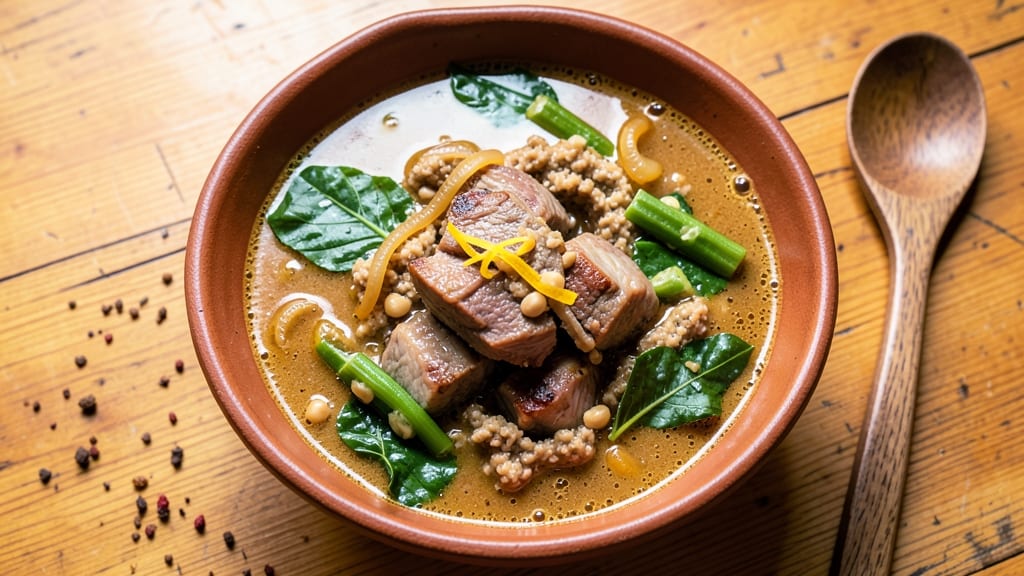
This Banga Soup recipe Cameroon brings the bold, nutty richness of West African tradition to your kitchen with its signature palm oil and peanut base. 🌟 The dish transforms tough cuts of meat into tender, flavorful morsels through slow simmering, while vegetables like okra and pumpkin leaves add vibrant texture and depth.
What makes Banga truly special is its balance of smoky, earthy notes from palm oil and the creamy, slightly sweet undertones of ground peanuts—a combination that’s both comforting and complex.
The foundation of Banga lies in its smoky palm oil, which gives the soup its distinctive color and rich flavor profile. Unlike many stews, Banga relies on a peanut-based broth rather than tomatoes, creating a uniquely velvety consistency that pairs beautifully with hearty meats like goat, beef, or fish.
The dish is traditionally served with staples like fufu, plantains, or rice, which soak up the flavorful broth and turn every bite into a satisfying experience.
What you’ll achieve is a deeply flavorful, aromatic stew that’s hearty enough for a family meal but rich enough to feel like a celebration. The slow cooking process ensures the meat is fork-tender, while the vegetables retain their texture, creating a harmonious blend of flavors and textures.
This recipe delivers restaurant-quality results at home, with just a few key techniques to master.
Whether you’re serving Banga for a special occasion or a weeknight dinner, it’s a dish that will impress with its depth of flavor and cultural significance. The recipe scales easily, making it perfect for gatherings or meal prep. Let’s get started on creating this iconic Cameroonian classic!
Ingredients for banga soup recipe cameroon
Six servings of rich, smoky Banga await with these carefully chosen ingredients.
| Ingredient | Amount | Notes |
|---|---|---|
| Goat Meat 🐐 | 2 lb | Cut into 2-inch pieces, bone-in preferred |
| Palm Oil 🫒 | ½ cup | Smoky, unrefined for authentic flavor |
| Ground Peanuts 🥜 | 1 cup | Roasted, unsalted preferred |
| Okra 🌿 | 1 lb | Trimmed, sliced into 1-inch pieces |
| Pumpkin Leaves 🍃 | 2 cups | Chopped, fresh or frozen |
| Onions 🧅 | 2 whole | Yellow or red, chopped |
| Garlic Cloves 🧄 | 6 cloves | Minced, fresh preferred |
| Scotch Bonnet Peppers 🌶️ | 2 whole | Seeds removed for milder heat |
| Tomato Paste 🍅 | 2 tbsp | High-quality, no added salt |
| Chicken Stock 🥫 | 4 cups | Homemade or low-sodium |
| Thyme 🌿 | 1 tbsp | Fresh, chopped or dried |
| Bay Leaves 🌿 | 2 whole | Fresh preferred |
| Salt 🧂 | 1 ½ tsp | Adjust to taste, kosher preferred |
| Black Pepper 🌶️ | ½ tsp | Freshly ground |
| Cilantro 🌿 | ¼ cup | Chopped, for garnish |
The palm oil is non-negotiable for authentic flavor—look for unrefined, smoky varieties at African markets or specialty stores like African & Caribbean Foods Market. If unavailable, light coconut oil works in a pinch, though it lacks the signature depth. For the ground peanuts, Trader Joe's or Whole Foods bulk sections offer the best quality; avoid pre-salted versions. The goat meat should be well-marbled—ask your butcher for chuck or shoulder cuts, which stay tender during long simmering. Fresh pumpkin leaves elevate the dish, but frozen works if you can’t find them fresh at Latin or African grocery stores.
No palm oil? A mix of smoked paprika and olive oil (1 tbsp each) mimics the smokiness, though it won’t be identical. Substitute peanuts with cashews (soaked and blended) for a nuttier profile. Skip the Scotch bonnet? Jalapeño or habanero adds heat, but reduce to 1 pepper for milder flavor. The tomato paste can be omitted entirely—Banga’s peanut base carries the dish without it. For a quicker prep, pre-chopped onions and garlic from the store save time, though fresh tastes superior. Diamond Crystal kosher salt dissolves cleanly; adjust gradually to avoid over-salting.
Store palm oil in a cool, dark place for up to 12 months—it’s stable but loses smokiness over time. Ground peanuts keep for 6 months in the pantry; toast them briefly before grinding for deeper flavor. Pumpkin leaves wilt quickly—blanch and freeze extras for later use. The finished soup reheats beautifully—simmer for 5 minutes to revive textures. Portion into glass jars for 3 days of fridge storage or 3 months frozen. Garnish with cilantro just before serving to preserve its freshness.
Why You'll Love This Recipe
- One-Pot Magic: The okra thickens the broth while you simmer the goat—no separate sauces, no extra pots. Just dump, stir, and let the palm oil work its richness into every corner.
- Rich Without Effort: That deep, nutty peanut base and smoky palm oil do all the heavy flavor-lifting. Honestly, the goat meat practically melts into the broth, so you’re left with layers of taste with almost no extra work.
- Weeknight Crowd-Pleaser: Between us, this feeds a houseful and still leaves leftovers that taste better the next day. My in-laws request it every time they visit—no fancy plating, just pure satisfaction.
- Budget-Friendly Powerhouse: Ground peanuts stretch the soup, pumpkin leaves add nutrition, and goat meat keeps costs lower than beef. I’ll be real: it’s the kind of dish that makes grocery day feel like a win.
Step-by-step instructions for Banga soup Cameroon
Master this West African classic with its rich peanut-palm oil base and tender goat meat.
🔥 Step 1: Sear the Goat Meat for Deep Flavor
Heat 0.5 cup palm oil in a large Dutch oven over medium-high heat until shimmering. Add the 2 lb goat meat in batches, searing for 3-4 minutes per side until deeply browned. This step develops the Maillard reaction, creating that signature caramelized depth.
Don't overcrowd the pan—work in batches if needed. The meat should release easily from the pan when ready. Remove the seared meat and set aside temporarily. You'll notice the oil will darken slightly from the meat's natural juices, intensifying the soup's smoky character.
🍳 Step 2: Build the Peanut-Palm Oil Base
In the same Dutch oven, reduce heat to medium and add 1 cup ground peanuts, stirring constantly for 2-3 minutes until they begin to darken and release their nutty aroma. This creates the soup's signature peanut-palm oil base that coats every ingredient.
Add 2 tbsp tomato paste and stir vigorously for 1 minute to distribute evenly. The tomato paste helps balance the richness of the peanuts while adding subtle sweetness. Here's where the magic happens—this base will become the flavor foundation for your entire soup.
🥘 Step 3: Develop the Vegetable Medley
Add 2 chopped onions and 6 minced garlic cloves to the Dutch oven, cooking for 3-4 minutes until softened and fragrant. Stir in 1 lb sliced okra and 2 cups chopped pumpkin leaves, cooking for another 5 minutes until the okra begins to soften.
Add 2 whole bay leaves, 1 tbsp thyme, 1.5 tsp salt, and 0.5 tsp black pepper, stirring to combine. The aromatic herbs will infuse throughout the soup, creating that complex herbal profile characteristic of authentic Banga. The okra will thicken the soup naturally as it cooks.
🍳 Step 4: Simmer with Spice and Stock
Return the seared goat meat to the pot along with 4 cups chicken stock. Bring to a gentle boil, then reduce heat to low-medium and simmer uncovered for 45-60 minutes, stirring occasionally. The soup should reduce slightly, allowing flavors to meld and the meat to become fork-tender.
Add the 2 seeded Scotch bonnet peppers during the last 15 minutes of cooking to infuse heat without making the soup too spicy. The meat is done when it easily pulls apart with a fork and the broth has thickened into a rich, velvety consistency. Taste and adjust seasoning—you might need an extra pinch of salt to balance the flavors.
🍽️ Step 5: Finish and Garnish
Remove from heat and let the soup rest for 5 minutes to allow flavors to settle. Discard the bay leaves and adjust consistency by adding water or stock if needed—it should coat the back of a spoon but still be spoonable.
Ladle into serving bowls and garnish with 0.25 cup chopped cilantro. Serve immediately with fufu, eba, or pounded yam to soak up the rich, flavorful broth. The soup should have a perfect balance of smoky palm oil, nutty peanut base, and tender meat with just the right amount of heat from the Scotch bonnet peppers.
Pro Tips For Making Banga Soup Recipe Cameroon
- Brown the Goat First: Don’t skip this step—toss the goat meat in a hot pot with a splash of water (just enough to deglaze) and let it sizzle until the edges turn dark brown. I used to rush this, and the soup always tasted flat; the Maillard reaction here makes the difference between good and deeply flavorful.
- Toast the Peanuts: Dry-roast the ground peanuts in a separate pan for 3-4 minutes until they smell nutty and slightly toasted. This isn’t just about flavor—it prevents the peanut paste from turning greasy and clumping in your soup. (Yes, even if you’re impatient like me.)
- Add Okra Late: Hold off on tossing in the okra until the very end—about 10 minutes before serving. If you add it too early, it’ll turn mushy and lose its signature slimy texture, which actually thickens the soup. Trust me, that’s the magic.
- Simmer on Low Heat: Once everything’s in the pot, drop the heat to the lowest setting and let it bubble gently. I learned this the hard way—high heat makes the palm oil separate and the pumpkin leaves turn bitter. Low and slow keeps the soup rich and cohesive. (Your future self will thank you.)
Make-ahead tips for banga soup recipe cameroon
Prep Ahead Components
Start by prepping the goat meat the day before—trim and cut it into 2-inch pieces, then marinate in 1 tbsp palm oil, 1 tsp thyme, and ½ tsp black pepper for 12-24 hours in the fridge.
This tenderizes the meat and infuses it with flavor. Store the marinated meat in an airtight container with a lid. 🌟
Peanut-Palm Base
Make the peanut-palm oil base in advance for maximum flavor development. Toast 1 cup ground peanuts in a dry skillet over low heat for 5 minutes, then grind them into a fine powder using a mortar and pestle or food processor.
Store in an airtight container at room temperature for up to 3 days. This step can be done 2 days ahead—just reheat the base gently before adding other ingredients.
Vegetable Prep
Chop all vegetables—okra, pumpkin leaves, onions, and garlic—and store them separately in ziplock bags in the fridge for up to 3 days. For pumpkin leaves, blanch them in boiling water for 1 minute, then shock in ice water to preserve their vibrant green color.
This keeps them fresh and ready to add directly to the pot when you’re ready to cook. ✨
Slow Cooker Option
For a hands-off approach, sear the goat meat as directed, then transfer it to a 6-quart slow cooker along with all other ingredients except the Scotch bonnet peppers. Cook on low for 6-8 hours or high for 4-5 hours.
Add the peppers during the last 30 minutes to infuse heat. This method is perfect for busy days—just reheat and serve! 💪
Freezer-Friendly
Banga soup freezes exceptionally well. After cooking, let it cool completely, then portion into glass freezer-safe containers or heavy-duty freezer bags. Leave 1-inch headspace for expansion and label with the date. It keeps for up to 3 months.
To reheat, thaw overnight in the fridge, then simmer on the stovetop for 10-15 minutes until heated through. The flavors actually improve after freezing! ❄️
Staple Prep
Prepare your staple—whether it’s fufu, eba, or pounded yam—ahead of time. Fufu can be made 1 day ahead and reheated in a steamer for 5-10 minutes. Eba can be stored in the fridge for 2 days and reheated in the microwave.
Pounded yam keeps for 3 days in the fridge and can be reheated in a pot of boiling water for 2-3 minutes. This ensures your meal is ready to serve as soon as the soup is hot. 🍽️
Nutrition facts
Frequently asked questions about Banga soup
What makes Banga Soup different from other African stews?
Banga stands out with its unique peanut-palm oil base that creates a velvety, nutty flavor profile unlike tomato-based stews. The combination of smoky palm oil and ground peanuts gives it a distinct richness, while the slow-cooked meat and vegetables maintain their texture. This dish also traditionally uses okra for natural thickening rather than flour or cornstarch.
Can I substitute goat meat with another protein?
For a fish version, use 2 lbs firm white fish like tilapia or cod (add during the last 10 minutes of cooking). Beef or chicken work too—just increase cooking time to 1 hour for beef or 45 minutes for chicken. The key is ensuring the meat becomes fork-tender during simmering.
Why does my Banga Soup look too thin?
The okra naturally thickens as it cooks, but if your soup is still too thin, simmer uncovered for 10-15 extra minutes to reduce. For immediate thickening, blend ½ cup of the soup and stir it back in. If using frozen pumpkin leaves, they release more liquid—reduce cooking time slightly or add 1 tbsp tomato paste to help bind the broth.
What's the best way to store leftovers?
Transfer cooled soup to airtight containers and refrigerate for up to 4 days. For longer storage, freeze in portions for 3 months. Reheat gently on low heat, stirring occasionally, and add a splash of water if needed. The peanut-palm oil base actually tastes richer after reheating!
Can I make Banga Soup without palm oil?
While palm oil is traditional, you can substitute with ½ cup light coconut oil + 1 tbsp smoked paprika for smokiness. For a nutty alternative, use ½ cup peanut oil (though it lacks the signature color). The peanut base will still shine through—just expect a slightly different flavor profile.