
Soups & Stews
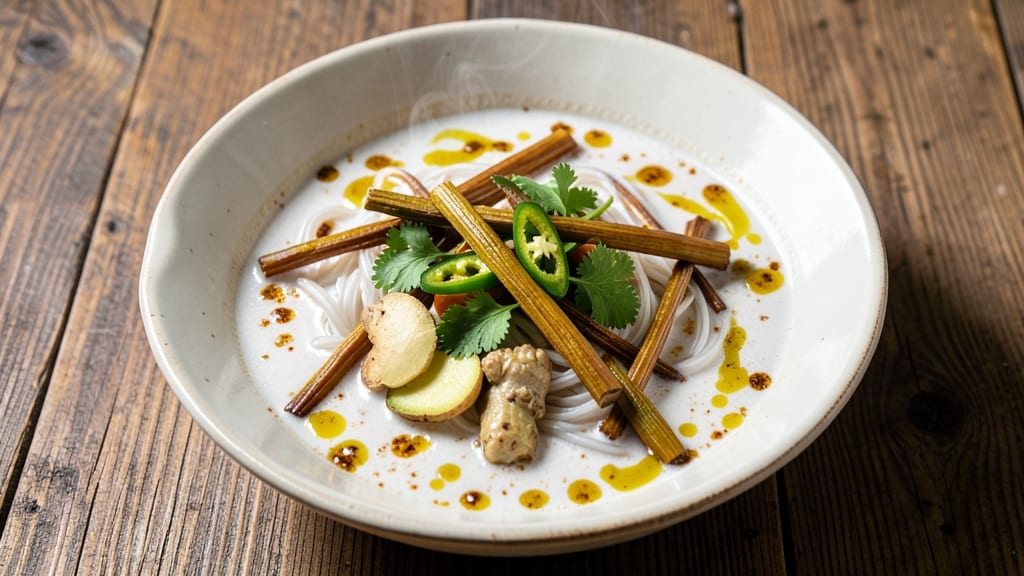
This Bangladeshi Thai-inspired soup blends fragrant lemongrass, fiery ginger, and aromatic spices into a creamy, comforting broth that balances heat and depth. The fusion of South Asian and Southeast Asian flavors creates something entirely unique—bright, tangy, and deeply satisfying.
I developed this recipe after craving a soup that honored both culinary traditions while delivering restaurant-quality richness at home.
The soul of this dish lies in its fragrant broth, simmered with lemongrass, galangal, and a touch of mustard oil for that signature South Asian kick. Thin rice noodles soak up the bold flavors while remaining tender, and a silky coconut milk base adds velvety texture.
What sets this apart is the balance—spicy yet refreshing, hearty yet light, with layers of umami from fish sauce and tamarind.
By the time you finish cooking, you’ll have a bowl of golden, aromatic soup that’s perfect for chilly evenings or as a healing meal. The broth is rich enough to stand alone but pairs beautifully with steamed jasmine rice or crusty bread.
Each spoonful delivers a symphony of ginger, lemongrass, and coconut, making this more than just a soup—it’s a flavor journey.
This recipe is foolproof for home cooks, with clear steps to build the broth and assemble the noodles without fuss. The spices can be adjusted to taste, so whether you prefer it fiery or gently spiced, this soup adapts. Let’s get cooking—your taste buds will thank you.
Ingredients for bangladeshi thai soup
Fragrant lemongrass, fiery ginger, and creamy coconut milk come together for this fusion soup.
| Ingredient | Amount | Notes |
|---|---|---|
| Lemongrass Stalks 🌿 | 3 whole | Bruised and cut into 2-inch pieces |
| Fresh Ginger Root 🧄 | 3 oz | Peeled and sliced into thin coins |
| Galangal Root 🌿 | 2 oz | Peeled and sliced (or sub ginger) |
| Mustard Oil 🫒 | 2 tbsp | For authentic South Asian kick |
| Coconut Milk 🥥 | 1 can | Full-fat, 13.5 oz can (not carton) |
| Thin Rice Noodles 🍜 | 8 oz | Vermicelli or angel hair type |
| Fish Sauce 🍶 | 2 tbsp | Red Boat brand preferred |
| Tamarind Paste 🍈 | 1 tbsp | Dissolved in 2 tbsp warm water |
| Garlic Cloves 🧄 | 4 cloves | Minced or finely chopped |
| Shallots 🧅 | 3 whole | Peeled and thinly sliced |
| Green Chilies 🌶️ | 2 whole | Thinly sliced (adjust for heat) |
| Lime Juice 🍋 | 2 tbsp | Freshly squeezed |
| Vegetable Broth 💧 | 4 cups | Homemade or quality store-bought |
| Cilantro Leaves 🌿 | ¼ cup | Chopped for garnish |
| Salt 🧂 | 1 tsp | Adjust to taste |
Lemongrass and galangal are the flavor anchors here—look for fresh stalks at Asian markets or the international aisle. Trader Joe's and H Mart usually stock them year-round. If you can't find galangal, ginger works in a pinch (though it's not the same). For the mustard oil, Kallo brand is my go-to—it's hot but not overpowering. The coconut milk needs to be full-fat for that silky texture, so skip the light version. And trust me, the fish sauce makes all the difference—Red Boat is the gold standard, but any quality brand will do.
No galangal? Double the ginger and add a pinch of turmeric for depth. Mustard oil too strong? Swap for toasted sesame oil or neutral oil like avocado. Tamarind paste hard to find? Lemon juice plus 1 tsp sugar mimics the tang. The rice noodles should be thin—vermicelli works best, but angel hair is fine if that's what you've got. For extra umami, add a splash of soy sauce to the broth. And if you're feeling adventurous, top with crispy shallots or fried garlic for crunch.
This soup tastes even better the next day—reheat gently with a splash of water or broth to restore creaminess. Keeps 4-5 days in the fridge, though the noodles get softer over time. For longer storage, freeze the broth separately (without noodles) for up to 3 months. I like to prep the broth ahead and keep the noodles in a separate container—just cook them fresh when ready to serve. The aromatics (lemongrass, ginger) can be prepped a day ahead too, stored in the fridge wrapped in plastic.
Why You'll Love This Recipe
- No Chopping Chaos: I swear by this recipe because the prep is actually simple—just smash the ginger, bruise the galangal, and slice the lemongrass stalks (no mincing, no fuss). The hardest part is finding mustard oil, and honestly, that’s half the fun.
- Coconut-Galangal Magic: That first spoonful of soup—where the mustard oil’s sharp bite meets the creamy coconut milk and the galangal’s citrusy heat? It’s the kind of flavor that makes you pause mid-sip. No heavy cream, no overpowering spices—just balanced, addictive layers.
- Leftover Goldmine: This soup only gets better the next day. The flavors meld into something richer, and it reheats like a dream. I make a double batch on Sundays because by Thursday, I’m begging for it—no takeout needed.
- Budget-Friendly Luxury: Mustard oil might sound fancy, but a little goes a long way, and the rest of the ingredients are pantry staples. Galangal’s cheaper than ginger in bulk, and coconut milk stretches across multiple meals. It’s comfort food that doesn’t break the bank.
Step-by-step instructions for lemongrass-ginger noodle soup
This fusion soup brings together bold flavors and aromatic ingredients for a comforting dish.
Prepare the Aromatic Base
Heat the 2 tablespoons mustard oil in a large pot over medium heat until shimmering but not smoking. Add the 3 whole lemongrass stalks (cut into 2-inch pieces) and 3 ounces sliced ginger root. Sauté for 3 minutes until the ginger becomes fragrant and slightly translucent.
Add the 2 ounces sliced galangal root and 3 whole shallots (thinly sliced). Cook for another 4 minutes until the shallots soften and turn golden. This foundational step builds the soup's signature aromatic complexity - the galangal adds a citrusy depth that complements the ginger perfectly.
Build the Flavor Layers
Stir in the 4 cloves minced garlic and 2 whole green chilies (thinly sliced). Cook for 1 minute until the garlic turns golden and the chilies soften slightly. This quick cooking prevents the garlic from burning while preserving the chilies' heat.
Pour in the 4 cups vegetable broth and bring to a gentle boil. Reduce heat to medium-low and let it simmer for 8 minutes until the broth reduces slightly and the flavors meld together. This simmering step allows all the aromatics to infuse deeply into the broth.
Add the Tangy Elements
In a small bowl, dissolve the 1 tablespoon tamarind paste in 2 tablespoons warm water until smooth. Stir this mixture into the simmering broth along with the 2 tablespoons fish sauce. The tamarind adds a beautiful tanginess that balances the richness of the coconut milk we'll add next.
Add the 1 can coconut milk and stir gently to combine. Let the soup simmer for another 5 minutes until the coconut milk is fully incorporated and the soup reaches your desired consistency. The coconut milk should create a velvety texture while maintaining the broth's aromatic depth.
Prepare and Cook the Noodles
While the soup simmers, prepare the 8 ounces thin rice noodles by soaking them in hot water for 5-7 minutes until pliable but still slightly firm. Drain and rinse briefly with cold water to stop the cooking process. This preparation ensures the noodles cook perfectly in the hot soup without becoming mushy.
Add the drained noodles to the pot and stir gently to coat them evenly with the soup. Cook for 3-4 minutes until the noodles are tender but still hold their shape. The noodles should absorb the soup's flavors without becoming overcooked and limp.
Finish and Serve
Remove the pot from heat and stir in the 2 tablespoons lime juice and 1 teaspoon salt. Taste and adjust the seasoning - you may need a bit more salt or lime depending on your preference. The lime juice brightens all the flavors and creates that perfect balance between rich and tangy.
Ladle the soup into bowls and garnish with ¼ cup chopped cilantro leaves. Serve immediately while the noodles are hot and the broth is steaming. This dish is best enjoyed fresh when all the flavors are at their peak intensity and the noodles maintain their perfect texture.
Pro Tips For Making Bangladeshi Thai Soup
- Bruise the Galangal: I learned this the hard way—chopping galangal too finely makes the soup bitter. Instead, smash it with the flat side of your knife (like ginger) before slicing. This releases the oils without turning the broth into a mouthful of peppery grit.
- Bloom the Mustard Oil: Mustard oil burns faster than you think. Heat it over low medium until it shimmers (about 2 minutes), then add the lemongrass and ginger. If it darkens, you’ve lost that signature sharp aroma—start over. (Yes, even if you’re impatient like me.)
- Simmer, Don’t Boil: After adding coconut milk, keep the heat at a whisper. A rolling boil will break the milk into greasy clumps, and the soup will taste like a watered-down curry. A gentle simmer keeps the texture creamy and the flavors layered.
- Toast the Lemongrass First: Sounds weird, but it works: Sear the lemongrass stalks in the mustard oil for 30 seconds before adding water. This caramelizes the edges, adding a subtle smokiness that cuts through the coconut’s richness. (Your future self will notice the difference.)
Make-ahead tips for this dish
Broth Prep Ahead
Make the fragrant broth 24 hours ahead—it tastes even better after flavors meld overnight. Store the cooked broth (without noodles) in an airtight container in the fridge. The aromatics (lemongrass, ginger, galangal) can stay in—just reheat gently over low heat for 10 minutes before adding noodles.
The broth will thicken slightly, so add a splash of water if needed. 💫
Noodle Prep Shortcut
Save time by prepping noodles separately. Soak the 8 ounces rice noodles in hot water for 5-7 minutes until pliable, then drain and rinse with cold water. Store in a resealable plastic bag in the fridge for up to 3 days.
When ready to serve, just reheat the broth and toss in the noodles for 3-4 minutes—they’ll cook through instantly. This keeps your soup assembly quick and stress-free. ✨
Freezing for Later
Freeze the broth (without noodles) in quart-sized freezer bags for up to 3 months. Leave 1 inch headspace for expansion. Thaw overnight in the fridge, then reheat on the stovetop over medium-low heat for 15 minutes, stirring occasionally.
The texture stays creamy, and the flavors remain vibrant. I like to freeze broth in 2-cup portions for single servings—perfect for quick lunches. ❄️
Garnish Prep
Chop the ¼ cup cilantro and store it in a small container with a damp paper towel to keep it fresh.
You can also pre-make crispy shallots by thinly slicing 2 shallots, frying in 2 tbsp oil over medium heat for 3-4 minutes until golden, then draining on paper towels. Store in an airtight container at room temperature for up to 1 week.
Toss these on top just before serving for extra crunch. 🌟
Spice Adjustments
If you’re prepping ahead, taste the broth before storing and adjust seasonings now. Add ½ tsp salt or 1 extra tbsp fish sauce if needed. For extra heat, stir in 1 tsp chili flakes or 1 tbsp sambal oelek.
Store these adjustments separately in small containers—just stir them in when reheating. This ensures your soup hits the perfect balance every time. 🔥
Nutrition facts
Frequently asked questions
What makes this soup uniquely Bangladeshi-Thai?
This fusion soup blends South Asian and Southeast Asian flavors through key ingredients: mustard oil (classic Bangladeshi) and lemongrass-galangal (Thai staples). The tamarind-fish sauce combo adds that signature tangy umami, while coconut milk bridges both cuisines beautifully. It's like a flavor bridge between two culinary worlds!
Can I make this soup vegetarian?
Yes! Simply replace the fish sauce with 2 tbsp soy sauce + 1 tbsp miso paste for umami depth. Also swap the vegetable broth for a rich mushroom or lentil broth. The galangal and ginger will still shine, but check your galangal is pesticide-free if avoiding all animal products.
Why does the recipe call for mustard oil?
The mustard oil is essential for that signature Bangladeshi kick—it adds a pungent, slightly spicy depth that complements the coconut milk beautifully. If you're sensitive to its heat, reduce to 1 tbsp or use toasted sesame oil instead. The oil should be hot but not smoking when added to the aromatics.
How do I adjust the spice level?
For milder heat, reduce green chilies to 1 whole or remove seeds. For extra spice, add ½ tsp chili flakes or 1 tbsp sambal oelek when reheating. The tamarind and lime juice naturally balance heat, so adjust these too if needed. Always taste before serving!
Can I use dried noodles instead of fresh?
Use 8 oz dried rice vermicelli (like Miracle Noodles). Soak them in hot water for 8-10 minutes until pliable, then drain and rinse with cold water. They'll absorb flavors just like fresh noodles. For extra texture, add 1 tbsp toasted sesame seeds to the broth while simmering.