
Soups & Stews
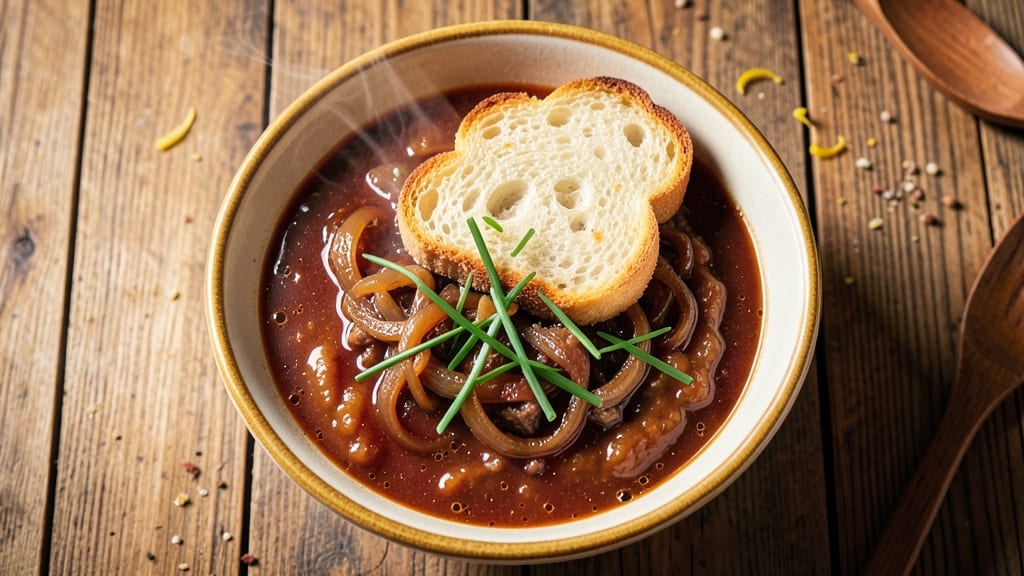
This Be Our Guest French onion soup recipe brings the magic of Disney's iconic restaurant to your kitchen with golden, crispy bread crowns and layers of caramelized onions. The secret? Slow-cooking onions until they're sweet, jammy, and deeply flavorful—just like the pros do.
I've perfected this version after years of testing, and it's become my go-to for cozy nights or special dinners.
The beauty of this recipe is in the layers—rich beef broth, tender onions, and that perfect crispy cheese bread topping that's impossible to resist. It takes about 1 hour to make, but the slow caramelization of the onions is worth every minute.
The bread crowns get golden and crispy in the oven, creating the ultimate contrast with the warm, velvety soup beneath.
What you'll end up with is a steaming bowl of French onion soup that looks and tastes like it came straight from Be Our Guest—crispy bread crowns piled high with melted cheese, floating in a sea of caramelized onions and savory broth.
The aroma alone will have everyone gathering around the table, and the first spoonful is always the best.
Serve this luxurious soup with a side salad or crusty baguette for dipping, and don't forget the extra cheese for topping. This is the kind of recipe that turns an ordinary weeknight into something special. Let's get cooking!
Ingredients for be our guest french onion soup
Rich caramelized onions, velvety broth, and crispy golden bread crowns—this is Disney magic in a bowl.
| Ingredient | Amount | Notes |
|---|---|---|
| Yellow Onions 🧅 | 4 whole | Thinly sliced, about 8 cups total |
| Beef Broth 💧 | 6 cups | High-quality, low-sodium preferred |
| Butter 🧈 | ½ cup | Unsalted, for caramelizing onions |
| All-Purpose Flour 🌾 | ¼ cup | For thickening broth |
| Dry White Wine 🍷 | ½ cup | Bold, dry variety like Sauvignon Blanc |
| Garlic Cloves 🧄 | 4 cloves | Minced for depth of flavor |
| Fresh Thyme Leaves 🌿 | 1 tbsp | Or 1 tsp dried thyme |
| Baguette 🍞 | 1 whole | Crusty, about 12 inches long |
| Gruyère Cheese 🧀 | 1 ½ cups | Freshly grated, nutty flavor |
| Parmesan Cheese 🧀 | ½ cup | Freshly grated, adds umami |
| Olive Oil 🫒 | 2 tbsp | For brushing bread crowns |
| Salt 🧂 | 2 tsp | Kosher or sea salt |
| Black Pepper 🌶️ | ½ tsp | Freshly ground for finish |
The onions are the soul of this soup. Yellow onions work best—they caramelize beautifully. Grab the biggest, sweetest ones you can find, like the Vidalia variety if you're near a farmers market. Thinly slice them—about 1/8-inch thick—and don't skip the slow cook (30+ minutes) to get that jammy, sweet depth. The beef broth should be premium, like Kraft or Swanson organic, or even better, homemade. If you're using bouillon cubes, Knorr or Pacific Foods are solid choices—just dissolve them fully in hot water. The butter? Plugrá or Land O'Lakes unsalted, because salted can make your onions watery.
No wine? Extra beef broth with a splash of balsamic vinegar works in a pinch. Fresh thyme is ideal, but dried works at one-third the amount. The flour is just for thickening—if you're gluten-free, use cornstarch instead. For the bread crowns, French baguettes are perfect, but any crusty loaf will do. The cheeses? Gruyère is non-negotiable—it melts beautifully, but if you can't find it, Comté or Emmental are great substitutes. Just make sure it's freshly grated; pre-shredded gets clumpy. And trust me on the double cheese—Gruyère alone isn't enough for that Be Our Guest richness.
This soup tastes even better the next day—honestly, the flavors meld into something magical. Store it in the fridge for up to 4 days, covered tightly. The bread crowns? Make them fresh if you can, but you can prep the dough ahead and bake just before serving. For leftovers, reheat the soup gently on the stove, then pop the bread crowns under the broiler for 2-3 minutes to crisp up. Freeze the soup (without the bread) for up to 3 months—just thaw and reheat slowly. The bread crowns? Not ideal for freezing, but you can toast leftover baguette slices and use those instead.
Why You'll Love This Recipe
- Caramelized Magic: I swear by that slow cook in butter—it turns sweet, golden, and sticky before you even think about adding broth. The onions practically melt into the pan, and that’s when the real flavor starts.
- Wine Upgrade: A splash of dry white wine? Oh, it’s not fancy—just a quick deglaze—but it cuts through the richness and adds this bright, almost citrusy lift. My cheap box wine works just as well as the expensive stuff.
- Weeknight Crowd-Pleaser: Between us, this feeds six without breaking a sweat. Make a double batch, freeze half, and you’ve got a cozy meal ready for when your in-laws drop by or you just need to impress someone.
- Budget-Friendly Luxury: Onions are cheap, broth is cheap, and that flour-butter roux? It stretches like crazy. I’ve made this for under $10 per serving, and it still tastes like a Parisian bistro. (Yes, even on a Tuesday night.)
Step-by-step instructions for be our guest French onion soup
Transform simple ingredients into a restaurant-worthy masterpiece with these foolproof techniques.
Caramelize the Onions to Golden Perfection
In a large Dutch oven, melt the 0.5 cup butter over medium-low heat. Add the 4 whole yellow onions, sliced thinly into 8 cups total, and sprinkle with 1 teaspoon salt and ¼ teaspoon black pepper. Stir to coat the onions evenly in the butter.
Cook for 45-50 minutes, stirring occasionally, until the onions turn deep golden brown and caramelized. Here's the thing—don't rush this step. You'll know it's ready when the onions have melted down significantly, lost most of their moisture, and developed a rich, sweet aroma. The longer you cook them, the deeper the flavor. If they start to brown too quickly, reduce the heat slightly to prevent burning.
Build the Rich, Velvety Broth
Once the onions are caramelized, sprinkle the 0.25 cup all-purpose flour over them and stir vigorously for 1-2 minutes to cook out the raw flour taste. Pour in the 0.5 cup dry white wine and scrape up any browned bits from the bottom of the pot—this is where all the flavor hides. Let it simmer for 3-4 minutes until the wine has mostly evaporated.
Gradually whisk in the 6 cups beef broth, one ladle at a time, to prevent lumps from forming. Bring the mixture to a gentle simmer, then add the 4 cloves minced garlic and 1 tablespoon fresh thyme leaves. Stir in the remaining 1 teaspoon salt and ¼ teaspoon black pepper. Let the soup simmer uncovered for 20-25 minutes until it thickens slightly and the flavors meld together beautifully. The broth should coat the back of a spoon with a velvety texture.
Prepare the Crispy Bread Crowns
Preheat your oven to 375°F. Slice the 1 whole baguette into 1-inch thick rounds, creating about 8-10 slices depending on the baguette's length. Brush both sides of each slice generously with the 2 tablespoons olive oil—this is what creates that perfect golden crust.
Place the oiled bread slices on a baking sheet and toast in the preheated oven for 5-7 minutes until they're golden brown and crispy. Here's the secret: don't overcrowd the baking sheet. Leave some space between slices so they can crisp up properly on all sides. While the bread toasts, keep the soup warm on the stovetop at a gentle simmer.
Assemble and Bake to Melty Perfection
Once the bread is crispy, carefully place each slice on top of the simmering soup in individual oven-safe bowls or a large pot. Spoon the hot soup over the bread, making sure each slice is well-covered. The bread will soak up some of the soup, but that's exactly what we want—it creates the perfect balance of crispy and creamy textures.
In a small bowl, mix together the 1.5 cups Gruyère cheese and 0.5 cup Parmesan cheese. Sprinkle this generous layer of cheese over each bread slice. Pop the bowls into the oven and bake for 3-5 minutes until the cheese is fully melted, bubbly, and has turned a delicious golden brown. Watch closely during the last minute—you want that cheese to be perfectly melted but not burned.
Serve Immediately with Style
Remove the soup from the oven and let it sit for 1-2 minutes to allow the cheese to set slightly. The bread crowns should be crispy on the outside, soft on the inside, and topped with a blanket of melted, golden cheese. Serve immediately while the bread is still warm and the cheese is gooey.
Here's where it gets fun—garnish each bowl with a sprinkle of freshly cracked black pepper and a drizzle of the caramelized onions from the pot. The contrast of the crispy bread, creamy cheese, and rich onion broth creates a symphony of textures and flavors in every bite. Remember, this soup is best enjoyed fresh out of the oven when the bread is at its crispiest and the cheese is at its most luxurious.
Pro Tips For Making Be Our Guest French Onion Soup
- Sweat Onions Low and Slow: I learned this the hard way—crank the heat too high, and you’ll end up with bitter, blackened onion mush instead of sweet, caramelized layers. Keep it at a steady simmer (medium-low) and stir occasionally, letting those onions break down over 20-25 minutes. Patience here makes the whole dish sing.
- Use Cold Butter for Roux: Skip the melted butter—drop cold, cubed butter into the flour to create a paste first. This prevents lumps and ensures a smoother, silkier roux when you gradually whisk in the broth. (Yes, even if you’re impatient like me, trust the process.)
- Deglaze with Wine Immediately: After browning the onions, pour in that white wine right away—don’t let the pan sit. The alcohol will dissolve the stuck-on bits instantly, adding depth to the broth. Let it reduce by half before adding broth, or you’ll dilute the flavor.
- Broth Temperature Matters: Cold broth shocks the roux and can turn it gummy. Warm the beef broth to just under a simmer (about 160°F) before pouring it in. This keeps the roux smooth and prevents curdling. (Your future self will thank you.)
Regional styles of these flavors
Parisian Classic
The original French onion soup comes from Paris, where it was traditionally served as a hearty street food in the 18th century. The classic version uses beef broth and Gruyère cheese on toasted baguette slices, just like we're making here. The key difference?
Parisian chefs often add a splash of white wine to the broth for brightness, which we're doing too. The bread is typically toasted in the oven until crispy, then topped with cheese and broiled until bubbly.
This version stays true to the original while adding that magical Be Our Guest twist. 🍷
Lyon's Twist
In Lyon, France's culinary capital, they take French onion soup to another level by adding lardon (pancetta) and sometimes even a touch of cognac> to deepen the flavor. While we're not adding lardons here, you could easily incorporate ½ cup diced pancetta cooked with the onions for extra richness.
The Lyonnais version also tends to have a slightly thicker broth, almost a soup-consommé consistency. If you want to try this, reduce the broth by 1 cup> before adding the wine to achieve that perfect thickness.
Alsatian Style
Alsace, the region bordering Germany, adds a unique touch to French onion soup with local wines> and a hint of sweet marjoram>. Their version often includes white wine from Alsace> (like Gewürztraminer) and sometimes a touch of crème fraîche> for extra creaminess.
For an Alsatian-inspired twist, try adding 1 teaspoon dried marjoram> with the thyme and a splash of ½ cup crème fraîche> at the end. The marjoram adds a lovely floral note that pairs beautifully with the caramelized onions. 🌿
Modern American Adaptation
In the US, French onion soup often gets a heartier makeover with additions like caramelized potatoes> or even ground beef>. Some versions also swap the traditional Gruyère for a mix of Swiss and cheddar> for a more approachable flavor.
For a modern twist, consider adding ½ cup diced potatoes> to the caramelization process—they'll absorb the onion flavors beautifully. You could also stir in ½ cup cooked ground beef> with the onions for extra heartiness, especially if you're serving it as a main dish rather than an appetizer.
Vegetarian Version
While traditional French onion soup uses beef broth, a vegetarian version can be just as delicious using mushroom or vegetable broth>. For depth of flavor, add 1 cup finely chopped mushrooms> to the caramelization process along with the onions.
You can also use vegetable-based Worcestershire sauce> (like Annie's) to add umami. The key is to make sure your broth is rich and flavorful—consider using a high-quality vegetable bouillon like Pacific Foods Vegetable Base> or homemade mushroom broth.
The bread and cheese topping remain the same, creating that same comforting, cheesy experience. 🌱
Nutrition facts
Frequently asked questions
Can I make this soup without white wine?
Replace the 0.5 cup white wine with an equal amount of extra beef broth plus 1 tablespoon balsamic vinegar for depth. The flavor won't be identical, but it'll still be delicious. For a richer alternative, try ½ cup beef stock reduced by half first.
How do I get the bread crowns extra crispy?
The secret is in the olive oil and oven timing. Brush the bread generously with oil (don't skip the second side!) and bake at 375°F for 5-7 minutes until golden brown. For extra crunch, place the bread slices on a wire rack over a baking sheet before toasting. The air circulation makes all the difference!
Can I prepare this soup ahead of time?
Yes! Make the soup base up to 2 days ahead and store it in the fridge. Reheat gently on the stove, then assemble with fresh bread and cheese just before serving. The bread crowns should always be made fresh—about 10 minutes before baking—to maintain their crispiness. Freeze the soup (without bread) for up to 3 months.
What's the best cheese substitute if I can't find Gruyère? Try a mix of Comté and Emmental for the nutty flavor, or Swiss and sharp cheddar for a more approachable taste. For extra richness, add ¼ cup cream cheese to the mix. Just
Why did my onions burn instead of caramelizing?
This usually happens when cooking too quickly or at too high a heat. Keep the onions on medium-low heat and stir occasionally. If they start browning too fast, reduce the heat further. The key is patience—45-50 minutes of slow cooking creates that perfect jammy texture. A splash of water can help if they're sticking too much.