
Soups & Stews
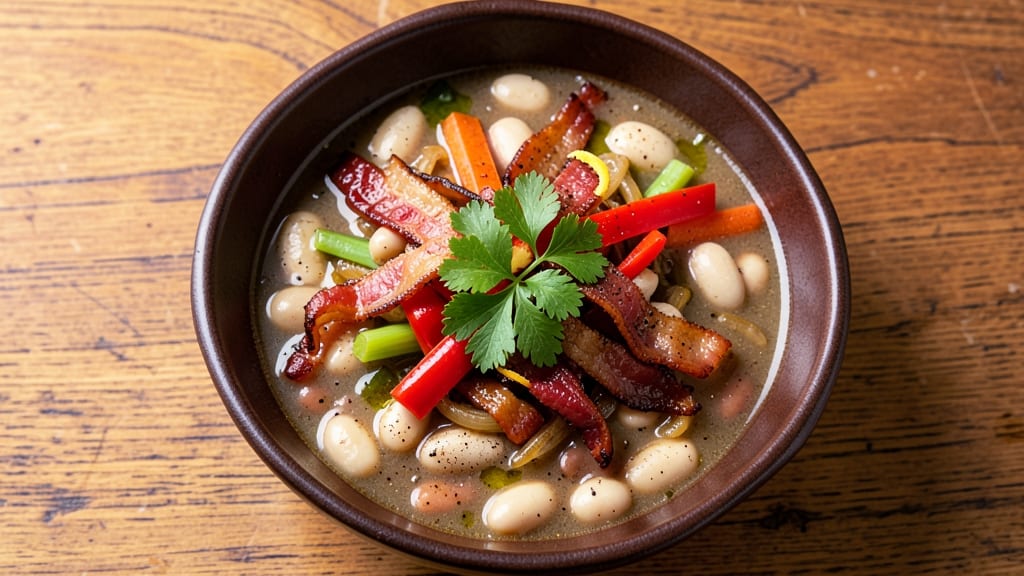
This bean and bacon soup recipe with canned beans delivers restaurant-quality depth in under an hour—no soaking or prep required. The secret lies in crispy bacon rendered until caramelized, which infuses the broth with smoky richness while canned beans bring instant heartiness.
I developed this version after realizing how much flavor you can extract from just 10 minutes of bacon cooking, making it perfect for busy weeknights when you still crave something substantial.
The beauty of this soup is its creamy velouté texture, achieved through a simple roux technique that transforms basic ingredients into something velvety and satisfying. Unlike many canned-bean soups that taste flat, this version builds layers of flavor through aromatics, herbs, and that critical bacon fat.
The result? A soup that's hearty enough for a cold evening but light enough to enjoy any day of the week.
What makes this recipe truly special is how it balances textures—crispy bacon bits floating on top contrast beautifully with the smooth, creamy broth and tender beans. The bacon adds a satisfying crunch with every spoonful, while the velouté coats your spoon like a hug.
This isn't just soup; it's a comforting, flavor-packed meal that comes together faster than takeout.
Serve it with crusty bread for dipping or alongside a simple green salad to round out the meal. For extra heartiness, stir in diced potatoes or add a splash of tomato paste for brightness.
The possibilities are endless, but the base recipe is foolproof—perfect for beginners and experienced cooks alike. Let's get cooking!
Ingredients for bean and bacon soup recipe with canned beans
Smoky bacon meets velvety velouté—just 14 ingredients for restaurant-quality comfort.
| Ingredient | Amount | Notes |
|---|---|---|
| Thick-Cut Bacon 🥓 | 6 oz | Thick-cut for maximum crispiness |
| Yellow Onion 🧅 | 1 whole | Diced, medium size preferred |
| Carrots 🥕 | 2 medium | Peeled, diced into small cubes |
| Celery Stalks 🌿 | 2 whole | Diced, including leaves for extra flavor |
| Garlic Cloves 🧄 | 3 cloves | Minced, fresh preferred |
| Canned White Beans 🌱 | 15 oz | Great Northern or cannellini preferred |
| All-Purpose Flour 🌾 | 2 tbsp | For velouté roux |
| Whole Milk 🥛 | 1 cup | Full-fat for creamiest texture |
| Chicken Broth 💧 | 4 cups | Low-sodium preferred |
| Bay Leaves 🌿 | 1 whole | Fresh preferred, remove before serving |
| Fresh Thyme 🌿 | 1 tbsp | Leaves only, chopped |
| Salt 🧂 | 1 ½ tsp | Kosher or sea salt |
| Black Pepper 🌶️ | ½ tsp | Freshly ground preferred |
| Unsalted Butter 🧈 | 2 tbsp | Cold, for roux |
The bacon is non-negotiable here—thick-cut renders slowly, creating deep caramelization for that smoky richness. Costco or Trader Joe's sell premium cuts that stay crispy. For the beans, Great Northern or cannellini work best—their mild flavor lets the bacon and aromatics shine. If you're using pre-diced onions or carrots from the store, rinse them first to remove excess moisture. The flour should be all-purpose, not self-rising, and the butter must be cold for that perfect roux. Fresh thyme and bay leaves elevate the dish, but dried will work in a pinch at half the amount.
No thick-cut bacon? Regular bacon cooked longer gets you close, though it won't be as crispy. Substitute the milk with half-and-half for extra creaminess or coconut milk for a dairy-free version. Chicken broth is ideal, but vegetable broth works too—just add a splash of soy sauce for depth. The carrots can be baby carrots if that's what's in your fridge, but peeling ensures a cleaner texture. For extra umami, add a dash of Worcestershire sauce (check for vegetarian-friendly versions if needed). The roux requires patience—cook it low and slow to avoid burning, or it'll taste bitter.
This soup tastes even better the next day as flavors meld. Store in an airtight container for up to 5 days in the fridge, or freeze for 3 months. The bacon bits stay crispy if you reheat gently—cover with a lid and warm on low. For meal prep, portion into containers with a layer of bacon on top to keep it crispy. The velouté thickens when cold, so stir in a splash of milk or broth when reheating. Leftovers make excellent lunches—just pop them in the microwave for 2 minutes, stir, and enjoy.
Why You'll Love This Recipe
- No-Chop Shortcuts: I swear by that pre-diced onion mix—saves me from crying over onions while the bacon renders its glorious fat. The celery and carrots? Just rough chop—no need for fancy knife work, and the soup still tastes like I spent hours simmering.
- Smoky Depth Magic: That thick-cut bacon isn’t just for looks—it cracks and crisps while the onions caramelize, then melts into the broth like a rich, salty hug. Add fresh garlic at the end? Instant flavor explosion you’ll want to bottle.
- Lunchbox Hero: Between us, this soup is my secret weapon for packed lunches. The flavors only get better the next day, and the canned beans mean no soaking or pre-cooking. Just reheat, and you’ve got a hearty, no-fuss meal that tastes like home.
- Budget-Friendly Feast: A single package of bacon and a can of beans stretch this into four servings without breaking the bank. Honestly, it’s the kind of meal that makes me feel like I’m feeding a crowd while still eating well—my wallet thanks me every time.
Step-by-step instructions for bean and bacon soup
This method delivers a rich, velouté-style soup where crispy bacon meets silky bean broth.
Render the Bacon and Sauté Vegetables
Cut the 6 oz thick-cut bacon into ½-inch pieces and cook in a large Dutch oven over medium heat for 8-10 minutes, stirring occasionally. The bacon will render fat and develop a deep, smoky aroma—this is your flavor foundation. Once the edges turn golden brown and the fat is shimmering, remove the bacon with a slotted spoon and set aside, leaving the rendered fat in the pot.
In the same Dutch oven, add the 1 whole yellow onion, 2 medium carrots, and 2 whole celery stalks, all diced to ¼-inch pieces. Sauté for 5-6 minutes until the onions soften and the vegetables begin to caramelize slightly. Add the 3 minced garlic cloves and cook for 30 seconds until fragrant—this prevents the garlic from burning, which would make the soup bitter. Season lightly with ½ teaspoon salt and ¼ teaspoon black pepper at this stage to enhance the vegetables' natural sweetness.
Build the Velouté Roux
Reduce the heat to medium-low and add the 2 tablespoons unsalted butter to the Dutch oven. Stir until the butter melts completely, then sprinkle in the 2 tablespoons all-purpose flour all at once. Whisk vigorously for 1-2 minutes until the mixture forms a smooth, pale roux—this will thicken the soup and create its velvety texture. Cook the roux for an additional 30 seconds to toast the flour slightly, which deepens its flavor.
Slowly pour in the 4 cups chicken broth, whisking constantly to prevent lumps from forming. Bring the mixture to a gentle simmer and cook for 5 minutes until the roux is fully incorporated and the soup begins to thicken. Add the 1 whole bay leaf and 1 tablespoon chopped fresh thyme to infuse the broth with aromatic depth. This step ensures the soup has a rich, cohesive base before adding the beans and bacon.
Simmer the Beans and Finish the Soup
Drain and rinse the 15 oz canned white beans to remove excess sodium, then add them to the Dutch oven. Stir gently to combine with the soup, ensuring the beans are fully submerged. Return the reserved bacon to the pot and simmer the soup for 15-20 minutes over low heat, allowing the flavors to meld. The soup should thicken slightly as it simmers, but it should remain smooth and creamy—not gluey.
Taste the soup and adjust the seasoning with the remaining 1 teaspoon salt and ¼ teaspoon black pepper as needed. Remove the bay leaf before serving, as it can be bitter if consumed. For extra creaminess, stir in the 1 cup whole milk during the last 5 minutes of simmering. The milk will blend seamlessly, adding a luxurious texture without overpowering the smoky bacon and earthy bean flavors.
Serve with Crispy Bacon Garnish
Ladle the soup into bowls, ensuring each serving includes a generous portion of beans and bacon. For an elegant finish, top each bowl with an additional 1 tablespoon of crispy bacon bits—these add a satisfying crunch that contrasts beautifully with the creamy velouté. Serve immediately while the soup is hot, as the flavors and textures are at their peak. Pair with crusty bread to soak up every last drop of this hearty, comforting dish.
Pro Tips For Making Bean And Bacon Soup Recipe With Canned Beans
- CRISP THE BACON LOW: I used to blast thick-cut bacon on high heat, ending up with chewy edges and grease splatter everywhere. Instead, cook it on medium-low—just enough to render fat slowly and get that perfect crackle. A 12-inch skillet works best; crowding steams the bacon instead of crisping it.
- CHOP VEGETABLES UNIFORM: Carrots and celery in random sizes mean some cook to mush while others stay crunchy. Aim for ¼-inch slices and dice onions into ⅛-inch pieces. This ensures everything softens at the same time—no one wants a soup with "textural surprises."
- DRAIN BEANS BUT SAVE LIQUID: Rinsing canned beans strips flavor, but dumping them straight in without the juice makes the soup taste flat. Drain, then stir in ½ cup of the canned liquid per 15 oz of beans. It’s like adding a secret umami boost without extra effort.
- SIMMER NOT BOIL: After adding broth and beans, resist the urge to crank the heat. A gentle simmer (tiny bubbles, occasional skimming) keeps the bacon from turning greasy and prevents the carrots from falling apart. Let it bubble quietly for 15–20 minutes—patience pays off.
Common mistakes when making this dish
Overcooking the Bacon
This is the #1 mistake I see—letting bacon burn instead of rendering slowly. When you cook 6 oz thick-cut bacon over medium heat for 8-10 minutes, it should develop golden edges and crispy bits, not blackened patches.
Burnt bacon adds bitter flavors that ruin the soup's harmony. Keep heat consistent and stir occasionally to prevent hot spots. If your bacon starts smoking excessively, reduce heat immediately. 🔥
Skipping the Roux
The velouté texture comes from that 2-tablespoon roux made with butter and flour. Skipping it leaves your soup thin and watery. Cook the roux over medium-low heat for 1-2 minutes—too hot and it'll burn, too cool and it won't thicken properly.
Whisk constantly to avoid lumps, and let it toast just slightly for that nutty depth. This is what transforms basic ingredients into something restaurant-worthy.
Ignoring the Bacon Fat
Never drain that rendered bacon fat! It's packed with smoky flavor that forms the soup's foundation. After removing the bacon, leave the fat in the pot—it's your secret weapon for depth.
If you're worried about excess fat, you can skim a little off after sautéing the vegetables, but leave at least 2 tablespoons—that's what carries all those delicious bacon flavors throughout the soup.
Rushing the Simmer
Low-and-slow is key for flavor development. After adding the beans, simmer for 15-20 minutes—not just 5! This lets the bacon reabsorb flavors, the beans soften properly, and all the aromatics meld together.
Rushing this step results in a soup that tastes disjointed. Keep heat at low—gentle bubbles are all you need. Patience here makes all the difference in the final product.
Forgetting to Rinse Beans
Canned beans often contain excess sodium that can make your soup taste bland or overly salty. Always drain and rinse 15 oz canned white beans—this removes about 30% of the sodium—without losing any texture.
I like to give them a quick cold water rinse in a colander before adding to the pot. This simple step ensures your soup's seasoning stays balanced and lets the other flavors shine.
Adding Milk Too Early
The milk should go in during the last 5 minutes—not at the beginning! Adding it too soon can cause the soup to curdle or separate. The heat needs to be high enough to fully incorporate the milk into the velouté, creating that silky texture.
If your soup looks too thick after adding milk, just stir in a splash of warm broth to adjust consistency. Timing here is everything for that perfect creamy finish. 💫
Nutrition facts
Frequently asked questions
Can I substitute fresh beans for canned in this recipe?
Fresh beans require 1 hour of soaking and 45-60 minutes of cooking, which extends prep time significantly. If you choose this route, use 1.5 cups dry white beans and simmer them until tender. The texture will be slightly firmer than canned, so adjust by adding 5-10 extra minutes of simmering after they're done.
How can I make this soup vegetarian?
Replace the bacon with 6 oz smoked tofu or mushrooms (like cremini or shiitake) for umami depth. Use vegetable broth instead of chicken, and add 1 tbsp soy sauce or 1 tsp liquid smoke to mimic the bacon's smoky flavor. The velouté technique works perfectly with these substitutions.
Why did my soup turn out too thick?
This usually happens when the roux cooks too long or the milk isn't incorporated properly. Thin with 2-4 tbsp warm broth or a splash of milk while reheating. For future batches, reduce the flour to 1.5 tbsp if you prefer a lighter texture. The soup should coat the back of a spoon but still be easy to ladle.
Can I add potatoes to this recipe?
Add 1 cup diced potatoes with the onions and carrots. They'll cook through during the 15-20 minute simmer. For creamier potatoes, use Yukon Golds. If you prefer them softer, add them 10 minutes earlier in the simmering process. The potatoes will absorb some of the creamy broth, making each bite even more satisfying.
How can I make this soup ahead of time?
This soup actually tastes better the next day as flavors meld! Store in an airtight container in the fridge for up to 5 days. When reheating, warm on low heat and stir in a splash of milk or broth to restore creaminess. For freezing, portion into containers with a layer of bacon on top—this keeps it crispy. Thaw overnight in the fridge before reheating.