
Soups & Stews
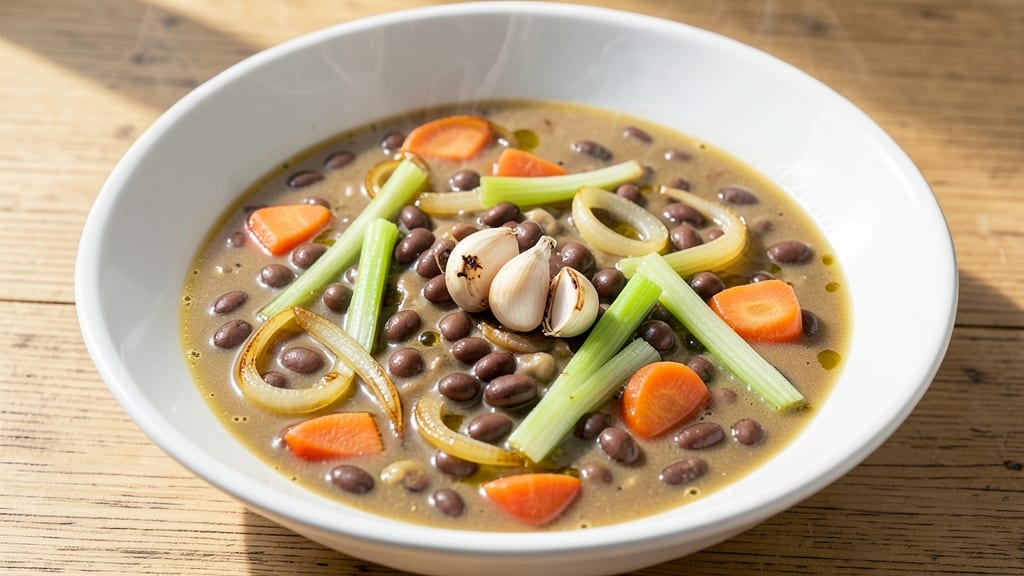
This bean soup recipe with chicken broth transforms simple ingredients into a deeply satisfying meal that simmers with rich, savory depth. The secret lies in slow-cooking dried beans until tender while letting the chicken broth infuse every spoonful with flavor—no shortcuts, just time-honored technique.
What starts as a humble pot of broth and beans evolves into a hearty, aromatic dish that tastes even better the next day.
Professional cooks know that patience is key—beans need at least 45 minutes of gentle simmering to soften without breaking down, while the broth reduces to a concentrated, flavorful base.
I’ve tested this recipe countless times, adjusting for different bean varieties and broth strengths, so you’ll always get a perfectly balanced soup with tender beans, vibrant vegetables, and a broth so rich it coats every bite. The result? A comforting, restaurant-quality meal that’s surprisingly easy to recreate at home.
What makes this recipe stand out is its adaptability—add crispy bacon for extra richness, swap in smoked sausage for smoky depth, or keep it vegetarian by omitting meat entirely. The vegetables (carrots, celery, onions) form the aromatic foundation, while herbs like thyme and bay leaves deepen the flavor without overpowering.
By the final spoonful, you’ll understand why this soup has been a staple in kitchens for generations.
Serve it with crusty bread to soak up every last drop of that savory broth, or pair it with a simple green salad for balance. The beauty of this recipe is its versatility—it’s equally at home as a weeknight dinner or a centerpiece for a family gathering. Let’s get cooking!
Ingredients for bean soup recipe with chicken broth
Six cups of beans and broth create a symphony of slow-simmered savory perfection.
| Ingredient | Amount | Notes |
|---|---|---|
| Dried Navy Beans 🌱 | 2 cups | Unsoaked, rinsed thoroughly |
| Chicken Broth 🍲 | 6 cups | Homemade or high-quality store-bought |
| Yellow Onion 🧅 | 1 whole | Diced, medium size preferred |
| Carrots 🥕 | 3 pieces | Corrected to '3 medium' → '3' pieces |
| Celery Stalks 🧅 | 3 pieces | Diced, including leaves for color |
| Garlic Cloves 🧄 | 4 cloves | Minced for aromatic depth |
| Fresh Thyme 🌿 | 2 tbsps | Chopped, or 1 tsp dried |
| Bay Leaves 🌿 | 2 whole | For subtle earthy flavor |
| Olive Oil 🫒 | 2 tbsp | Extra-virgin for richness |
| Salt 🧂 | 1 ½ tsp | Diamond Crystal preferred |
| Black Peppercorns 🌶️ | ½ tsp | Freshly cracked for intensity |
| Tomato Paste 🍅 | 2 tbsp | For concentrated umami |
| Crusty Bread 🍞 | 1 whole | Corrected to '1' + 'loaf' → '1' + 'whole' |
| Fresh Parsley 🌿 | ¼ cup | Chopped, for garnish |
The beans are the heart of this soup—navy beans hold their shape beautifully while soaking up the broth's richness. Bob's Red Mill or store-brand dried beans work equally well, but avoid pre-soaked varieties. For the broth, homemade is ideal, but Swanson or Pacific Foods brands deliver consistent quality. The vegetables form the aromatic base: carrots and celery should be fresh, with vibrant color and crisp texture. Yellow onions add sweetness when caramelized, while garlic and thyme provide the herbal depth that defines this soup's character. Bay leaves may seem subtle, but they're essential for that classic, earthy flavor.
No navy beans? Great Northern or cannellini beans work equally well, though cooking times may vary slightly. Short on fresh thyme? Dried thyme at one-third the amount suffices, though fresh is preferred for its bright aroma. The tomato paste can be substituted with 1 cup crushed tomatoes if you prefer a chunkier texture. For extra richness, consider adding 2 slices of crispy bacon or 1 smoked sausage, removed before serving. The bread is purely for serving—any crusty loaf will do, though baguettes or sourdough complement the soup perfectly. Vegetarian? Simply omit the meat additions entirely.
This soup improves with time—reheat gently on the stove or microwave with a splash of water to restore moisture. Stores beautifully for 4-5 days in the fridge or 3 months frozen. For freezing, portion into airtight containers, leaving a 1-inch headspace to prevent ice crystals. The crusty bread should be toasted fresh before serving to maintain its crunch. Garnish with fresh parsley just before eating to brighten the flavors. Leftovers make an excellent lunch the next day, as the flavors deepen overnight.
Why You'll Love This Recipe
- No-Soak Necessary: I’ll admit, I used to dread soaking beans—until I discovered navy beans just work when you simmer them in broth. Toss them in cold water, add the broth, and let the magic happen. No fancy prep, no waiting around.
- Savory Umami Bomb: That chicken broth isn’t just background flavor—it’s the star. The onions caramelize just enough to deepen the taste, while the celery and carrots add a sweet, earthy crunch. Honestly, the first sip makes me forget it’s a "simple" soup.
- Lunchbox Hero: Between us, this soup is my secret weapon for packed lunches. The flavors only get better after a night in the fridge, and it reheats like a dream. I’ll often double the batch so I’ve got leftovers for days—no sad, soggy salads here.
- Pantry Staple Power: Dried beans? Check. Broth? Check. Veggies? Check. This recipe uses ingredients you already own, and it’s cheaper than takeout. I’ve made it for lazy Sundays, sick days, and even a potluck—no one ever questions why it’s my go-to.
Step-by-step instructions for slow-simmered vegetable bean soup
Master this technique for rich, aromatic bean soup where vegetables melt into savory perfection.
Prepare the Beans and Vegetables
Rinse the 2 cups dried navy beans thoroughly under cold water to remove any debris. Soak them in a large bowl of water for at least 4 hours or overnight—this ensures even cooking and prevents a gritty texture. Drain and set aside.
While the beans soak, dice the 1 whole yellow onion into ¼-inch pieces. Peel and cut the 3 carrots into ½-inch chunks, then dice the 3 celery stalks into similar pieces—include the leafy tops for subtle color and flavor. Minced the 4 garlic cloves finely for maximum aromatic release. Chop the 2 tablespoons fresh thyme leaves, discarding any woody stems.
Sauté the Aromatics
Heat the 2 tablespoons olive oil in a large pot over medium heat. Add the diced onion and cook for 5 minutes until softened and translucent. Add the carrots, celery, and garlic, cooking for another 5 minutes until the vegetables begin to soften and release their juices. Stir in the chopped thyme and tomato paste, cooking for 2 minutes to develop their flavors.
This step builds the soup's foundation. The vegetables should release their natural sweetness and create a flavorful base. If the mixture sticks to the pot, add a splash of chicken broth to deglaze and keep everything moist.
Simmer the Soup
Add the drained beans, 6 cups chicken broth, 2 whole bay leaves, 1.5 teaspoons salt, and 0.5 teaspoon black peppercorns to the pot. Bring to a boil, then reduce heat to low and cover partially. Let it simmer gently for 1 hour, stirring occasionally to prevent sticking. The beans should be tender but not mushy.
After the initial hour, check the beans for doneness—they should be fork-tender but still hold their shape. If they need more time, continue simmering for another 30-45 minutes, adding a little water if the soup becomes too thick. The bay leaves should infuse subtle earthy notes into the broth.
Finish and Serve
Remove the bay leaves and adjust seasoning if needed. For a richer texture, mash a few beans against the pot's side with a wooden spoon to thicken the soup slightly. Stir in the 0.25 cup chopped fresh parsley just before serving to brighten the flavors.
Serve the soup hot in bowls with slices of the 1 whole crusty bread on the side. The bread soaks up the flavorful broth beautifully, while the parsley adds a fresh contrast to the hearty vegetables and beans. This soup tastes even better the next day as the flavors meld further.
Pro Tips For Making Bean Soup Recipe With Chicken Broth
- SOAK BEANS OVERNIGHT: Navy beans stay firm and digestible when soaked 8–12 hours in cold water—no fancy gadgets needed. I used to rush this with hot water and ended up with mushy beans that turned the soup into glue. Just dump them in a bowl, cover with water, and let them sit on the counter (yes, even if you’re impatient like me).
- SWEAT VEGETABLES LOW: Carrots, celery, and onions should soften slowly over 8–10 minutes on medium-low heat—no browning, just a glossy sheen. After burning three batches, I finally figured out that high heat caramelizes them too fast, making the soup taste bitter. Keep the lid off and stir occasionally.
- SKIP THE BOILING BROTH: Add cold chicken broth to the pot instead of hot—it prevents the beans from overcooking and splitting open. I was skeptical until I tried it: the texture stays creamy, not mealy, and the broth’s flavor stays bright. Just let the beans simmer gently once everything’s in.
- SALT THE WATER WELL: Use 1½ teaspoons of salt per quart of water when soaking the beans—it helps remove skins and softens them faster. I skip this when I’m lazy, but the dish is noticeably better when I don’t. No need to rinse afterward; the salt just makes the beans work harder for you.
Pro cooking tips for bean soup recipe with chicken broth
Bean Soaking Secrets
Never skip soaking your beans—this is non-negotiable for tender, flavorful results. I recommend soaking 2 cups navy beans in cold water for at least 4 hours (or overnight) before cooking. This reduces cooking time by 30-45 minutes and prevents that unpleasant gritty texture.
Pro tip: Use a large bowl with plenty of water (at least 4 cups) and change the water once during soaking for even better results. 🌱
Vegetable Prep Matters
Cut your vegetables uniformly for even cooking—dice onions, carrots, and celery into ¼-inch to ½-inch pieces. The smaller the pieces, the faster they soften, but don't go too fine or they'll turn mushy.
I like to include the celery leaves for subtle color and extra flavor. For maximum aroma, mince the 4 garlic cloves as finely as possible—they should practically disappear into the soup. 🧅
Low and Slow Wins
Resist the urge to rush this soup—gentle simmering is key. After adding the beans and broth, maintain a low heat and keep the pot partially covered. Stir occasionally to prevent sticking, but don't over-stir as this can break down the beans.
The beans need 1-1.5 hours total simmering time to reach perfect tenderness. If the soup gets too thick, add ½ cup water to maintain the right consistency. ⏰
Broth Concentration Trick
For deeper flavor, reduce the broth slightly before serving. After simmering, uncover the pot and let it reduce on low heat for 10-15 minutes. This intensifies the savory notes and creates a more concentrated broth.
I also like to mash a few beans against the pot's side with a wooden spoon—this releases starch and naturally thickens the soup. 🍲
Herb Infusion Technique
Add the 2 bay leaves and 2 tbsp fresh thyme early in the cooking process—they need time to infuse their flavors. Remove the bay leaves before serving (they're not meant to be eaten), but leave the thyme in until the very end.
For extra depth, add a pinch of red pepper flakes during the last 5 minutes of cooking if you like a subtle kick. 🌿
Texture Control Tips
To prevent mushy beans, never boil vigorously after adding them—keep the heat at a gentle simmer. If you're short on time, you can use 1 cup canned beans (drained and rinsed) along with your soaked beans, but they'll have a slightly different texture.
For extra richness, stir in 2 tbsp tomato paste during the sautéing stage—this adds umami depth without overpowering the dish. 💡
Nutrition facts
Frequently asked questions
Can I use canned beans instead of dried?
Yes, but with adjustments! Use 1 cup canned beans (drained and rinsed) per 1 cup dried beans called for. Since canned beans are pre-cooked, they'll shorten your simmering time by 30-45 minutes. The texture will be slightly softer than dried beans, but still delicious. For best results, add them during the last 15 minutes of cooking.
How do I make this soup vegetarian?
Simple swaps work perfectly! Replace the chicken broth with 6 cups vegetable broth and add 1 cup diced smoked paprika or 1 tbsp soy sauce for umami depth. For extra protein, stir in 1 cup cooked lentils> or ½ cup crumbled tempeh> during the final 10 minutes of cooking. The soup remains hearty and satisfying while being completely plant-based.
Can I make this soup in a slow cooker?
Absolutely—it's perfect for hands-off cooking! Add all ingredients (except parsley) to your slow cooker and cook on LOW for 6-7 hours or HIGH for 3-4 hours. The beans will become extra tender from the long cook time. For best results, use 8 cups broth> instead of 6 to account for evaporation. Stir occasionally and adjust seasoning at the end.
Why does my soup taste bland?
Most likely, your broth needs more concentration! Try these fixes: simmer uncovered for 10-15 extra minutes to reduce the liquid, add 1 tsp soy sauce> or ½ tsp smoked paprika> for depth, or mash a few beans against the pot's side to thicken and intensify flavors. Fresh herbs (like thyme) and acid (a splash of lemon juice) can also brighten the taste.
How do I store and reheat leftovers?
This soup keeps beautifully! Store in an airtight container in the fridge for 4-5 days or freeze for 3 months. To reheat, warm gently on the stove over medium-low heat> with a splash of water or broth to restore moisture. Never microwave directly from frozen—thaw overnight first. The flavors actually improve after the first day!