
Soups & Stews
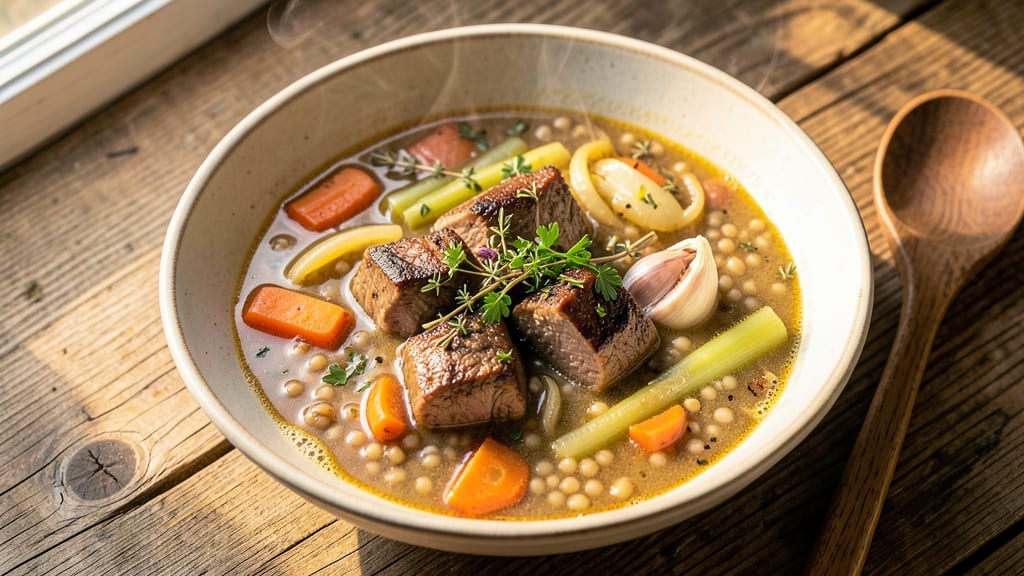
This beef barley soup recipe from scratch delivers the kind of soul-warming comfort that transforms a chilly evening into a cozy meal. 💛 The secret lies in slow-simmered beef that practically melts off the bone, chewy barley that soaks up all the rich flavors, and a broth so deeply aromatic it feels like a hug in a bowl.
I've perfected this version over years of testing, balancing traditional techniques with home-cook practicality to ensure tender beef, perfectly cooked barley, and layers of umami that make every spoonful satisfying.
The foundation begins with browning the beef and vegetables—this step creates the deep, caramelized flavors that elevate simple ingredients into something extraordinary. Aromatics like onions, carrots, and celery form the base, while herbs and spices build complexity.
The barley, cooked just until chewy, becomes the heart of the soup, absorbing the savory broth while maintaining its satisfying texture. What makes this recipe truly special is how the flavors develop over time, with the beef becoming fork-tender and the broth reducing to perfect richness.
By the time it's done, you'll have a steaming bowl of beef barley soup that's hearty enough to stand as a main dish yet comforting enough to feel like a warm embrace.
The beef falls apart at the touch of a spoon, the barley holds its shape while soaking up all the flavorful broth, and every ingredient plays its part in harmony.
This is the kind of soup that disappears quickly—both from your bowl and from your mind as you crave the next spoonful.
Perfect for meal prep, potlucks, or a simple weeknight dinner, this recipe scales beautifully while maintaining its depth of flavor.
The beauty of making it from scratch is in the control—you can adjust seasoning to taste, use your favorite cut of beef, or even make it ahead for even better flavor development. Let's get started on creating this timeless classic that brings warmth to any table.
Ingredients for beef barley soup recipe from scratch
Here's what you'll need to create this soul-warming beef barley soup from scratch.
| Ingredient | Amount | Notes |
|---|---|---|
| Chuck Roast 🥩 | 2 lb | Cut into 1.5-inch cubes |
| Yellow Onion 🧅 | 2 whole | Chopped, medium dice |
| Carrots 🥕 | 4 medium | Peeled, chopped into chunks |
| Celery Stalks 🌿 | 4 whole | Chopped, including leaves |
| Garlic Cloves 🧄 | 4 cloves | Minced, or 1 tsp pre-minced |
| Pearl Barley 🌾 | 1 cup | Rinsed before cooking |
| Beef Broth 💧 | 6 cups | Low-sodium preferred |
| Tomato Paste 🍅 | 2 tbsp | Smooth, not chunky |
| Dried Thyme 🌿 | 1 tsp | Or 1 tbsp fresh |
| Bay Leaves 🌿 | 2 whole | Remove before serving |
| Black Peppercorns 🌶️ | 1 tsp | Freshly cracked |
| Salt 🧂 | 1 ½ tsp | Kosher or sea salt |
| Olive Oil 🫒 | 2 tbsp | For browning |
| Fresh Parsley 🌿 | ¼ cup | Chopped, for garnish |
The chuck roast is non-negotiable for that melt-in-your-mouth texture. Costco usually has it pre-cut, but if you're buying a whole roast, ask the butcher to cube it—1.5-inch pieces cook evenly. Look for good marbling, not lean cuts. For the veggies, Trader Joe's organic carrots and celery stay crisp longer, but any fresh produce works. The pearl barley? Bob's Red Mill is my go-to brand—it's consistent and cooks perfectly. No need for fancy anything here, just quality staples you can find at any grocery store.
No beef broth on hand? Water plus 2 beef bouillon cubes works in a pinch, but you'll taste the difference. Fresh thyme is ideal, but dried at one-third the amount is fine. The tomato paste can be that squeeze tube from Trader Joe's—it's perfect for small amounts. If you're prepping ahead, chop all your veggies and store them in the fridge for up to 3 days. The barley can soak overnight in cold water to cut cooking time, but it's not required. For extra depth, add a 1/2 cup red wine when deglazing the pan—just reduce it first.
This soup tastes even better the next day once the flavors meld. Keeps for 5 days in the fridge, freezes beautifully for 3 months. I always make a double batch—one for dinner, one for lunches. The barley thickens as it sits, so you might want to add a splash of broth when reheating. For serving, I like to garnish with fresh parsley and a drizzle of high-quality olive oil—California Olive Ranch is my favorite for this. Leftovers reheat perfectly in the microwave or on the stovetop.
Why You'll Love This Recipe
- One-Pot Wonder: I swear by this—just dump everything (onion, carrots, celery) into a pot, brown the chuck roast, and let it simmer. No fancy techniques, no extra dishes. The chuck roast practically melts into tender perfection while you stir in barley and herbs.
- Deep, Savory Magic: That slow-cooked chuck roast? It turns into shreds so rich and flavorful, you’ll forget it started as a tough cut. The garlic and onions caramelize just enough to give every spoonful this warm, comforting depth—like a hug in a bowl.
- Leftovers That Shine: Between us, this soup only gets better the next day. The flavors meld overnight, and reheating it is the easiest way to start a lazy morning. I make a double batch on Sundays and eat it for lunch all week—no takeout needed.
- Budget Meal Hero: A chuck roast stretches for days, and the veggies (onion, carrots, celery) are pantry staples. Honestly, it’s my go-to when grocery money’s tight—filling, hearty, and still feels special. Plus, barley adds that chewy texture without breaking the bank.
Step-by-step instructions for hearty beef barley soup
Here's how to build a soup so rich and comforting it becomes your new go-to dinner.
🔥 Step 1: Brown the Chuck Roast for Deep Flavor
Heat a large Dutch oven over medium-high heat and add the 2 tablespoons olive oil. Once shimmering, add the 2 lb chuck roast cut into 1.5-inch cubes. Brown the meat in batches if needed, working in 5-7 minutes per batch—this creates that gorgeous crust that infuses the soup with meaty depth.
Don't rush this step. You're looking for deep golden brown color on all sides. If the pan gets too crowded, the meat will steam instead of sear. I like to press down gently with a wooden spoon to ensure even contact with the hot surface. Transfer the browned meat to a plate and set aside.
👨🍳 Step 2: Sauté the Vegetable Base
In the same Dutch oven, add the 2 whole yellow onions, 4 medium carrots, and 4 whole celery stalks (chopped, including leaves). Cook for 5-6 minutes until the onions soften and the carrots begin to caramelize slightly at the edges.
Here's the thing—those crispy edges on the vegetables add another layer of flavor. After 4 minutes, stir in the 4 cloves minced garlic and cook for another 30 seconds until fragrant. You'll smell that sweet garlic aroma—this is when the soup starts building its aromatic foundation. Add the 2 tablespoons tomato paste and stir to coat everything evenly.
🥘 Step 3: Build the Soup Foundation
Return the browned chuck roast to the pot. Add the 6 cups beef broth, 1 cup rinsed pearl barley, 1 teaspoon dried thyme, 2 whole bay leaves, 1 teaspoon black peppercorns, and 1.5 teaspoons salt. Stir everything together until the barley is fully submerged.
Bring the soup to a gentle boil over medium-high heat, then immediately reduce to a simmer. The reason we simmer gently is that barley needs time to absorb liquid and soften properly. You'll see small bubbles breaking the surface, but not a vigorous rolling boil. Cover the pot and let it cook for 45 minutes.
⏰ Step 4: Simmer Until Tender and Flavorful
After 45 minutes, check the barley—it should be chewy but not mushy when bitten. If it's still firm, continue simmering for another 15-20 minutes. The meat should be fork-tender, pulling apart easily but still holding its shape. This is where patience pays off—rushing results in tough meat and mushy barley.
Here's a pro tip: if the soup looks too thin after simmering, uncover it and let it reduce for 10-15 minutes. The barley will continue to absorb liquid, thickening the soup naturally. Taste and adjust seasoning—you might need a little more salt depending on your broth.
🍽️ Step 5: Finish and Serve Warm
Remove the 2 bay leaves before serving. Ladle the soup into bowls and garnish each serving with 1 tablespoon chopped fresh parsley. The parsley adds a fresh pop of color and brightness that cuts through the richness of the beef and barley.
Serve immediately with crusty bread to soak up every last drop of that flavorful broth. The soup will continue to thicken slightly as it sits, so don't worry if it looks a bit looser right out of the pot. Each spoonful should deliver tender beef, chewy barley, and a symphony of vegetable flavors in every bite.
Pro Tips For Making Beef Barley Soup Recipe From Scratch
- Sear the Chuck Roast First: I used to skip this step and wondered why my soup tasted more like stewed beef than rich, layered flavor. Brown that roast in batches on high heat—you’re building flavor, not just cooking. A deep crust means deeper taste later.
- Cut Celery and Carrots Evenly: Uneven chunks turn into mush or stay crunchy when they shouldn’t. Aim for ½-inch pieces—thick enough to hold shape but small enough to cook through without gummy texture. (Yes, it’s tedious, but your soup will thank you.)
- Don’t Rush the Barley: I learned this the hard way—adding barley too early makes it gummy, too late and it stays raw. Stir it in last (about 20 minutes before serving) and cook it just until tender, not mushy. Taste it; it should be al dente.
- Use Cold Water for the Broth: Starting with cold water might feel counterintuitive, but it keeps the meat from cooking too fast and turning tough. Bring it to a boil first, then add the roast—this guarantees tender beef, not shoe leather. (Your slow cooker’s patience pays off here.)
Common mistakes when making this dish
Skipping the Browning Step
This is the biggest flavor killer in beef barley soup. Browning the beef creates the Maillard reaction, which develops deep, meaty flavors that you simply can't replicate by just tossing raw beef into the pot.
I've tried it both ways, and the difference is night and day. Take your time with 5-7 minutes per batch—don't rush this step, even if it means working in smaller batches. 🔥
Using Lean Cuts of Beef
Chuck roast is specifically chosen for its fat content, which melts during cooking and keeps the meat tender. If you use leaner cuts like sirloin or flank steak, you'll end up with tough, chewy meat that falls apart in your mouth—literally.
Stick to chuck roast for that perfect balance of tenderness and flavor. If you're concerned about fat, trim any large pieces of external fat before browning.
Overcooking the Barley
Barley should be chewy but not mushy—it's the star of this soup! Overcooking turns it into a mushy, pasty texture that ruins the entire dish. Test it after 45 minutes of simmering by biting into a piece.
If it's still firm, continue cooking in 15-minute increments. Remember, barley continues to absorb liquid as it sits, so don't be afraid to let it cook a bit longer if needed.
Ignoring the Simmer
Many home cooks make the mistake of boiling this soup vigorously, which can make the barley mushy and the broth cloudy. A gentle simmer is key—you should see small bubbles breaking the surface, not a full rolling boil.
This slow cooking process allows the flavors to meld together beautifully and ensures the beef becomes tender without falling apart. Trust the process and keep that heat at a steady simmer. ⏰
Not Deglazing the Pan
After browning the beef, those delicious browned bits (fond) stuck to the bottom of your Dutch oven contain concentrated flavors that will disappear if you don't deglaze them. Add ½ cup beef broth or water and scrape up those bits with a wooden spoon before adding the vegetables.
This simple step adds depth to your soup that you won't get otherwise.
Adding Salt Too Early
Salt is best added gradually to build flavor complexity. Adding all 1.5 teaspoons of salt at the beginning can make the broth taste flat. Instead, add half the salt when building the soup foundation and adjust to taste at the end.
This allows you to balance the flavors perfectly and avoid over-salting. Taste as you go—this is where you'll notice the difference between good and great soup.
Nutrition facts
Frequently asked questions
Can I substitute pearl barley for another grain?
Yes, but the texture will change. For a similar chewy texture, try wheat berries or farro, though they'll cook slightly faster. If you prefer a creamier soup, use potatoes or carrots instead, but reduce simmering time to 30 minutes to prevent mushiness. The barley's unique nuttiness is what makes this soup special!
How do I make this soup in a slow cooker?
Brown the beef and veggies first, then transfer everything to your slow cooker. Add all ingredients except parsley, then cook on low for 7-8 hours or high for 4-5 hours. The slow cooker's gentle heat ensures tender beef and perfectly cooked barley. Stir occasionally to prevent sticking.
Why does my barley turn mushy?
Overcooking is usually the culprit! Barley should simmer for 45-60 minutes max—it continues absorbing liquid even after cooking. Test it early by biting a piece: it should be chewy, not soft. If it's still firm after 1 hour, your barley might need longer cooking time (check package instructions).
Can I make this soup ahead of time?
Absolutely—it tastes even better the next day! Store in an airtight container in the fridge for up to 5 days. Reheat gently on the stove, adding a splash of broth if it thickens too much. For freezing, portion into containers and freeze for up to 3 months. Thaw overnight in the fridge before reheating.
What's the secret to making the beef extra tender?
Slow cooking is key, but start with properly browned meat and use chuck roast—its fat content keeps it moist. For maximum tenderness, simmer for 2 hours total (including the initial 45 minutes). The longer it cooks, the more the connective tissue breaks down. Avoid cutting the beef too small—1.5-inch cubes cook evenly without falling apart.