
Soups & Stews
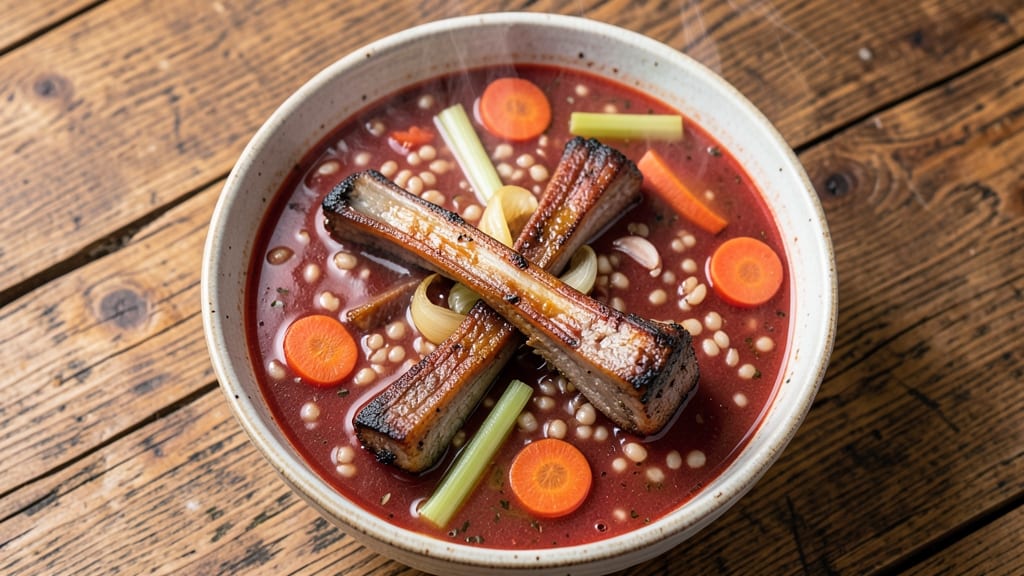
This beef barley soup recipe with prime rib bones transforms humble ingredients into a deeply satisfying one-pot masterpiece. The secret lies in roasting prime rib bones until they develop a rich, caramelized crust—this unlocks layers of umami that infuse the broth during hours of slow simmering.
Every spoonful delivers a perfect balance of hearty barley, tender beef, and velvety broth that feels like a hug in a bowl.
What sets this recipe apart is the technique: bones are first seared and roasted to maximize flavor extraction, then simmered with aromatic vegetables and herbs until the broth becomes thick and luxurious. Barley cooks until plump and chewy, absorbing the deep, savory essence of the beef.
The result is a soup that’s both comforting and impressive—ideal for chilly evenings or special gatherings when you want to showcase your cooking skills.
The beauty of this dish lies in its simplicity and depth. With just a few key ingredients—prime rib bones, barley, vegetables, and aromatics—you’ll create a soup that’s far more complex than its ingredients suggest.
The slow cooking process allows flavors to meld and intensify, turning a simple pot of soup into a restaurant-worthy meal that pairs perfectly with crusty bread or a simple green salad.
This recipe isn’t just about the soup itself—it’s about the experience. The aroma filling your kitchen as it simmers, the way the barley softens just enough to hold its shape, and the rich, velvety broth that coats every bite.
It’s the kind of dish that tastes even better the next day, making it perfect for meal prep or feeding a crowd. Let’s get started on creating this hearty, flavor-packed masterpiece.
Ingredients for beef barley soup recipe with prime rib bones
Prime rib bones and pearl barley form the flavorful backbone of this deeply satisfying soup.
| Ingredient | Amount | Notes |
|---|---|---|
| Prime Rib Bones 🥩 | 3 lb | With meat still attached, cut into chunks |
| Pearl Barley 🌾 | 1 ½ cups | Uncooked, rinsed thoroughly |
| Yellow Onion 🧅 | 1 whole | Chopped into 1-inch pieces |
| Carrots 🥕 | 4 whole | Medium size, cut into 1-inch chunks |
| Celery Stalks 🧆 | 4 whole | Cut into 1-inch pieces |
| Garlic Cloves 🧄 | 6 cloves | Peeled and smashed |
| Fresh Thyme 🌿 | 2 tbsp | Leaves only, chopped |
| Fresh Parsley 🌿 | ¼ cup | Chopped, for garnish |
| Tomato Paste 🍅 | 2 tbsp | Smooth, not chunky |
| Beef Stock 💧 | 6 cups | Homemade preferred, low-sodium |
| Dry Red Wine 🍷 | 1 cup | Bold variety like Cabernet Sauvignon |
| Bay Leaves 🌿 | 2 whole | Fresh if possible |
| Black Peppercorns 🌶️ | 1 tsp | Crushed, freshly ground |
| Salt 🧂 | 2 tsp | Kosher or sea salt, adjust to taste |
| Olive Oil 🫒 | ¼ cup | Extra-virgin, for roasting |
The prime rib bones are non-negotiable here—look for marbled, meaty bones at your local butcher or Costco. If you can't find them fresh, frozen works fine (thaw overnight). The barley should be pearl barley, not quick-cooking—it needs time to develop that hearty texture. For the vegetables, organic is ideal to avoid dirt buildup, but regular produce works too. The thyme and parsley should be bright green and fragrant—wilted herbs mean flavor loss. If you're feeling fancy, Trader Joe's carries excellent dried herbs in small quantities, perfect for this recipe.
No prime rib bones? Beef marrow bones work in a pinch, though they won't yield as much meat. Substitute pearl barley with wheat berries or farro for a different texture. Fresh thyme unavailable? Dried thyme at one-third the amount suffices, but toast it first in a dry pan for 30 seconds to deepen the flavor. The red wine adds complexity—if you don't drink it, beef broth with a splash of balsamic vinegar mimics the acidity. For the tomato paste, Trader Joe's squeeze tubes are perfect—they're convenient and keep well. The carrots and celery can be swapped for turnips or parsnips if you prefer.
This soup tastes even better the next day as flavors meld. Store in an airtight container in the fridge for up to 5 days or freeze for 3 months. For meal prep, portion into individual containers—just reheat with a splash of water or broth. The barley thickens when chilled, so stir in extra broth when reheating. Freeze in ziplock bags with room for expansion. Garnish with fresh parsley and a drizzle of olive oil before serving to elevate the presentation.
Why You'll Love This Recipe
- Bone Broth Magic: I swear by the depth of flavor those prime rib bones bring—no bouillon cubes here. Just rich, gelatinous goodness that turns ordinary barley into something hearty and deeply satisfying.
- One-Pot Wonder: Honestly, this is my "I don’t want to wash a million dishes" meal. Toss everything in one pot—bones, veggies, barley—and let it simmer. The only cleanup is the spoon I lick clean afterward.
- Budget-Friendly Luxury: Prime rib bones might sound fancy, but they’re cheaper than steak and stretch into days of leftovers. Freeze portions for later, or let the barley thicken over time—every spoonful feels like a treat without breaking the bank.
Step-by-step instructions for beef barley soup with prime rib bones
This method transforms tough prime rib bones into rich, velvety broth while developing deep flavor through slow cooking.
Roast the Prime Rib Bones for Maximum Flavor
Preheat your oven to 425°F and position a rack in the middle position. Place the 3 lb prime rib bones on a rimmed baking sheet lined with aluminum foil. Drizzle with ¼ cup olive oil and rub it evenly over all surfaces, coating the bones thoroughly. This step creates the Maillard reaction that forms the flavor foundation.
Roast the bones for 25-30 minutes, turning them halfway through, until they develop a deep mahogany color and you can smell that rich, caramelized aroma. The bones should be golden brown with some charred spots—this is essential for developing the deep umami flavor that will infuse your soup. Let them cool slightly before proceeding.
Build the Soup Base with Aromatics and Wine
In a large Dutch oven, heat ¼ cup olive oil over medium heat. Add the roasted prime rib bones and let them sear for 2-3 minutes per side to deepen their flavor. Remove the bones and set aside, leaving all the browned bits in the pot.
Add the chopped 1 whole yellow onion, 4 whole carrots, and 4 whole celery stalks to the pot. Cook for 8-10 minutes until the vegetables begin to soften and the onion becomes translucent. Add the 6 smashed garlic cloves and 2 tbsp tomato paste, stirring to coat everything in the paste. Pour in the 1 cup dry red wine and scrape up all the browned bits from the bottom of the pot—this is where all the concentrated flavor lives.
Simmer the Vegetables and Barley
Add 6 cups beef stock, 2 whole bay leaves, 1 tsp crushed black peppercorns, and 2 tsp salt to the pot. Stir well to combine, then bring everything to a gentle boil. Once boiling, reduce heat to low** and add the rinsed 1.5 cups pearl barley. The barley should be completely submerged—if not, add a little water.
Return the prime rib bones to the pot, ensuring they're fully submerged. Cover the pot and let it simmer gently for 1 hour 15 minutes. After this time, the vegetables should be tender but still hold their shape. Remove the bones and set them aside—they'll be used later for garnish or to serve alongside the soup.
Finish with Fresh Herbs and Seasoning
Stir in the 2 tbsp chopped fresh thyme and let the soup continue simmering uncovered for another 15-20 minutes to allow the flavors to meld and the broth to reduce slightly. This step develops the depth of flavor and ensures the barley is perfectly tender. Taste the soup and adjust the seasoning with additional salt or pepper if needed.
Remove the bay leaves and discard them. Stir in the ¼ cup chopped fresh parsley just before serving. The parsley adds a bright, fresh contrast to the rich, hearty soup. Ladle the soup into bowls and garnish each serving with a prime rib bone for presentation and additional flavor.
Pro Tips For Making Beef Barley Soup Recipe With Prime Rib Bones
- CHAR THE BONES FIRST: Don’t just toss prime rib bones into cold water—sear them hard in a dry pot first. After browning, add a splash of water and scrape up the fond with a wooden spoon. This step locks in flavor faster than simmering raw bones, and the rich crust adds depth the soup desperately needs.
- SWEAT THE AROMA BASE: Dice onions, carrots, and celery into even ¼-inch pieces and cook them low and slow—no rushing. After 10 minutes, add a pinch of salt and let them sweat until the onions turn translucent and the veggies release their juices. Skipping this step means your soup will taste like it’s missing half its soul.
- SALT THE BARLEY: Pearl barley soaks up liquid like a sponge, but it also soaks up salt if you add it later. Toss the barley in 1 teaspoon of salt before rinsing, then cook it in the broth. This guarantees every grain is seasoned through, not just the surface.
- STRAIN THE BROTH TWICE: After simmering the bones, strain the broth through a fine-mesh sieve, then a cheesecloth-lined colander. The second strain removes those last stubborn bits of gristle and fat that make the soup cloudy. Yes, it’s extra work, but the clarity and richness are worth it.
Serving suggestions for this recipe
Crusty Bread Pairing
Nothing complements this soup like a warm, crusty loaf of bread to soak up every last drop of that velvety broth. I recommend a sourdough boules from your local bakery—the tangy crust cuts through the richness beautifully.
For a homemade option, try a no-knead bread baked at 450°F for 30 minutes, or even a simple garlic bread with butter, garlic, and parsley for extra flavor. 🥖
Fresh Green Salad
A crisp green salad adds brightness to balance the hearty soup. Toss 4 cups mixed greens (arugula, spinach, or romaine) with 2 tbsp olive oil, 1 tbsp balsamic vinegar, and a pinch of salt.
Top with ¼ cup shaved Parmesan and ¼ cup toasted walnuts for crunch. The acidity of the vinaigrette cleanses your palate between spoonfuls of soup.
Cheese Board Accompaniment
For a cozy gathering, serve your soup alongside a cheese board featuring complementary cheeses like aged Gruyère or creamy brie. Add cured meats (prosciutto or salami), fig jam, and honey for a sweet contrast.
The rich, nutty flavors of the cheese enhance the soup’s depth, while the sweet elements add a delightful balance. 🧀
Garnish Like a Pro
Elevate your presentation with simple garnishes. A drizzle of extra-virgin olive oil and a sprinkle of fresh parsley just before serving adds freshness. For extra flair, place a roasted prime rib bone on the rim of each bowl or serve it on the side for guests to nibble.
A few black peppercorns scattered on top add a pop of color and a hint of spice. 💫
Wine Pairing
A bold red wine like Cabernet Sauvignon or Malbec complements the soup’s richness and depth. The tannins in the wine cut through the fat from the beef, while the fruitiness balances the barley’s earthiness.
For a lighter option, a Pinot Noir offers a smoother, more elegant pairing. Serve the wine slightly chilled (55-60°F) to enhance its aromas. 🍷
Leftovers Reinvented
Transform leftover soup into a delicious barley-stuffed bread or soup dumplings. For bread, mix the cooled soup with 1 cup breadcrumbs, 1 egg, and ¼ cup grated Parmesan, then stuff into a loaf pan and bake at 375°F for 25 minutes.
For dumplings, drop spoonfuls of soup into simmering broth and cook until they float. Both ideas turn leftovers into a new meal! 🔥
Nutrition facts
Frequently asked questions
Why do we roast the prime rib bones before simmering?
Roasting creates the Maillard reaction, which develops deep, caramelized flavors that infuse the broth during simmering. The bones become richly browned, unlocking layers of umami that transform a simple beef stock into something extraordinary. This step is what makes your soup taste restaurant-quality!
Can I substitute pearl barley for another grain?
Yes! For a quicker version, use wheat berries (simmer 45-50 minutes) or farro (simmer 30-35 minutes). If you prefer a creamier texture, swap for wild rice (simmer 40 minutes). Just adjust cooking times—these grains need less time than pearl barley to become tender.
How do I know when the barley is perfectly cooked?
Pearl barley should be tender yet still hold its shape—think al dente pasta. Test by tasting a grain: it should be soft but not mushy. If it's still firm after 1 hour 30 minutes, add ½ cup hot water and simmer 10-15 minutes more. Overcooking turns barley into a gluey mess!
What if I don't have prime rib bones? Can I use other beef bones?
Use beef marrow bones or short ribs for similar richness, but avoid knuckle bones—they yield less meat. For maximum flavor, roast them first (as in the recipe) and simmer for 2-3 hours to extract collagen. If using short ribs, remove them after 1 hour 30 minutes of cooking to prevent toughness.
Can I make this soup in a slow cooker?
Follow the same steps for roasting bones, then transfer everything to a 6-quart slow cooker. Cook on low for 8-10 hours or high for 5-6 hours. The slow cooker's gentle heat enhances the broth's depth, but stir occasionally to prevent barley from sticking. Add extra broth if needed—barley absorbs liquid!