
Soups & Stews
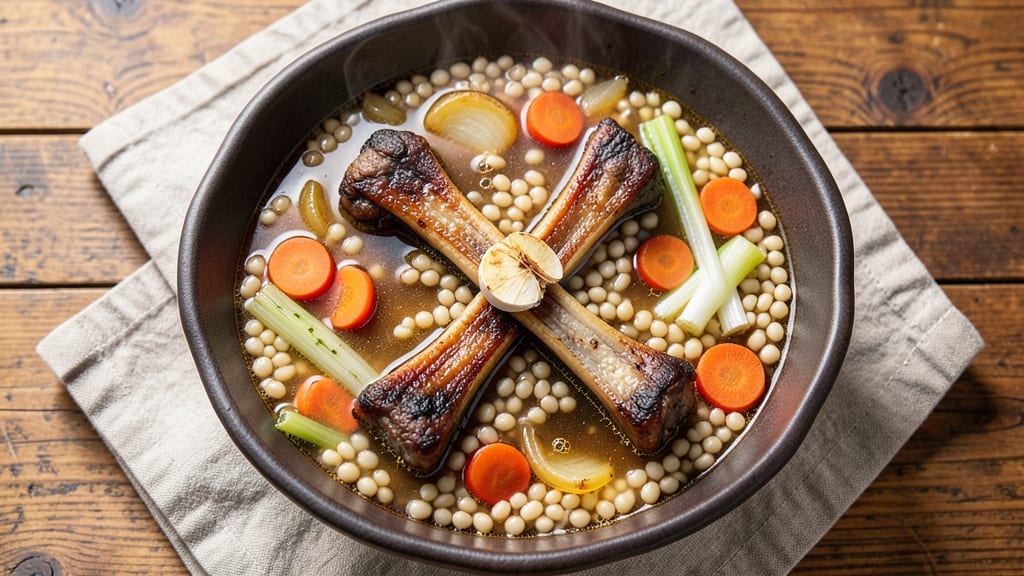
This beef barley soup recipe with soup bones delivers restaurant-quality depth you can't find in store-bought versions. The secret lies in slow-simmered bone broth that transforms tough cuts into tender, flavorful meat while infusing the soup with rich, gelatinous goodness.
After years of perfecting this recipe, I've found that using soup bones creates a broth so robust it carries every ingredient—barley, vegetables, and herbs—into a harmonious, hearty meal.
The process begins with browning beef bones and aromatics to develop a deep, caramelized foundation, then simmering for hours to extract maximum flavor. Barley absorbs the broth beautifully, becoming plump and chewy without turning mushy, while vegetables like carrots and celery add natural sweetness and texture.
The result is a soup that's both comforting and sophisticated—perfect for chilly evenings or when you crave a meal that feels like a warm hug in a bowl.
What sets this recipe apart is the balance of textures and flavors: tender beef, hearty barley, and silky broth all working together. The soup bones contribute collagen that thickens the broth naturally, creating that signature restaurant-quality body.
Each spoonful delivers layers of umami from the bones, earthy notes from the barley, and a touch of brightness from fresh herbs. It's the kind of soup that tastes even better the next day as flavors meld completely.
Serve it with crusty bread to soak up every last drop of that rich broth, or pair it with a simple green salad for contrast. This recipe makes enough for leftovers, which only get better as the flavors deepen.
Let's get started on creating your own pot of soul-warming beef barley soup.
Ingredients for beef barley soup recipe with soup bones
Sixteen ingredients for a soup that tastes like home—rich, hearty, and full of depth.
| Ingredient | Amount | Notes |
|---|---|---|
| Beef Soup Bones 🦴 | 3 lb | Marbled for rich flavor, split if large |
| Pearl Barley 🌾 | 1 cup | Uncooked, rinsed thoroughly |
| Yellow Onion 🧅 | 2 whole | Medium, chopped into 1/2-inch pieces |
| Carrots 🥕 | 4 whole | Medium, peeled and cut into chunks |
| Celery Stalks 🧄 | 4 whole | Cut into 1-inch pieces |
| Garlic Cloves 🧄 | 6 cloves | Peeled, smashed lightly |
| Fresh Thyme 🌿 | 2 tbsp | Leaves only, stems removed |
| Fresh Parsley 🌿 | ¼ cup | Chopped, for garnish |
| Tomato Paste 🍅 | 2 tbsp | Smooth, not chunky |
| Beef Broth 💧 | 8 cups | Low-sodium preferred |
| Apple Cider Vinegar 🍎 | 1 tbsp | For brightness |
| Bay Leaves 🍃 | 2 whole | Dried, standard size |
| Black Peppercorns 🌶️ | 1 tsp | Crushed, not ground |
| Salt 🧂 | 2 tsp | Kosher or sea salt |
| Olive Oil 🫒 | 2 tbsp | Extra-virgin for browning |
The soup bones are non-negotiable for that restaurant-quality broth. Look for beef soup bones at specialty butchers or well-stocked grocery stores like Whole Foods or Kroger—they should be marbled with fat and smell rich, not gamey. If you can't find them, beef marrow bones work in a pinch, though they'll yield slightly less gelatin. Split larger bones with a meat cleaver before browning to maximize surface area. Fresh thyme and parsley from the grocery store's produce section (not the dried aisle) add that bright, herbal note that makes this soup sing. For the barley, pearl barley is key—it holds its shape better than steel-cut varieties.
No beef soup bones? Substitute beef marrow bones or chicken soup bones, though the flavor will be less rich. Swap pearl barley for wheat berries or farro if you prefer a nuttier texture. Fresh herbs wilt fast, so dried thyme at one-third the amount works if you're in a bind. The tomato paste can be replaced with 1/4 cup crushed tomatoes for a slightly different texture. For extra depth, add 1 tsp Worcestershire sauce (check for vegetarian version if needed). If you're short on time, use 8 cups store-bought beef broth instead of making your own, but you'll miss that signature gelatinous richness.
This soup tastes even better the next day, so make a double batch if you can. Store leftovers in airtight containers in the fridge for up to 5 days or freeze for 3 months. Reheat gently on the stove with a splash of water or broth to restore creaminess. The barley thickens as it cools, so add a bit more broth when reheating if needed. For serving, keep a stash of crusty bread on hand—it's perfect for soaking up every last drop of that rich, bone-infused broth.
Why You'll Love This Recipe
- Soup Bones Shortcut: I swear by the marrow-rich broth from soup bones—it’s the secret weapon. No stockpot fuss, no pre-soaking barley (just a quick rinse), and the bones do all the heavy lifting while you chop a single onion and celery stalk.
- Deep Umami Magic: That first sip? Pure satisfaction. The soup bones melt into the broth, layering in richness that turns simple carrots and barley into something heartier than takeout. Honestly, the flavor builds all day—better with time.
- Leftovers That Beg: This soup tastes even better tomorrow. I make a double batch on Sundays, and by Wednesday, I’m sneaking bites straight from the fridge. The barley gets tender, the broth deepens, and it’s still my go-to when I’m too tired to cook.
- Budget Feast, Crowd Pleaser: Soup bones stretch a meal across a week, and the barley keeps everyone full. Between us, this is my secret for feeding a houseful of guests without breaking the bank—plus, it’s the one dish my picky eaters actually finish.
Step-by-step instructions for beef barley soup with soup bones
Here's the method for developing deep, rich flavors through slow cooking techniques.
Brown the Beef Soup Bones for Maximum Flavor
Preheat your oven to 425°F. Pat the 3 lb beef soup bones dry with paper towels and place them on a baking sheet. Roast for 20-25 minutes until they develop a deep mahogany color. This step caramelizes the natural sugars in the bones, creating a complex foundation for your soup.
Turn the bones occasionally for even browning. You're looking for a rich, toasty aroma that fills your kitchen—this is your first flavor layer. Remove the bones from the oven and set aside. Don't clean the baking sheet yet; those browned bits are pure flavor gold.
Sauté the Vegetable Base
In a large Dutch oven, heat the 2 tbsp olive oil over medium heat. Add the chopped 2 whole yellow onion, 4 whole carrots (cut into chunks), and 4 whole celery stalks (cut into 1-inch pieces). Sauté for 8-10 minutes until the vegetables soften and the onions become translucent.
Add the 6 cloves garlic cloves (smashed lightly) and 2 tbsp fresh thyme leaves. Cook for another 2 minutes until the garlic is fragrant but not browned. Here's where the flavor foundation builds—don't rush this step. The vegetables should release their natural juices and create a light paste at the bottom of the pot.
Build the Rich Broth Base
Return the browned beef bones to the Dutch oven. Add 2 tbsp tomato paste, 1 tbsp apple cider vinegar, 2 whole bay leaves, 1 tsp crushed black peppercorns, and 2 tsp salt. Stir everything together, scraping up those flavorful browned bits from the bottom of the pot.
Pour in the 8 cups beef broth and bring the mixture to a gentle boil. Once boiling, reduce heat to low and add the 1 cup pearl barley (rinsed thoroughly). The barley should be fully submerged—if not, add a bit more broth. Cover the pot and let it simmer for 1 hour to allow the bones to release their collagen into the broth.
Simmer for Deep Flavor Development
After the initial 1 hour simmer, remove the beef bones and set them aside (they're great for future broth!). Return the soup to a gentle simmer and cook uncovered for another 45-60 minutes until the barley is tender and the soup has thickened slightly. The barley should be al dente with a slight bite—it shouldn't be mushy.
Taste the soup and adjust seasoning if needed. The apple cider vinegar should add a bright tang that balances the richness. If the soup is too thick, add a bit more broth. If it's too thin, let it simmer uncovered for another 10 minutes to reduce slightly. The perfect consistency should coat the back of a spoon but still be light enough to ladle easily.
Finish and Serve with Fresh Herbs
Once the soup reaches your desired consistency, stir in the 0.25 cup chopped fresh parsley. This adds a final bright note and beautiful color to the soup. Remove the 2 whole bay leaves before serving. Ladle the soup into bowls and garnish with additional parsley if desired.
Serve immediately while hot. The soup should be rich with beefy depth from the bones, hearty with chewy barley, and balanced by the bright acidity of the apple cider vinegar. Each spoonful should deliver layers of flavor—first the comforting warmth of the broth, then the satisfying bite of the barley, and finally the aromatic herbs that finish the experience.
Pro Tips For Making Beef Barley Soup Recipe With Soup Bones
- BLISTER THE BONES FIRST: I learned this the hard way—skipping the char ruins the depth. Sear those soup bones in a dry pot over medium-high heat until they turn deep brown in spots (about 8-10 minutes). The Maillard reaction pulls flavor out of the bone marrow like magic, and it won’t burn if you keep moving the pot occasionally.
- CUT VEGETABLES UNIFORM: No one wants mushy celery or undercooked carrots. Dice the onion into ¼-inch pieces, slice carrots into ¼-inch rounds, and cut celery into ½-inch chunks—all the same size. They’ll cook evenly, and you’ll avoid the sad, half-raw veggie situation that happens when you’re lazy with prep.
- SIMMER LOW AND SLOW: After the initial boil, drop the heat to a bare simmer—just a few tiny bubbles breaking the surface. Pearl barley needs 45-60 minutes to soften properly, and rushing it turns the soup gluey. Cover the pot and let it do its thing; you’re not racing, you’re building flavor.
- SALT THE BONES BEFORE BOILING: This isn’t just about seasoning—it’s about science. Generously salt the bones (about 1 tablespoon per pound) before adding water. The salt breaks down collagen faster, making the broth richer and the barley creamier. Trust me, your soup will taste like it simmered twice as long.
Storing and reheating your leftovers
Refrigerator Storage
Let your beef barley soup cool to room temperature (about 2 hours) before transferring to airtight glass containers. I use quart-sized Pyrex containers because they stack neatly in the fridge.
Store at 40°F or below for up to 5 days—the flavors actually deepen overnight as the barley absorbs more broth and the bones' collagen continues to enrich the liquid. 💫
Freezer Prep Tips
For longer storage, freeze your soup in quart-sized freezer bags (lay them flat to save space). Leave 1-inch headspace for expansion and remove as much air as possible to prevent freezer burn.
Label with the date—this soup stays excellent for 3 months. I like adding a splash of olive oil before freezing to preserve richness. 🧊
Stovetop Reheating
My preferred method is reheating on the stove over medium-low heat. Transfer the desired portion to a pot and add ¼ cup water or beef broth to restore creaminess. Simmer uncovered for 10-15 minutes, stirring occasionally, until heated through to 165°F.
The barley will thicken slightly—just add a bit more broth if needed. Taste and adjust seasoning; you might need a pinch more salt after reheating. ⏰
Microwave Safety
For quick reheating, use the microwave on 50% power in 2-minute intervals, stirring between each interval. Cover with a microwave-safe lid or damp paper towel to prevent drying. Add 2 tbsp broth or water if the soup looks too thick.
Never reheat to steaming—stop when just hot to the touch and let sit for 1 minute before serving. 🔥
Reviving Texture
If your reheated soup seems too thick, thin it with warm broth or water (about 2 tbsp at a time). For extra richness, stir in 1 tsp butter or olive oil before serving.
I also like adding a pinch of black pepper and a splash of apple cider vinegar to refresh the flavors. The barley should still have a pleasant bite—if it's mushy, it was likely overcooked originally. 💡
Leftovers Strategy
This soup tastes even better the next day, so plan to make a double batch. Store individual portions in single-serving containers for easy grab-and-go meals. Reheat just before eating to maintain the best texture.
Keep a stash of crusty bread on hand—it's perfect for soaking up every last drop of that rich, bone-infused broth. 🍞
Nutrition facts
Frequently asked questions
Why are soup bones better than regular beef bones for this recipe?
Soup bones contain more marrow and connective tissue, which releases rich collagen during simmering. This creates a velvety, gel-like texture that regular beef bones can't match. The collagen also adds depth of flavor that elevates the entire soup, making it taste more luxurious than versions using just beef broth.
Can I substitute pearl barley for another grain?
Yes, but texture will change. Try wheat berries (similar cooking time) or farro (chewier bite). Avoid steel-cut oats or quinoa—they cook too quickly and won't absorb broth properly. For a gluten-free option, use buckwheat groats (simmer 45 minutes instead).
How do I know when the barley is perfectly cooked?
Barley should be tender with a slight resistance when bitten—like al dente pasta. Test by tasting a grain: it should be soft but not falling apart. If it's mushy, you overcooked it. For best results, aim for 45-60 minutes total simmering time after adding barley.
Can I make this soup in a slow cooker?
Brown bones and veggies first, then transfer everything to the slow cooker with broth. Cook on low for 8-10 hours or high for 5-6 hours. The long cook time actually enhances the bone broth flavor. Just skip the uncovered simmering at the end—cover it the whole time.
What if my soup tastes too salty?
Add 1 cup cold water or beef broth and simmer for 10 minutes to dilute. If that's not enough, stir in 1/2 cup chopped tomatoes or apple slices—their natural acidity helps balance saltiness. For future batches, reduce salt by 1/2 tsp and taste before adding all of it.