
Soups & Stews
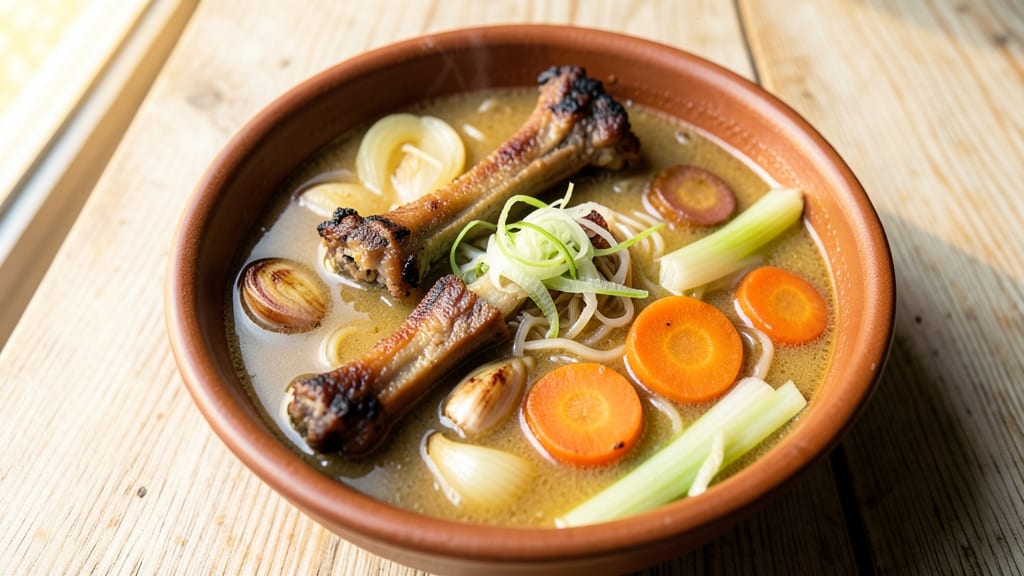
This Filipino beef bone soup recipe transforms tough bones into a velvety umami broth that carries the soul of Filipino comfort food. 🌟 The secret lies in slow-simmering, where collagen-rich bones release their essence into a fragrant, deeply flavorful base—perfect for pairing with silky egg drop swirls and traditional accompaniments like bagoong or steamed rice.
The process begins with charring aromatic vegetables and spices to unlock their full potential, then simmering the bones for hours until the broth achieves that signature richness.
This isn’t just soup; it’s a labor of love that rewards patience with layers of savory depth and a clean, bright finish from the egg swirls.
By the time you’re done, you’ll have a restaurant-quality Filipino bone broth that’s tender enough to soothe and bold enough to impress. The aroma alone will have everyone gathering around the table, while the silky texture of the egg swirls adds a touch of elegance to every spoonful.
Serve it with crispy pork cracklings, a side of vinegar, or a sprinkle of patis for that authentic Filipino touch. Here’s how to make it—slow, deliberate, and deeply satisfying.
Ingredients for beef bone soup filipino
Six aromatic vegetables, four pounds of bones, and a slow simmer for restaurant-quality Filipino comfort.
| Ingredient | Amount | Notes |
|---|---|---|
| Beef Bones 🦴 | 4 lb | Knuckle or marrow bones preferred |
| Yellow Onions 🧅 | 2 whole | Chopped, outer layers removed |
| Garlic Cloves 🧄 | 8 cloves | Peeled, smashed slightly |
| Fresh Ginger 🌿 | 2 oz | Sliced into 1/2-inch pieces |
| Carrots 🥕 | 3 whole | Whole, scrubbed clean |
| Celery Stalk 🌿 | 3 whole | Cut into 2-inch pieces |
| Bay Leaves 🍃 | 2 whole | Dried, standard size |
| Black Peppercorns 🌶️ | 1 tbsp | Whole, lightly crushed |
| Salt 🧂 | 1 ½ tsp | Kosher or sea salt |
| Large Eggs 🥚 | 4 whole | Fresh, room temperature |
| Vegetable Oil 🫒 | ½ cup | For charring vegetables |
| Patis (Fish Sauce) 🍶 | 1 tbsp | Filipino brand preferred |
| Soy Sauce 🥄 | 2 tbsp | Light or regular |
| Water 💧 | 8 cups | Filtered preferred |
The bones are everything here—knuckle or marrow bones give you that rich, gelatinous texture. Asian markets or butcher shops usually carry them, often labeled for bone broth. Skip the pre-cut ones; whole bones release more collagen. If you can't find them, beef shank bones work in a pinch, but they won't be as tender. For the vegetables, fresh is best, but frozen carrots and celery (thawed) won't ruin the broth—just chop them bigger so they don't turn to mush. The ginger? Fresh only—dried lacks that bright kick.
No patis? Soy sauce plus a splash of anchovy paste gets you close, but the umami won't be identical. Short on soy sauce? Worcestershire sauce at half the amount works, though it's not traditional. Eggs for the swirls? Room temperature is key—they'll emulsify better. If you're making this ahead, keep the eggs separate until serving. The broth freezes beautifully, but the egg swirls are best made fresh. For extra depth, some cooks add a splash of calamansi juice at the end, but that's optional—it's all about balancing the rich broth with something bright.
This broth tastes even better the next day—3-4 days in the fridge, 3 months frozen. For freezing, use wide-mouth jars so the liquid expands. The egg swirls? Make them fresh when serving—3 minutes max in hot broth. I like to portion the broth into containers with a small cup of egg swirls on top, then freeze. When reheating, start from cold (never microwave directly from frozen)—simmer on low for 20 minutes to wake up all those flavors. Leftovers? Perfect for noodles or rice the next day.
Why You'll Love This Recipe
- One-Pot Magic: The bones simmer right in the pot—no extra pans, no fuss. Just toss in onions, garlic, ginger, and carrots, then let the broth work its magic while you prep the rest of dinner.
- Deep Umami Bomb: That beef bone marrow? Pure flavor gold. The slow simmer pulls out rich, savory depth, and the garlic-ginger combo gives it a warmth that lingers long after the last spoonful.
- Leftovers That Beg for More: This soup only tastes better the next day—honestly, it’s my go-to for lazy Sundays. Reheat it, add a splash of vinegar, and suddenly it’s like a fresh batch.
- Budget-Friendly Bone Broth: Beef bones are cheap, and they stretch this into a week’s worth of meals. Use the broth for rice, stir-fries, or even a quick pasta sauce—waste not, want not.
Step-by-step instructions for beef bone soup Filipino recipe
Here's how to craft that deeply flavorful Filipino beef bone soup with silky egg swirls.
🔥 Step 1: Char the Vegetables for Deep Flavor
Heat the 0.5 cup vegetable oil in a large pot over medium-high heat. Add the chopped 2 whole yellow onions, 8 cloves garlic cloves, 2 oz sliced fresh ginger, 3 whole carrots (cut into 2-inch chunks), and 3 whole celery stalks (cut into 2-inch pieces). Cook for 8-10 minutes until the vegetables are deeply browned and fragrant.
This charring step is crucial—it develops a rich, caramelized flavor that forms the base of your soup. Stir occasionally and watch closely to prevent burning. You'll know it's ready when the vegetables release easily from the pan and smell intensely sweet and nutty.
🍳 Step 2: Sear the Beef Bones for Maximum Richness
Remove the charred vegetables and set aside. In the same pot, add the 4 lb beef bones and sear them over medium-high heat for 5-7 minutes on each side until they develop a deep golden-brown crust. This creates the Maillard reaction that adds incredible depth to your broth.
Don't rush this step—proper searing ensures your soup will have that unmistakable umami richness. You'll see the bones release a wonderful aroma and develop a beautiful crust. Once seared, add the charred vegetables back to the pot.
🥘 Step 3: Simmer the Broth with Aromatics
Add the 8 cups water, 2 whole bay leaves, 1 tbsp lightly crushed black peppercorns, and 1.5 tsp salt to the pot. Bring to a boil, then reduce heat to low and let it simmer uncovered for 3-4 hours. Skim off any foam that rises to the surface during the first 30 minutes of simmering.
Here's the thing—patience is key. The long simmer time allows the collagen in the bones to break down into gelatin, creating that signature silky texture. You'll know it's ready when the broth is deep amber in color and smells incredibly rich and savory.
🍳 Step 4: Season and Prepare the Egg Swirls
After 3 hours of simmering, add the 1 tbsp patis (fish sauce) and 2 tbsp soy sauce to the broth. Taste and adjust seasoning if needed—Filipino soups should be savory with just a hint of saltiness. In a small bowl, beat the 4 whole large eggs until well combined but still slightly runny.
This is where the magic happens. The combination of patis and soy sauce creates that perfect balance of umami and saltiness that defines Filipino beef bone soup. The slightly underbeaten eggs will create those beautiful swirls when added to the hot broth.
🥘 Step 5: Finish with Silky Egg Swirls
Just before serving, bring the broth to a gentle simmer. Slowly pour the beaten eggs in a thin stream while stirring continuously with a wooden spoon or chopsticks. The gentle motion creates those signature silky swirls throughout the soup. Simmer for just 1-2 minutes until the eggs are just set but still silky.
Serve immediately with steamed rice. The broth should be rich and flavorful, with the eggs beautifully swirled throughout. Each spoonful should deliver that perfect combination of hearty beef flavor, silky egg texture, and aromatic vegetables.
Pro Tips For Making Beef Bone Soup Filipino
- BLANCH BONES FIRST: Skip the direct boil—parboil bones for 10 minutes to loosen gristle and dirt before adding to the pot. I learned this the hard way after stirring up a cloud of sediment in my soup. Rinse them well afterward, or you’ll end up with murky broth.
- CHAR THE AROMATICS: Sear onions, garlic, and ginger in oil until deep golden—almost caramelized—before adding liquid. This isn’t just for flavor; it builds a rich base that cuts through the bone’s earthiness. (Yes, even if you’re impatient like me.)
- PEEL GINGER THIN: Use a spoon to scrape off just the purple outer layer, then slice the pale inner part paper-thin. Thick chunks burn and leave bitter notes, while thin slices infuse smoothly. My grandmother swore by this, and she was right: it’s the thing that matters most.
- ADD CARROTS LATE: Toss them in during the last 30–45 minutes, or they’ll turn to mush. You want them tender but still holding shape—like little sweet edible spoons for the broth. (Your future self will thank you.)
Regional styles of this beef bone soup filipino
Visayan-Style Sinigang
In the Visayas region, this beef bone soup transforms into sinigang na baka—a tangy, sour broth that brightens the rich umami. Add 1 cup tamarind pulp (or ½ cup calamansi juice) after simmering the bones, along with 1 tbsp shrimp paste for depth.
Serve with sliced radish, green beans, and spinach—these vegetables cook in just 5 minutes in the hot broth. The acidity cuts through the richness beautifully. 🌶️
Bicolano Kare-Kare
For a Bicolano twist, turn this into kare-kare-inspired beef bone soup by adding 1 cup peanut butter (Filipino-style, like Pinoysan) and 1 tbsp annatto seeds (soaked in 2 tbsp hot water) for color.
Simmer the bones as usual, then blend 1 cup cooked peanuts with ½ cup coconut milk and stir into the broth. Serve with banana heart (saging na saging) and bagoong. The peanut sauce adds a creamy, nutty contrast to the silky broth. 🥜
Ilocano Dinengdeng
In Ilocos, this soup becomes dinengdeng, a hearty dish with fermented shrimp paste (bagoong) as the star. After simmering the bones, add 2 tbsp bagoong (mashed) and 1 tbsp vinegar to balance flavors.
Stir in 1 cup chopped kangkong (water spinach) and 1 cup corn kernels in the last 10 minutes of cooking. The fermented shrimp paste gives it a funky, umami kick that’s uniquely Ilocano. Pair with steamed rice and crispy pork cracklings. 🍚
Tagalog-Style Bone Broth
The classic Tagalog approach focuses on simplicity and depth. After simmering the bones, add 1 tbsp soy sauce and 1 tbsp fish sauce (patis) for umami, then finish with 1 tsp sugar to balance. Serve with silky egg swirls and a side of garlic fried rice (sinangag).
This version is lighter than regional adaptations but still packed with flavor. The key is letting the broth reduce slightly for concentration—simmer uncovered for 4 hours for the best results. 💫
Pampangan Beef Bone Soup
In Pampanga, the dish leans into sweet and savory profiles. After the initial bone simmer, add 1 cup coconut milk and 1 tbsp brown sugar to the broth. Top with crispy lechon kawali (pork belly crisps) and fresh calamansi slices for brightness.
The coconut milk adds a velvety richness that pairs perfectly with the silky egg swirls. This version is often served at family gatherings, where it’s paired with sticky rice for a festive touch. 🍽️
Nutrition facts
Frequently asked questions
Can I use chicken or pork bones instead of beef?
While you can use chicken or pork bones, the flavor and texture will differ significantly. Beef bones provide the richest umami and gelatinous quality that's signature to Filipino beef bone soup. Chicken bones work better for lighter broths, while pork bones give a slightly sweeter taste. If you must substitute, use 4-5 pounds of chicken or pork bones to compensate for their smaller size.
How do I know when the broth is ready?
The broth is perfectly done when it reaches a deep amber color and has a silky, almost gelatinous texture. It should smell intensely rich and savory, with no gamey or fishy notes. For best results, simmer for 3-4 hours—the longer it cooks, the more collagen breaks down into gelatin, creating that luxurious mouthfeel.
What if I don't have patis (fish sauce)?
You can substitute with 1 tbsp soy sauce plus ½ tsp anchovy paste for umami depth. If you're avoiding fish entirely, use 1 tbsp soy sauce plus ½ tsp Worcestershire sauce. Just remember these alternatives won't perfectly replicate the complex flavor of authentic patis, which adds both saltiness and a distinctive funky depth to Filipino soups.
Can I make this soup in a slow cooker or Instant Pot?
For a slow cooker, follow the same steps but increase simmering time to 6-8 hours on low. In an Instant Pot, pressure cook the bones with water for 90 minutes on high pressure**, then do a natural release. The Instant Pot version will be faster but slightly less gelatinous. For both methods, char the vegetables separately before adding them to the pot.
Why do my egg swirls look lumpy instead of silky?
Lumpy swirls usually happen when the eggs are overbeaten or the broth isn't hot enough. For perfect silky swirls, use room temperature eggs beaten just until combined (not frothy), and pour them into broth that's at a gentle simmer. Stir continuously with a wooden spoon or chopsticks to create the signature ribbons. If they curdle, the broth might be too hot—reduce heat before adding eggs.