
Soups & Stews
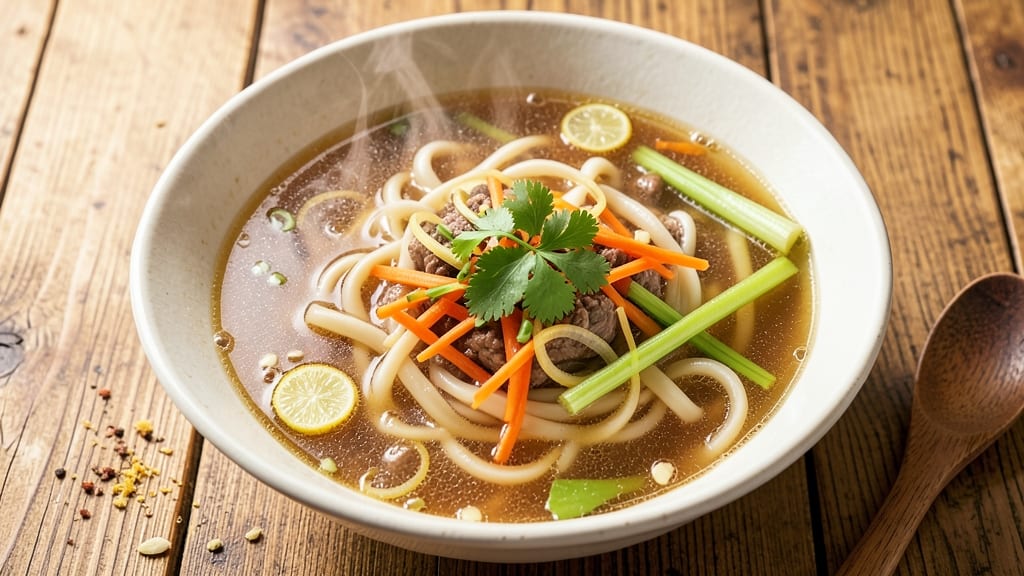
This beef broth udon noodle soup delivers the perfect balance of rich, savory broth and silky udon noodles—every spoonful is a comforting embrace. 💛 The secret lies in slow-simmered beef broth infused with aromatic vegetables and a crisp celery crown that adds freshness with every bite.
What makes this recipe stand out is the harmony of textures: tender udon, hearty beef, and delicate toppings that elevate each component. The broth forms the soul of this dish, built from a base of beef bones, vegetables, and spices simmered for hours to extract deep, umami-rich flavors.
Meanwhile, the udon noodles—whether fresh or dried—cook to a perfect al dente, absorbing the broth while maintaining their signature chewiness.
The assembly is simple yet transformative: combine the broth, noodles, and toppings like thinly sliced green onions, corn kernels, and soft tofu for a bowl that’s both nourishing and deeply satisfying.
What you’ll achieve is a bowl of soup that feels like a hug—warm, aromatic, and packed with layers of flavor. The crisp celery crown not only adds visual appeal but also introduces a refreshing crunch that contrasts beautifully with the silky noodles and tender beef.
This recipe is designed to be adaptable, allowing you to customize it with optional ingredients like mushrooms, chili oil, or even a splash of soy sauce for added depth.
Perfect for chilly evenings or as a comforting meal any time of year, this udon noodle soup is a testament to the power of simple, well-executed techniques. Let’s get started on creating a bowl that’s as rewarding to make as it is to eat.
Ingredients for beef broth udon noodle soup
Rich beef bones and aromatic vegetables create the soul of this comforting udon soup.
| Ingredient | Amount | Notes |
|---|---|---|
| Beef Bones 🦴 | 2 lb | Marrow and knuckle bones preferred |
| Yellow Onion 🧅 | 1 whole | Chopped, for broth base |
| Carrot 🥕 | 2 whole | Chopped, for broth base |
| Celery Stalks 🧆 | 4 whole | For broth and crisp crowns |
| Fresh Ginger 🌿 | 2 tbsp | Grated, aromatic base |
| Garlic Cloves 🧄 | 6 cloves | Smashed, for deep flavor |
| Dried Shiitake Mushrooms 🍄 | 4 whole | Rehydrated, umami boost |
| Dried Udon Noodles 🍜 | 12 oz | Or 8 oz fresh udon |
| Silken Tofu 🧀 | 8 oz | Soft, for delicate texture |
| Green Onions 🧅 | 4 whole | Thinly sliced, for garnish |
| Sweet Corn Kernels 🌽 | 1 cup | Fresh or frozen, for sweetness |
| Soy Sauce 🍶 | 2 tbsp | For seasoning broth |
| Sesame Oil 🌿 | 1 tbsp | For finishing touch |
| Vegetable Oil 🫒 | 2 tbsp | For crisping celery crowns |
| Salt 🧂 | 1 tsp | Kosher or sea salt |
The beef bones are non-negotiable—marrow and knuckle bones give the most flavor. Costco or local butcher shops often have them pre-packaged, but if not, ask for the toughest cuts. The celery and carrots should be organic if possible—no waxy skins, just vibrant color. Fresh ginger? Look for firm, bumpy roots—none of that shriveled stuff. Dried shiitake mushrooms add that umami magic, but if you can't find them, cremini mushrooms work in a pinch. For the udon, dried is easier to find, but fresh noodles have a silkier texture—worth the hunt at Asian markets.
No fresh ginger? Powdered works at half the amount, but it won't have that same bright punch. Out of soy sauce? Coconut aminos or tamari are solid swaps. The udon noodles can be pre-cooked and refrigerated for 3 days—just reheat in the broth. For the celery crowns, thinly slice the ends and fry until crispy—this is where the magic happens. Silken tofu needs to be extra-firm for that perfect bite, so don't grab the soft kind. And if you can't find shiitake, dried porcini mushrooms are a great alternative—just rehydrate them first.
Broth keeps for 5 days in the fridge or 3 months frozen—make extra! The udon noodles reheat beautifully in the broth, so portion them ahead for quick lunches. Celery crowns stay crisp for 2 days if stored in an airtight container. For leftovers, freeze the soup without the toppings—they'll add freshness when reheated. Pro tip: Add a splash of water when reheating to keep it silky.
Why You'll Love This Recipe
- Simmered in Minutes: I swear, this broth builds itself while you chop. Toss those beef bones, onion, carrot, and celery into a pot with ginger and water—then walk away. By the time I’ve sliced the udon, the kitchen smells like a Tokyo ramen shop.
- Umami Bomb: That beef bone broth? Chef’s kiss. The marrow melts into the water, turning every sip into rich, savory perfection. Even my picky husband asks for seconds—no small feat.
- Leftovers That Shine: Make a double batch on Sunday and thank me later. The broth tastes even better the next day, and I’ve reheated it for lunch three times this week. Freezer-friendly too—just add hot water to revive.
- Budget Comfort Food: Beef bones and veggies stretch into a whole meal for pennies. No fancy ingredients, just honest, hearty flavor that fills the house with warmth. My wallet and stomach both approve.
Step-by-step instructions for beef broth udon noodle soup
Here's how to build a rich, layered udon soup with crisp celery crowns and silky noodles.
🔥 Step 1: Roast the Beef Bones for Deep Flavor
Preheat your oven to 425°F and place the 2 lb beef bones on a baking sheet. Roast for 20-25 minutes until they develop a deep golden-brown crust. This caramelization forms the foundation of your broth's rich flavor.
While they roast, I like to add 1 tsp salt directly to the bones—this helps draw out collagen and enhances the umami depth. Turn the bones every 10 minutes to ensure even browning. The aroma alone will make your kitchen smell amazing—this is where the magic begins.
🍳 Step 2: Build the Broth Base with Aromatics
Transfer the roasted bones to a large stockpot and add 1 whole chopped yellow onion, 2 whole chopped carrots, 4 whole chopped celery stalks, 2 tbsp grated fresh ginger, and 6 smashed garlic cloves. Cover everything with 8 cups cold water—just enough to submerge the ingredients.
Bring to a boil over high heat, then immediately reduce to a gentle simmer. Skim off any foam that rises to the surface during the first 10 minutes—this ensures a clear, clean broth. The vegetables will soften and release their flavors into the water, creating a fragrant base. Don't rush this step; proper simmering extracts maximum flavor.
🥘 Step 3: Add Shiitake Mushrooms and Simmer
Soak the 4 whole dried shiitake mushrooms in warm water for 20 minutes until softened. Drain, reserving the soaking liquid, then slice them and add to the broth along with the reserved liquid. This step adds incredible umami depth that transforms your broth from good to extraordinary.
Simmer uncovered for 3-4 hours until the broth reduces by about 25% and becomes rich and gelatinous. You'll know it's ready when you can see the bones easily through the liquid and the aroma is intensely savory. Strain out the bones and vegetables, pressing gently on the solids to extract every last bit of flavor. This is your golden broth—save it for future soups too!
🍳 Step 4: Prepare the Crisp Celery Crowns
While the broth simmers, cut the 4 whole celery stalks into ½-inch thick rounds. Heat 2 tbsp vegetable oil in a skillet over medium-high heat until shimmering. Add the celery in a single layer and cook for 3-4 minutes per side until golden brown and crisp.
Here's the thing—don't overcrowd the pan or they'll steam instead of crisp. Work in batches if needed. The crispy celery crowns add a wonderful textural contrast to the silky noodles. Once golden, transfer to a paper towel-lined plate to drain excess oil.
🥘 Step 5: Assemble the Soup
Bring the broth back to a gentle simmer in a clean pot. Add 12 oz dried udon noodles and cook for 2-3 minutes until they float to the surface. Stir gently to prevent tangling. Add the 8 oz silken tofu and 1 cup sweet corn kernels, simmering for just 1 minute to warm through.
Ladle the hot broth into bowls, dividing the udon noodles evenly. Top each serving with crisp celery crowns, 4 whole thinly sliced green onions, and finish with a drizzle of 1 tbsp sesame oil. The contrast of crispy, silky, and savory elements in every bite is what makes this soup truly special. Serve immediately while the celery crowns are still crisp!
Pro Tips For Making Beef Broth Udon Noodle Soup
- CHAR THE BONES FIRST: Skip the slow start—blast those beef bones in a screaming-hot pot for 10 minutes before adding water. I learned this the hard way: rushing the sear means your broth stays cloudy and lacks depth. Do this, and the collagen will melt like butter later.
- SLICE GINGER THINLY: No, "chopped" isn’t enough—shave that ginger into paper-thin strips. Thick pieces sit like rocks; thin slices dissolve into the broth, infusing flavor without bitterness. Save yourself the strain of peeling out chunks later.
- DON’T CROWD THE POT: If your pot’s overflowing with bones and veggies, the broth will simmer like a sad stew. Aim for a 1:3 ratio of bones to water, and trim carrots/celery into 2-inch chunks. Space matters—crowding = murky broth.
- SALT THE BROTH LATE: Wait until the last 30 minutes to add salt. Early salting makes the broth taste flat as you add water to compensate for shrinkage. Taste near the end, then adjust—this is where umami gets its balance. (Yes, even if you’re impatient like me.)
Regional styles of beef broth udon noodle soup
Japanese Kanpyo Udon
In Japan, udon noodles are often paired with kanpyo—dried gourd strips that add a delightful chewy texture. Replace the crisp celery crowns with 2 oz dried kanpyo, soaked in warm water for 30 minutes until pliable.
Sauté with 1 tbsp sesame oil until golden and crispy, then arrange on top of the broth. The subtle sweetness of kanpyo complements the beef broth beautifully. 🌿
Korean Kongguksu Style
For a Korean-inspired twist, transform this into kongguksu by using a cold cucumber broth instead of beef. Add 1 lb beef brisket thinly sliced, 1 cup bean sprouts, and ½ cup sliced cucumber to the udon.
Garnish with sesame seeds and chili oil for a refreshing, spicy kick. The contrast of cold broth with warm udon is uniquely satisfying.
Chinese Beef Noodle Soup
In China, this dish often includes wonton strips and a spicy chili oil drizzle. After assembling the udon, add 4 oz store-bought or homemade wonton wrappers cut into strips and poached in the broth for 1 minute.
Finish with 1 tsp chili oil and extra green onions. The combination of chewy udon, tender beef, and crispy wonton strips creates a hearty, flavorful bowl.
Thai-Inspired Tom Yum Udon
For a Thai-inspired version, infuse the broth with 1 stalk lemongrass, 3 kaffir lime leaves, and 1 tbsp fish sauce (or soy sauce for vegetarian). Add 1 cup sliced straw mushrooms and ½ cup cherry tomatoes to the udon.
Top with Thai basil and a squeeze of lime for a bright, tangy twist. The aromatic herbs elevate the dish with a tropical flair.
Vietnamese Pho-Inspired Udon
Bring the flavors of pho to your udon by adding 1 cinnamon stick and 3 star anise pods to the broth while simmering. Include thinly sliced beef eye of round and bean sprouts as toppings.
Garnish with hoisin sauce and bean sprouts for a fusion dish that blends Japanese udon with Vietnamese comfort food. The aromatic spices create a warm, inviting bowl.
Americanized "Beefy Udon" Bowl
For a Western-friendly version, add ½ cup shredded cheddar cheese and ½ cup diced bacon to the broth. Top with crispy fried onions and a dollop of sour cream for a hearty, American-style udon.
This version is perfect for those who prefer bold, cheesy flavors while keeping the silky udon texture intact. 🍔
Nutrition facts
Frequently asked questions
Can I use dried udon noodles instead of fresh?
Dried udon noodles are more widely available and work perfectly in this recipe. They typically require 2-3 minutes of cooking time in the hot broth until they float to the surface. Fresh udon cooks faster (1 minute) but requires more effort to find. Either works—just adjust cooking time based on package instructions.
How do I make the broth richer without beef bones?
For a vegetarian version, use 2 tbsp soy sauce, 1 tbsp miso paste, and 1 cup mushrooms (shiitake or cremini) in the broth. Simmer 1 hour longer to develop depth. Add 1 beef bouillon cube or 2 tbsp beef powder for umami if using beef. The key is patience—longer simmering builds flavor even without bones.
Why did my celery crowns turn soggy?
Celery crowns lose crispness when exposed to moisture. To fix this, fry them fresh right before serving and keep them separate until the last minute. If they soften in the broth, remove them with a slotted spoon and add fresh ones. For extra crunch, toss them in 1 tsp cornstarch before frying to create a protective barrier.
Can I make this soup ahead of time?
Yes! Prepare the broth up to 5 days ahead and store it refrigerated. Cook the udon noodles fresh when serving to maintain texture. The celery crowns should be made fresh too—reheat them in a dry pan for 1 minute before adding to bowls. For a complete make-ahead meal, assemble everything (except celery crowns) and reheat gently before adding the crispy topping.
What's the best way to reheat leftovers?
Reheat only the broth and noodles together in a pot over low heat with ¼ cup water to prevent drying. Add fresh celery crowns and toppings after reheating. Never microwave the celery crowns—they'll turn rubbery. For best results, reheat just until steaming (3-4 minutes) and add fresh garnishes to restore texture and flavor.