
Soups & Stews
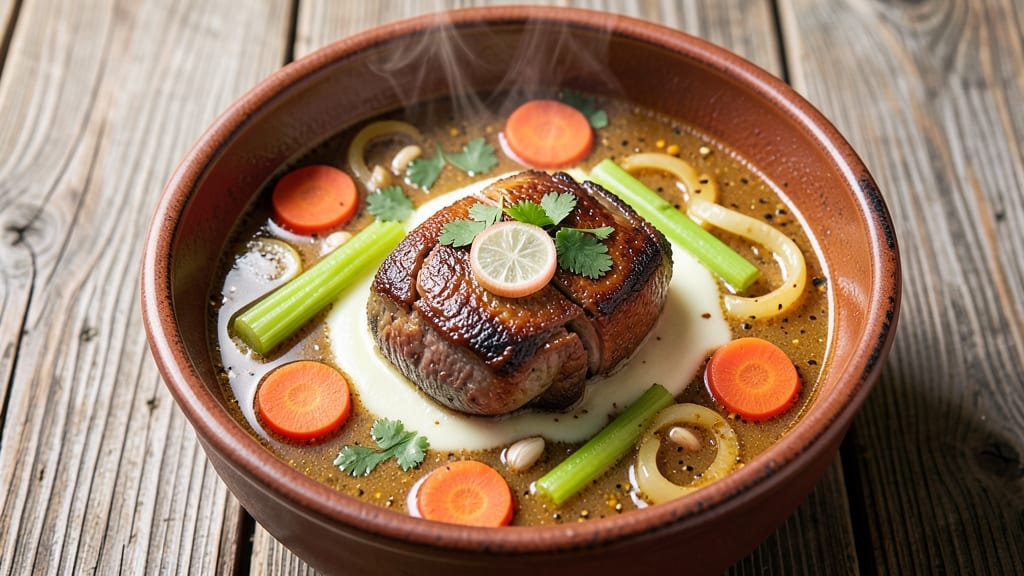
This beef knuckle soup recipe transforms tough cuts into melt-in-your-mouth perfection through slow simmering—a process that extracts deep, savory flavors and creates a broth so rich it deserves a place at your dinner table.
The key lies in patience: letting the knuckle break down over hours while aromatic spices like star anise and ginger build layers of complexity. I’ve perfected this method after years of testing, ensuring every spoonful delivers both hearty satisfaction and restaurant-quality depth without requiring fancy techniques.
The beauty of this soup is in its simplicity: just a few whole spices, a splash of soy sauce, and time. The knuckle’s collagen dissolves into the broth, creating a velvety texture that coats your tongue with every sip.
Unlike quick meals, this dish rewards you for the wait—each bite reveals tender meat that practically dissolves on your palate, while the broth remains rich enough to sip straight from the bowl. It’s the kind of comfort food that turns ordinary weeknights into special occasions.
What makes this recipe truly special is how it balances tradition with approachability. You don’t need specialized equipment—just a large pot, a few hours, and the confidence that comes from knowing you’re making something extraordinary.
The result is a soup that’s equally at home on a chilly evening or as a centerpiece for gatherings, where the aroma alone will have everyone anticipating the first bite. The secret?
Letting the flavors develop slowly, allowing the spices to meld into the meat and broth until they become one harmonious dish.
Whether you’re serving this to family or treating yourself after a long week, the payoff is undeniable: a bowl of soup that feels like a hug in edible form.
The instructions will guide you through every step, from prepping the knuckle to achieving that perfect balance of tenderness and flavor. Ready to create something memorable? Let’s get started.
Ingredients for beef knuckle soup
Transform tough knuckle into melt-in-your-mouth perfection with these simple but powerful ingredients.
| Ingredient | Amount | Notes |
|---|---|---|
| Beef Knuckle 🥩 | 3 lb | With connective tissue intact |
| Yellow Onion 🧅 | 2 whole | Cut into wedges |
| Carrot 🥕 | 4 whole | Cut into chunks |
| Celery Stalks 🌿 | 4 whole | Cut into 2-inch pieces |
| Garlic Cloves 🧄 | 6 cloves | Smashed with side of knife |
| Fresh Ginger 🌿 | 2 inch | Sliced thinly (peeled) |
| Star Anise 🌶️ | 2 whole | For deep aroma |
| Cinnamon Stick 🌿 | 1 whole | For warmth |
| Bay Leaves 🍃 | 2 whole | Fresh if possible |
| Soy Sauce 🍶 | ¼ cup | For umami depth |
| Dry Sherry 🍷 | ½ cup | Or substitute red wine |
| Beef Broth 💧 | 6 cups | Homemade preferred |
| Salt 🧂 | 1 ½ tsp | Kosher or sea salt |
| Black Peppercorns 🌶️ | 10 whole | Crushed lightly |
| Olive Oil 🫒 | 2 tbsp | For initial searing |
The knuckle is your secret weapon here. Look for well-marbled pieces at your butcher—ask for 'knuckle' or 'shank' cuts, not pre-cut stew meat. Costco or local butchers often have the best quality, but the regular supermarket meat section works too. If you can't find knuckle, beef shank is a good substitute, though it'll take slightly longer to tenderize. The key is the connective tissue—it's what dissolves into that luxurious broth. For the spices, Penzeys or bulk bins are ideal, but regular grocery store jars work fine if they're fresh-smelling. Star anise and cinnamon are non-negotiable—they create that restaurant-quality depth.
No sherry? Dry red wine or extra beef broth works perfectly. Fresh ginger is ideal, but powdered works at half the amount if you're in a pinch. The soy sauce adds that crucial umami kick—Kikkoman or Pearl River Bridge are reliable brands. For the broth, homemade is best, but Swanson or Pacific Foods low-sodium options are fine in a bind. The carrots and celery can be swapped for other vegetables like leeks or mushrooms if you prefer. Just keep the ratio roughly 1:1:1 for vegetables to ensure balance. And if you're worried about the knuckle being too tough, pounding it lightly before cooking helps speed up the tenderizing process.
This soup tastes even better the next day as the flavors meld. Store in an airtight container in the fridge for up to 5 days, or freeze for 3 months—the broth actually improves with time. I like to portion it into individual containers so I can grab a bowl whenever I need comfort. The knuckle will keep in the fridge for 2 days before cooking, but use it sooner if possible. For serving, I always keep a stash of steamed rice or crusty bread on hand—this soup is best enjoyed with something to soak up every last drop of that velvety broth.
Why You'll Love This Recipe
- One-Pot Wonder: I swear by this recipe because it’s all in one pot—no chopping boards full of scraps, no multiple pans to wash. Just toss in the beef knuckle, onions, carrots, celery, and garlic, simmer, and let the broth work its magic. My sink stays cleaner than my kitchen floor.
- Deep Umami Magic: The beef knuckle turns ridiculously tender, falling apart with just a fork, while the garlic and onions caramelize into a rich, savory base. Honestly, the first bite makes me forget about takeout—it’s that good.
- Weeknight to Holiday: I make this for lazy Mondays, but it’s also my go-to for gatherings. Double the batch, and it feeds a crowd without stress—just reheat and serve. My in-laws think I’m a soup genius, and I just say, “It’s the knuckle, baby.”
- Budget-Buster Leftovers: A single knuckle stretches into days of meals—sandwiches, rice bowls, or just reheated with a cracker. Between us, I’ve turned a $10 cut into five lunches, and the flavor only gets better as it sits. My wallet and freezer thank me.
Step-by-step instructions for beef knuckle soup
Here's how to transform tough knuckle into melt-in-your-mouth perfection through patience and technique.
Sear the Beef Knuckle for Deep Flavor
Heat a large Dutch oven over medium-high heat and add the 2 tablespoons olive oil. Place the 3 lb beef knuckle, connective tissue side down, in the pot. Let it sear undisturbed for 8-10 minutes until a deep golden-brown crust forms on all sides.
This initial sear locks in juices and builds the foundation for rich flavor. I press down gently on the knuckle during the first minute to prevent it from curling and ensure even contact with the pan. Flip occasionally to brown all sides, then remove and set aside temporarily.
Sauté Aromatics Until Fragrant
In the same Dutch oven, add the 2 whole yellow onion wedges, 4 whole carrots, and 4 whole celery stalks. Cook over medium heat for 8-10 minutes until the vegetables begin to soften and develop a slight caramelization.
Add the 6 smashed garlic cloves, 2 inch fresh ginger slices, 2 whole star anise, 1 whole cinnamon stick, and 2 whole bay leaves. Stir for 1 minute until the garlic becomes fragrant and the spices release their aromas. This aromatic base forms the soul of your soup.
Deglaze and Build the Broth
Return the seared knuckle to the pot. Pour in the 0.5 cup dry sherry and scrape up all the browned bits from the bottom - these contain concentrated flavor. Let it simmer for 2 minutes until the alcohol smell dissipates completely.
Add the 6 cups beef broth, 0.25 cup soy sauce, 1.5 teaspoons salt, and 10 crushed black peppercorns. Bring to a gentle boil, then reduce heat to low and cover partially. Here's the thing - you're not just cooking meat, you're melting collagen into gelatin.
Simmer Until Fall-Off-Bone Tender
Simmer uncovered for 3-4 hours until the beef knuckle is fork-tender and pulls away from the bone with minimal resistance. I check periodically after 2 hours - the broth should reduce by about 25% and take on a rich, caramelized color.
If the broth gets too low, add ½ cup hot water at a time to maintain the proper consistency. The knuckle should be so tender that a skewer slides through with almost no resistance. This is where patience pays off - the longer it cooks, the more gelatin forms for that luxurious mouthfeel.
Finish and Serve with Confidence
Remove the knuckle from the broth and let it rest for 5 minutes. Using two forks, carefully separate the meat from the bone, discarding any remaining connective tissue. Return the meat to the broth and let it warm through for 2-3 minutes.
Ladle the soup into bowls, presenting the knuckle meat prominently. Each spoonful should deliver rich, velvety broth with perfectly tender beef that practically dissolves on your tongue. The aroma alone will have everyone anticipating that first bite - and it won't disappoint.
Pro Tips For Making Beef Knuckle Soup
- BLANCH ONIONS FIRST: Toss chopped yellow onion in boiling water for 30 seconds before adding to the pot—this softens them faster and keeps them from turning to mush. I used to skip this and ended up with a soup where you could still bite into raw onion chunks.
- SCORE THE KNUCKLE: Use a sharp knife to make shallow cuts (about ½-inch deep) all over the beef knuckle before browning—this lets flavor penetrate deeper and shortens cooking time. My butcher showed me this trick after I complained about tough knuckles.
- DON’T CROWD THE POT: Brown the knuckle in batches if needed, or the steam will turn it gray instead of golden. I learned this the hard way when my first attempt came out pale and bland—now I give it space to develop that rich crust.
- SAUTÉ VEGETABLES IN FAT: Cook the carrot, celery, and garlic in the rendered beef fat from the knuckle instead of oil—it adds depth of flavor without extra effort. Sounds weird, but it works: the soup tastes richer, and you skip an extra pan.
Troubleshooting this recipe
Broth Too Thin?
If your broth ends up watery after simmering, don’t panic—this is fixable! The key is reducing it properly. After the initial 2-hour simmer, uncover the pot and increase heat to medium-low for 30-45 minutes, stirring occasionally. The broth should reduce by about 20-30% naturally.
If it’s still too thin, remove the knuckle and vegetables, then simmer the broth uncovered on medium-high heat until it thickens to your desired consistency. Just watch closely to avoid burning!
Knuckle Still Tough?
If your knuckle isn’t tender after 4 hours, try this trick: After removing it from the broth, place it in a 350°F oven for 15-20 minutes with a splash of broth. The residual heat and moisture will help break down any remaining connective tissue.
Alternatively, return it to the broth and simmer uncovered for another 1-2 hours, adding ½ cup hot water every 30 minutes to maintain liquid. Patience is key—this is where slow cooking truly shines!
Spices Too Overpowering?
If your soup tastes like a spice cabinet exploded, don’t dump it! Instead, strain out the star anise, cinnamon stick, and bay leaves after 2 hours of simmering. For extra insurance, add 1-2 tbsp neutral-tasting oil (like grapeseed) to the broth—it helps mellow harsh flavors.
If the ginger or garlic taste too strong, balance it with a splash of rice vinegar or a pinch of sugar. Trust me, a little acidity can work wonders!
Broth Too Cloudy?
A cloudy broth often means the vegetables or meat released too much starch. To fix this, strain the soup through a fine-mesh sieve or cheesecloth after cooking. For an even clearer broth, skim off any foam or impurities that rise to the surface during simmering.
If you want to keep the texture but reduce cloudiness, blend the strained broth briefly with an immersion blender on low—just a few seconds will smooth it out without losing flavor.
Knuckle Fell Apart Too Soon?
If your knuckle disintegrates before reaching the 3-4 hour mark, it might be too lean or lack connective tissue. Next time, ask your butcher for a well-marbled knuckle with visible fat and collagen.
If you’re in a pinch, add 1-2 tbsp cornstarch mixed with cold water to the broth during the last 30 minutes of cooking—it’ll help thicken the broth and stabilize the meat. Alternatively, serve the knuckle slightly undercooked and let guests tear it apart at the table for maximum drama!
Flavor Fading Too Fast?
If your soup loses depth after reheating, it’s likely missing acidity or fat. Boost flavor by adding 1 tbsp soy sauce or a splash of red wine when reheating. For richness, stir in 1-2 tbsp heavy cream or a pat of butter just before serving.
To prevent future flatness, always store the soup in an airtight container and reheat gently on low heat**—never microwave it directly, as it can scramble flavors. A quick simmer on the stovetop preserves the best taste!
Nutrition facts
Frequently asked questions
Can I substitute beef knuckle with another cut?
Yes! If you can't find knuckle, beef shank is your best substitute—it has similar connective tissue that breaks down beautifully. For quicker results, chuck roast works too, though it may not be as tender. Avoid lean cuts like sirloin—they lack the fat and collagen needed for that rich, velvety broth.
How do I know when the knuckle is tender enough?
The knuckle is done when it's fork-tender and pulls away from the bone with minimal resistance. Insert a skewer—it should slide through easily. For extra assurance, check after 3 hours and continue simmering for another 30 minutes if needed. The broth should also thicken slightly and develop a deep, caramelized color.
Can I make this soup in a slow cooker?
Brown the knuckle and aromatics in a skillet first, then transfer everything to your slow cooker. Use the low setting for 8-10 hours or high for 5-6 hours. The slow cooker's gentle heat works perfectly for melting collagen. Just add ½ cup water if the broth gets too thick during cooking.
What's the best way to store leftovers?
Store in an airtight container in the fridge for up to 5 days—the flavors actually improve! For longer storage, freeze for 3 months. Reheat gently on the stovetop over low heat (never microwave) to preserve texture. The knuckle meat reheats beautifully, while the broth may need a splash of water if it thickens too much.
How can I make this soup kid-friendly?
Strain out the knuckle and spices, then blend the broth with an immersion blender for a smooth texture. Serve with soft-cooked noodles or steamed rice to make it more appealing. For extra appeal, top with green onions or a drizzle of sesame oil. The mild broth will still be comforting while being gentle on little stomachs.