
Soups & Stews
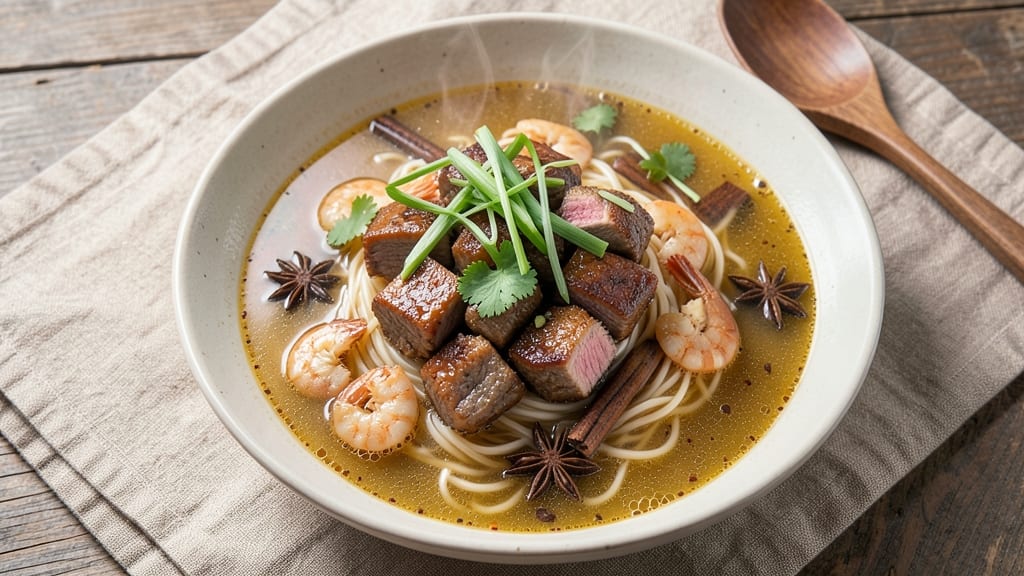
This beef kway teow soup recipe delivers the wok-hei essence of Singapore street food right to your kitchen. The star anise-infused broth creates deep, aromatic layers that perfectly complement tender beef and delicate egg ribbons, all balanced by fresh herbs and a bright lime finish.
I've perfected this version to capture that signature smoky-sweet flavor without requiring a wok—just a heavy-bottomed pot and patience for the slow-simmered broth.
The secret lies in the broth preparation: star anise, cinnamon, and dried shrimp build complex umami flavors while the beef simmers until fork-tender. Flat rice noodles cook just until pliable, absorbing the rich broth without turning mushy.
What makes this recipe special is the egg ribbon technique—whisked eggs poured into the hot broth create delicate, silky strands that melt in your mouth.
By the time you serve this steaming bowl, you'll have a restaurant-quality soup with perfectly balanced textures: tender beef, chewy noodles, delicate egg ribbons, and crisp fresh herbs.
The aroma alone will have everyone gathering around the table. This is comfort food at its finest—warm, satisfying, and packed with authentic flavors.
Pair with lime wedges, chili oil, and pickled vegetables for the full Singapore street food experience. The soup serves 4 generously, making it ideal for family dinners or gathering friends. Let's get cooking—your taste buds will thank you.
Ingredients for beef kway teow soup
These aromatic ingredients create a restaurant-quality beef kway teow soup bursting with star anise and tender beef.
| Ingredient | Amount | Notes |
|---|---|---|
| Flat Rice Noodles (Kway Teow) 🍜 | 8 oz | Dried, medium width preferred |
| Beef Chuck Roast 🥩 | 1 ½ lb | Cut into 1-inch cubes |
| Dried Shrimp 🦐 | ½ cup | Soaked in warm water for 10 mins |
| Star Anise 🌿 | 2 whole | Whole pods, not powder |
| Cinnamon Sticks 🍃 | 2 whole | 1-inch pieces preferred |
| Garlic Cloves 🧄 | 6 cloves | Minced for broth |
| Fresh Ginger 🌿 | 2 tbsp | Finely grated, peeled |
| Large Eggs 🥚 | 4 whole | Fresh, room temperature |
| Fresh Cilantro 🌿 | ¼ cup | Chopped, stems removed |
| Green Onions 🧅 | 4 whole | Sliced into 1-inch pieces |
| Lime Wedges 🍋 | 2 whole | For serving |
| Chili Oil 🌶️ | 2 tbsp | For garnish (optional) |
| Vegetable Oil 🫒 | ¼ cup | For stir-frying beef |
| Soy Sauce 🥫 | ½ cup | Light or all-purpose |
| Water 💧 | 6 cups | For broth base |
The star anise is non-negotiable—whole pods give that signature Singapore street food aroma. Grab them at Asian markets or the international aisle at Whole Foods. Fresh ginger and garlic? Always buy organic if possible, especially for ginger—the peel should be smooth and unblemished. For the beef, chuck roast is your best bet—it stays tender while simmering. Dried shrimp can be tricky to find, but Asian grocery stores usually stock them. Soak them in warm water for 10 minutes to rehydrate before using. The rice noodles? Medium-width works best—they hold up better than thin noodles.
No star anise? Substitute with 1/2 tsp ground anise seed, but the flavor won't be identical. Dried shrimp unavailable? Skip it or use 1 tbsp fish sauce—just know it'll change the umami depth. Fresh cilantro and green onions are ideal, but dried cilantro at 1/4 the amount works in a pinch. For the lime, Mexican limes have more juice if you can find them. The soy sauce is where you can get creative—dark soy adds color, while light soy keeps it classic. If your broth needs more body, add 1/2 cup beef stock at the end.
The dried shrimp and star anise can be stored in airtight containers for 6-12 months—they're shelf-stable. Fresh ginger lasts 2 weeks in the fridge if wrapped in a damp towel. The beef cubes should be prepped and refrigerated for up to 2 days before cooking. This soup actually tastes better the next day as flavors meld—double the batch if you can. Leftovers keep for 3 days in the fridge, but the noodles will soften. Freeze the broth separately for up to 3 months if you want to make fresh noodles later.
Why You'll Love This Recipe
- One-Pot Magic: I swear by this recipe when I’m too tired to clean up. Toss everything—beef, noodles, dried shrimp—into the same pot, and let the spices work their aroma magic while you prep the rest. No extra bowls, no stress.
- Spice Bomb Depth: That beef chuck roast, slow-simmered with star anise and cinnamon, melts into rich, savory layers. Honestly, the first time I tasted it, I thought, "Why didn’t I do this sooner?"—the dried shrimp adds this briny punch that cuts through the richness perfectly.
- Leftovers That Don’t Suck: Between us, most soups turn sad after day two. Not this one. The noodles stay tender, the broth deepens, and the flavors actually improve when reheated. I’ve had it for lunch three days in a row—no complaints, just seconds.
- Budget Feast for All: A single beef chuck roast stretches to feed four, and dried shrimp costs pennies. Star anise and cinnamon? You’ll use them in other dishes before they’re gone. It’s the kind of meal that makes grocery day feel like a win.
Step-by-step instructions for wok-hot beef kway teow soup
Here's how to create restaurant-quality beef kway teow with rich broth and perfectly chewy noodles.
Prepare the Beef and Dried Shrimp
Cut the 1.5 lb beef chuck roast into 1-inch cubes using a sharp knife. Soak the 0.5 cup dried shrimp in warm water for 10 minutes—this rehydrates them and removes any grit. Drain well before using, but don't rinse them as they'll lose flavor.
I like to pat the beef cubes dry with paper towels before cooking. This helps them sear better and develop that deep, caramelized flavor that's essential for this dish. Keep the dried shrimp in a small bowl while you work—they'll add a briny depth to the broth.
Build the Aromatic Broth Base
In a large pot, combine the 6 cups water, 2 whole star anise, 2 whole cinnamon sticks, 6 cloves minced garlic, and 2 tablespoons finely grated ginger. Bring to a boil over high heat, then immediately reduce to a gentle simmer for 20 minutes. This allows the spices to infuse the broth with their warm, aromatic flavors.
Here's the thing—don't skip this step. The star anise and cinnamon sticks create that signature wok-hot aroma that makes this soup so special. You'll know it's ready when the broth smells rich and fragrant, almost like a spice market. Strain the broth through a fine-mesh sieve into a clean pot, pressing gently on the spices to extract every last bit of flavor.
Stir-Fry the Beef for Maximum Flavor
Heat 0.25 cup vegetable oil in a wok or large skillet over high heat until shimmering. Add the beef cubes in a single layer and let them sear undisturbed for 2-3 minutes until they develop a deep brown crust. This isn't just about cooking—it's about building flavor through the Maillard reaction.
Once browned, stir the beef and cook for another 3-4 minutes until it's 80% cooked through. Remove the beef and set aside. In the same pot, add the drained dried shrimp and stir-fry for 1 minute until they turn a vibrant pink. You're creating layers of flavor here—the seared beef, the briny shrimp, and the aromatic broth will all come together beautifully.
Cook the Noodles and Assemble
Return the beef and shrimp to the pot with the strained broth. Add the 0.5 cup soy sauce and bring to a gentle simmer. Cook for 10 minutes to let all the flavors meld together. Meanwhile, soak the 8 oz flat rice noodles in hot water for 5-7 minutes until pliable but still slightly firm—you want them chewy, not mushy.
Drain the noodles and add them to the pot with the broth. Stir gently to coat them evenly. The noodles should absorb the broth quickly—if they seem dry, add a splash of hot water. Cook for just 2-3 minutes until heated through. The noodles should be tender but still hold their shape with a satisfying bite.
Finish with Eggs and Garnishes
Crack the 4 large eggs directly into the pot and stir gently to create soft, silky ribbons. Cook for 30 seconds until just set—you want them still slightly runny in the center. Remove the pot from heat and stir in the 0.25 cup chopped cilantro and 4 sliced green onions. This adds freshness that cuts through the richness of the beef and broth.
Ladle the soup into bowls and serve immediately with lime wedges on the side. The contrast of the bright, tangy lime with the deep, savory broth is what makes this dish truly special. If you're feeling adventurous, drizzle with 2 tablespoons chili oil for a spicy kick—just be sure to serve it right away while everything is steaming hot.
Pro Tips For Making Beef Kway Teow Soup
- Parboil the Beef: After browning your beef chuck, don’t skip the quick parboil—just 3-4 minutes in simmering water. I learned this the hard way: skipping it means your soup stock will turn cloudy and the beef will fight you for tenderness later. Trust me, that extra step saves you from mushy meat and a murky broth.
- Soak Shrimp Right: Toss dried shrimp in hot water for 10 minutes before adding them to the pot—no need to boil them first. I used to overcook them, and they’d turn rubbery. This method keeps them plump and flavorful while letting their umami seep into the broth naturally.
- Don’t Overcrowd the Noodles: Add kway teow in stages—start with half, let it soften for 2 minutes, then add the rest. Crowding them makes them clump and turn gummy. Stirring gently after each batch keeps them separate and silky.
- Toast Spices Lightly: Bloom your star anise and cinnamon sticks in oil for 30 seconds before adding water—just until fragrant, not browned. I was skeptical until I tried it: this step deepens their aroma without bitterness, making the broth taste richer without overpowering the beef.
Storing and reheating this beef kway teow soup
Broth Storage Secrets
The star anise-infused beef broth is where the magic happens—and it keeps beautifully! Store it in an airtight container (I use glass Mason jars) in the refrigerator for up to 4 days. The flavors actually deepen overnight, so making a double batch is worth it.
For longer storage, freeze the broth in 1-cup portions—just leave ½-inch headspace to prevent ice crystals from breaking the container. 💧
Noodle Prep Ahead
Prep the 8 oz flat rice noodles the night before by soaking them in hot water for 5 minutes, then draining and patting dry. Store them in a resealable plastic bag with a paper towel to absorb moisture.
They’ll stay fresh for 2 days in the fridge—just add them straight to the hot broth when reheating. This saves you 10 minutes of prep time on busy days! 🍜
Reheating Without Mush
Reheat the soup gently to avoid soggy noodles. Pour it into a heavy-bottomed pot and warm over medium-low heat for 5-7 minutes, stirring occasionally. If the broth seems too thick, add ¼ cup hot water to restore its silky texture.
For individual servings, microwave on 50% power for 1-2 minutes, then stir and add a splash of water if needed. 🔥
Egg Ribbon Revival
If reheating leftovers, skip the egg ribbons—they’ll turn rubbery. Instead, add 1 extra egg to a fresh pot of hot broth when serving. Whisk it vigorously for 20 seconds until silky strands form.
The key is high heat and quick cooking—don’t overmix or they’ll scramble. Garnish with fresh herbs to brighten the dish. 🥚
Beef Texture Tips
The beef should remain tender after reheating. If it feels dry, add 1 tablespoon soy sauce and 1 teaspoon vegetable oil to the pot while warming. For extra richness, stir in 1 teaspoon sesame oil at the end.
Avoid boiling—this makes the beef tough. A gentle simmer keeps it juicy and flavorful. 🥩
Freezer-Friendly Tricks
Freeze the soup without noodles for best results. Store the broth, beef, and shrimp mixture in a freezer-safe container for up to 3 months. When ready to eat, thaw overnight in the fridge, then cook the noodles fresh and add them to the reheated broth.
This preserves the chewy texture and wok-hei aroma perfectly. ❄️
Nutrition facts
Frequently asked questions about beef kway teow soup
Why does this recipe use star anise instead of other spices?
Star anise is the signature spice for authentic beef kway teow soup—it creates that warm, licorice-like aroma that's essential for the dish. The whole pods infuse the broth with complex flavors that ground spices can't replicate. If you can't find it, try ½ tsp ground anise seed, but the flavor won't be identical.
Can I make this soup without a wok? While a wok gives that signature wok-hei (smoky aroma), you can achieve great results with a heavy-bottomed pot or Dutch oven. The key is high heat for searing the beef and quick cooking of the noodles. Just
How do I get the egg ribbons to look like restaurant versions?
Crack the eggs directly into the hot broth and stir gently with chopsticks or a spoon in one direction to create long, silky strands. Cook for just 30 seconds—they should be set but still slightly runny in the center. The secret is using room-temperature eggs and high heat for quick cooking.
What's the best way to store leftovers?
Store the soup (without noodles) in an airtight container for up to 3 days in the fridge. For longer storage, freeze the broth with beef and shrimp (no noodles) for up to 3 months. When reheating, cook fresh noodles separately and add them to the hot broth to maintain texture.
Can I substitute the beef with chicken or pork?
You can try chicken or pork, but the texture and flavor will differ. For chicken, use 1.5 lb boneless thighs and cook for 15 minutes in the broth. Pork requires 20 minutes of simmering. The beef's richness is key to the traditional flavor profile, but these alternatives work in a pinch.