
Soups & Stews
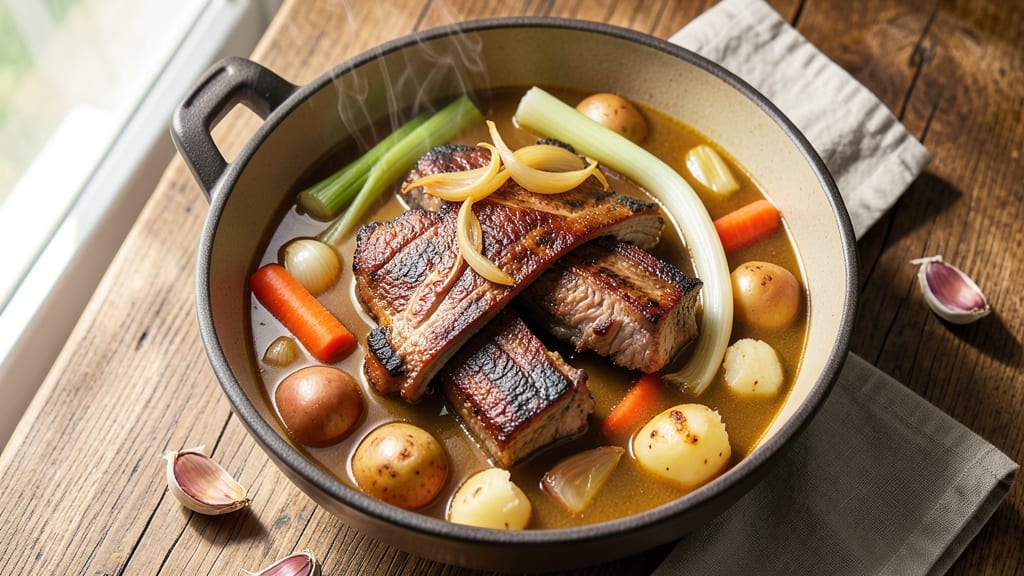
This beef short rib vegetable soup transforms tough cuts into melt-in-your-mouth tenderness while delivering a deep, savory broth packed with seasonal vegetables. The secret lies in slow-braising the short ribs until they fall apart, creating a rich foundation that coats every spoonful with velvety meat and aromatic herbs.
I've perfected this recipe over years of testing, balancing traditional braising techniques with modern shortcuts for busy weeknights.
The result is a hearty soup where tender beef short ribs share the spotlight with crisp-tender vegetables—carrots, celery, and potatoes—all simmered in a deeply flavorful broth infused with garlic, thyme, and bay leaves.
What makes this recipe special is its versatility: you can prepare it in a Dutch oven on the stovetop or use a pressure cooker for half the time without sacrificing depth of flavor.
The vegetables develop a natural sweetness from the long simmer, while the beef absorbs the aromatics, creating a harmonious balance of textures and tastes.
By the time you serve this soup, you'll have a steaming bowl of restaurant-quality comfort food that's rich yet balanced, substantial yet comforting. The beef falls apart easily, releasing its juices into the broth, while the vegetables maintain their structure just enough to provide satisfying bite.
This is the kind of soup that warms you from the inside out, perfect for chilly evenings or as a nourishing meal to share with family and friends.
The best part? Leftovers taste even better the next day as the flavors continue to meld and deepen. Whether you're serving it as a main course or pairing it with crusty bread, this beef short rib vegetable soup delivers on both flavor and satisfaction.
Let's get started on creating this deeply satisfying dish.
Ingredients for beef short rib vegetable soup
These rich, hearty ingredients create a restaurant-quality beef short rib soup with melt-in-your-mouth meat and vibrant vegetables.
| Ingredient | Amount | Notes |
|---|---|---|
| Beef Short Ribs 🥩 | 3 lb | Bone-in, 2-3 inches thick |
| Yellow Onions 🧅 | 2 whole | Medium size, chopped |
| Carrots 🥕 | 4 whole | Medium size, peeled, cut into chunks |
| Celery Stalks 🧄 | 4 whole | Cut into 1-inch pieces |
| Russet Potatoes 🥔 | 2 lb | Peeled, cut into 1-inch cubes |
| Garlic Cloves 🧄 | 6 cloves | Peeled, smashed |
| Fresh Thyme 🌿 | ¼ cup | Stems removed, chopped |
| Bay Leaves 🌿 | 2 whole | Fresh preferred |
| Dry Red Wine 🍷 | 1 cup | Bold variety like Cabernet Sauvignon |
| Beef Broth 💧 | 6 cups | Low-sodium preferred |
| Tomato Paste 🍅 | 2 tbsp | Smooth, not chunky |
| Olive Oil 🫒 | ¼ cup | Extra-virgin for richness |
| Kosher Salt 🧂 | 2 tsp | Diamond Crystal preferred |
| Ground Black Pepper 🌶️ | 1 tsp | Freshly ground |
| Fresh Parsley 🌿 | ⅛ cup | Chopped, for garnish |
The beef short ribs are the star—look for marbled cuts with good fat cap at Costco or your local butcher. If they're pre-cut, no problem, but if buying whole, ask for the bone-in, 2-3 inch thick pieces. The vegetables should be fresh and firm: carrots with bright orange color, celery with crisp stalks, and potatoes that feel heavy for their size. Thyme and bay leaves add depth, so don't skip them—Penzeys has excellent dried options if fresh isn't available. For the wine, any bold red works here—Cab Sauv, Merlot, whatever's open in your cabinet.
No red wine? Beef broth with a splash of balsamic vinegar gets you close. Fresh thyme is ideal but dried works at one-third the amount. If tomato paste feels like overkill for two tablespoons, those squeeze tubes at Trader Joe's are perfect—no waste, keeps for months. The carrots can be baby carrots if that's what's in the fridge, but whole carrots develop better sweetness. For the potatoes, Russets hold up best to long cooking, but Yukon Golds add creaminess if you prefer. The beef broth matters—low-sodium version lets you control the salt better.
This soup tastes even better the next day as flavors meld. Keeps 5-6 days in the fridge, freezes for 3 months. I portion mine into containers so lunches are sorted for the week. For reheating, start with cold broth and simmer gently—never microwave. The beef will stay tender if you're careful. Store fresh herbs wrapped in damp paper towels for up to 5 days—they wilt fast once cut.
Why You'll Love This Recipe
- One-Pot Magic: I swear by this—just toss the short ribs, onions, carrots, and celery into one pot, add water, and let it simmer. No chopping like a fine-diner, no separate pans, and the potatoes melt in like they were meant to be there.
- Rich Without Effort: That first bite? The short ribs fall apart so easily, coating your spoon in deep, savory broth while the carrots stay tender-crisp. Honestly, it’s the kind of flavor that makes you forget you didn’t spend hours on it.
- Weeknight to Company Dinner: Make a double batch on Sunday—it reheats like a dream for lunches all week. Or serve it to guests when you want to impress without stressing. The same simple ingredients just feel fancier when you ladle them into bowls with crusty bread.
- Budget-Friendly Luxury: Short ribs on sale? Snap them up. A pound of them stretches into four hearty servings, and the veggies round it out without breaking the bank. Between us, this is how I trick myself into feeling like I’m eating at a steakhouse for half the price.
Step-by-step instructions for slow-simmered beef short rib vegetable soup
This rich, hearty soup transforms tough short ribs into melt-in-your-mouth tenderness through slow simmering.
Sear the Beef Short Ribs for Depth of Flavor
Pat the 3 lb beef short ribs completely dry with paper towels. Heat a large Dutch oven over medium-high heat and add 0.25 cup olive oil. Once shimmering, place the ribs in a single layer and sear for 8-10 minutes per side until deeply browned. This caramelization builds the foundation for rich flavor.
Real talk: Don't rush this step. You'll know it's ready when the ribs release easily from the pan and develop a beautiful mahogany crust. Transfer the seared ribs to a plate and set aside. You'll see the oil turn golden and aromatic—this is where the magic begins.
Build the Aromatic Vegetable Base
In the same Dutch oven, add 2 whole yellow onions, 4 whole carrots, and 4 whole celery stalks (all chopped as per ingredient list). Cook for 8-10 minutes, stirring occasionally, until the vegetables soften slightly and begin to release their natural juices. This process, called sweating, develops their flavors without browning.
Add 6 cloves garlic cloves (smashed) and 0.25 cup fresh thyme, stirring for 1 minute until fragrant. Here's where it gets fun—sprinkle in 2 tbsp tomato paste and cook for 2 minutes, stirring constantly. This creates a rich, umami base that will deepen the soup's complexity. The tomato paste will darken slightly, indicating it's properly incorporated.
Deglaze and Simmer the Foundation
Pour in 1 cup dry red wine, scraping up any browned bits from the bottom of the pot with a wooden spoon. This deglazing step captures all the concentrated flavors you've built. Let the wine simmer for 5 minutes until reduced by half, allowing the alcohol to cook off and intensify the flavor profile.
Add 6 cups beef broth and 2 whole bay leaves, then return the seared short ribs to the pot. Bring to a gentle boil, then immediately reduce heat to low and cover partially. This is where patience pays off—simmer for 2 hours until the ribs are fork-tender. You'll notice the broth will darken and develop a rich, meaty aroma as it works its magic.
Add Potatoes and Final Simmer
Add 2 lb russet potatoes (cut into 1-inch cubes) to the pot. Increase heat to medium and simmer uncovered for another 45-60 minutes, until the potatoes are tender and the ribs are falling off the bone. The potatoes should absorb some of the broth, creating a perfect balance of thick and thin areas in the soup.
I know it seems like a long cook time, but this is essential. The ribs should pull apart easily with two forks, and the potatoes should be completely tender with no resistance. If the soup reduces too much before the potatoes are done, add a splash of water or broth to maintain the proper consistency.
Finish and Serve with Fresh Herbs
Remove the ribs from the pot and let them rest on a cutting board for 5 minutes. Using two forks, shred the meat directly into the soup, discarding any large bones. Stir in 2 tsp kosher salt and 1 tsp ground black pepper, then taste and adjust seasoning if needed.
Ladle the soup into bowls and garnish each serving with 0.125 cup fresh parsley. The parsley adds a bright contrast to the rich, meaty broth. Serve immediately with crusty bread to soak up every last drop of that velvety goodness. The ribs should be so tender they practically melt, and the vegetables perfectly cooked through with just a hint of bite.
Pro Tips For Making Beef Short Rib Vegetable Soup
- Sear the Ribs First: High heat for 3-4 minutes per side until deep brown—don’t skimp on this step. The Maillard reaction here builds flavor that won’t dissolve into the broth later, and rushed searing just makes the meat steam instead of caramelize.
- Cut Potatoes Uniformly: Slice russets into 1-inch chunks, not random bits—consistent size means even cooking. I learned this the hard way when my first batch had mushy potatoes and rock-hard centers; uniform cuts guarantee everything finishes at the same time.
- Deglaze with Wine, Not Water: After searing the ribs, hit the pot with a splash of dry red wine (or even cheap cooking wine) and scrape every last bit of browned bits off the bottom. Water just makes a weak broth; wine adds depth and cuts through the richness of the short ribs.
- Add Celery Last: Toss the celery stalks in 5 minutes before serving—it softens too fast and turns to mush if left in too long. This keeps the soup’s texture bright and the celery’s bite fresh, not slimy. (Yes, I know it’s annoying to wait, but your soup will thank you.)
Make-ahead tips for leftovers
Prep Ahead Strategy
Start by prepping all vegetables the night before—chop 2 onions, 4 carrots, 4 celery stalks, and 2 lbs potatoes into uniform pieces. Store them in separate airtight containers with a damp paper towel to maintain freshness. This cuts 30 minutes off your cooking day. 💫
Shortcut for Busy Days
Use a pressure cooker to reduce cooking time by 75%. After searing the ribs, add all ingredients except potatoes to your Instant Pot. Cook on high pressure for 45 minutes, then add potatoes and cook 10 more minutes. The ribs will be fork-tender and the broth deeply flavorful without the long simmer. Just
Broth Prep Technique
Make a big batch of beef broth in advance and freeze it in quart-sized portions. Use one portion for this recipe and save the rest for future soups or braises. I like using low-sodium broth so I can control the final seasoning. Keep frozen broth in airtight containers for up to 3 months—thaw overnight in the fridge before using.
Herb Storage Tips
Store fresh thyme and parsley in separate containers with a damp paper towel wrapped around them. Place them in sealed bags and store in the crisper drawer of your fridge. This keeps them fresh for up to 5 days.
For dried herbs, keep them in small airtight jars away from light and heat—they'll stay potent for 6 months or longer. 🌿
Make-Ahead Freezing
This soup freezes beautifully for up to 3 months. Let it cool completely, then portion into airtight containers leaving 1-inch headspace for expansion. When reheating, thaw overnight in the fridge, then simmer gently on the stovetop with a splash of water or broth.
Never microwave—it makes the potatoes gummy and the meat tough.
Weeknight Prep Plan
For ultimate convenience, prepare everything except the final simmer the night before. Sear the ribs, build the vegetable base, and deglaze with wine. Cover and refrigerate overnight. The next day, just add the broth, bay leaves, and potatoes, then simmer until everything is tender.
This half-day prep makes weeknight dinners effortless while keeping the soup's rich flavors intact.
Nutrition facts
Frequently asked questions
Can I substitute beef short ribs with another cut of beef?
While beef short ribs are ideal for their rich flavor and melt-in-your-mouth texture, you can substitute with chuck roast (cut into chunks) or brisket. For best results, increase the cooking time by 30-45 minutes since these cuts are more fibrous. Avoid lean cuts like sirloin—they won't become tender enough during the simmering process.
How do I know when the beef short ribs are fully cooked?
The ribs are done when they're fork-tender and easily shred apart with minimal resistance. Insert a fork into the thickest part—the meat should separate cleanly with just light pressure, and the juices should run clear. If you're using a meat thermometer, aim for an internal temperature of 203°F. This ensures they're fall-apart tender without being mushy.
Can I make this soup in a slow cooker? If so, how?
Sear the ribs as directed, then transfer everything (except potatoes) to your slow cooker. Add 6 cups beef broth and cook on low for 8 hours or high for 5 hours. Stir in potatoes during the last 1-2 hours of cooking. The slow cooker method is perfect for hands-off prep and delivers the same deep, rich flavors. The ribs will be even more tender from the extended low-and-slow cooking.
What vegetables can I add or swap for different seasonality?
This soup is incredibly adaptable! Swap carrots for parsnips in winter or zucchini in summer. Celery can be replaced with leeks or fennel for extra depth. For greens, add kale or spinach in the last 10 minutes of cooking. In fall, try butternut squash or turnips—just increase cooking time by 15-20 minutes for denser vegetables.
Why did my soup turn out too salty?
This usually happens when using high-sodium broth or adding salt too early. Always taste before adding final seasoning, and remember that the broth, wine, and tomato paste already contribute saltiness. If it's too salty, stir in 1/2 cup cold milk or cream to dilute, or add 1 extra potato (which absorbs some salt) and simmer for 10 more minutes. For future batches, use low-sodium broth and add salt gradually.