
Soups & Stews
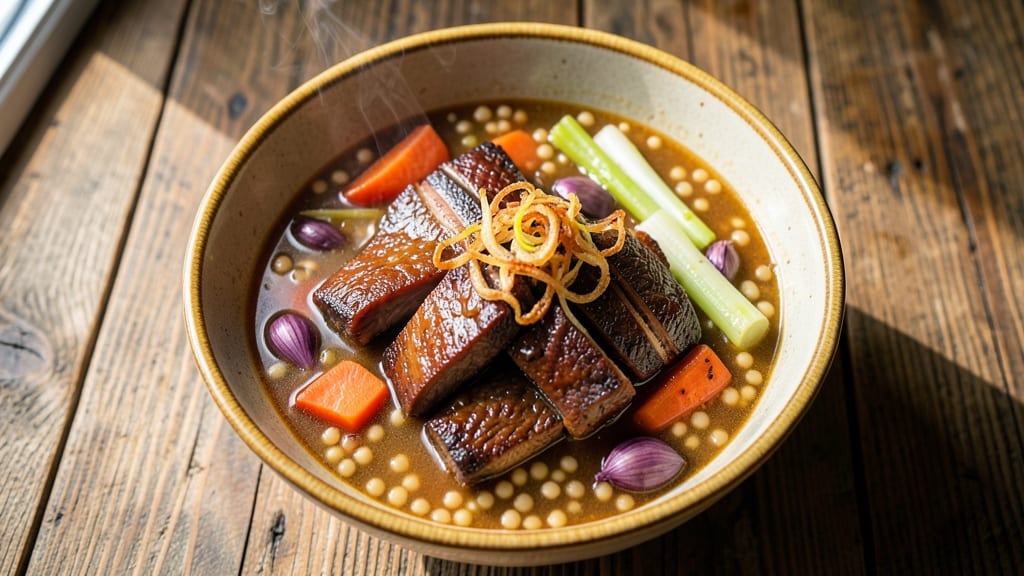
The beef short ribs and barley soup recipe transforms tough cuts into melt-in-your-mouth perfection through slow braising. This method creates a rich, umami-packed broth that tenderizes the meat while infusing flavor into every ingredient.
The secret lies in searing the ribs first, developing deep caramelized crusts that dissolve into the simmering liquid over hours.
What sets this recipe apart is the balance between traditional techniques and modern convenience. You'll achieve restaurant-quality results whether you use a slow cooker for hands-off cooking or a pressure cooker to cut time without sacrificing tenderness.
The barley absorbs the flavorful broth, becoming plump and satisfying, while the short ribs fall apart at the touch of a fork.
By the time you serve this soup, you'll have a dish that's hearty enough for winter meals but versatile enough for everyday comfort. The aroma alone will fill your kitchen with warmth, while each spoonful delivers layers of savory depth from the caramelized meat and aromatic vegetables.
This is the kind of soup that makes people linger at the table.
The best part? Leftovers only get better as flavors meld overnight. Garnish with fresh parsley or a drizzle of cream for added richness, and you'll have a soup that feels like a hug in a bowl. Perfect for feeding a crowd or meal prepping for the week ahead.
Ingredients for beef short ribs barley soup
Six hearty ingredients transform tough short ribs into melt-in-your-mouth perfection.
| Ingredient | Amount | Notes |
|---|---|---|
| Beef Short Ribs 🥩 | 3 lb | Bone-in, 2-2.5 inches thick |
| Yellow Onion 🧅 | 2 whole | Chopped into 1-inch pieces |
| Carrots 🥕 | 4 medium | Peeled, cut into 1-inch chunks |
| Celery Stalks 🧆 | 4 whole | Chopped into 1-inch pieces |
| Garlic Cloves 🧄 | 6 cloves | Smashed, not minced |
| Pearl Barley 🌾 | 1 ½ cups | Uncooked, rinsed well |
| Beef Broth 💧 | 6 cups | Low-sodium preferred |
| Tomato Paste 🍅 | ½ cup | Smooth, not chunky |
| Dry Red Wine 🍷 | 1 cup | Bold, like Cabernet |
| Fresh Thyme 🌿 | 2 sprigs | Stems removed |
| Fresh Rosemary 🌿 | 1 sprig | Chopped, not powdered |
| Bay Leaves 🍃 | 2 whole | Dried, standard size |
| Olive Oil 🫒 | ¼ cup | Extra-virgin for searing |
| Salt 🧂 | 1 ½ tsp | Kosher or sea salt |
| Black Pepper 🌶️ | 1 tsp | Freshly cracked |
The short ribs are the star here—look for bone-in cuts with good marbling at your butcher or grocery store's meat counter. Costco or Whole Foods usually have them pre-cut, which saves time. If buying a whole packer, ask for 2-2.5 inch thick pieces—they'll stay tender. Fresh thyme and rosemary make all the difference, so grab them from the grocery store's produce section (not the dried spices aisle). The pearl barley should be uncooked—it expands dramatically when simmered. I always buy mine in bulk bins for better quality, but the regular supermarket bags work fine too.
No red wine? Beef broth plus a splash of balsamic vinegar works in a pinch. Fresh herbs wilt fast—if you can't use them all, freeze the extras in oil. The tomato paste can be from a squeeze tube (like Trader Joe's brand) if you don't want to open a can. For extra depth, add 1 tbsp soy sauce to the broth. The barley needs rinsing—skip this and it'll get mushy. If you're short on time, quick-cooking barley cuts prep by 20 minutes. The carrots and celery can be swapped for potatoes or turnips if you prefer.
This soup tastes even better the next day—flavors meld beautifully overnight. Store in the fridge for 4-5 days or freeze for 3 months. I like to portion it into containers for easy lunches. The broth thickens as it cools, so add a splash of water when reheating. For a restaurant-style finish, top with crème fraîche or a drizzle of cream** before serving. The ribs will fall apart easily when reheated—just warm gently on the stove.
Why You'll Love This Recipe
- One-Pot Magic: I swear by this—just brown the ribs, toss in chopped veggies, cover with broth, and walk away. No extra pots, no fuss, and the flavors meld perfectly while you’re doing whatever else life throws at you.
- Rich, Deep Satisfaction: That slow-cooked beef falls off the bone, while the barley soaks up all the garlic-infused broth like a sponge. Honestly, the first bite makes me pause mid-sentence because it’s that good.
- Weeknight Workhorse: Make a double batch on Sunday, and you’ve got lunch for Tuesday and dinner for Thursday. The ribs stay tender, the barley plumps up, and reheating? Just add a splash of water—no stress.
- Budget-Friendly Feast: Short ribs are cheaper than steak, and this recipe stretches them across bowls for days. Between us, I’ve fed six people for under $30 with this—plus, the leftovers taste even better the next day.
Step-by-step instructions for beef short ribs and barley soup
Here's how to create a rich, hearty soup where tender ribs melt in your mouth.
Sear the Beef Short Ribs for Maximum Flavor
Pat the beef short ribs dry with paper towels—this ensures a good sear. Heat the olive oil in a large Dutch oven over medium-high heat until shimmering. Working in batches, add the ribs bone-side down and let them sear undisturbed for 4-5 minutes until deeply browned. Flip and sear the other side for another 4-5 minutes. The goal is to create a rich, caramelized crust that will infuse the broth with deep umami flavor.
Transfer the seared ribs to a plate and set aside. If your Dutch oven looks crowded, don't worry—this soup is designed to build flavor layer by layer. The ribs will have plenty of room once we add the vegetables and liquids.
Sauté the Vegetables and Build the Base
In the same Dutch oven, add the chopped yellow onion, carrots, and celery stalks. Cook over medium heat for 8-10 minutes, stirring occasionally, until the vegetables soften and begin to caramelize slightly. This step develops their natural sweetness and forms the foundation of your soup's flavor profile.
Add the smashed garlic cloves, tomato paste, and the 1 cup of dry red wine. Stir well and let the mixture simmer for 3-4 minutes until the alcohol smell dissipates completely. This deglazing step captures all the browned bits from the seared ribs, creating a rich, flavorful base for your soup.
Simmer the Soup with Herbs and Barley
Return the seared beef short ribs to the Dutch oven. Add the 6 cups of beef broth, bringing everything to a gentle simmer. Stir in the rinsed pearl barley, 2 sprigs of fresh thyme, 1 sprig of chopped fresh rosemary, and 2 whole bay leaves. The barley should be fully submerged in the liquid.
Cover the Dutch oven and let the soup simmer gently over low heat for 2.5 to 3 hours. The ribs should become fork-tender and easily pull away from the bone. Here's the thing—low and slow is key. This long cooking time allows the collagen in the ribs to break down, creating a velvety texture in the broth while keeping the meat incredibly tender.
Season and Finish the Soup
Once the ribs are tender, carefully remove them from the broth using tongs and transfer them to a cutting board. Let them rest for 5 minutes before shredding the meat into bite-sized pieces with two forks. Return the shredded meat to the soup pot.
Season the soup with 1.5 teaspoons of salt and 1 teaspoon of freshly cracked black pepper. Taste and adjust the seasoning if needed—this is where you can really make the soup your own. The barley should be tender but still have a slight bite. If the soup is too thick, you can add a little water or broth to reach your desired consistency.
Serve Warm with Fresh Herbs
Ladle the soup into bowls and garnish with additional fresh thyme or rosemary if desired. Serve immediately while hot, with crusty bread to soak up every last drop of that rich, umami-packed broth. The combination of tender beef short ribs, chewy pearl barley, and deeply flavorful broth makes this soup a true comfort food experience.
Pro Tips For Making Beef Short Ribs Barley Soup
- BLANCH THE VEGETABLES FIRST: Toss your diced onions, carrots, and celery into boiling water for 2 minutes before adding them to the pot. This softens them faster and keeps them from turning to mush—no more sad, limp veggies at the bottom of your soup. (I used to skip this and ended up with a watery, mushy base.)
- SEAR THE RIB BONES: Lay those short ribs bone-side down in a cold pan and turn the heat to medium-low. Let them render fat slowly—this builds flavor that won’t burn off. Crowding the pan? Do it in batches. (Yes, it takes longer, but your soup will taste like it simmered for days.)
- SKIP THE PEELING: Leave the skins on your carrots and celery—just scrub them well. The extra fiber adds body to the broth, and the color stays vibrant. (I was skeptical until I tried it; the soup feels richer without extra work.)
- USE WHOLE GARLIC: Smash 3-4 whole garlic cloves with the flat side of your knife instead of mincing them. Toss them in with the ribs at the start—they’ll infuse the broth without burning. (Mincing garlic too early means it turns bitter.)
Storing and reheating your leftovers
Refrigerator Storage
Let your soup cool to room temperature before transferring to airtight glass containers—I prefer Le Creuset stoneware for its durability. Store for up to 4-5 days at 40°F or below, with the broth thickening slightly as it rests.
The ribs and barley will stay tender, though the barley may soften further. Always leave 1-inch headspace to prevent spills when reheating. 🌡️
Freezer Storage
For longer storage, freeze in quart-sized freezer bags (lay flat to save space) or glass containers with ½-inch headspace. Label with the date—this soup stays delicious for 3 months. Thaw overnight in the fridge before reheating.
The texture remains intact, though the barley may absorb more liquid after freezing. I avoid ice crystals by pressing out excess air before sealing. ❄️
Stovetop Reheating
My preferred method: Transfer soup to a pot and heat over medium-low heat for 10-15 minutes, stirring occasionally. Add ¼ cup water or broth if the soup thickens too much. The ribs should warm through evenly—165°F internal temperature is ideal.
Taste and adjust seasoning, as flavors concentrate during storage. For extra richness, stir in 1 tablespoon butter or 2 tablespoons cream at the end. 🔥
Microwave Reheating
For quick meals, microwave in 2-minute intervals on 50% power, stirring between each interval. Cover with a microwave-safe lid or damp paper towel to retain moisture. The ribs may dry out slightly—combat this by adding 2 tablespoons broth before microwaving.
This method works best for single servings and takes about 4-5 minutes total. 💫
Oven Reheating
Preheat oven to 325°F and transfer soup to an oven-safe dish. Cover tightly with foil and bake for 20-25 minutes, stirring halfway. This gentle heat preserves the ribs' tenderness and prevents scorching.
Perfect for reheating larger batches—just check the internal temperature of the ribs to ensure they reach 165°F. The barley stays chewy and the broth remains velvety. 🍲
Garnish Before Serving
After reheating, finish with fresh parsley, a drizzle of crème fraîche, or a sprinkle of grated Parmesan. These additions brighten the dish and add freshness.
For extra depth, top with toasted breadcrumbs or crispy fried shallots. Serve with crusty sourdough to soak up every last drop of that rich, umami broth. ✨
Nutrition facts
Frequently asked questions
Can I substitute bone-in beef short ribs for boneless?
Yes, but the cooking time and flavor will differ. Bone-in ribs (2-2.5 inches thick) need 2.5-3 hours to become tender, while boneless cuts (like chuck roast) cook faster (1.5-2 hours). The bones add depth to the broth, so if using boneless, add an extra 2 cups beef broth and 1 tbsp beef bouillon for richness. The texture will be slightly different but still delicious!
What if I don't have red wine? Can I still make this?
Replace the 1 cup red wine with 1 cup beef broth + 1 tablespoon balsamic vinegar for acidity. For extra depth, add 1 teaspoon soy sauce or ½ teaspoon Worcestershire sauce. The soup will still develop rich flavors—just slightly less complex. The key is balancing the acidity to help tenderize the ribs.
How do I know when the beef short ribs are done?
The ribs are ready when they're fork-tender and pull away from the bone easily. Insert a fork into the thickest part—it should slide in like butter. For bone-in ribs, the meat should separate cleanly with minimal resistance. If using a meat thermometer, aim for 195-205°F in the thickest part (the collagen will break down at this temp). Never overcook, or the meat may turn mushy!
Can I make this in a slow cooker or Instant Pot?
Yes! For a slow cooker: Sear the ribs as directed, then transfer everything to the pot and cook on low for 8 hours or high for 5 hours. For an Instant Pot: Sear the ribs, then add all ingredients (except barley) and pressure cook for 60 minutes. Quick-release the pressure, stir in the barley, and cook on high pressure for 10 more minutes. The barley will absorb the broth perfectly in both methods!
Why did my barley turn mushy?
Overcooking or skipping the rinse are the most common causes. Always rinse pearl barley thoroughly before adding it to the pot—this removes excess starch that causes mushiness. If using a slow cooker, check the barley after 2 hours—it should be tender but still hold its shape. For extra insurance, use quick-cooking barley (cuts cooking time by 20-30 minutes) or reduce the simmer time by 30 minutes.