
Soups & Stews
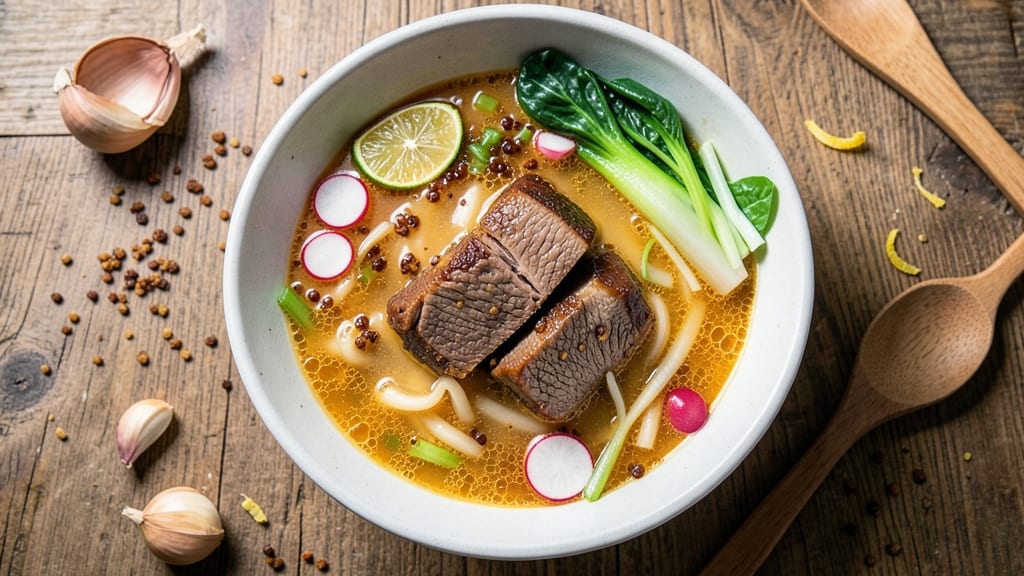
This beef sinigang soup recipe brings the tangy, herb-infused comfort of Filipino home cooking to your kitchen. 🌟 The secret lies in balancing tamarind’s bright sourness with tender beef and fresh vegetables, creating a broth that’s both deeply flavorful and impossibly light.
I’ve perfected this version to stay true to tradition while offering adaptable shortcuts for modern cooks—like using bottled tamarind paste when fresh isn’t available.
The magic starts with the broth, where tamarind and calamansi (or daing) create that signature sour punch, while ginger, garlic, and shrimp paste build depth. Thinly sliced beef simmers until fork-tender, then joins radish, eggplant, and kangkong for a vegetable medley that absorbs the broth’s complex flavors.
The result? A soup that’s equal parts comforting and vibrant, with every spoonful delivering layers of tang, umami, and freshness.
What makes this recipe special is its versatility—serve it as a hearty meal with steamed rice or as a light lunch with crusty bread.
Garnish with chili for heat or a drizzle of coconut milk for creaminess, and you’ve got a dish that honors tradition while letting you put your own spin on it. The aroma alone will transport you to a bustling Filipino kitchen.
Perfect for weeknight dinners or special gatherings, this sinigang adapts to your schedule without sacrificing authenticity. Whether you’re cooking for family or craving a taste of home, this recipe delivers restaurant-quality results with minimal fuss. Let’s get started!
Ingredients for beef sinigang soup
Pantry staples meet Filipino market finds for this tangy, herb-packed soup masterpiece.
| Ingredient | Amount | Notes |
|---|---|---|
| Beef Chuck Roast 🥩 | 1 ½ lb | Thinly sliced for quick cooking |
| Tamarind Paste 🍯 | ½ cup | Bottled or fresh pulp preferred |
| Calamansi or Daing (Filipino Souring Agent) 🍋 | ¼ cup | Juiced, or substitute with lime |
| Shrimp Paste (Bagoong) 🦐 | 1 tbsp | Fermented shrimp paste for umami |
| Fresh Ginger 🧄 | ½ cup | Julienned or grated finely |
| Garlic Cloves 🧄 | 6 cloves | Minced for aromatic base |
| Radish 🥕 | 1 whole | Thinly sliced, daikon preferred |
| Eggplant 🍆 | 1 lb | Thinly sliced for even cooking |
| Kangkong (Water Spinach) 🌿 | 1 bunch | Washed, stems trimmed |
| Green Chili Peppers 🌶️ | 2 whole | Sliced, for heat (optional) |
| Onion 🧅 | 1 whole | Thinly sliced, white or yellow |
| Salt 🧂 | 1 ½ tsp | Adjust to taste, kosher preferred |
| Black Peppercorns 🌶️ | ½ tsp | Freshly cracked for flavor |
| Fish Sauce 🐟 | 1 tbsp | For depth, optional but recommended |
| Coconut Milk (Optional) 🥥 | ¼ cup | For creaminess, added last |
The tamarind and calamansi are non-negotiable for that signature sour punch. Filipino markets carry the best tamarind paste, but Asian grocery stores usually stock it too—look for blocks or bottles. Fresh calamansi? Grab a bag at Trader Joe's if you're in the U.S., or use lime juice in a pinch. Shrimp paste (bagoong) is what gives sinigang its deep umami—Red Boat brand is my go-to, but any quality fermented shrimp paste works. The beef? Chuck roast is perfect for thin slicing, but sirloin works too if you're in a hurry. Just make sure to slice it against the grain for tenderness.
No shrimp paste? Fish sauce plus a splash of soy sauce gets you close. Fresh ginger and garlic are ideal, but powdered ginger at half the amount works in a bind. The eggplant and radish should be thinly sliced—mandoline slicer makes this easy, but a sharp knife works too. Kangkong (water spinach) is the star green here, but regular spinach or bok choy will do. For heat, bird's eye chilies are traditional, but any green chili works. The fish sauce adds that extra layer of complexity—skip it only if you're strictly avoiding seafood.
This soup tastes even better the next day as flavors meld. Store leftovers in the fridge for 3-4 days, or freeze for 3 months in airtight containers. I always make extra because it disappears fast—perfect for meal prep. The broth reduces slightly when reheated, so add a splash of water if it's too thick. Garnish with fresh chili slices or a drizzle of coconut milk before serving for that restaurant-quality touch.
Why You'll Love This Recipe
- One-Pot Magic: I swear by this recipe because it’s actually one-pot—no chopping vegetables into oblivion, no separate pans. Just beef, tamarind, and ginger simmering together while I sip coffee. The shrimp paste adds depth without extra effort, and the calamansi brightens the whole thing in minutes.
- Tangy Umami Bomb: The tamarind and calamansi give this soup that perfect balance—sour enough to wake up your taste buds, but the beef and shrimp paste round it out with rich, salty depth. Between us, the ginger? It’s the secret weapon that makes it taste like you spent hours simmering (but you didn’t).
- Weeknight Crowd-Pleaser: This is my go-to when friends drop by unannounced or my kids demand dinner after soccer practice. The beef stays tender, the broth is bold, and everyone—even the picky eaters—asks for seconds. Honestly, I’ve served it at potlucks, family gatherings, and lazy Sundays, and it never disappoints.
- Budget-Friendly Leftovers: A whole roast of beef stretches for days, and the broth only gets better as it sits. Freeze extras for when you’re too tired to cook, or reheat with rice for a quick lunch. I’ll be real: I’ve had this soup three times in a row, and my wallet and my taste buds are happy.
Step-by-step instructions for beef sinigang soup
Here's how to craft this vibrant Filipino classic with perfect sour-savory balance.
🍳 Step 1: Sear the Beef and Build the Flavor Base
Heat a large pot over medium-high heat and add the 1.5 lb beef chuck roast in thin slices. Let them sear undisturbed for 2-3 minutes until they develop a golden crust. This step locks in flavor and prevents the beef from turning rubbery later.
Remove the beef and set aside. In the same pot, add 1 tablespoon shrimp paste (bagoong) and let it sizzle for 30 seconds until fragrant. This umami bomb forms the foundation of your soup's depth. Immediately add 1 whole onion and 6 cloves garlic cloves (minced), cooking for 1 minute until softened but not browned.
🍳 Step 2: Bloom the Aromatics and Add Souring Agents
Stir in 0.5 cup fresh ginger (julienned) and 1 whole radish (thinly sliced). Cook for 2 minutes until the ginger becomes translucent and releases its bright aroma. The radish will soften slightly but maintain its texture.
Pour in 8 cups water (enough to cover ingredients) and bring to a rolling boil. Add 0.5 cup tamarind paste and 0.25 cup calamansi or daing juice, stirring until fully dissolved. The mixture should bubble vigorously and develop a tangy aroma. This is where the signature sour flavor develops—don't skip this step!
🥘 Step 3: Simmer the Beef and Vegetables
Return the seared beef to the pot and add 1 lb eggplant (thinly sliced) and 2 whole green chili peppers (sliced). Simmer for 20-25 minutes over medium-low heat until the beef is tender enough to pierce with a fork. The eggplant should soften but not disintegrate.
Season with 1.5 teaspoons salt and 0.5 teaspoon black peppercorns (freshly cracked), then add 1 tablespoon fish sauce for that signature savory depth. Taste the broth—it should be tangy, slightly salty, and rich. If you prefer a creamier texture, stir in the 0.25 cup coconut milk (optional) now and simmer for another 2 minutes.
🥘 Step 4: Finish with Leafy Greens
Add the 1 bunch kangkong (water spinach) (washed and stems trimmed) to the pot. Cook for just 3-4 minutes—this ensures the greens stay vibrant and crisp-tender. Overcooking will turn them mushy, which ruins the dish's fresh appeal.
Remove from heat and let the soup sit for 5 minutes to allow flavors to meld. The kangkong will continue to soften slightly, absorbing all that delicious broth. Taste again and adjust seasoning if needed—Filipino soups should balance sour, salty, and umami perfectly.
Pro Tips For Making Beef Sinigang Soup
- Simmer Slow and Steady: After burning my first batch by rushing the tamarind and shrimp paste, I learned to start with a rolling boil for 5 minutes, then drop to the lowest heat possible. Sinigang needs time—at least 45 minutes—to let the sourness mellow and the beef tenderize. If your pot’s too hot, you’ll end up with a murky broth instead of the bright, balanced soup you want.
- Prep the Ginger Right: Skip the lazy mincing—slice the ginger into ¼-inch thick rounds and lightly smash them with the side of your knife. This way, the oils infuse without turning the broth bitter. (Yes, even if you’re impatient like me, resist the urge to grate it—it burns too fast.)
- Balance the Sour Early: Taste your broth after 20 minutes, not the end. Add calamansi or daing gradually—you can always add more sour, but you can’t take it out. I used to dump it all in at once and end up with a mouth-puckering disaster. Start with half the recommended amount and adjust.
- Use the Chuck’s Fat: Don’t trim the beef chuck roast—leave the fat. It renders slowly and adds richness to the broth. If you’re worried about grease, skim it after the beef has cooked for 30 minutes, not before. The fat is your flavor insurance.
Flavor customization for beef sinigang soup
Classic Sour Profile
The traditional beef sinigang relies on tamarind and calamansi for its signature tang. For that authentic Filipino sour punch, use ½ cup tamarind paste (bottled or fresh) plus ¼ cup calamansi juice.
If you can't find calamansi, lime juice works in a pinch—just add 2 tablespoons extra since it's milder. The key is balancing this sourness with the umami from shrimp paste and sweetness from the beef. 🍋
Spicy Heat Variations
Want to kick up the heat? Add 1-2 sliced bird's eye chilies during cooking, or finish with ½ teaspoon chili flakes at the table. For a smoky twist, swap some beef with ½ lb spicy pork belly (like lechon kawali).
If you prefer mild heat, simply reduce the chili to 1 whole green chili pepper and skip the flakes.
Creamy Adaptations
For a richer texture, stir in ¼ cup coconut milk in the final 2 minutes of cooking. This balances the sourness beautifully while adding a velvety finish. Another option: Swap ½ cup of the broth for ½ cup tomato sauce (like Muir Glen crushed tomatoes) for a tangy-sweet hybrid.
Garnish with toasted coconut flakes for extra depth.
Vegetable Swaps
No kangkong? Use spinach, bok choy, or cabbage—just cook them for 2-3 minutes less to keep them crisp. For heartier veggies, add ½ lb string beans or 1 small pumpkin (cubed and parboiled first). The radish and eggplant are non-negotiable for texture, but zucchini slices work in a bind.
Protein Alternatives
Swap beef for pork shoulder (simmer longer) or chicken thighs (cook for 15 minutes). For seafood lovers, add ½ lb shrimp in the last 5 minutes to avoid overcooking.
Vegetarians? Use extra-firm tofu (pressed and cubed) or mushrooms for umami. Just adjust cooking times—tofu needs 10 minutes, while shrimp cooks in 3-4 minutes.
Modern Twists
Add ½ cup corn kernels (fresh or canned) for sweetness or 1 sliced carrot for color. For a fusion touch, stir in 1 tablespoon fish sauce plus 1 teaspoon soy sauce for deeper umami.
Top with crispy fried shallots or crumbled pork rinds for texture. The broth’s tangy-savory base keeps these twists harmonious. 🌟
Nutrition facts
Frequently asked questions
What makes sinigang different from other sour soups?
The magic lies in its tamarind-calamansi souring duo combined with shrimp paste (bagoong) for umami. Unlike vinegar-based soups, sinigang's tang is bright yet balanced by the beef's sweetness and ginger's warmth. The vegetables—radish, eggplant, and kangkong—absorb the broth perfectly, creating a harmonious blend of textures and flavors that's uniquely Filipino.
Can I make sinigang without shrimp paste?
Yes! Replace 1 tbsp shrimp paste with 1 tbsp fish sauce + ½ tsp soy sauce for similar depth. For a vegetarian version, use 1 tbsp soy sauce + ½ tsp miso paste. The key is maintaining that savory base—just taste and adjust. The broth will still be delicious, though slightly less complex.
How do I adjust the sourness if it's too strong?
Start by adding 1 tbsp sugar or honey to balance the acidity. If still too sour, stir in ¼ cup coconut milk or a splash of fish sauce (both add sweetness and umami). For a milder version next time, reduce tamarind to ¼ cup and calamansi to 2 tbsp juice. The broth should taste tangy but not overpowering.
Can I prepare sinigang ahead of time?
Make the broth and beef mixture up to 3 days ahead and refrigerate. Reheat gently, then add fresh vegetables and greens just before serving. For freezing, store in airtight containers for up to 3 months. Thaw overnight in the fridge—never microwave directly. The flavors actually improve as they meld!
What's the best way to serve sinigang?
Always serve with steamed white rice to soak up the flavorful broth. Garnish with sliced green chili for heat or toasted garlic for aroma. For a modern twist, add crispy pork rinds or fried shallots on top. The soup tastes best piping hot, but leftovers reheat beautifully—just add a splash of water if the broth thickens.