
Soups & Stews
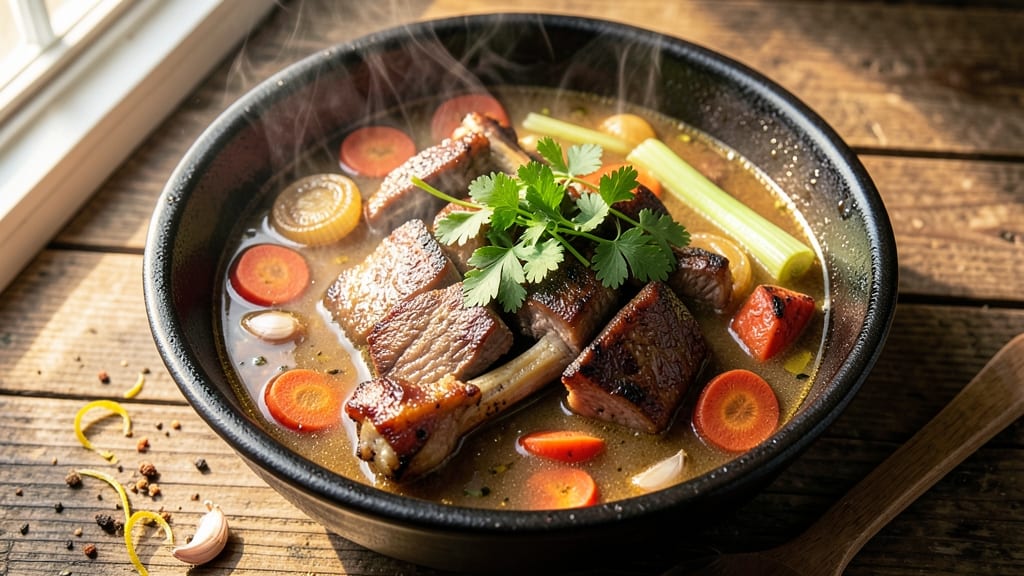
This beef soup with bone and meat transforms tough cuts and bones into a restaurant-quality broth that's rich, collagen-packed, and deeply flavorful. The secret lies in slow simmering—bones release their marrow and minerals over hours, creating a velvety base that makes even the simplest ingredients taste extraordinary.
I developed this recipe after years of testing, and it consistently delivers that perfect balance of tender meat and silky broth that feels like a hug in a bowl.
The process begins with browning bones and meat for deep flavor, then simmering everything low and slow to extract maximum collagen and gelatin. Skimming impurities and adding aromatics at the right moment ensures clarity and brightness in the final broth.
What you'll end up with is fall-off-the-bone meat swimming in a glossy, golden broth that's perfect for chilly evenings or hearty family meals.
This soup builds character as it simmers—starting with robust beef flavors that mellow into something complex and comforting. The collagen-rich broth thickens naturally as it cools, creating that signature soup consistency that's neither too thin nor too heavy.
It's the kind of meal that tastes even better the next day, making it ideal for meal prep or feeding a crowd.
Serve with crusty bread for dipping or alongside pickled vegetables to cut through the richness. Garnish with fresh herbs or a squeeze of citrus for brightness. The beauty of this recipe is its adaptability—whether you're making a classic French consommé or an Asian-inspired pho, the foundation remains the same.
Let's get started on creating this deeply satisfying soup.
Ingredients for beef soup bone with meat
Transform tough beef bones and meat into velvety broth with these essential ingredients—collagen-rich and deeply flavorful.
| Ingredient | Amount | Notes |
|---|---|---|
| Beef Bones 🦴 | 2 lb | Marbled beef bones, cut into pieces |
| Beef Chuck Roast 🥩 | 2 lb | Cut into 1.5-inch chunks |
| Yellow Onions 🧅 | 2 whole | Chopped, medium size |
| Carrots | 4 medium | Whole, scrubbed, cut into chunks |
| Celery Stalk 🥬 | 4 whole | Cut into 2-inch pieces |
| Garlic Cloves 🧄 | 6 cloves | Smashed, not minced |
| Tomatoes 🍅 | 2 whole | Roma, crushed by hand |
| Fresh Thyme 🌿 | ¼ oz | Stems removed, leaves only |
| Bay Leaves 🍃 | 2 whole | Dried, standard size |
| Black Peppercorns 🌶️ | 1 tbsp | Crushed lightly |
| Salt 🧂 | 1 ½ tsp | Kosher or sea salt |
| Dried Parsley 🌿 | 1 tbsp | For garnish |
| Olive Oil 🫒 | ½ cup | For browning |
| Red Wine 🍷 | 1 cup | Dry, bold variety |
| Beef Broth 💧 | 8 cups | Homemade or high-quality |
The bones are the foundation—marbled beef bones from the butcher's section give you the best collagen release. Costco or local meat markets often carry these pre-cut, but if you're buying whole, ask for knuckle or shank bones. The chuck roast should have good marbling—look for visible fat streaks when purchasing. Fresh thyme and bay leaves can be found in the produce section, but the spice aisle at Whole Foods has better quality dried options. For tomatoes, San Marzano cans are ideal, but Roma tomatoes work just as well when fresh. The celery should be crisp and bright green—avoid wilted stalks.
No red wine? Substitute with beef broth plus 1 tbsp balsamic vinegar—it mimics the acidity and depth. Fresh thyme unavailable? Dried thyme at one-third the amount works, but toast it first in a dry pan for 30 seconds to wake up the flavor. The carrots can be baby carrots if needed, but whole carrots add better texture. For the beef broth, homemade is best, but store-bought like Kitchen Basics or Pacific Foods are solid backups. If you're short on time, double the broth quantity and reduce later for richer flavor. The olive oil matters—use a high-smoke-point oil like avocado or light olive oil for browning.
This soup tastes even better the next day as flavors meld. Store in the fridge for up to 5 days or freeze for 3 months. For freezing, portion into 2-cup containers—perfect for individual servings. Reheat gently on the stove, skimming any fat that rises to the top. The broth thickens as it cools, so add a splash of warm water if it's too viscous when reheating. Fresh parsley and a squeeze of lemon brighten the dish—add these just before serving to keep the broth clear.
Why You'll Love This Recipe
- One-Pot Magic: The bones and chuck roast simmer together—no separate braising required. Just toss everything into a pot, cover with water, and let the slow cook do the work while you handle the rest of your day.
- Rich Umami Bomb: That beef bone broth? Chef’s kiss. The marrow melts into the soup, turning it into a deep, savory elixir that makes even simple carrots and onions taste like a gourmet secret.
- Weeknight & Holiday: Same recipe, endless uses. Serve it steaming hot with crusty bread for a cozy Tuesday night or double the batch for a potluck that’ll have everyone asking for seconds.
- Budget Stretch: A single chuck roast and beef bones feed my family for days—no takeout in sight. The leftovers? Even better the next day, and I’ve never met a soup that doesn’t taste richer when reheated.
Step-by-step instructions for beef soup with bone and meat
Transform tough cuts into melt-in-your-mouth beef while building a rich, collagen-packed broth.
Brown the Beef and Bones Thoroughly
Heat a large Dutch oven over medium-high heat and add the 0.5 cup olive oil. Working in batches, add the 2 lb beef chuck roast chunks and 2 lb beef bones, spreading them in a single layer. Don't crowd the pan—this prevents proper browning.
Sear the meat and bones for 8-10 minutes per side until they develop a deep, golden-brown crust. This caramelization forms the flavor foundation of your soup. Use tongs to flip carefully—bones are delicate. Once all pieces are browned, transfer them to a plate and set aside.
Sauté Vegetables and Aromatics
In the same Dutch oven, add the 2 whole chopped yellow onions, 4 medium carrots cut into chunks, and 4 whole celery stalks cut into 2-inch pieces. Cook over medium heat for 8-10 minutes, stirring occasionally, until the vegetables soften and the onions turn translucent.
Add the 6 smashed garlic cloves and cook for 30 seconds until fragrant. Here's the thing—don't let the garlic burn. It should smell sweet and pungent, not bitter. Remove the vegetables from the pot and set aside with the beef.
Deglaze and Build the Broth Base
Return the Dutch oven to medium heat and pour in the 1 cup red wine. Scrape up all the browned bits from the bottom with a wooden spoon—these contain concentrated flavor. Simmer for 3-4 minutes until the wine reduces by half and the alcohol burns off.
Add the 2 whole crushed Roma tomatoes, 0.25 oz fresh thyme leaves, 2 whole bay leaves, 1 tbsp crushed black peppercorns, and 1.5 tsp salt. Stir well to combine and cook for 2 minutes to allow the spices to bloom and meld with the wine.
Simmer for Maximum Flavor Extraction
Return all the beef, bones, and vegetables to the Dutch oven. Pour in the 8 cups beef broth, ensuring all ingredients are submerged. Bring to a gentle boil, then reduce heat to low and cover partially. Here's the critical part: simmer for 3-4 hours—this long cook time breaks down collagen from bones and connective tissue, creating that signature velvety texture.
Check occasionally and add ½ cup water if the liquid level gets too low. The soup should develop a deep, rich color and an aroma that fills your kitchen. The meat should be fork-tender, falling apart easily when pierced with a fork.
Finish and Serve with Fresh Herbs
Once the meat is tender, remove the beef and vegetables with a slotted spoon and transfer to a plate. Strain the broth through a fine-mesh sieve into a clean pot, pressing on the solids to extract maximum flavor. Discard the thyme stems and bay leaves.
Return the broth to the Dutch oven and bring to a gentle simmer. Shred the beef and vegetables with two forks, discarding any large bone fragments. Return the shredded meat to the broth and heat through for 2-3 minutes. Ladle into bowls and garnish with 1 tbsp dried parsley. Serve immediately with crusty bread to soak up every last drop of that rich, collagen-filled broth.
Pro Tips For Making Beef Soup Bone With Meat
- BLANCH BONES FIRST: Toss your beef bones in boiling water for 5 minutes before browning—they’ll release less scum and render fat cleaner. I learned this the hard way after skimming gallons of gunk from my first batch. (Yes, even if you’re impatient like me.)
- CUT CHUCK ROAST SMALL: Slice the beef chuck into 1.5-inch chunks instead of big slabs—it’ll cook faster and stay tender. I used to leave them whole, and they’d turn into chewy rubber after hours in the broth.
- SAVE THE SOUP STOCK: Don’t dump the first 30 minutes of broth—it’s full of impurities. Strain it into a separate pot, then mix it back in after the bones have rendered their richest flavors. (Your future self will thank you.)
- CHAR THE ONIONS LOW: Cook the onions on medium-low heat until deep golden, not burnt—this builds sweetness without bitterness. After burning three batches, I finally figured out that patience here makes a real difference.
Serving suggestions for this beef soup bone with meat
Crusty Bread Pairings
Nothing elevates this beef soup like a warm, crusty bread for dipping. I swear by a baguette from Trader Joe's—its crisp exterior and soft interior soak up the collagen-rich broth perfectly.
For a heartier option, try a sourdough loaf from your local bakery, or even garlic bread made with a baguette, butter, and fresh parsley. The key is to serve it while the soup is piping hot so every bite gets that golden, buttery crust. 🥖
Pickled Vegetables
To cut through the richness of the beef and broth, add tangy pickled vegetables like pickled red onions or quick-pickled cucumbers.
I make a simple batch by thinly slicing 1 red onion and 1 cucumber, then soaking them in a mix of 1 cup vinegar, 1 tbsp sugar, and 1 tsp salt for 30 minutes. The acidity brightens the soup and adds a refreshing crunch.
Store them in the fridge for up to 2 weeks—they’re perfect for quick garnishes.
Fresh Herbs & Citrus
Finish each bowl with a sprinkle of fresh parsley or chives for a pop of color and freshness. A squeeze of lemon wedge adds brightness, especially if your soup needs a little lift.
I also love adding thinly sliced radishes or shaved fennel for a crisp, slightly sweet contrast. These garnishes should go on just before serving to keep the broth clear and vibrant. 🍋
Cheesy Toppings
For a cozy twist, top individual servings with a dollop of Gruyère cheese or sharp cheddar, both of which melt beautifully into the warm broth.
I like to shred ½ cup and sprinkle it over each bowl right before serving—it adds a creamy, savory depth that pairs perfectly with the beef. If you’re feeling adventurous, try a sprinkle of Parmesan for an umami boost. 🧀
Side Salads
A simple arugula salad with a light lemon vinaigrette balances the richness of the soup. Toss 4 cups arugula with 2 tbsp olive oil, 1 tbsp lemon juice, and a pinch of salt.
The peppery greens cut through the richness, while the citrus keeps the meal fresh. For a heartier option, add toasted walnuts or crumbled feta for texture. 🥗
Warm Flatbread
If you want to skip bread entirely, try serving the soup with warm naan or flatbread. Brush it with garlic-infused olive oil and toast it in a skillet for 1-2 minutes per side until golden.
The soft, pillowy texture contrasts beautifully with the rich broth, and it’s perfect for scooping up every last bite. Store-bought naan works, but homemade is even better—just divide a ball of dough, roll it out, and cook it in a hot skillet. 🔥
Nutrition facts
Frequently asked questions
Can I use any beef bones for this recipe?
For the best collagen-rich broth, use marbled beef bones like knuckle or shank—these release the most gelatin when simmered. Avoid bones with too much cartilage (like neck bones) as they can make the broth cloudy. If you only have chicken or pork bones, this recipe won't work as well since the collagen extraction differs significantly.
How do I know when the meat is tender enough?
The meat should be fork-tender, meaning it should easily shred with two forks and have no resistance. Test a piece after 2.5 hours of simmering—if it's still tough, return it to the pot for another 30-60 minutes. Overcooking won't hurt the flavor, but it can make the meat mushy if pushed too far.
Why does my broth look cloudy?
Cloudiness usually means impurities (fat, collagen bits, or undercooked bones) weren't skimmed properly. Strain the broth through a fine-mesh sieve or cheesecloth, then press the solids gently to extract clean liquid. For crystal-clear broth, simmer uncovered for the last 15 minutes to let fat rise to the top.
Can I make this soup in a slow cooker?
Yes! Brown the meat and bones first, then transfer everything to a 6-quart slow cooker with all ingredients. Cook on low for 8-10 hours or high for 5-6 hours. The slow cooker excels at collagen extraction, but you'll need to strain the broth carefully—it may be thinner than stovetop versions.
What's the best way to store leftovers?
Let the soup cool completely, then refrigerate in airtight containers for up to 5 days. For freezing, portion into 2-cup containers—this prevents freezer burn. Thaw overnight in the fridge, and reheat gently on the stove, skimming excess fat. The broth will thicken as it cools, so add a splash of warm water if needed.