
Soups & Stews
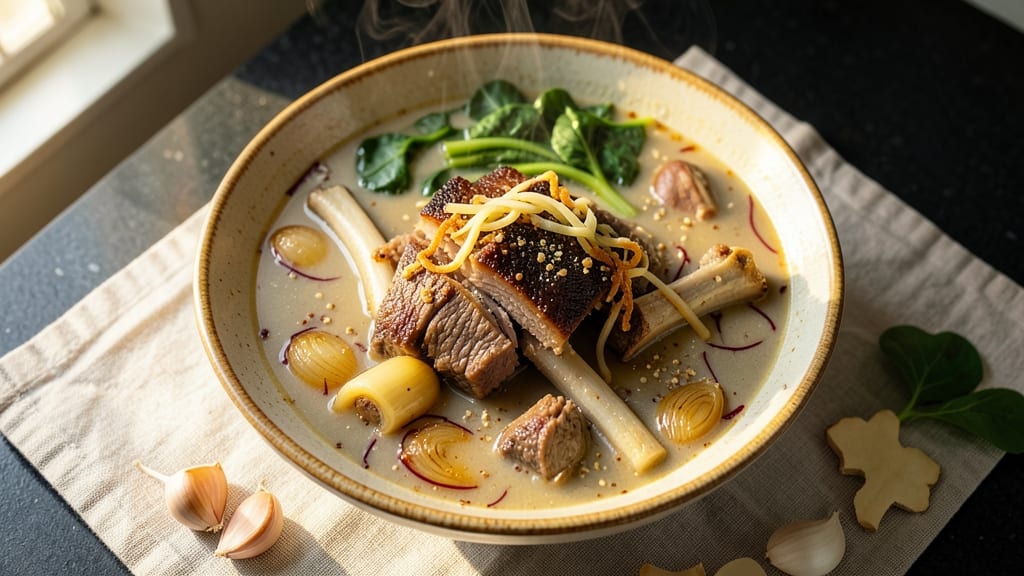
This Filipino-style beef soup recipe transforms tough beef into melt-in-your-mouth tenderness while creating a fragrant broth that's the heart of every Filipino meal. 🌟 The secret lies in slow-simmering with aromatic spices, souring agents like tamarind or calamansi, and the perfect balance of savory and tangy flavors that make this dish a comfort food staple.
Unlike many beef soups, this recipe builds depth through layering flavors—starting with a rich broth made from beef bones, then adding tender beef chunks, hearty rice noodles, and vegetables that soak up every drop of that savory-tangy goodness.
The result is a soup that's both nourishing and restaurant-quality, perfect for chilly evenings or family gatherings.
What sets this apart is the traditional approach: using natural souring agents that brighten the broth without overpowering the beef's natural richness. The rice noodles absorb the flavorful broth beautifully, creating a satisfying, filling meal that's easier to make than you'd think.
Each spoonful delivers that perfect harmony of textures and tastes that makes Filipino comfort food unforgettable.
Serve it with steamed white rice to soak up every last drop of that flavorful broth, and you've got a complete meal that feels like home.
The best part? This recipe scales effortlessly, whether you're feeding a family or meal prepping for the week. Let's bring Filipino flavors to your table.
Ingredients for beef soup recipe filipino style
These aromatic ingredients create a fragrant Filipino beef soup that's rich, tangy, and deeply comforting.
| Ingredient | Amount | Notes |
|---|---|---|
| Beef Bones (Chuck or Short Rib) 🦴 | 2 lb | For rich broth, raw or roasted |
| Beef Chuck Roast 🥩 | 2 lb | Cut into 1-inch cubes |
| Yellow Onions 🧅 | 2 whole | Thinly sliced, about 3 cups |
| Garlic Cloves 🧄 | 6 cloves | Minced, about 2 tbsp |
| Fresh Ginger 🌿 | 1 inch | Thinly sliced, about 1 tbsp |
| Tamarind Paste 🍈 | 2 tbsp | Or substitute calamansi juice |
| Soy Sauce 🥢 | 2 tbsp | Dark soy preferred |
| Fish Sauce 🐟 | 1 tbsp | Traditional umami source |
| Bay Leaves 🌿 | 2 whole | Dried, for aroma |
| Star Anise 🌟 | 2 whole | For subtle anise flavor |
| Black Peppercorns 🌶️ | 1 tsp | Crushed, for heat |
| Carrots 🥕 | 3 medium | Cut into 1-inch pieces |
| Potatoes 🥔 | 2 medium | Cut into 1-inch cubes |
| Rice Noodles 🍜 | 1 lb | Thin or medium width |
| Fresh Green Onions 🧅 | 4 whole | Sliced, for garnish |
| Salt 🧂 | 2 tsp | Adjust to taste |
The beef bones are the soul of this soup—look for marrow-rich chuck or short rib bones at your local butcher or Asian market. If you can't find them, substitute beef marrow bones for extra richness. The tamarind paste gives that signature tangy brightness—Filipino markets or international aisles usually carry it, but calamansi juice (if available) works beautifully too. For the spices, whole star anise and bay leaves add depth without overpowering. I always double-check the fish sauce—Red Boat or Thai Kitchen brands are my go-tos for authentic flavor.
No tamarind? Lime juice plus a pinch of sugar mimics the tang. Running low on fish sauce? Soy sauce plus a splash of vinegar gets you close. The rice noodles should be thin or medium width—they soak up the broth perfectly. If you can't find them, egg noodles work in a pinch. For the vegetables, baby carrots or pre-cut potatoes save time. And trust me on the dark soy sauce—it adds that gorgeous deep color without extra salt. The ginger and garlic? Fresh is non-negotiable here—dried just won't cut it.
This soup tastes even better the next day as flavors meld. Store in the fridge for 4-5 days—the broth gets more concentrated over time. For freezing, portion into airtight containers and keep for up to 3 months. I always make extra—it reheats beautifully and makes perfect lunches. The noodles? Cook them fresh when serving so they stay al dente. Garnish with those green onions right before eating—they add a fresh pop of color and crunch.
Why You'll Love This Recipe
- No Chopping Needed: The onions and garlic go in whole—peel, smash, and drop. My kids even help with that part, and the soup still tastes like it simmered for hours.
- Rich Without Effort: Those beef bones? They melt into the broth, turning it into something so deeply flavorful, you’ll forget how little work went into it. The ginger and garlic layers build slowly, but honestly, you could skip the timer.
- Leftovers That Taste Better: This soup only gets richer overnight. I make a big batch on Sundays, and by Wednesday, it’s the best part of my day—warm, hearty, and still packed with that meaty goodness.
- Budget-Friendly Feast: Chuck roast and bones stretch into meals for days. I’ve fed six people for under $20, and no one ever complains about the leftovers. That’s a win in my book.
Step-by-step instructions for Filipino-style beef soup
Transform simple ingredients into a deeply flavorful Filipino beef soup that simmers for hours into rich perfection.
🔥 Step 1: Build the Flavorful Broth Base
In a large stockpot, combine the 2 lb beef bones and 2 lb beef chuck roast with 2 whole yellow onions (thinly sliced), 6 cloves garlic (minced), 1 inch fresh ginger (thinly sliced), 2 tbsp tamarind paste, 2 tbsp soy sauce, 1 tbsp fish sauce, 2 whole bay leaves, 2 whole star anise, 1 tsp crushed black peppercorns, and 2 tsp salt. Here's the thing—this aromatic blend is what makes the broth sing.
Add 8 cups cold water and bring to a boil over high heat. Once boiling, immediately reduce to a gentle simmer and skim off any foam that rises to the surface for the first 10 minutes. This ensures a crystal-clear broth. Let it simmer uncovered for 2 hours, stirring occasionally. You'll know it's developing depth when the broth turns rich amber and smells like a Filipino comfort food dream.
🍳 Step 2: Add Vegetables for Hearty Depth
After the initial 2-hour simmer, add the 3 medium carrots (cut into 1-inch pieces) and 2 medium potatoes (cut into 1-inch cubes). These vegetables will absorb the broth's flavors beautifully while adding satisfying texture. Return to a gentle simmer and cook uncovered for another 45-60 minutes until the vegetables are fork-tender but not falling apart.
Here's where it gets fun—the potatoes should be soft enough to pierce easily with a fork, but still hold their shape. If you see the broth reducing too quickly, add ½ cup hot water to maintain the right consistency. The vegetables should float just below the surface, soaking up all that beefy goodness.
🔪 Step 3: Prepare the Rice Noodles
While the soup simmers, prepare the 1 lb rice noodles according to package instructions—usually boiling for 3-5 minutes until just tender. The key here is to cook them al dente so they don't turn mushy when added to the hot broth. Drain and rinse briefly with cold water to stop the cooking process, then set aside.
I like to keep the noodles separate until serving because they absorb the broth's flavors best when added fresh. This also prevents them from getting soggy while you're finishing the soup. Trust me, this small step makes a big difference in texture.
🥘 Step 4: Finish with Fresh Aromatics
Once the vegetables are tender, remove the bay leaves and star anise from the broth—they've done their job. Stir in the cooked rice noodles and let them soak up the flavorful liquid for 2-3 minutes just before serving. This final step ensures each bite is packed with that perfect balance of beefy richness and noodle comfort.
Garnish each serving with 4 whole fresh green onions (sliced) for a pop of freshness and color. The green onions add a bright contrast to the deep, savory broth. Serve immediately while the noodles are still warm and the broth is steaming—this is when the soup tastes absolutely incredible.
Pro Tips For Making Beef Soup Recipe Filipino Style
- BLISTER THE BONES FIRST: I learned this the hard way—skipping the char on beef bones means you’re missing out on that deep, smoky flavor that defines Filipino beef soup. Sear them in a dry pot over medium-high heat until they turn deep brown, almost black in spots. This isn’t just for looks; it builds a flavor base that water alone can’t replicate.
- CHOP GINGER LIKE YOU MEAN IT: Fresh ginger in Filipino beef soup isn’t just for aroma—it’s the backbone of the broth’s warmth. Use a knife, not a grater, and slice it paper-thin (about 1/8-inch) so it infuses without turning the soup into a ginger slurry. My first attempts with pre-minced ginger ended up making the soup taste like a spa treatment—too subtle.
- DON’T RUSH THE SIMMER: Low and slow isn’t just a cliché here—it’s non-negotiable. Once your bones and meat are seared and the aromatics are sizzling, add just enough water to cover everything and let it bubble hard for 10 minutes to drive out impurities. Then drop the heat to a bare simmer (tiny bubbles, maybe 180°F/82°C) and walk away. Three hours later, you’ll have a broth that coats a spoon, not one that’s watery and sad.
- SAVE THE STOCK POT: Here’s where I cut corners and regretted it: I’d use the same pot for the initial sear and the long simmer, and the flavors would never meld right. Instead, sear the bones and meat in one pot, then transfer them to a stockpot with the onions, garlic, and ginger. The extra surface area and dedicated pot mean cleaner, richer flavor—no cross-contamination with old burnt bits. (Yes, even if you’re impatient like me.)
Regional styles of this recipe
Visayan-Style Sinigang
In the Visayas region, this soup takes on a tangier profile using tamarind leaves instead of paste. The leaves are simmered directly in the broth, infusing that signature sourness without added sugar.
I like to add 10-12 tamarind leaves during the final 30 minutes of cooking—remove them before serving to avoid bitterness. The result is a broth so bright it practically glows, with a complexity that balances the beef's richness perfectly. 🌿
Tagalog Beef Afritada
Central Luzon's take replaces tamarind with calamansi juice (about ¼ cup) and adds tomato sauce (2 tbsp) for a sweeter, slightly tomatoey depth. The secret here is potatoes and carrots cut into larger chunks to hold their shape longer.
I always include 1 tbsp vinegar at the end for extra tang—this version feels like a hug in a bowl, especially when served with garlic fried rice on the side.
Bicolano Beef Soup
Bicol's coastal influence shines through with coconut milk (½ cup) swirled into the broth during the final 15 minutes of cooking. This creates a creamy, slightly sweet contrast to the beef's savory notes.
The region also uses chili peppers (1-2, sliced) for heat—don't skip this! The noodles here are often thicker, like bihon, which hold up better to the coconut's richness. 🌶️
Ilocano-Style Beef Soup
Northern Ilocos prefers dried radish (soaked overnight) and bagoong (fermented shrimp paste, 1 tbsp) for umami depth. The broth is often thicker, with less water (start with 6 cups instead of 8).
I've found that adding 1 tbsp vinegar at the end enhances the radish's natural sweetness while keeping the broth bright. Serve with steamed bagoong on the side for dipping—it's a game-changer!
Mindanao Beef Soup
Southern Mindanao versions incorporate turmeric (½ tsp) for color and lemongrass (1 stalk, bruised) for aroma. The tamarind is often replaced with guava leaves (4-5, tied in a bundle) for a floral, citrusy note.
I like to add 1 tbsp fish sauce at the end for extra depth—this version feels lighter but equally flavorful, perfect for hot climates. The noodles here are sometimes egg noodles instead of rice, adding another layer of texture. 🌺
Modern Filipino Twist
For a contemporary take, try adding mushrooms (8 oz, sliced) during the vegetable phase—they absorb the broth beautifully. Or swap half the beef for pork belly (2 cups, diced) for a richer, fattier profile.
I've also seen versions with kale or spinach (added last) for greens. The key is keeping the tamarind or souring agent central—it's what makes this soup uniquely Filipino. 💡
Nutrition facts
Frequently asked questions
What makes this Filipino beef soup different from regular beef soup?
This recipe stands out with its signature tangy-savory balance from tamarind or calamansi, plus aromatic spices like star anise and bay leaves. Unlike Western beef soups, it uses rice noodles that soak up the rich broth perfectly, and the beef is slow-simmered until fork-tender. The combination of these elements creates that uniquely Filipino comfort flavor.
Can I substitute tamarind paste if I can't find it?
Use ¼ cup lime juice plus 1 tsp sugar for a similar tangy brightness. Or try calamansi juice (if available) at a 1:1 ratio. For a deeper flavor, simmer 10 tamarind leaves in the broth for the last 30 minutes—just remove them before serving to avoid bitterness.
How do I make this soup less greasy?
Start by trimming excess fat from the beef bones and chuck roast before cooking. After the initial 2-hour simmer, skim any hardened fat from the broth's surface with a spoon. For extra clarity, chill the broth overnight—the fat will solidify on top, making it easy to remove before reheating.
Can I prepare this ahead of time?
This soup tastes even better the next day! Store the broth and cooked beef in airtight containers in the fridge for 4-5 days. Reheat gently on the stove, then add fresh noodles and vegetables when serving. For freezing, portion into containers and keep for up to 3 months—just thaw overnight in the refrigerator before reheating.
What's the best way to serve this Filipino beef soup?
Serve it steaming hot in deep bowls with steamed white rice on the side to soak up the flavorful broth. Garnish with fresh green onions for color and freshness. For extra authenticity, pair it with garlic fried rice or sliced cucumbers on the side. The noodles should be al dente—add them fresh to the hot broth just before serving.