
Soups & Stews
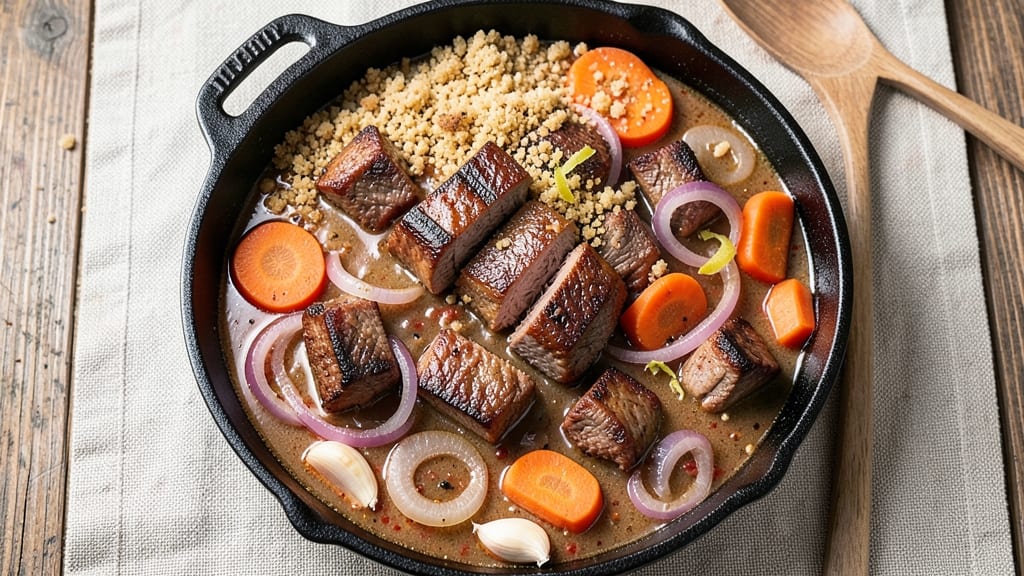
This one-pot beef stew and onion soup combines the hearty richness of braised beef with the comforting sweetness of caramelized onions—all in a single, flavor-packed dish.
The secret lies in slow-simmering beef until fork-tender while building layers of onion depth through gentle cooking, then blending the broths for a velvety base that ties everything together.
What starts as a rustic stew transforms into a restaurant-worthy soup with minimal effort, proving that one pot can deliver double the satisfaction.
The beauty of this recipe is its flexibility—whether you're using a Dutch oven on the stovetop or a slow cooker for hands-off cooking, the technique remains the same. Beef chuck breaks down beautifully, while onions caramelize gradually, their natural sweetness intensifying as they cook.
The result is a dish that feels indulgent yet simple, with each spoonful delivering tender meat, rich broth, and sweet onions in perfect harmony.
By the time you're ready to serve, you'll have a deeply flavorful meal that's perfect for chilly evenings or hearty gatherings. The broth reduces to a perfect consistency, coating every bite, while the beef remains juicy and the onions melt into the sauce.
Garnish with fresh thyme or a sprinkle of Gruyère for extra elegance—this is comfort food at its finest, elevated without the fuss.
Best of all, leftovers reheat beautifully, making this an ideal meal for prepping ahead. Whether you're feeding a family or treating yourself to a cozy dinner, this recipe delivers restaurant-quality results with minimal cleanup. Let's get started on this one-pot wonder.
Ingredients for beef stew onion soup
Six hearty ingredients transform into two restaurant-worthy dishes in one pot.
| Ingredient | Amount | Notes |
|---|---|---|
| Beef Chuck Roast 🥩 | 3 lb | Cut into 1.5-inch cubes |
| Yellow Onions 🧅 | 4 whole | Large, peeled and quartered |
| Carrots 🥕 | 4 whole | Medium, peeled and halved |
| Garlic Cloves 🧄 | 6 cloves | Minced for depth of flavor |
| Tomato Paste 🍅 | ½ cup | For rich, concentrated flavor |
| Beef Broth 💧 | 6 cups | Low-sodium preferred |
| Red Wine 🍷 | 1 cup | Dry, bold variety like Cabernet |
| Fresh Thyme 🌿 | ¼ cup | Leaves only, finely chopped |
| Bay Leaves 🌿 | 2 whole | For subtle aromatic depth |
| Salt 🧂 | 1 ½ tsp | Kosher or sea salt |
| Black Pepper 🌶️ | 1 tsp | Freshly ground for best flavor |
| Olive Oil 🫒 | 2 tbsp | Extra-virgin for richness |
| Gruyère Cheese 🧀 | ½ cup | Grated for garnish (optional) |
The beef chuck is non-negotiable here—it's the secret to that melt-in-your-mouth texture. Grab a 3-pound roast from the butcher section if you can, as it's often fresher than pre-packaged cuts. Costco or local farmers markets usually have the best quality at reasonable prices. Look for good marbling—those white fat streaks are what make the beef tender. The onions? Yellow onions from the store's bulk bin (not the pre-sliced kind) caramelize best—they're sweeter and more flavorful. If you're short on time, baby carrots work in a pinch, but the regular size gives you better texture in the stew.
No red wine? Substitute with extra beef broth plus 1 tbsp balsamic vinegar—it mimics the depth without the alcohol. Fresh thyme is ideal, but dried thyme at one-third the amount works if that's what you've got. The tomato paste can be swapped for 1 cup crushed tomatoes if you prefer, though it'll be slightly less concentrated. For the carrots, if you accidentally grab the pre-shredded bag, pat them dry first—they'll caramelize better. The Gruyère? Skip it if you're vegan, but if you're using it, a $15 wedge from the deli counter (not pre-shredded) makes all the difference.
This dish gets better the next day—plan ahead. The stew portion reheats beautifully, while the soup can be blended fresh when ready to serve. Store the stew in an airtight container for up to 5 days in the fridge, or freeze for 3 months. For the soup, keep the blended portion separate until serving—it thickens as it cools. I like to double the recipe and freeze half, so I always have a backup for those unexpected dinner guests. The onions and carrots? Roast any extras with olive oil and salt for a quick side dish.
Why You'll Love This Recipe
- One-Pot Magic: I swear by this recipe when I’m too tired to scrub pots. Toss everything—a chunk of beef, onions, carrots, and garlic—into one pot, add water, and let it simmer. By the time the beef is tender, the house smells like a cozy dinner, and I’ve only used one pan. (Yes, even on a Tuesday night.)
- Deep, Rich Umami: That beef chuck roast? It melts into the broth, turning it into something dangerously good. The tomato paste gives it a subtle depth, while the onions caramelize just enough to make every spoonful taste like a hug. Honestly, I’ve tried store-bought soup—this beats it every time.
- Leftovers That Don’t Suck: Between us, most stews turn into sad, watery meals after day two. Not this one. The beef stays juicy, the broth thickens just right, and the flavors only get better. I freeze portions for lazy days, and they reheat like they’re fresh. My secret weapon for when I’m too wiped to cook.
- Budget-Friendly Feast: A single beef chuck roast stretches for four or five meals, and the rest of the ingredients cost pennies. You’re not just feeding a crowd—you’re doing it without breaking the bank. Plus, the carrots and onions last forever, so I’m not scrambling for last-minute grocery runs. (My wallet thanks me.)
Step-by-step instructions for beef stew and onion soup
This one-pot wonder delivers hearty beef stew that transforms into creamy onion soup—effortless and delicious.
Sear the Beef for Deep Flavor
Heat the 2 tablespoons olive oil in a large, heavy pot over medium-high heat until shimmering. Working in batches, add the 3 lb beef chuck roast cut into 1.5-inch cubes, letting each piece sear undisturbed for 2-3 minutes until deeply browned on all sides. This step builds rich, caramelized flavors that infuse the entire dish.
Don't overcrowd the pot—sear in batches if needed. Once all beef is browned, transfer it to a plate. You'll hear a satisfying sizzle as the meat releases from the pot, signaling it's ready for the next phase. The golden crust you've created will melt into the stew later, creating layers of umami goodness.
Build the Stew Foundation
In the same pot, add the 4 whole yellow onions (quartered) and 4 whole carrots (halved) to the browned bits left in the pot. Cook for 5 minutes, stirring occasionally, until the onions soften slightly and begin to caramelize. Add the 6 cloves minced garlic and cook for another 30 seconds until fragrant.
Stir in the 0.5 cup tomato paste, scraping up any browned bits from the bottom. Pour in the 1 cup red wine and let it simmer for 2 minutes until reduced by half. This step develops the stew's rich, complex base. The wine's acidity cuts through the meat's richness, balancing the flavors perfectly. Don't skip this reduction—it's what makes the difference between ordinary and extraordinary.
Simmer the Stew to Perfection
Return the beef to the pot and add the 6 cups beef broth, 1.5 teaspoons salt, 1 teaspoon black pepper, 0.25 cup fresh thyme, and 2 whole bay leaves. Bring to a gentle boil, then reduce heat to low, cover partially, and let it simmer for 2-2.5 hours until the beef is fork-tender. The stew should bubble gently but not vigorously—this ensures even cooking without toughening the meat.
Check the beef after 1.5 hours—it should pull apart easily with a fork. If it's not tender enough, continue simmering. The longer it cooks, the more flavorful it becomes. I like to stir occasionally to prevent sticking, but avoid over-stirring which can make the stew grainy. The aroma filling your kitchen right now? That's the smell of a perfect stew.
Transform into Onion Soup
Once the beef is tender, remove 2 of the quartered onions and set aside for the soup. Discard the bay leaves and thyme stems. Using an immersion blender, carefully puree about half of the stew until smooth. You want a velvety texture, not completely liquid—think of it as a thick, creamy base. If you don't have an immersion blender, transfer half the stew to a blender and puree, then return it to the pot.
Stir in the reserved 2 quartered onions and simmer for an additional 10 minutes to soften them. The pureed portion creates a rich, creamy base while keeping the texture of the original stew intact. This is where the magic happens—the stew transforms into a luxurious onion soup with just a few simple steps. The Gruyère cheese will be the perfect finishing touch later.
Serve with Cheesy Topping
Ladle the stew into bowls, dividing the creamy pureed portion and the chunky stew evenly. Top each serving with about 1 tablespoon of the 0.5 cup grated Gruyère cheese (you can save the rest for another use). Broil for 2-3 minutes until the cheese is golden and bubbly, creating a beautiful, crispy topping that adds a final layer of flavor.
Serve immediately with crusty bread to soak up every last bit of that rich, cheesy goodness. The contrast between the hearty beef stew and the creamy onion soup in one bowl makes this dish truly special. Each bite delivers a perfect balance of tender beef, caramelized onions, and velvety cheese—all in one satisfying, one-pot meal.
Pro Tips For Making Beef Stew Onion Soup
- SEAR THE ROAST FIRST: Don’t just toss the chuck roast into the pot raw—get it golden brown in a hot Dutch oven before adding liquids. I used to skip this, and the stew always tasted flat; now it develops that deep, caramelized flavor that makes the whole dish sing.
- CHOP ONIONS UNIFORM: Cut those yellow onions into even ½-inch chunks—no mix of big and small pieces. My first few batches had some onions cooking faster than others, leaving you with mushy bits and undercooked chunks. Consistency is key here.
- DEGLAZE WITH BEER (OR BROTH): After browning the meat, splash in ½ cup of dark beer or beef broth to scrape up all those fond bits stuck to the bottom. I learned this the hard way—ignoring the fond means losing flavor you’ve already cooked into the pot.
- SIMMER LOW AND COVERED: Once everything’s in the pot, reduce heat to a bare simmer and keep it covered for the first hour. The meat needs time to tenderize, and rushing it with high heat turns the stew into a sad, watery mess. Patience here makes all the difference.
Dietary considerations for these flavors
Gluten-Free Adaptations
This recipe is naturally gluten-free if you use certified gluten-free ingredients. The key is ensuring your beef broth and red wine are gluten-free—brands like Annie's Homegrown or Imagine Foods offer safe options.
For extra precaution, check labels on tomato paste and spices, as some contain hidden gluten. I always double-check my Kraft tomato paste is gluten-free, but store brands can vary. 🌱
Dairy-Free Options
Skip the Gruyère cheese topping entirely for a dairy-free version, but you can still enjoy the stew and soup. For the creamy onion soup, blend in ½ cup coconut milk or nutritional yeast (about 2 tbsp) to add richness.
I've found Silk unsweetened almond milk works well when blended with the broth for a lighter texture. The beef and vegetables remain the star, so no one will miss the cheese!
Low-Carb Modifications
Reduce the onion quantity to 2 whole onions (instead of 4) to cut carbs while keeping flavor. Swap carrots for cauliflower florets (about 2 cups) for a lower-carb vegetable.
The beef chuck remains the same, but you can add extra mushrooms (about 1 cup sliced) for umami without many carbs. This version still delivers hearty satisfaction while fitting low-carb diets.
Vegetarian Swap
Replace the beef with 2 lbs extra-firm tofu or mushrooms for a meaty texture. Press and drain tofu, then cube and pan-fry until golden. For mushrooms, use 8 oz cremini mushrooms sliced into thick pieces.
Both options absorb the flavors beautifully. I've had great results with King Oyster mushrooms—they hold their shape and add a satisfying bite. 🍄
Allergen-Friendly Tips
For nut allergies, avoid nut-based broths—stick with beef broth or vegetable broth. If you're sensitive to sulfites, choose wine with lower sulfur content or use balsamic vinegar instead. For soy allergies, ensure your tomato paste is soy-free (some brands add it as a thickener).
Always check ingredient labels, especially for spices and broths, as cross-contamination can occur in shared facilities.
Nutrition facts
Frequently asked questions
Can I make this in a slow cooker instead of a stovetop?
Brown the beef first in a skillet, then transfer everything to a 6-quart slow cooker. Cook on low for 8 hours or high for 5 hours until the beef is tender. The slow cooker's gentle heat makes this even more hands-off. For the soup portion, blend half after cooking and stir in the reserved onions before serving.
What's the best way to reheat leftovers?
Reheat the stew portion in a pot over medium-low heat until warmed through (5-7 minutes). For the creamy soup part, warm it gently to avoid curdling. If the stew seems too thick, add 1-2 tablespoons of beef broth per cup. Never microwave directly from the fridge—it can make the texture uneven.
Can I use dried onions instead of fresh?
Fresh onions are ideal for caramelization, but you can use 2 tablespoons dried onion flakes if needed. For the soup portion, add them with the broth at the start. The flavor won't be as deep, but it'll still work. For the stew, dried onions won't caramelize—they'll just dissolve, so fresh is definitely better if you have them.
How do I make this dish kid-friendly?
Skip the red wine and use extra broth plus 1 teaspoon apple cider vinegar for acidity. Remove the bay leaves and reduce thyme to 1 teaspoon. For the cheese topping, use mild cheddar instead of Gruyère. Serve the stew and soup portions separately so kids can choose what they prefer—some might love the creamy soup but not the meaty stew.
What if my stew isn't tender enough after 2.5 hours?
If the beef still has some resistance, continue simmering uncovered for 30 more minutes—the liquid will reduce and intensify flavors. For stubbornly tough pieces, transfer them to a cutting board, slice against the grain, and return to the pot. The extra cooking time will make them more tender. If you're in a hurry, try adding 1 cup hot water to speed up the process.