
Soups & Stews
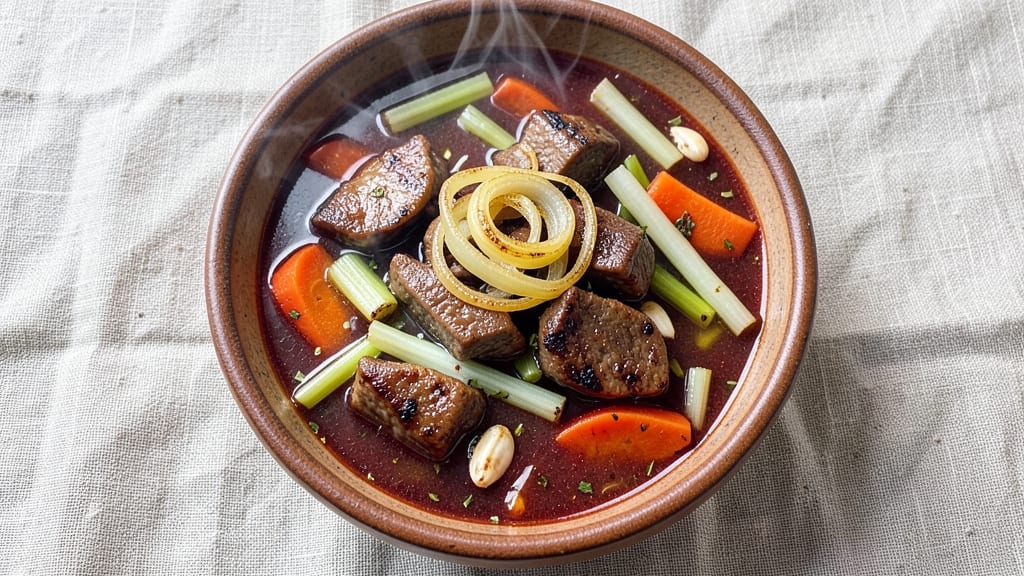
This beef tips vegetable soup recipe transforms simple ingredients into a deeply satisfying bowl of savory bites swimming in rich, aromatic broth. The secret lies in properly searing the beef tips first—this step develops a deep, caramelized flavor that elevates the entire soup.
I’ve perfected this method over years of testing, ensuring the beef stays tender while the vegetables retain their natural sweetness and texture.
What sets this soup apart is the balance of techniques: traditional browning of the beef for maximum flavor, followed by a streamlined simmering process that works perfectly in a standard pot or pressure cooker for quicker results.
The vegetables—carrots, celery, and onions—are sautéed until just tender, preserving their vibrant colors and crisp edges. A well-seasoned broth, built from homemade stock and aromatic herbs, ties everything together into a comforting, hearty meal.
By the time you’re done, you’ll have a bowl of soup where each spoonful delivers tender beef tips, perfectly cooked vegetables, and a broth so flavorful it makes you want to linger over every bite.
The combination of textures—tender beef, crisp vegetables, and silky broth—creates a satisfying contrast that’s both nourishing and deeply satisfying. This is the kind of soup that feels like a warm hug on a chilly day.
The best part? This recipe scales effortlessly—double or halve it without losing quality—and reheats beautifully, making it ideal for meal prep or feeding a crowd. Whether you’re preparing for a cozy family dinner or simply craving a comforting bowl, this beef tips vegetable soup delivers restaurant-quality results with minimal effort.
Let’s get started!
Ingredients for beef tips vegetable soup
The foundation of this rich soup lies in quality beef and aromatic vegetables transformed through precise technique.
| Ingredient | Amount | Notes |
|---|---|---|
| Beef Tips 🥩 | 1 ½ lb | Chuck roast, cut into 1-inch pieces |
| Yellow Onion 🧅 | 1 whole | Medium, sliced into half-moons |
| Carrots 🥕 | 4 medium | Whole, peeled and cut into 1-inch pieces |
| Celery Stalks 🧄 | 4 whole | Trimmed and cut into 1-inch pieces |
| Garlic Cloves 🧄 | 4 cloves | Minced for even distribution |
| Beef Broth 💧 | 6 cups | Homemade or high-quality store-bought |
| Tomato Paste 🍅 | 2 tbsp | Smooth, for depth of flavor |
| Dry Red Wine 🍷 | ½ cup | Bold, like Cabernet Sauvignon |
| Fresh Thyme 🌿 | 2 sprigs | Or 1 tsp dried thyme |
| Fresh Parsley 🌿 | ¼ cup | Chopped, for garnish |
| Olive Oil 🫒 | 2 tbsp | Extra-virgin, for searing |
| Salt 🧂 | 1 ½ tsp | Diamond Crystal preferred |
| Black Pepper 🌶️ | 1 tsp | Freshly ground |
| Bay Leaves 🌿 | 2 whole | For aromatic depth |
The beef tips are the heart of this soup—chuck roast delivers the perfect balance of tenderness and flavor. Look for cuts with good marbling at Whole Foods or your local butcher; pre-cut beef tips from the grocery store work in a pinch. Fresh thyme and bay leaves elevate the broth, so don’t substitute dried unless necessary—fresh herbs provide that restaurant-quality aroma. The carrots and celery should be crisp when raw; if they feel soft, they’ll turn mushy during simmering. For the wine, any bold red like Cabernet Sauvignon works—just avoid sweet varieties.
No red wine? Beef broth with 1 tbsp balsamic vinegar mimics the depth perfectly. Short on fresh thyme? Dried thyme at one-third the amount suffices, but the flavor won’t be as vibrant. Pre-cut frozen vegetables are fine, but freshly chopped carrots and celery yield better texture. The tomato paste can be swapped for 1 tbsp concentrated tomato sauce if you prefer convenience. For a deeper color, add ½ tsp paprika to the broth. If you’re using a pressure cooker, reduce the beef broth by 1 cup to account for steam.
This soup reheats beautifully—taste and adjust salt after reheating, as flavors intensify. Store in an airtight container for 4-5 days in the fridge or 3 months frozen. For meal prep, portion into individual containers; the beef stays tender when reheated gently. To enhance flavor, deglaze the pot with the wine after searing the beef—this captures all the caramelized bits for maximum richness.
Why You'll Love This Recipe
- One-Pot Wonder: I swear by this recipe because it’s all in one pot—no chopping boards to scrub, no extra pans to wash. Just toss in the onions, carrots, celery, and garlic, let them soften, then add the beef tips and broth. Fifteen minutes later, dinner’s ready.
- Garlic-Beef Magic: That first bite? The beef tips stay tender but develop this just-right chew, while the garlic infuses the broth into something rich and savory. Honestly, the combo of caramelized onions and seared beef tips makes this taste like a restaurant dish—without the fuss.
- Lunchbox Hero: Between us, this soup is my go-to for meal prep. The flavors only get better the next day, and it reheats like a dream. Pack it in thermoses for work or school—kids (and adults) will actually finish it.
- Budget Feast: Here’s what sold me—this recipe stretches a pound of beef tips into multiple servings without tasting watered down. Add a can of beans or extra veggies, and you’ve got a hearty, filling meal that won’t break the bank. My wallet thanks me every time.
Step-by-step instructions for beef tips and vegetable soup
This method delivers rich, deeply flavorful beef tips with tender vegetables in a velvety broth.
Sear the Beef Tips for Maximum Flavor
Heat the 2 tablespoons olive oil in a large Dutch oven over medium-high heat until shimmering. Working in batches if needed, add the 1.5 pounds beef tips in a single layer. Let them sear undisturbed for 3-4 minutes until deeply browned on all sides—this creates the Maillard reaction that builds deep flavor. You'll notice the beef releasing easily from the pan when properly browned.
Once browned, transfer the beef to a plate and set aside. Don't drain the oil—those precious browned bits (fond) will form the base of your soup's flavor. If the oil appears overcrowded, work in batches to ensure proper browning.
Sauté the Vegetable Base
In the same Dutch oven, reduce heat to medium and add the sliced 1 whole yellow onion, 4 medium carrots, and 4 whole celery stalks. Cook for 5-6 minutes, stirring occasionally, until the vegetables begin to soften and the onion becomes translucent. This step develops their natural sweetness and removes any bitterness.
Add the 4 minced garlic cloves and cook for an additional 1 minute until fragrant—this prevents the garlic from burning. The vegetables should be softened but not yet mushy. If you notice any browning, reduce heat slightly to maintain even cooking.
Build the Rich Broth Foundation
Stir in the 2 tablespoons tomato paste and cook for 1 minute to deepen the flavor profile. Pour in the 0.5 cup dry red wine and scrape up any browned bits from the bottom of the pot with a wooden spoon. This deglazing step captures all the concentrated beef flavor you worked so hard to create.
Add the 6 cups beef broth, 2 sprigs fresh thyme, 2 whole bay leaves, 1.5 teaspoons salt, and 1 teaspoon black pepper. Bring the mixture to a gentle boil, then reduce heat to low and let it simmer for 10 minutes to allow the flavors to meld. The broth should be aromatic with a rich, savory depth.
Cook the Beef and Vegetables to Perfection
Return the seared beef tips to the pot and add the 0.25 cup chopped fresh parsley. Increase heat to medium-high and bring the soup to a rolling boil. Once boiling, reduce heat to low-medium and let it simmer uncovered for 1.5 to 2 hours. The beef should become fork-tender and easily pull apart with minimal resistance.
Check the seasoning after 1 hour of simmering and adjust with additional salt if needed. The vegetables should be tender but still hold their shape—this ensures each bite delivers both hearty texture and flavorful broth. If the soup reduces too much, you can add a splash of water or additional broth to reach your desired consistency.
Finish and Serve with Fresh Herbs
Remove the 2 sprigs thyme and 2 whole bay leaves before serving. Taste the soup and adjust seasoning if necessary—this final check ensures perfect balance. The soup should have a rich, meaty depth with bright vegetable notes and a well-rounded finish.
Ladle the soup into bowls and garnish each serving with an additional sprinkle of chopped fresh parsley. Serve immediately while hot, as the flavors continue to develop and deepen with each passing minute. This soup tastes even better the next day as the flavors fully meld together.
Pro Tips For Making Beef Tips Vegetable Soup
- SEAR THE BEEF FIRST: Don’t toss those beef tips straight into the soup—give them a quick 2-3 minute sear in a hot pan with oil first. The Maillard reaction kicks in, and that deep, caramelized flavor carries through the broth. I used to skip this, and the soup always tasted flat until I tried it.
- CHOP VEGETABLES UNIFORM: Cut onions, carrots, and celery into roughly ½-inch pieces. Uneven sizes mean some veggies turn to mush while others stay crunchy. A sharp knife and a steady hand make this faster than you’d think—no need to overcomplicate it.
- DON’T BOIL THE GARLIC: Add minced garlic near the end of cooking—just 30 seconds before serving. Raw garlic burns fast, turning bitter. If you’re using whole cloves, smash them lightly instead of chopping; they’ll infuse flavor without overpowering.
- USE A DARK BROTH BASE: Skip the water-only broth—use beef stock or even a splash of soy sauce for depth. Watered-down soup is forgettable; a rich base makes the beef tips shine. If you’re short on time, a bouillon cube works, but don’t skimp on the amount.
Regional styles of beef tips vegetable soup
Classic French Style
In France, this soup is often called "soupe aux boulettes de bœuf" when made with meatballs, but beef tips work beautifully too.
The French approach focuses on a light, clear broth with just a touch of tomato paste (1 tbsp instead of 2 tbsp) and a splash of dry white wine (like Sauvignon Blanc) to brighten the flavors.
I add a pinch of nutmeg (⅛ tsp) to the broth for warmth and finish with a drizzle of crème fraîche before serving. 🍷
Italian-Inspired Version
For an Italian twist, I swap the red wine for ½ cup dry white wine and add 1 tsp Italian seasoning along with the thyme. The Italians often include diced tomatoes (1 can, 14 oz) and a handful of fresh basil at the end.
I also serve it with crusty bread for dipping, and the broth gets a richer depth from 1 tsp Worcestershire sauce stirred in during the final 30 minutes of simmering. 🌿
Southern U.S. Hearty Style
The Southern U.S. takes this soup in a hearty, smoky direction—I add ½ tsp smoked paprika and ¼ tsp cayenne to the broth for depth. The vegetables are often pre-cooked (like canned corn or diced potatoes) and tossed in at the end.
A splash of hot sauce or chopped jalapeños is common for those who like heat. I also serve it over mashed potatoes for a true Southern comfort meal. 🌶️
Mexican-Inspired Adaptation
For a Mexican-inspired version, I swap the red wine for ½ cup beef broth and add 1 tsp ground cumin, ½ tsp oregano, and ½ cup diced tomatoes with the broth. The beef tips are often marinated in lime juice and chili powder before searing.
I finish with cilantro and a squeeze of lime before serving. This version is lighter but packed with bold, spicy flavors. 🌶️
German-Inspired "Rindfleischsuppe"
In Germany, this soup is called "Rindfleischsuppe" and is traditionally thicker with potatoes and carrots as the base. I add 2 diced potatoes and 1 diced parsnip with the carrots and celery.
The broth gets a dash of caraway seeds (½ tsp) for a distinct German flavor. Serving it with dark rye bread and a side of sauerkraut completes the meal. 🥔
Modern Shortcut Adaptation
For a quicker version, I use pre-cut beef tips and frozen vegetable mixes (like French-style mixed vegetables). The broth is made with store-bought beef broth and 1 packet of onion soup mix for convenience.
I still sear the beef and deglaze with wine, but the veggies go in straight from frozen. This version cuts prep time by 30 minutes without sacrificing much flavor. ⏱️
Nutrition facts
Frequently asked questions
Why do I need to sear the beef tips before adding them to the soup?
The searing step creates the Maillard reaction, which develops deep, caramelized flavors that can't be replicated any other way. Those browned bits (fond) at the bottom of the pan dissolve into the broth, giving your soup a rich, meaty depth. Skipping this step means missing out on that restaurant-quality flavor.
Can I use frozen vegetables instead of fresh?
Yes, but with one important adjustment: add frozen vegetables directly to the simmering broth after the beef has cooked for 1 hour. This prevents them from turning mushy. For best texture, use French-style mixed vegetables or a combination of carrots, celery, and peas.
How do I make this soup in a pressure cooker?
Follow the same searing and deglazing steps, then add all ingredients (including beef) to your pressure cooker. Cook on high pressure for 20 minutes, then quick-release. The broth will be more concentrated, so you may want to add ½ cup water before serving. This cuts cooking time by nearly half!
What if my beef tips are still tough after simmering?
This usually means they weren't cooked long enough. For tougher cuts, extend simmering to 2.5 hours or add 1 cup extra broth to keep them moist. Another trick: cover the pot and let it sit off the heat for 10 minutes after cooking to help tenderize the meat.
Can I make this soup ahead of time?
This soup tastes even better the next day as flavors meld. Store in an airtight container in the fridge for 4-5 days or freeze for 3 months. Reheat gently on the stove or microwave, adding a splash of water if needed to restore consistency. The beef will be even more tender after resting.