
Soups & Stews
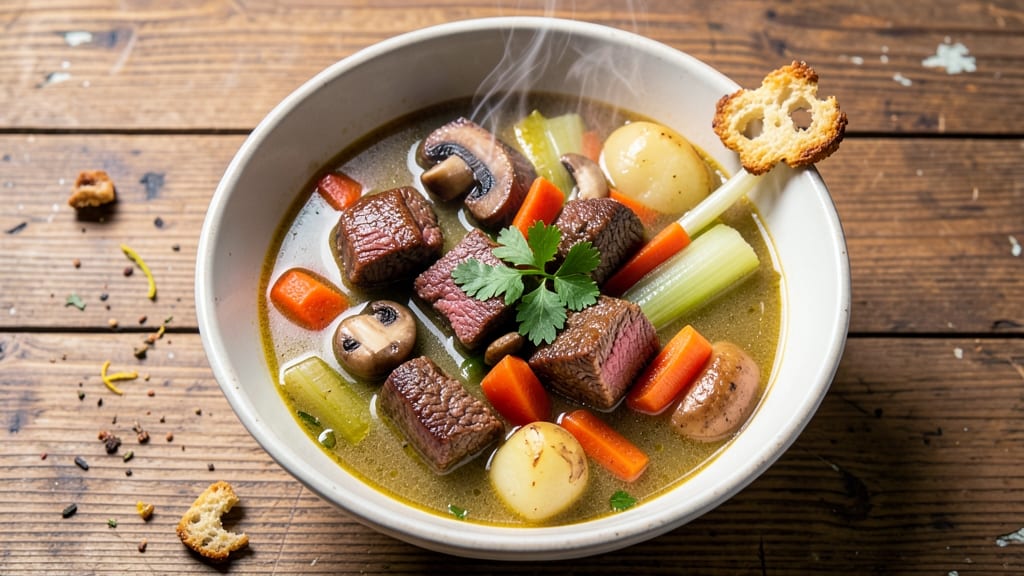
This beef vegetable soup recipe from scratch transforms tough cuts into fork-tender meat swimming in rich, aromatic broth—exactly what elevates weeknight dinners to comforting masterpieces. The secret lies in slow simmering beef with vegetables until they melt into perfect harmony, creating a dish that's both hearty and deeply satisfying.
Every spoonful delivers layers of savory depth from caramelized onions and garlic, earthy mushrooms, and fresh herbs that brighten the final result.
What sets this recipe apart is the balance of protein and vegetables—generous chunks of beef break down beautifully while carrots, celery, and potatoes absorb the broth's flavors without losing their natural sweetness.
The key technique is building flavor through proper browning of the meat and vegetables, which forms a rich fond at the bottom of the pot that dissolves into the broth during simmering. This method ensures every bite is packed with savory complexity.
By the time your soup reaches the table, you'll have tender beef that falls apart at the touch of a fork, vegetables that are perfectly cooked but still hold their shape, and a broth so flavorful it deserves a bowl all its own.
The aroma alone will fill your kitchen with warmth, while the first taste delivers that perfect balance of hearty beef, sweet vegetables, and aromatic herbs. This is the kind of soup that disappears quickly and leaves everyone asking for seconds.
Perfect for chilly evenings or meal prep, this recipe scales beautifully for families or gatherings. The beauty of homemade soup is that it only gets better with time—flavors deepen as it sits, making leftovers even more satisfying. Here's how to create your own bowl of comforting perfection from scratch.
Ingredients for beef vegetable soup recipe from scratch
Six hearty ingredients transform into the ultimate comfort bowl of savory beef and veggie goodness.
| Ingredient | Amount | Notes |
|---|---|---|
| Chuck Roast 🥩 | 2 lb | Cut into 1-inch cubes |
| Yellow Onions 🧅 | 2 whole | Sliced into 1/2-inch pieces |
| Carrots 🥕 | 4 whole | Peeled, cut into 1-inch chunks |
| Celery Stalks 🧄 | 4 whole | Trimmed, cut into 1-inch pieces |
| Russet Potatoes 🥔 | 3 medium | Peeled, cut into 1-inch cubes |
| Mushrooms 🍄 | 8 oz | Cremini or white, sliced |
| Garlic Cloves 🧄 | 6 cloves | Minced for depth |
| Fresh Thyme 🌿 | 2 tbsp | Leaves only, chopped |
| Fresh Parsley 🌿 | ¼ cup | Chopped for brightness |
| Tomato Paste 🍅 | 2 tbsp | For richness |
| Beef Broth 💧 | 6 cups | Low-sodium preferred |
| Red Wine 🍷 | ½ cup | Dry variety like Cabernet |
| Olive Oil 🫒 | ¼ cup | For browning |
| Salt 🧂 | 1 ½ tsp | Kosher or sea salt |
| Black Pepper 🌶️ | 1 tsp | Freshly ground |
The beef is everything here. Chuck roast breaks down beautifully—sirloin or ribeye won't give you that same melt-in-your-mouth texture. Grab the pre-cubed version at Costco or your local butcher for convenience. For the veggies, organic carrots and celery from the store's produce section add natural sweetness, but any fresh produce works. The mushrooms? Cremini have the best earthy flavor—Trader Joe's sells them pre-sliced if you're short on time. Don't skip the garlic—six cloves ensure that deep, aromatic base everyone loves.
No red wine? Beef broth with a splash of balsamic works just as well. Fresh thyme is ideal, but dried thyme at one-third the amount gets you close. The tomato paste can be the squeeze tube kind—Trader Joe's has the perfect size for this recipe. Potatoes too starchy? Swap in Yukon Golds for creamier texture. For the broth, low-sodium is key—you'll be adding plenty of salt later. And if you're watching calories, use olive oil spray instead of pouring. Trust me, it makes a difference.
This soup only gets better after a night in the fridge—3-4 days is perfect. Freeze portions for up to 3 months in airtight containers. I always double the batch because it disappears fast. The beef gets even more tender with time, and the flavors meld into pure comfort. Store the broth separately if you prefer it less thick—just reheat and adjust consistency with water or extra broth. Leftovers reheat beautifully—just add a splash of water or broth to loosen it up.
Why You'll Love This Recipe
- Chop Once, Cook Long: I swear by the "mirepoix" trick—dicing onions, carrots, and celery together in one bowl. Toss them in the pot with the chuck roast, add water, and let the slow simmer do the work. No fancy techniques, just hands-off magic.
- Deep, Savory Payoff: That chuck roast? It melts into tender shreds while the potatoes turn creamy and the carrots caramelize just enough. Honestly, the first spoonful makes me pause—I didn’t realize how much I missed that rich, hearty beef flavor until now.
- Leftovers That Don’t Suck: Between us, most soups turn sad after day two. Not this one. The beef stays juicy, the veggies hold their shape, and I’ve reheated portions for breakfast (yes, with toast) without a single complaint. Three days of effortless meals, no takeout needed.
- Budget-Friendly Crowd-Pleaser: A 3-pound chuck roast and a bag of potatoes stretch to feed six for under $15. I’ll be real: my college budget would’ve wept happy tears. Plus, it’s the kind of dish where picky eaters actually finish their bowls—no leftovers go to waste.
Step-by-step instructions for beef vegetable soup from scratch
Here's how to build rich, hearty soup with melt-in-your-mouth beef and vibrant vegetables.
Brown the Chuck Roast for Maximum Flavor
Heat the 0.25 cup olive oil in a large Dutch oven over medium-high heat. Working in batches if needed, add the 2 lb chuck roast cut into 1-inch cubes, spreading them out in a single layer. Don't crowd the pan—this prevents proper browning.
Sear the beef for 3-4 minutes per side until deeply browned with a crust forming. You'll smell that wonderful Maillard reaction happening—that's where all the deep flavor comes from. Transfer the browned beef to a plate and set aside. If the oil starts smoking before all pieces are browned, reduce heat slightly and continue working in batches.
Sauté the Vegetable Base
In the same Dutch oven, add the 2 whole yellow onions sliced into ½-inch pieces, 4 whole carrots cut into 1-inch chunks, and 4 whole celery stalks cut into 1-inch pieces. Cook for 5-6 minutes stirring occasionally until the vegetables soften slightly and begin to caramelize at the edges.
Add the 8 oz mushrooms sliced and 6 cloves garlic minced, cooking for another 3-4 minutes until the mushrooms release their moisture and the garlic becomes fragrant. Here's where the magic happens—the vegetables develop sweetness and depth that forms the foundation of your soup. If the pan gets too dry, add a splash of red wine to deglaze and scrape up those flavorful browned bits.
Build the Rich Broth Foundation
Stir in the 2 tbsp tomato paste and cook for 1 minute to toast it slightly, deepening its flavor. Pour in the 0.5 cup red wine and scrape up any browned bits from the bottom of the pot—this is called deglazing and captures all that concentrated flavor. Let it simmer for 2-3 minutes until the wine reduces by half.
Add the 6 cups beef broth and bring to a gentle boil. Return the browned beef to the pot, along with the 1.5 tsp salt and 1 tsp black pepper. Partially cover and simmer for 1 hour until the beef is fork-tender. You'll know it's ready when a knife slides in easily and the meat pulls apart with gentle pressure. If the soup reduces too much before the beef is tender, add a little water or broth to maintain the liquid level.
Add Potatoes and Finish with Herbs
Add the 3 medium russet potatoes cut into 1-inch cubes to the soup. The potatoes will absorb some of the broth as they cook, so don't worry if the soup looks slightly thick at this point. Return to a gentle simmer and cook for another 15-20 minutes until the potatoes are tender when pierced with a fork.
In the last 5 minutes of cooking, stir in the 2 tbsp fresh thyme and 0.25 cup fresh parsley. These herbs add bright, fresh notes that cut through the richness of the beef and vegetables. Taste and adjust seasoning if needed—you might need a little more salt to balance the flavors now that all the ingredients are combined.
Serve Warm with Crusty Bread
Ladle the soup into bowls, making sure each serving gets a good portion of beef and vegetables. The soup should be thick but still spoonable, with tender beef that falls apart easily and vegetables that are soft but still hold their shape. Garnish each bowl with an extra sprinkle of fresh parsley for color and freshness.
Serve immediately with warm crusty bread to soak up every last drop of that flavorful broth. This soup tastes even better the next day as the flavors continue to meld together, so consider making extra for leftovers. The secret to perfect beef vegetable soup lies in that initial browning step—never skip it, as it creates the deep, savory foundation that makes this soup truly special.
Pro Tips For Making Beef Vegetable Soup Recipe From Scratch
- BROWN THE ROAST FIRST: Chuck roast needs that deep, crusty sear—don’t skip it. Hit the pot with a tablespoon of oil, then cook the roast over medium-high heat for 5-6 minutes per side until it’s dark brown. I used to rush this, and the soup always tasted flat; the Maillard reaction is where all the flavor hides.
- CUT POTATOES UNIFORM: Russet potatoes take forever to soften if they’re big chunks. Dice them into 1-inch cubes so they cook through evenly alongside the carrots and celery. I learned this the hard way—uneven potatoes mean some turn to mush while others stay stubbornly firm.
- SALT THE WATER LIKE THE SEA: Taste the broth halfway through cooking—it should be salty enough that you’d need a drink after a sip. Chuck roast releases a ton of flavor, but you’ll still need about 2 teaspoons of salt per quart of water. I was skeptical until I tried it; the soup now tastes bold, not bland.
- ADD VEGETABLES IN ORDER: Tough veggies first—onions, carrots, celery—then potatoes 20 minutes later. If you toss everything in at once, the carrots and celery will turn to mush while the potatoes stay raw. Sounds obvious, but I’ve burned through three batches doing it wrong.
Essential equipment for this recipe
Dutch Oven Essentials
A large Dutch oven (I use a Le Creuset 6-quart) is your best friend for this recipe. Its heavy construction distributes heat evenly, preventing hot spots that can burn your vegetables or sear your beef unevenly.
The deep sides help prevent spills while browning, and the tight lid traps steam for perfect simmering. Look for a 5-7 quart size—All-Clad or Lodge are great budget-friendly alternatives that still deliver professional results. 🔥
Knife Skills Matter
Invest in a sharp chef's knife (I recommend Wüsthof or Shun) for consistent cuts. The chuck roast should be cut into 1-inch cubes—this ensures even cooking and maximum tenderness. For the vegetables, aim for 1-inch chunks for carrots, celery, and potatoes.
A mandoline can speed up prep if you're short on time, but hand-cutting gives you better control. Keep your knife sharp—dull blades crush vegetables instead of cleanly cutting them, which releases bitter juices into your soup.
Deglazing Tools
You'll need a wooden spoon or silicon spatula for deglazing—the process of scraping up those flavor-packed browned bits from the bottom of your pot. I prefer wooden spoons because they won't scratch your Dutch oven like metal utensils.
A ladle (like the OXO Good Grips) also comes in handy for transferring soup to bowls later. These tools are non-negotiable for capturing all that deep, savory flavor that makes homemade soup taste restaurant-quality. ✨
Broth Measurement Help
Measuring 6 cups of beef broth accurately is easier with a liquid measuring cup (I use Pyrex) than pouring directly from the carton. For the red wine, a jigger or small measuring cup ensures you use exactly ½ cup without overdoing it.
A fine-mesh strainer (like OXO) helps if you prefer your broth smooth—just strain it before adding to the pot. Pro tip: Keep an extra 1 cup of broth on hand to adjust consistency if needed during cooking.
Herb Storage Solutions
Fresh herbs like thyme and parsley should be stored properly to maintain their flavor. Keep them in a glass jar with ½ inch of water in the fridge—they'll stay fresh for up to 2 weeks.
For thyme, you can also wrap the stems in damp paper towels and store in a ziplock bag. When prepping, I always wash herbs in a colander and gently pat them dry with a clean kitchen towel to remove excess moisture, which can make your soup watery. 🌿
Optional Upgrades
For extra flavor, consider a meat thermometer (like Thermoworks Smoke) to check beef doneness—aim for 203°F internal temperature for perfect tenderness. A microplane makes quick work of garlic and ginger if you want to add those for extra depth.
And if you love garnishes, a small bowl of crème fraîche or grated Parmesan on the side lets everyone customize their soup. These aren't essential, but they elevate the dish to next-level comfort. 💫
Nutrition facts
Frequently asked questions
Can I substitute chuck roast with another cut of beef?
While chuck roast is ideal for its tenderness when slow-cooked, you can use stew meat or brisket as alternatives. Avoid lean cuts like sirloin—they won't break down as nicely. For quicker cooking, short ribs work well but may require 20-30 minutes less simmering time since they're already tender. Always cut the meat into 1-inch cubes for even cooking.
How can I make this soup vegetarian?
Replace the beef with mushrooms (add 12 oz extra for meaty texture) and white beans (1 can, drained). Use vegetable broth instead of beef broth and swap red wine for dry white wine or extra broth. The potatoes, carrots, and celery will still provide heartiness, but add 1 extra cup of broth to maintain soup consistency.
My soup turned out too thick—how can I fix it?
Add ½ cup hot broth or water at a time while reheating, stirring well between additions. For immediate fixing, place the pot over low heat and add liquid gradually until it reaches your preferred thickness. If the soup is too thick after cooking, the potatoes may have absorbed too much liquid—simmer uncovered for 5-10 minutes to reduce it naturally.
Can I make this soup in an Instant Pot?
Yes! Sauté the onions, carrots, celery, and mushrooms in the Instant Pot for 3 minutes on Sauté mode. Add the beef, tomato paste, wine, broth, and potatoes, then cook on High Pressure for 30 minutes. Quick-release the pressure, stir in herbs, and adjust thickness with broth if needed. The beef will be tender but slightly less fall-apart than stove-top simmering.
Why does my beef vegetable soup taste bland?
Blandness usually comes from skipping the browning step or not deglazing the pot. Always brown the beef thoroughly and scrape up all browned bits with wine or broth. For extra depth, add 1 tsp Worcestershire sauce or ½ tsp smoked paprika during simmering. Taste as you go—soup flavors build gradually, so adjust salt and pepper in stages rather than all at once.