
Soups & Stews
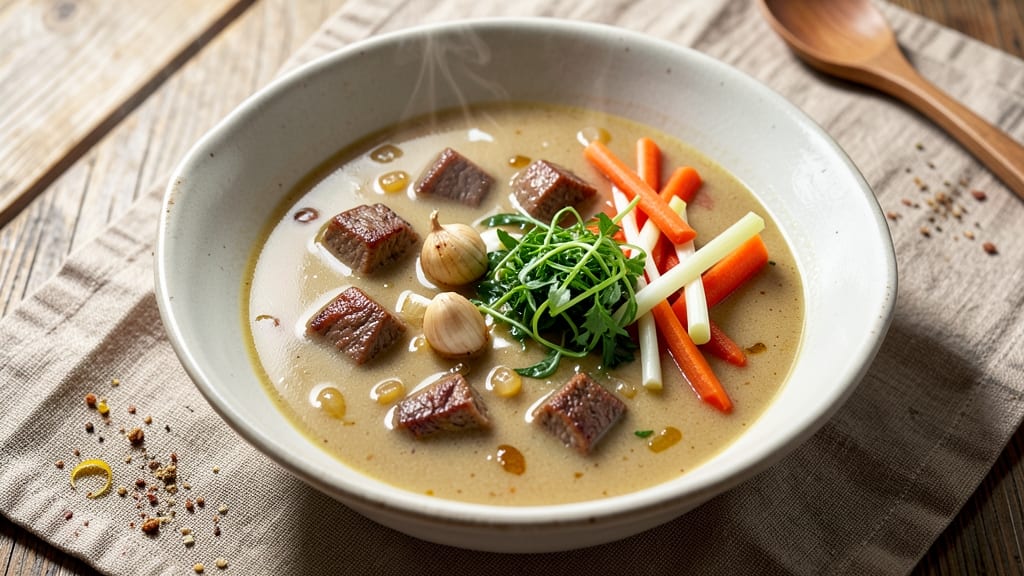
This beef watercress soup recipe transforms humble ingredients into a deeply satisfying dish where rich, savory beef broth meets the peppery brightness of watercress. The secret lies in slow-braising the beef to extract maximum flavor while keeping the watercress fresh and vibrant until the very end.
Professional chefs know that proper technique—like browning the meat and simmering low—makes all the difference in achieving that velvety, restaurant-quality texture.
The process begins with building a robust broth from beef bones or chuck, then incorporating tender beef chunks and aromatic vegetables. What sets this soup apart is the careful timing of adding watercress—just before serving—to preserve its crisp texture and peppery punch.
This balance of rich and fresh flavors creates a harmonious bite that’s both comforting and sophisticated, perfect for chilly evenings or special gatherings.
What makes this recipe truly special is its versatility—it works equally well as a hearty main course or light lunch, depending on how you serve it. The slow-cooked beef becomes melt-in-your-mouth tender, while the watercress adds a refreshing contrast that cuts through the richness.
Garnished with fresh herbs and a drizzle of cream, this soup delivers a level of depth that store-bought versions simply can’t match.
Whether you're using a traditional pot for hours of simmering or a pressure cooker for faster results, the principles remain the same: patience and attention to detail.
The result is a bowl of soup that’s as nourishing as it is delicious, with every spoonful offering a perfect marriage of beefy richness and peppery greens. Let’s get started on creating this comforting classic.
Ingredients for beef watercress soup
Sixteen ingredients transform into a velvety soup where rich beef broth harmonizes with vibrant watercress.
| Ingredient | Amount | Notes |
|---|---|---|
| Beef Chuck Roast 🥩 | 2 lb | Cut into 1-inch cubes, trimmed of fat |
| Yellow Onion 🧅 | 1 whole | Chopped into 1/2-inch pieces |
| Carrots 🥕 | 4 medium | Peeled and cut into 1-inch chunks |
| Celery Stalks 🧄 | 3 whole | Trimmed and cut into 1-inch pieces |
| Garlic Cloves 🧄 | 6 cloves | Peeled and smashed |
| Watercress 🌿 | 4 oz | Fresh, stems trimmed |
| Beef Broth 💧 | 6 cups | Homemade or high-quality store-bought |
| Red Wine 🍷 | 1 cup | Bold variety like Cabernet Sauvignon |
| Heavy Cream 🥛 | ½ cup | Full-fat for optimal texture |
| Tomato Paste 🍅 | 2 tbsp | For depth of flavor |
| Fresh Thyme 🌿 | 2 sprigs | Or 1 tsp dried thyme |
| Bay Leaves 🌿 | 2 whole | For aromatic depth |
| Salt 🧂 | 1 ½ tsp | Diamond Crystal preferred |
| Black Peppercorns 🌶️ | 1 tsp | Freshly cracked |
| Olive Oil 🫒 | 2 tbsp | Extra-virgin for browning |
The beef chuck roast is non-negotiable—its marbling delivers unmatched depth of flavor during the slow braise. Costco or Whole Foods carry premium cuts with excellent marbling, but any reputable butcher will have suitable options. Look for pieces with visible fat streaks throughout the meat. Watercress should be bright green with crisp stems—local farmers markets often carry the freshest bunches. For the broth, Kitchen Basics or Pacific Foods brands offer restaurant-quality options, though homemade from beef bones yields superior results. The celery and carrots should be firm with no soft spots, indicating freshness.
No red wine? Substitute with beef broth and a splash of balsamic vinegar—the acidity mimics wine's depth. Fresh thyme unavailable? Dried thyme at one-third the amount works in a pinch, though the aroma won't be as pronounced. The tomato paste can be replaced with crushed San Marzano tomatoes if preferred, though paste provides more concentrated flavor. For a vegetarian adaptation, mushroom broth and seitan can replace the beef components entirely. The watercress must be added last—cooking it would turn the soup bitter. If you can't find watercress, arugula or spinach offer similar peppery notes, though with slightly different textures.
This soup develops deeper flavor with time—3-4 days in the refrigerator actually improves the taste as the ingredients meld. Portion into glass containers for best storage, leaving 1-inch headspace. Freezes beautifully for up to 3 months, though the watercress texture may soften slightly upon thawing. For reheating, warm gently on the stove with a splash of water or broth to restore the velvety consistency. The soup pairs exceptionally well with crusty sourdough or garlic bread, which soaks up every last drop of the rich broth.
Why You'll Love This Recipe
- Make a double batch on Sunday: the soup reheats like a dream, but the leftovers? Toss them cold with rice and extra watercress for a lunch that feels fancy. My daughter picks out the carrots, but still asks for seconds.
- One-Pot Magic: Honestly, I swear by this—just toss everything into a pot, simmer, and walk away. The chuck roast practically melts into tender shreds while the veggies soften, and you’re left with zero cleanup beyond a spoon.
- Garlic Bomb Depth: That first bite? Pure satisfaction. The roasted garlic cloves caramelize into the broth, then the fresh watercress brightens it all up—earthy, peppery, and just right with the beef’s richness. (Yes, even on a Tuesday night.)
- Soup-to-Salad Swap: Make a double batch on Sunday: the soup reheats like a dream, but the leftovers? Toss them cold with rice and extra watercress for a lunch that feels fancy. My daughter picks out the carrots, but still asks for seconds.
Step-by-step instructions for beef watercress soup
Master this balance of rich beef broth and peppery watercress for a sophisticated yet comforting soup.
Sear the Beef Chuck Roast for Deep Flavor
Heat a large Dutch oven over medium-high heat until hot. Add the 2 tablespoons olive oil and swirl to coat the bottom. Working in batches if needed, add the 2 lb beef chuck roast cut into 1-inch cubes, letting each piece develop a deep brown crust before stirring. This searing creates the Maillard reaction that forms complex flavors - don't rush this step. Cook the beef for 4-5 minutes per batch until all sides are golden brown and the meat releases easily from the pan.
Remove the beef from the pot and set aside. You'll notice the fond (browned bits) remaining on the bottom - this is pure flavor. We'll deglaze it in the next step. The beef should be well-browned but not fully cooked through, as it will finish in the simmering broth.
Build the Aromatic Base with Vegetables
In the same Dutch oven, add the chopped 1 whole yellow onion, peeled and cut 4 medium carrots, and trimmed 3 whole celery stalks. Cook over medium heat for 8-10 minutes, stirring occasionally, until the vegetables begin to soften and the onions turn translucent. This step develops their natural sweetness and removes any raw flavors.
Add the 6 peeled and smashed garlic cloves, 2 tablespoons tomato paste, 1.5 teaspoons salt, and 1 teaspoon freshly cracked black peppercorns. Stir for 1 minute until fragrant - you should smell the garlic and tomato paste releasing their aromas. This aromatic base forms the flavor foundation for the entire soup.
Deglaze and Simmer the Broth
Pour in the 1 cup red wine, scraping up all the browned bits from the bottom of the pot with a wooden spoon. Let it simmer for 2-3 minutes until the wine reduces by half and its alcohol burns off. Add the 6 cups beef broth, bringing everything to a gentle boil. Return the beef to the pot, then add the 2 sprigs fresh thyme and 2 whole bay leaves.
Reduce the heat to low and let the soup simmer uncovered for 1 hour and 15 minutes. The beef should be fork-tender when pierced - it should easily separate with minimal resistance. Skim off any foam that rises to the surface during cooking to maintain a clean broth. The vegetables should be tender but still hold their shape.
Finish with Watercress and Cream
Remove the thyme sprigs and bay leaves. Stir in the 4 ounces trimmed watercress and simmer for an additional 2 minutes - just enough to wilt the greens while preserving their vibrant color and peppery flavor. Remove from heat and stir in the 0.5 cup heavy cream. The cream should blend smoothly, creating a velvety texture without curdling.
Taste and adjust seasoning if needed. The soup should be rich but not overly salty, with a balance of beefy depth and watercress's peppery brightness. The red wine should add a subtle acidity that brightens the overall flavor profile. Serve immediately while the broth is hot and the flavors are at their peak.
Pro Tips For Making Beef Watercress Soup
- Brown the Chuck First: That beef chuck won’t add depth if you toss it in raw—take the 10 minutes to sear it over medium-high until it’s got a deep crust. I used to skip this, and the soup always tasted one-dimensional. Use a Dutch oven and don’t crowd the pan, or you’ll steam the meat instead of browning it.
- Cut Celery and Carrots Small: No one wants to bite into a chunk of celery in soup—dice those carrots and celery stalks into ¼-inch pieces so they soften evenly. I learned this the hard way when my first batch had chewy bits that made me regret the whole thing. Uniform size = consistent texture.
- Salt the Water Generously: Watercress soup needs flavor from the start, and you can’t season it enough later. Add 1½ teaspoons of salt per quart of water (yes, even if your broth is salty) to guarantee the broth develops properly. Trust me, your taste buds will notice the difference.
- Strain the Broth Twice: First strain removes big bits, but for silky soup, pass it through a fine-mesh sieve or cheesecloth a second time. I was skeptical until I tried it—I know, I know, but it makes a real difference, especially if you’re using store-bought broth. The result is smoother and cleaner.
Troubleshooting perfect results
Broth Too Thin?
If your soup ends up watery, it’s likely because the beef didn’t release enough collagen into the broth. Try simmering the beef longer—2-3 hours on low heat—to break down the connective tissue.
Alternatively, reduce the broth by simmering uncovered for 10-15 minutes to thicken it naturally. For an instant fix, stir in 1 tablespoon cornstarch mixed with 2 tablespoons cold water until thickened. 💡
Watercress Too Bitter?
Overcooking watercress turns it bitter, so add it only 2 minutes before serving. If your greens taste harsh, they may have cooked too long. For extra freshness, buy watercress with bright green leaves and crisp stems—older greens develop bitterness faster.
Store-bought watercress often sits too long; opt for local farmers' markets for the freshest bunch. ✨
Beef Not Tender?
Undercooked beef is the most common issue. Use a meat thermometer to check for 203°F internal temperature—this ensures fork-tender results. If your beef is still tough, simmer it 30-45 minutes longer on low heat.
For faster results, use a pressure cooker (set to high pressure for 45 minutes). Never rush this step—patience is key for melt-in-your-mouth texture. 🔥
Broth Too Salty?
Over-salting is easy when balancing rich flavors. If your broth tastes too salty, add 1-2 potatoes (peeled and cubed) and simmer for 15 minutes. The starches absorb excess salt.
Alternatively, stir in ½ cup cold milk or cream to dilute the saltiness slightly. Taste frequently—adjust gradually to avoid overcorrecting. 🧂
Greens Floating?
Watercress floats because it’s too light. To fix this, blanch the greens for 30 seconds in boiling water, then shock them in ice water before adding to the soup.
This softens the stems slightly, helping them sink. For a smoother texture, pulse the watercress in a food processor for 2 seconds before stirring into the soup. 🌿
Broth Too Cloudy?
Cloudiness often means the broth needs more time to clarify. Simmer the soup uncovered for 20-30 minutes to let impurities rise to the surface, then skim them off. For a quicker fix, strain the broth through a fine-mesh sieve or cheesecloth before serving.
If using store-bought broth, opt for low-sodium, high-quality brands like Pacific Foods for clearer results. 💧
Nutrition facts
Frequently asked questions
Can I substitute watercress with another green?
If you can't find watercress, try arugula or spinach for a similar peppery kick, though the texture will differ slightly. For a milder option, baby kale or swiss chard work well—just add them at the same 2-minute mark to preserve freshness. Avoid bitter greens like radicchio or endive, as they'll overpower the soup's delicate balance.
How do I make this soup vegetarian?
Replace the beef with mushroom broth and seitan or extra-firm tofu for protein. Simmer the tofu for 20 minutes to absorb flavors, and use beef-free broth throughout. The red wine adds depth even without meat—just ensure you're using a bold variety like Cabernet. For umami, add 1 teaspoon soy sauce or 1 tablespoon miso paste when deglazing.
Can I prepare this soup ahead of time?
Yes! This soup tastes even better the next day as flavors meld. Store in an airtight container in the fridge for 3-4 days, or freeze for up to 3 months. Reheat gently on the stove with a splash of water or broth to restore creaminess. Add fresh watercress when reheating to maintain its crisp texture—never cook it with the stored soup.
What's the best way to serve this soup?
Garnish with fresh thyme leaves, a drizzle of extra-virgin olive oil, and crusty bread or toasted baguette slices for dipping. For extra richness, top each bowl with a spoonful of crème fraîche or grated Parmesan. Serve with a simple green salad to balance the soup's heartiness.
Why does my soup taste bland?
Blandness often comes from skipping the browning step or using low-quality broth. Always sear the beef until deeply browned, and deglaze with wine to capture fond flavors. For extra depth, add 1 teaspoon fish sauce or ½ teaspoon Worcestershire sauce when simmering. Taste as you go—adjust seasoning gradually, especially salt and acid (a squeeze of lemon at the end brightens flavors).