
Soups & Stews
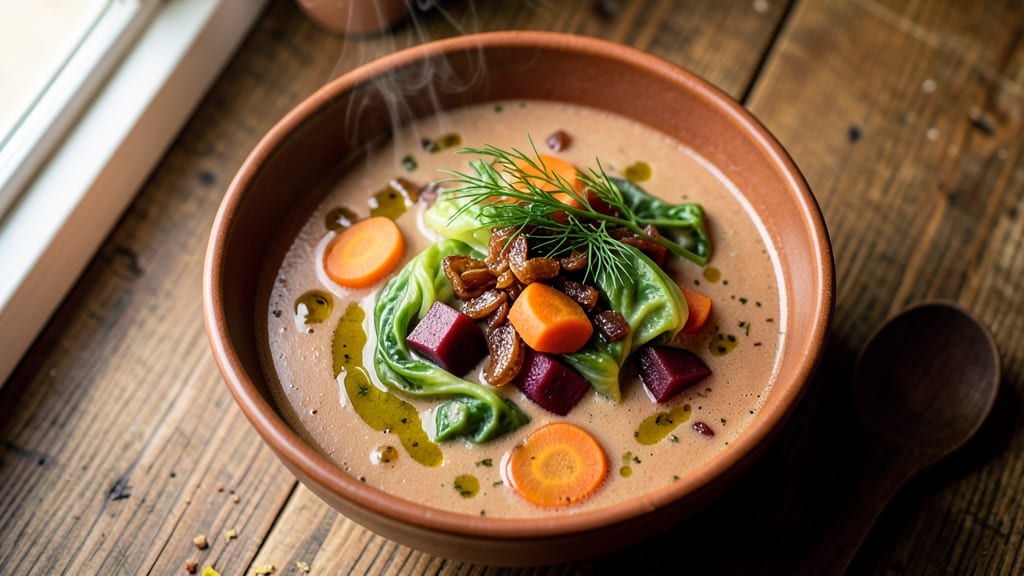
This beet, cabbage, and carrot soup recipe transforms humble root vegetables into a velvety masterpiece that’s rich in earthy sweetness and effortlessly vegan. The secret lies in slow-simmered flavors—caramelized onions, tender cabbage, and beets that melt into the broth for a naturally sweet, comforting depth.
Whether you’re using a stovetop, Instant Pot, or pressure cooker, this method ensures a perfectly balanced soup with no added sugars.
The foundation starts with sautéing onions and garlic until golden, then adding chopped cabbage, carrots, and beets to develop their natural sweetness before simmering in vegetable broth. For a silky texture, blend half the soup while leaving the other half rustic—this creates a luxurious contrast without sacrificing heartiness.
The result is a soup that’s deeply satisfying, packed with vitamins, and adaptable to any season.
What makes this recipe truly perfect is its versatility. Serve it as-is for a clean, vibrant bowl or top with toasted breadcrumbs, fresh herbs, or a drizzle of olive oil for added texture.
The flavors deepen over time, making it ideal for meal prep—simmer ahead and reheat to let the aromas meld even more. Every spoonful delivers that perfect balance of sweet, savory, and earthy notes.
This soup is a celebration of seasonal vegetables, proving that simple ingredients can create something extraordinary with the right technique. Ready in about 45 minutes (or just 20 minutes in a pressure cooker), it’s the kind of dish that feels both comforting and refined.
Let’s get cooking—your taste buds will thank you.
Ingredients for beet cabbage carrot soup
Earthy roots and aromatic herbs create this velvety beet, cabbage, and carrot masterpiece without added sugars.
| Ingredient | Amount | Notes |
|---|---|---|
| Yellow Onions 🧅 | 1 ½ lb | Chopped into small dice |
| Garlic Cloves 🧄 | 4 cloves | Peeled and minced |
| Green Cabbage 🥬 | ½ head | Core removed, chopped |
| Carrots 🥕 | 1 ½ lb | Medium, peeled and chopped |
| Beets 🍠 | 1 ½ lb | Peeled and chopped |
| Vegetable Broth 💧 | 4 cups | Low-sodium preferred |
| Extra-Virgin Olive Oil 🫒 | ¼ cup | For sautéing onions |
| Fresh Thyme Leaves 🌿 | 1 tbsp | Or 1 tsp dried thyme |
| Salt 🧂 | 1 ½ tsp | Diamond Crystal preferred |
| Black Pepper 🌶️ | ½ tsp | Freshly ground preferred |
| Apple Cider Vinegar 🍎 | 1 tbsp | For brightness |
| Fresh Parsley 🌿 | ¼ cup | Chopped, for garnish |
| Whole-Grain Bread 🍞 | ½ cup | Toasted, for topping |
The beets and carrots are the heart of this soup—look for vibrant, firm roots at the grocery store, especially in the fall when they're at their peak. Whole Foods or local farmers' markets often carry the best quality, but standard grocery stores work fine if you choose fresh, unblemished produce. For the cabbage, green varieties like Savoy or regular green cabbage both work, though Savoy has a slightly more delicate texture. Peeled and chopped uniformly, these vegetables release their natural sweetness as they simmer, creating that signature earthy depth without needing sugar. The vegetable broth should be low-sodium to control the seasoning—homemade or high-quality store-bought brands like Pacific Foods or Imagine ensure a clean, flavorful base.
No fresh thyme? Dried thyme works at one-third the amount, though fresh adds a brighter aroma. Running short on beets? Sweet potatoes or butternut squash can substitute at the same weight—just adjust cooking time slightly. For a smokier profile, add 1/2 tsp smoked paprika to the broth. The apple cider vinegar might seem unusual, but it brightens the soup beautifully—if you prefer a different acidity, lemon juice works in a pinch. The bread topping can be any whole-grain or sourdough you have on hand; toast it until crisp for the best texture. For a nutty finish, sprinkle with toasted walnuts or pecans instead.
This soup tastes even better the next day as flavors meld—store in airtight containers for up to 5 days in the fridge. For freezing, portion into single-serving containers and thaw overnight in the fridge. The texture holds well after reheating, though the beets may soften slightly. Garnish with fresh parsley just before serving to maintain vibrant color. For meal prep, simmer ahead and reheat gently—never boil, as that can make the vegetables mushy. The soup also freezes beautifully for up to 3 months, making it an ideal make-ahead dish for busy weeks.
Why You'll Love This Recipe
- No Chopping Chaos: I swear by this one because you can literally dump pre-shredded cabbage straight from the bag—no knife skills required. The onions and carrots take five minutes to dice, and the beets? Roast them ahead if you’re feeling fancy, or just toss raw cubes in for a quicker (if slightly less sweet) shortcut.
- Earthy Umami Bomb: That deep, caramelized onion base with garlic? It’s the soul of this soup. The beets add a natural sweetness that balances the cabbage’s bite, while the carrots bring this subtle crunch—like a hug in a bowl. Honestly, I’ve had people ask if I used bouillon, but it’s just those five ingredients doing their magic.
- Lunchbox Legend: Between us, this soup is my go-to for meal prep because it reheats like a dream. Pack it in jars for work or school—no soggy greens here, the cabbage stays crisp enough to bite into. And if you’re hosting? Double the batch and serve it warm with crusty bread. Guaranteed crowd-pleaser.
- Pantry Goldmine: I make this when my fridge is bare because it uses ingredients that last forever—onions, carrots, and beets keep for weeks, and cabbage? You can buy a whole head for the price of a sad salad kit. Plus, leftovers taste just as good the next day (if they last that long). My secret weapon for lazy Sundays.
Step-by-step instructions for beet, cabbage, and carrot soup
Transform humble root vegetables into a velvety, earthy masterpiece with this precise technique.
Develop the Flavor Base with Onions and Garlic
Heat the 0.25 cup extra-virgin olive oil in a large Dutch oven over medium heat until shimmering. Add the 1.5 lb chopped yellow onions and cook for 8-10 minutes until soft and translucent, stirring occasionally to prevent browning. The onions should release their natural sweetness and create a fragrant foundation.
Reduce heat to medium-low and add the 4 cloves minced garlic. Cook for 30 seconds until fragrant—don't let it brown or it will become bitter. Here's the thing—this aromatic base carries the entire soup's flavor profile, so take your time and develop it properly. The onions should be completely tender with no crisp edges remaining.
Build Depth with Vegetables and Broth
Increase heat to medium-high and add the 1.5 lb chopped carrots, 1.5 lb chopped beets, and 0.5 head chopped green cabbage. Stir well to coat with the onion mixture, then pour in the 4 cups vegetable broth. Bring to a gentle boil, then immediately reduce heat to low-medium to maintain a simmer.
Cover the pot and let the vegetables cook for 25-30 minutes until fork-tender. You'll know they're ready when the carrots and beets can be pierced easily with a fork and the cabbage leaves collapse when pressed. The soup should be developing a rich, earthy aroma—this is where the magic happens. Stir occasionally to prevent sticking, adding ¼ cup water if the mixture becomes too dry.
Season and Refine the Texture
Once the vegetables are tender, remove the pot from heat and stir in the 1 tbsp fresh thyme leaves, 1.5 tsp salt, 0.5 tsp black pepper, and 1 tbsp apple cider vinegar. The vinegar adds a subtle tang that brightens the earthy flavors. Let the soup sit off heat for 5 minutes to allow the seasonings to meld completely.
Using an immersion blender, carefully purée the soup until completely smooth. For best results, work in batches if needed, ensuring no chunks remain. If the soup is too thick after blending, thin it with ¼ cup water or additional broth until it reaches a velvety consistency that coats the back of a spoon. Taste and adjust seasoning—this is where you fine-tune the balance between sweetness and acidity.
Finish and Serve with Crispy Topping
Return the soup to medium-low heat and let it simmer for 5-7 minutes to allow flavors to fully develop. Meanwhile, toast the 0.5 cup whole-grain bread in a dry skillet over medium heat for 2-3 minutes until golden and crispy. Cut into small cubes or leave as rustic chunks.
Ladle the soup into bowls and top immediately with the toasted bread cubes and 0.25 cup chopped fresh parsley. The contrast between the velvety soup and crispy bread creates the perfect textural experience. Serve warm with a sprinkle of additional black pepper for that final aromatic touch. Each spoonful should deliver a harmonious blend of sweet beets, earthy cabbage, and carrot sweetness with just the right amount of brightness.
Pro Tips For Making Beet Cabbage Carrot Soup
- Sweat, Don’t Burn Onions: I learned this the hard way—when you start with yellow onions, take your time. A steady medium heat and a splash of water (yes, really) keeps them soft and sweet without turning bitter. Rushed onions mean rushed flavor, and nobody wants that in soup.
- Chop Cabbage Small: The cabbage’s job isn’t just to sit there looking pretty. Cut it into ½-inch pieces so it softens properly alongside the carrots and beets. Big chunks? You’ll end up with a soup that’s more salad than comfort food.
- Peel Beets After Cooking: Peeling raw beets is a mess, and I’ve ruined more gloves than I’d like to admit. Toss them in whole (scrubbed clean) and peel them right after cooking—skin slides off like butter. Bonus: You’ll save time and avoid the beet-stained fingers.
- Simmer Low and Slow: This soup isn’t a race. After everything’s in the pot, keep the heat at a gentle simmer (think tiny bubbles, not rolling). Rushing it turns the beets mushy and the cabbage limp—no one wants a watery, sad soup. Patience here makes all the difference.
Flavor customization for these flavors
Sweet & Spicy Kick
Add 1 tsp smoked paprika and ½ tsp cayenne pepper when sautéing onions for a smoky depth and subtle heat. For extra spice, stir in 1 tbsp hot honey or 1 tsp sriracha at the end.
Balance the heat with an additional ½ tsp apple cider vinegar if needed. This variation works beautifully with the earthy beets and cabbage. 🌶️
Creamy & Tangy Twist
Blend in ½ cup coconut milk or ¼ cup cashew cream for a velvety texture, then finish with 1 tbsp lemon juice and a pinch of turmeric for warmth.
The acidity brightens the soup while the creaminess adds richness. Garnish with toasted pumpkin seeds for crunch. This version feels indulgent but remains vegan.
Herb-Infused Brightness
Swap thyme for 1 tbsp fresh dill and 1 tbsp fresh parsley during simmering, then add 1 tbsp white wine vinegar at the end. The herbs add a fresh, almost Mediterranean flair, while the vinegar keeps the soup zesty.
Top with extra herbs and a drizzle of extra-virgin olive oil for a restaurant-worthy finish. ✨
Nutty & Toasted Crunch
Toast ¼ cup walnuts or pecans in a dry skillet until fragrant, then pulse into the soup for a nutty depth. Add ½ tsp cinnamon while simmering for warmth.
The nuts add protein and texture, while cinnamon enhances the natural sweetness of the beets. Serve with extra toasted nuts sprinkled on top for crunch.
Smoky & Charred Depth
Char the cabbage and carrots directly over a gas flame or under a broiler for 2-3 minutes per side** before adding to the pot. This adds a smoky, almost grilled flavor that pairs perfectly with the earthy beets.
Finish with a sprinkle of smoked salt for an extra layer of complexity. The charred notes elevate the soup to a whole new level. 🔥
Citrus & Zesty Finish
Zest 1 orange or lemon into the soup while simmering, then add 1 tbsp orange juice at the end. The citrus brightens the earthy flavors and cuts through the richness.
Garnish with extra zest and a few thin orange slices for a refreshing, vibrant touch. This variation is perfect for spring or summer when citrus is at its peak. 🍊
Nutrition facts
Frequently asked questions
Can I make this soup without blending for a chunkier texture?
Skip the blending step and simply mash some of the cooked vegetables with a potato masher for a rustic texture. The cabbage will naturally break down into tender pieces while the carrots and beets stay intact. This version keeps the hearty, vegetable-forward appeal while reducing prep time.
How do I prevent the beets from bleeding into the broth?
Peel and chop the beets quickly after washing, then immediately submerge them in cold water for 10 minutes before adding to the pot. This minimizes color bleeding. For extra control, wrap chopped beets in cheesecloth while simmering, then remove before blending. The result will be a beautifully layered soup with vibrant color.
What's the best way to reheat leftovers without making them mushy?
Gently reheat on the stovetop over low heat with a splash of water or broth until warmed through. Never microwave directly from the fridge, as this can create a watery texture. For best results, reheat only what you'll serve immediately and add fresh parsley or herbs at the end to maintain brightness.
Can I substitute canned beets for fresh?
Yes, but drain and rinse canned beets thoroughly to remove excess liquid and syrup. Use 1 (15 oz) can instead of fresh beets, and add them with the cabbage and carrots. The texture will be slightly softer, but the sweetness remains. For extra depth, add ½ tsp cinnamon while simmering to complement the canned beets' natural sweetness.
Why does my soup taste bland after blending?
Blending can dilute flavors, so taste before puréeing and adjust seasonings first. Add ½ tsp smoked paprika or 1 tbsp apple cider vinegar to the pot before blending for extra depth. If needed, finish with a pinch of salt or black pepper after blending. The key is balancing sweetness (beets), earthiness (cabbage), and acidity (vinegar) from the start.