
Soups & Stews
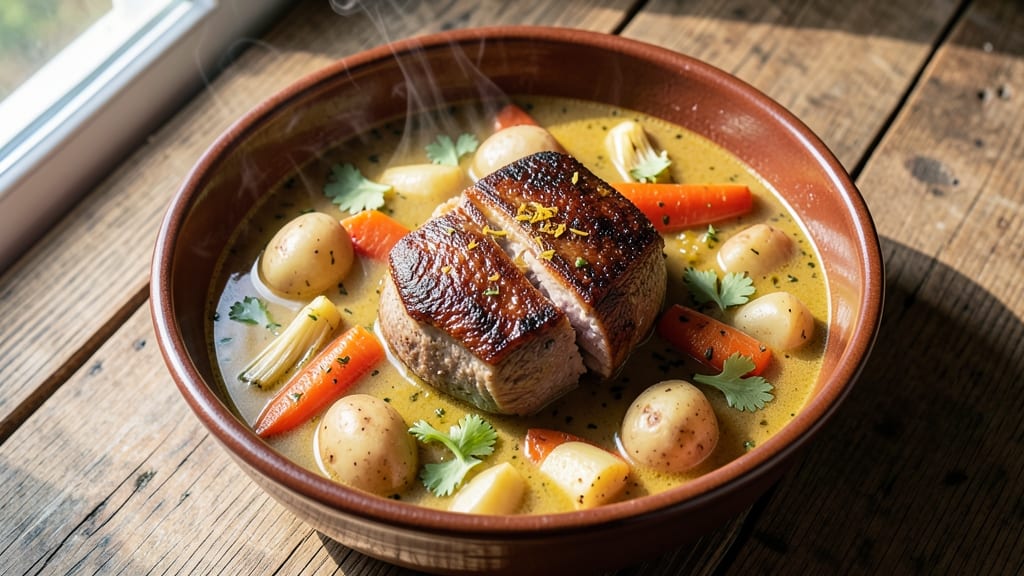
This Bergen soup recipe brings hearty Norwegian comfort to your table, where tender meat, root vegetables, and celery crowns simmer into a deeply satisfying stew.
Traditionally served during winter, this dish transforms humble ingredients into a meal that warms both body and soul—especially when paired with crusty bread or flatbrød. The secret lies in slow simmering, which develops rich flavors while keeping the potatoes perfectly tender and the broth deeply aromatic.
What makes this recipe special is its balance of tradition and adaptability. While the classic version uses lamb or beef, modern variations include hearty vegetables or even mushrooms for a vegetarian twist. The celery crowns add a delicate crunch, while root vegetables like carrots and parsnips lend natural sweetness.
The key technique? A long, gentle simmer that lets flavors meld without overcooking the meat or vegetables.
By the time you serve this soup, your kitchen will smell like a cozy Norwegian fjord, and every spoonful will deliver layers of savory, slightly sweet, and umami-rich goodness. The broth is thick enough to coat a spoon but light enough to let the ingredients shine.
This is the kind of meal that turns a simple dinner into a memorable experience—perfect for cold evenings or when you crave a dish that feels like a hug.
Serve with traditional Norwegian flatbrød or crusty dark rye bread to soak up every last drop of that flavorful broth. For extra authenticity, garnish with fresh parsley or a sprinkle of dried fruit like raisins or cranberries. Let's get cooking!
Ingredients for bergen soup
Six hearty ingredients transform into Norway's coziest winter stew, perfect for cold evenings.
| Ingredient | Amount | Notes |
|---|---|---|
| Lamb Shoulder 🐑 | 2 lb | Bone-in for flavor, cut into chunks |
| Yellow Onion 🧅 | 1 whole | Medium size, roughly chopped |
| Carrots 🥕 | 4 medium | Whole, peeled, cut into chunks |
| Parsnips 🥕 | 3 medium | Peeled, cut into chunks |
| Russet Potatoes 🥔 | 4 medium | Peeled, cut into chunks |
| Celery Crowns 🧅 | 3 whole | Trimmed, cut into pieces |
| Fresh Parsley 🌿 | ¼ cup | Chopped for garnish |
| Fresh Thyme 🌿 | 2 sprigs | Or 1 tsp dried thyme |
| Fresh Bay Leaves 🌿 | 2 whole | Remove before serving |
| Garlic Cloves 🧄 | 4 cloves | Peeled, smashed |
| Dried Raisins 🍇 | ¼ cup | Optional for sweetness |
| Vegetable Broth 💧 | 6 cups | Homemade or quality store-bought |
| Olive Oil 🫒 | ¼ cup | For searing meat |
| Salt 🧂 | 1 ½ tsp | Kosher or sea salt |
| Black Peppercorns 🌶️ | ½ tsp | Freshly ground |
The lamb shoulder is the soul of this soup—bone-in cuts deliver the richest flavor. Look for well-marbled pieces at Whole Foods or your local butcher. If lamb isn't available, beef chuck works beautifully too. The celery crowns are non-negotiable; they add that signature Norwegian crunch. Trim them carefully to preserve their delicate structure. For the vegetables, organic carrots and parsnips hold up best during the long simmer. If using pre-cut vegetables, rinse them thoroughly to remove any excess starch that could make the broth cloudy.
No lamb? Mushrooms or extra potatoes keep this vegetarian-friendly. Fresh thyme is ideal, but dried works at one-third the amount. The dried raisins add subtle sweetness—skip them if you prefer a savory-only version. For the broth, homemade is best, but quality store-bought like Pacific Foods or Imagine work in a pinch. The bay leaves should be removed before serving, but don't skip them—they're essential for that authentic Norwegian depth. If you're short on time, pre-chop all vegetables while the lamb browns to save steps later.
This soup tastes even better the next day as flavors meld. Store in an airtight container in the fridge for up to 5 days, or freeze for 3 months. For serving, reheat gently on the stove with a splash of broth to maintain texture. The celery crowns will soften slightly but still provide that lovely crunch. Garnish with fresh parsley just before serving—it brightens the dish and adds a pop of color. Leftovers make fantastic lunches; portion into containers with a side of flatbrød for easy grab-and-go meals.
Why You'll Love This Recipe
- One-Pot Wonder: I swear by this recipe because it’s all in one pot—no chopping chaos, no extra pans. Just brown the lamb shoulder, toss in the onions, carrots, parsnips, and potatoes, cover with broth, and let it simmer. Honestly, the only prep is dicing the veggies, and even that’s forgiving if you keep them roughly the same size.
- Rich, Deep Satisfaction: That lamb shoulder? It’s the star—fall-apart tender with a flavor so robust it sticks with you. The carrots and parsnips sweeten just enough to balance the savory, while the potatoes soak up all the goodness. Between us, I’ve had fancier soups that didn’t hit this hard.
- Leftovers That Don’t Let You Down: This soup only gets better the next day. The flavors meld into something even richer, and it reheats like a dream. I’ll be real: I make a big batch on Sundays, and by Wednesday, it’s still my go-to. Freeze it too—just thaw and warm, no fuss.
- Budget-Friendly Feast: Lamb shoulder is cheaper than you think, especially when you stretch it with hearty veggies. A single cut feeds four, and the potatoes and parsnips bulk it up without breaking the bank. Plus, it’s the kind of meal that makes you feel like you’re treating yourself—without the restaurant price tag.
Step-by-step instructions for Norwegian potato and celery crown comfort
This hearty Bergen soup delivers deep flavor and satisfying texture through careful layering and slow cooking.
Sear the Lamb Shoulder for Rich Flavor
Pat the 2 lb lamb shoulder dry with paper towels to remove any moisture. Heat the 0.25 cup olive oil in a large Dutch oven over medium-high heat until shimmering. Add the lamb in a single layer and sear for 8-10 minutes per side until deeply browned and crispy in spots.
This step creates the foundation of flavor—don't rush it. The browned crust releases into the pot as we cook, infusing the broth with caramelized richness. Once seared, remove the lamb and set it aside on a plate.
Build the Vegetable Base
In the same Dutch oven, add the 1 whole yellow onion, 4 medium carrots, 3 medium parsnips, 4 medium russet potatoes, and 3 whole celery crowns, all cut into 1-inch chunks. Cook for 5 minutes, stirring occasionally, until the vegetables begin to soften slightly.
Add the 4 cloves garlic (smashed), 2 sprigs fresh thyme, 2 whole fresh bay leaves, and 0.25 cup dried raisins. Stir to combine, then pour in the 6 cups vegetable broth. Bring to a gentle simmer, then return the seared lamb to the pot, along with 1.5 tsp salt and 0.5 tsp black peppercorns. The broth should just cover the ingredients—if not, add a splash of water.
Slow Cook Until Tender
Cover the Dutch oven and transfer to a preheated 325°F oven. Cook for 2-2.5 hours until the lamb is fork-tender and the vegetables are completely soft. The lamb should pull apart easily when tested with a fork.
Here's the thing—patience is key. The low temperature ensures the lamb stays moist and the vegetables absorb all the rich flavors. Check the broth level occasionally and add water if it reduces too much. The soup should be thick but not dry.
Finish and Garnish
Once the lamb is tender, carefully remove it from the pot and shred it into bite-sized pieces using two forks. Return the shredded lamb to the pot and stir to combine. Taste and adjust seasoning with additional salt or pepper if needed.
Remove the 2 whole fresh bay leaves before serving. Ladle the soup into bowls and garnish each serving with 0.25 cup chopped fresh parsley. The bright green parsley adds a fresh contrast to the rich, hearty flavors of the lamb and vegetables.
Serve with Warm Bread
This Bergen soup is best served immediately while still steaming hot. The combination of tender lamb, sweet raisins, and earthy vegetables creates a comforting dish perfect for chilly days. Serve with crusty bread to soak up every last bit of the flavorful broth.
Real talk: The raisins might seem unusual, but they add a subtle sweetness that balances the savory lamb perfectly. If you prefer a sweeter touch, you can increase the raisins to 0.5 cup, but stick to the original amount for a more traditional flavor profile.
Pro Tips For Making Bergen Soup
- Sear the Lamb Hard: The rich, caramelized crust on the lamb shoulder is what makes this soup sing—don’t skimp on the time. Get your pan screaming hot (medium-high to high) and let those fat caps render and brown for at least 10 minutes, flipping just once. I used to rush this, and the soup always tasted flat until I learned patience pays off here.
- Cut Potatoes Evenly: Unevenly chopped potatoes mean some will turn to mush while others stay rock-hard. Aim for 1.5-inch cubes—big enough to hold shape but small enough to cook through. My grandmother swore by this, and she was right: consistent size guarantees every bite is creamy without gummy bits.
- Don’t Rush the Simmer: Low and slow is the name of the game. After browning the lamb and softening the veggies, reduce heat to a gentle simmer (small bubbles, occasional skimming of foam). I learned this the hard way—boiling it too hard turns the broth cloudy and makes the lamb tough. Cover and let it bubble quietly for at least 2.5 hours.
- Brown the Onions First: Sauté the onions until they’re deep golden, almost caramelized, before adding the rest of the veggies. This adds a sweet, deep flavor that cuts through the richness of the lamb. Skip this, and your soup will taste bland—trust me, I’ve made that mistake. Use about 2 tablespoons of fat (from the lamb or butter) and don’t crowd the pan.
Dietary considerations for this dish
Vegetarian Adaptation
Swap the lamb for 1.5 lbs portobello mushrooms or 2 cups dried chickpeas (soaked overnight) to create a hearty vegetarian version. For extra protein, add 1 cup lentils or 1 block firm tofu, pressed and cubed.
The mushrooms should be sliced thickly to mimic meat texture, while chickpeas add a satisfying bite. 🌱
Gluten-Free Considerations
This recipe is naturally gluten-free, but always double-check your vegetable broth label—some brands contain hidden wheat. Use certified gluten-free broth like Pacific Foods GF Vegetable Broth for safety. The traditional ingredients (potatoes, carrots, celery) are all gluten-free, so no substitutions are needed beyond the broth.
Dairy-Free Options
No dairy is used in the classic recipe, making it naturally dairy-free. If you're avoiding animal fats, ensure your olive oil is 100% pure and free from additives. For extra richness, stir in 2 tbsp nutritional yeast when serving—it adds a cheesy, umami flavor without dairy. 🥄
Low-Carb Modifications
Reduce the 4 russet potatoes to just 2 cups diced cauliflower for a lower-carb version. Add 1 cup diced butternut squash for natural sweetness. The celery crowns and carrots can stay as-is, but limit the parsnips to 1 medium for fewer carbs.
This keeps the soup hearty while cutting net carbs by about 30g per serving.
Allergen-Friendly Swaps
For nut allergies, skip the optional raisins or use dried cranberries instead. If you're sensitive to sulfur compounds, use low-sulfite vegetable broth like Imagine Foods Low-Sodium Vegetable Broth.
For a soy-free version, avoid any soy-based thickeners—this recipe relies on natural vegetable thickening during simmering. Always check dried fruit labels for cross-contamination warnings.
Keto-Friendly Version
Transform this into a keto-friendly soup by eliminating all potatoes and reducing carrots to 2 medium. Replace them with 2 cups diced zucchini and 1 cup cauliflower florets. Use 2 tbsp heavy cream or ½ cup coconut milk at the end for richness.
The lamb remains the star, but you can also use ground pork for a lower-fat option. This version keeps net carbs under 8g per serving.
Nutrition facts
Frequently asked questions
What makes Bergen soup different from other Norwegian soups?
Bergen soup stands out with its distinctive use of celery crowns and a rich, hearty broth that balances earthy vegetables with tender meat. Unlike other Norwegian soups like fårikål (mutton stew) or raspeball (potato dumplings), this dish features a unique combination of lamb, root vegetables, and dried fruit that creates a satisfyingly sweet-savory flavor profile. The slow simmering technique is also key—it develops deep umami notes that set it apart from quicker-cooked soups.
Can I make Bergen soup without lamb?
For a vegetarian version, replace the lamb with 1.5 lbs portobello mushrooms or 2 cups dried chickpeas (soaked overnight). For a meat alternative, try beef chuck or even smoked sausage—just adjust cooking times accordingly. The key is maintaining the soup's hearty texture, so choose ingredients that can hold up during the long simmer.
Why does the recipe call for celery crowns instead of regular celery?
Celery crowns (the leafy tops of celery stalks) add a delicate, slightly sweet crunch that's essential to Bergen soup's texture and flavor. While regular celery works in a pinch, crowns provide a more complex taste and visual appeal. If you can't find them, use extra-leaf celery or a mix of celery leaves and stalks. The crowns also help thicken the broth naturally as they cook, creating that perfect spoonable consistency.
How do I know when the lamb is fully cooked?
The lamb should be fork-tender and easily shreddable after 2-2.5 hours of slow cooking. Test by piercing the largest piece with a fork—if it slides in effortlessly and the juices run clear (not pink), it's done. For extra safety, use a meat thermometer: the internal temperature should reach 145°F for lamb. Remember, the lamb will continue cooking slightly while resting, so aim for 140°F if you're testing early.
Can I make Bergen soup in a slow cooker?
Yes! Transfer the seared lamb and all ingredients to a 6-quart slow cooker and cook on low for 7-8 hours or high for 4-5 hours. The slow cooker's gentle heat mimics the oven's low-and-slow method perfectly. Just check the broth level occasionally and add water if needed. The celery crowns will soften more than in the oven version, but they'll still contribute to the soup's texture and flavor.