
Soups & Stews
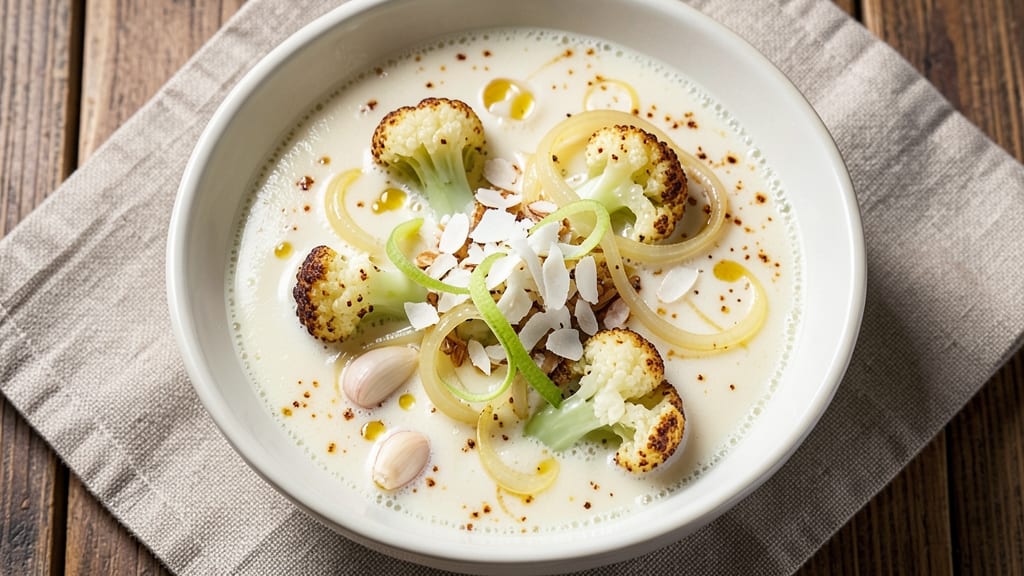
This best cauliflower soup recipe with coconut milk transforms humble ingredients into a velvety, tropical-inspired dish that feels like a vacation in a bowl. 🌴 The secret lies in balancing creamy coconut milk with aromatic spices—ginger, garlic, and curry—to create depth without overpowering the natural sweetness of cauliflower.
Simmering at a gentle 180–190°F ensures the soup develops rich, layered flavors while keeping it light enough for any meal. What sets this recipe apart is its foolproof simplicity: no straining required, just blending until smooth for a texture that’s both elegant and comforting.
The coconut milk adds a luscious creaminess that pairs perfectly with the earthy cauliflower, while a touch of lime brightens every spoonful. It’s the kind of soup that feels indulgent yet remains balanced—ideal for cozy nights or sharing with guests.
By the time you’re done, you’ll have a restaurant-quality bowl of soup that’s ready in 30 minutes, complete with optional garnishes like toasted coconut flakes or fresh cilantro for extra flair.
The aroma alone will have everyone gathered around the table, and the first sip delivers on that tropical promise—creamy, aromatic, and impossibly satisfying. Serve with crusty bread for dipping or alongside a simple side salad to round out the meal.
This recipe proves that comfort food doesn’t have to be heavy—just delicious. Let’s get cooking!
Ingredients for best cauliflower soup recipe with coconut milk
Creamy coconut milk meets aromatic cauliflower in this tropical-inspired soup, blending restaurant-quality depth with simple pantry staples.
| Ingredient | Amount | Notes |
|---|---|---|
| Fresh Cauliflower 🥬 | 1 ½ lb | Cut into florets, stems included |
| Full-Fat Coconut Milk 🥥 | 1 can | 13.5 oz can, unsweetened |
| Yellow Onion 🧅 | 1 whole | Diced, about 1 cup |
| Fresh Garlic 🧄 | 4 cloves | Minced, peeled |
| Fresh Ginger 🌿 | 1 tbsp | Grated, finely |
| Curry Powder 🌶️ | 1 tbsp | Mild or medium blend |
| Ground Turmeric 🌿 | ½ tsp | Freshly ground preferred |
| Vegetable Broth 💧 | 4 cups | Low-sodium preferred |
| Fresh Lime 🍋 | 1 whole | Juiced, about 2 tbsp |
| Extra-Virgin Olive Oil 🫒 | 2 tbsp | For sautéing aromatics |
| Toasted Coconut Flakes 🥥 | ¼ cup | For garnish, optional |
| Fresh Cilantro 🌿 | ¼ cup | Chopped, for garnish |
| Sea Salt 🧂 | 1 ½ tsp | Diamond Crystal preferred |
| Black Pepper 🌶️ | ½ tsp | Freshly cracked |
The coconut milk is non-negotiable here—full-fat, unsweetened delivers the richest texture without sweetness. Thai Kitchen or Goya brands are reliable for quality, but any 13.5 oz can works. Fresh ginger and garlic are essential for that aromatic foundation; peel the ginger first to avoid any lingering bitterness. The curry powder should be mild or medium—Badia or Spicewalla blends are excellent choices. For the cauliflower, organic is ideal since it often has fewer pesticides, but conventional works too. Look for heads with tight florets and vibrant green stems—those are the freshest.
No fresh ginger? Ground ginger at half the amount works in a pinch, though fresh is superior. Substituting coconut milk? Cashew cream (blended soaked cashews + water) mimics the richness, but the flavor will differ slightly. Out of curry powder? Mix 1/2 tsp each of ground coriander, cumin, and turmeric for a similar profile. The vegetable broth can be homemade or store-bought—Pacific Foods or Imagine are solid low-sodium options. For extra depth, add a 1/2 tsp fish sauce (vegan version), though it's optional. The lime juice should be freshly squeezed—bottled lacks the bright acidity that balances the creaminess.
This soup tastes even better the next day as flavors meld. Store in an airtight container for up to 5 days in the fridge, or freeze for 3 months—portion into single servings for easy reheating. The coconut flakes and cilantro are best added fresh just before serving, but you can toast the coconut ahead and store it in a sealed jar for 2 weeks. For a smoother texture, blend the soup longer, but leave some florets intact if you prefer a rustic touch. Garnishes like chili crisp or lime zest elevate the dish further for a restaurant-worthy presentation.
Why You'll Love This Recipe
- Minimal Chopping Required: I swear by this—just dice one onion, mince three cloves of garlic, and grate a thumb of ginger. That’s it. No small prep work, no stress, just chop-and-go while the soup builds its own magic in the pot.
- Creamy Without the Guilt: Full-fat coconut milk makes this soup dangerously rich—silky, slightly sweet, with that deep umami from the caramelized cauliflower. It’s the kind of comfort that doesn’t leave you sluggish, but honestly? I’ll take it anyway.
- Leftovers That Taste Better: This soup actually improves the next day. The flavors meld, the coconut milk thickens just right, and reheating? Five minutes in a pot or microwave, and it’s like you made it fresh. (Yes, even on a Tuesday night.)
- Budget-Friendly Luxury: Fresh cauliflower and onion stretch for four servings, and coconut milk adds that restaurant-worthy touch without breaking the bank. I’ll be real: it’s my go-to when I want to feel fancy but still feed the family for under $10.
Step-by-step instructions for tropical cauliflower coconut soup
This method delivers restaurant-quality depth with minimal effort—creamy, aromatic, and perfectly balanced.
🍳 Step 1: Sauté Aromatics Until Fragrant
Heat the 2 tablespoons extra-virgin olive oil in a large pot over medium heat. Add the diced yellow onion and cook for 5 minutes until softened and translucent. You'll notice the onions release their natural moisture and begin to caramelize slightly at the edges.
Add the minced garlic and grated ginger, stirring constantly for 30 seconds until the raw garlic aroma disappears. This quick cooking prevents bitterness while building the aromatic foundation. Immediately add the curry powder and ground turmeric, stirring for another 30 seconds to toast the spices and release their oils.
🍳 Step 2: Cook Cauliflower Until Tender
Add the 1.5 lb fresh cauliflower florets (including stems) and stir to coat in the spiced oil. Pour in the 4 cups vegetable broth and bring to a gentle boil. Reduce heat to medium-low and simmer uncovered for 12-15 minutes until the cauliflower is fork-tender with just a slight resistance.
Here's the thing—don't overcook the cauliflower. You want it to break down slightly but still maintain some texture. The stems should be tender when pierced with a fork, and the florets should collapse easily. If you see the broth reducing too quickly, add ½ cup water to maintain the proper consistency.
🥘 Step 3: Blend Until Silky Smooth
Use an immersion blender to purée the soup directly in the pot until completely smooth. I prefer this method because it prevents splattering and makes cleanup easier. If you don't have an immersion blender, carefully transfer the soup in batches to a countertop blender, blending until silky.
After blending, return the soup to the pot and stir in the 1 can full-fat coconut milk. The soup should immediately take on a luxurious creaminess. Bring to a gentle simmer over low heat for 5 minutes to allow the coconut milk to fully incorporate and develop its rich flavor profile.
🍋 Step 4: Finish with Acid and Seasoning
Remove the pot from heat and stir in the juice of 1 whole fresh lime (about 2 tablespoons) and the remaining 1.5 teaspoons sea salt and 0.5 teaspoon black pepper. Taste and adjust seasoning—this is where you fine-tune the balance between the creamy coconut, spicy aromatics, and bright citrus.
I like to add the lime juice gradually, tasting between additions. The acidity brightens the coconut flavor and cuts through the richness, creating that perfect balance that makes this soup truly special. If you prefer a thicker consistency, simmer the soup for an additional 5-10 minutes to reduce slightly.
🍽️ Step 5: Serve with Garnishes
Ladle the soup into bowls and garnish immediately with 0.25 cup chopped fresh cilantro and 0.25 cup toasted coconut flakes. The toasted coconut adds a delightful crunch that contrasts beautifully with the creamy soup, while the cilantro brings freshness to each spoonful.
For an extra touch, I drizzle a small amount of the reserved coconut cream (from the top of the can) over each serving. This adds a luxurious finish that elevates the presentation. Serve with crusty bread or warm naan to soak up every last drop of that tropical, aromatic goodness.
Pro Tips For Making Best Cauliflower Soup Recipe With Coconut Milk
- Sauté Onions Low and Slow: I used to rush this step and end up with bitter onions—don’t. Cook them over medium-low heat for 8-10 minutes until they’re golden and translucent, not browned. The longer you take, the sweeter the flavor becomes, and that’s the base of your soup’s depth.
- Blend in Stages: Cauliflower releases water like crazy when cooked. Start by blending half the soup first, then add the rest—this keeps the texture smooth without turning it into a watery mess. If it’s too thick, add a splash of coconut milk; if too thin, simmer uncovered for 5 minutes.
- Use Two Garlic Cloves: One clove? You’re missing half the flavor. Mince two fresh cloves and toast them with the ginger until fragrant—about 30 seconds over medium heat. The aroma compounds develop fully this way, and it’s the difference between "meh" and "wow."
- Strain the Coconut Milk: Store-bought coconut milk often has sediment that makes your soup look cloudy. Pour it through a fine-mesh sieve into a bowl before adding it to the pot. Takes 30 seconds but guarantees a velvety finish—no one wants to taste grit in their soup.
Troubleshooting this dish
Lumpy Texture Fix
If your soup turns out lumpy after blending, it’s likely because the cauliflower didn’t break down enough before blending. Simmer the cauliflower for an extra 5 minutes before blending—this ensures a smoother texture.
For stubborn lumps, strain the soup through a fine-mesh sieve or use an immersion blender again for 30-60 seconds while holding it at an angle to catch any remaining chunks. 🥄
Too Thin or Watery
A watery soup usually means the cauliflower didn’t release enough starch or the broth wasn’t reduced properly. Simmer the soup uncovered for 10-15 minutes after adding coconut milk to thicken it naturally.
If it’s still too thin, stir in 1-2 tablespoons of cornstarch mixed with water and simmer for 2-3 minutes until it reaches your desired consistency.
Overpowering Coconut Flavor
If the coconut taste dominates, you may have used too much or added it too early. Balance it by increasing the lime juice (add 1 extra tablespoon) or stirring in ½ teaspoon of black pepper to cut through the richness.
For a subtler coconut flavor, use light coconut milk instead of full-fat, though the texture will be slightly lighter. 🌿
Blender Splatter Chaos
Blending hot soup in a countertop blender is risky—steam can cause splatter and even burns. Cool the soup slightly (to about 150°F) before blending, or use an immersion blender directly in the pot for foolproof results.
If you must use a countertop blender, fill it only halfway and blend in batches, covering the opening with a towel to reduce splatter.
Ginger or Garlic Bitterness
Overcooked ginger or garlic can turn bitter, ruining the soup’s delicate balance. Cook the aromatics for no more than 1 minute after adding them to the pot. For extra insurance, peel the ginger thoroughly and use only the freshest garlic cloves.
If bitterness sneaks in, stir in ½ teaspoon of honey or maple syrup to counteract it.
Curry Powder Too Strong
If the curry flavor overpowers the dish, you likely used too much or a blend that’s too spicy. Start with ½ teaspoon of mild curry powder next time, or replace it with ½ teaspoon each of ground coriander and turmeric for a milder profile.
A splash of lime juice (1 extra tablespoon) also helps brighten and balance the flavors. 🍋
Nutrition facts
Frequently asked questions
Can I make this soup without coconut milk?
The coconut milk is what gives this dish its signature tropical creaminess, but you can substitute it with cashew cream (blended soaked cashews + water) or half-and-half (for non-vegan versions). For a lighter texture, use 1 cup coconut milk + 1 cup vegetable broth. The flavor will shift slightly, but it’ll still be delicious!
How do I make this soup spicier?
For extra heat, add ½ teaspoon of red pepper flakes when sautéing the aromatics or stir in 1 teaspoon of sriracha or chili garlic sauce at the end. If you love bold flavors, try ½ teaspoon of cayenne pepper with the curry powder. Always taste as you go—spice builds up!
Can I prep this soup ahead of time?
This soup tastes even better the next day as flavors meld. Store in an airtight container in the fridge for up to 5 days or freeze for 3 months. Reheat gently on the stove over low heat, stirring occasionally. The texture may thicken slightly—just add a splash of broth or water if needed.
What’s the best way to serve this soup?
This creamy soup pairs perfectly with crusty bread, warm naan, or grilled cheese sandwiches for dipping. For a complete meal, serve with a simple side salad (mixed greens + lime dressing) or steamed jasmine rice. The bright acidity of the lime also makes it a great match for grilled shrimp or tofu on the side.
Why does my soup taste bland?
Blandness usually means the spices or salt weren’t balanced. First, check your seasoning—add ½ teaspoon more salt or 1 extra tablespoon of lime juice to brighten flavors. If the spices seem weak, try toasting ½ teaspoon of ground cumin or coriander in the pot before adding broth. Fresh herbs like cilantro or basil can also add depth!