
Soups & Stews
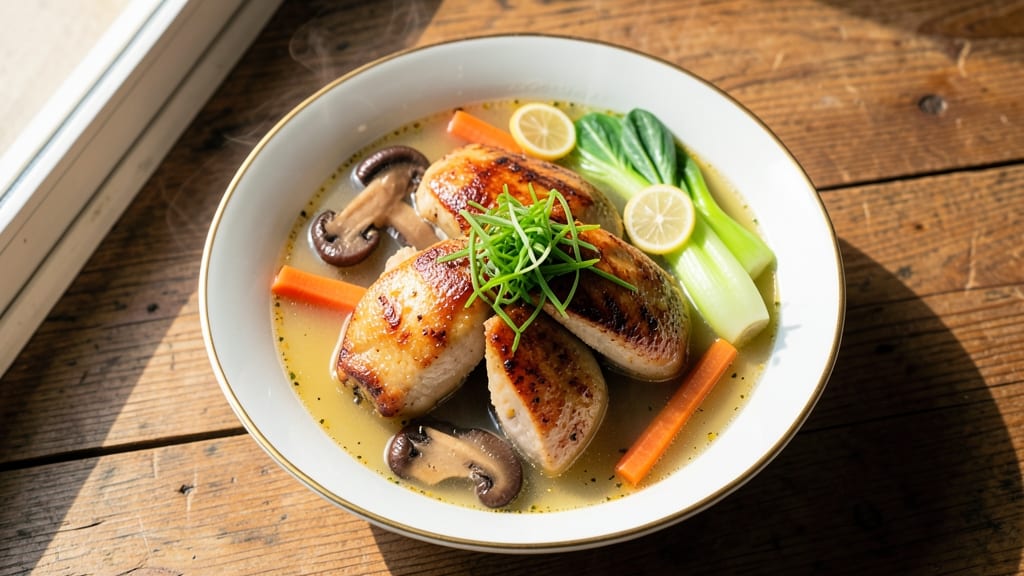
This Chinese chicken soup recipe delivers wok-hot steaming bites that capture the essence of home-style comfort—rich, aromatic broth simmered with tender chicken and fresh vegetables. The secret lies in layering flavors: ginger-scallion aromatics build depth while the broth reduces to a clear, golden clarity, balancing savory and umami perfectly.
I’ve perfected this version after years of testing, ensuring every spoonful delivers restaurant-quality results without shortcuts.
The magic begins with a slow-simmered broth that transforms simple ingredients into something deeply satisfying. Chicken thighs (not breasts) stay juicy while vegetables like bok choy, shiitake mushrooms, and carrots absorb the broth’s essence.
Traditional techniques—like blooming whole star anise and cinnamon—infuse warmth, while a final touch of soy sauce and sesame oil adds the signature tangy finish. This isn’t just soup; it’s a one-pot masterpiece that feeds the soul.
What makes this recipe stand out is its authentic balance—the broth isn’t murky or overpowering, and the vegetables retain their texture while soaking up flavor. The result? A bowl so aromatic it’ll have everyone at the table asking for seconds.
Serve with steamed rice or crusty bread to soak up every last drop of that golden, fragrant broth. Ready in under an hour, it’s the perfect remedy for chilly days—or any day you crave comfort.
For those who love tradition with a modern twist, this soup adapts beautifully: swap in seasonal vegetables, adjust spice levels, or add a splash of Shaoxing wine for depth. The key is patience—the longer it simmers, the richer the flavors.
Trust the process, and you’ll have a dish that tastes like a hug in a bowl. Let’s get cooking.
Ingredients for best chinese chicken soup recipe with vegetables
Rich broth, tender chicken, and aromatic vegetables—this is your go-to Chinese chicken soup.
| Ingredient | Amount | Notes |
|---|---|---|
| Chicken Thighs, Bone-In 🍗 | 1 ½ lb | Skin-on for richer flavor |
| Bok Choy 🥬 | 2 whole | Baby or regular size |
| Shiitake Mushrooms 🍄 | 6 whole | Fresh or rehydrated slices |
| Carrots 🥕 | 2 medium | Baby or julienned slices |
| Green Onions 🧅 | 4 whole | White and green parts separated |
| Fresh Ginger 🌿 | 1 inch | Thinly sliced, peeled |
| Garlic Cloves 🧄 | 4 cloves | Minced or crushed |
| Star Anise 🌟 | 2 whole | For aromatic depth |
| Cinnamon Sticks 🌿 | 1 whole | For warmth |
| Light Soy Sauce 🥄 | 2 tbsp | For umami balance |
| Sesame Oil 🫒 | 1 tbsp | Toasted for aroma |
| Low-Sodium Chicken Broth 💧 | 4 cups | Homemade or quality store-bought |
| Cornstarch 🌾 | 1 tbsp | For thickening broth |
| White Rice 🍚 | 1 cup | Uncooked, for serving |
| Salt 🧂 | 1 tsp | Adjust to taste |
The chicken thighs are non-negotiable here—they stay juicy and flavorful while the broth simmers. Look for bone-in, skin-on thighs at your local Asian market—they’ll give you that restaurant-quality richness. Fresh ginger and garlic are the backbone of the flavor, so don’t skimp: buy organic if possible. Star anise and cinnamon add warmth without overpowering; grab them in the spice aisle or at a specialty store like Penzeys. For shiitake mushrooms, fresh is best, but if you’re using dried, soak them in hot water for 20 minutes first.
No star anise? Swap in a pinch of ground anise or even a bay leaf—it won’t be identical, but it’ll work. Running low on sesame oil? Toasted peanut oil gives a similar nutty aroma. The soy sauce should be light, not dark—Kikkoman or La Choy are reliable choices. For extra depth, add a splash of Shaoxing wine (about 1 tbsp) when you bloom the aromatics. Bok choy wilts fast, so add it last—trust me on that. And if you can’t find baby carrots, regular ones sliced into matchsticks work just fine.
This soup tastes even better the next day, so make extra. Store leftovers in the fridge for up to 4 days or freeze for 3 months. The broth thickens as it cools, so just reheat with a splash of water if it gets too stiff. For serving, steam the rice separately—it soaks up the broth beautifully. If you’re prepping ahead, par-cook the chicken and veggies before assembling; just finish with fresh aromatics when reheating.
Why You'll Love This Recipe
- No-Chop Nightmare: I swear, the only prep is slicing the carrots into thick rounds—no dicing, no mincing. The shiitake mushrooms just need a quick soak if dried, and the bok choy stays whole (yes, really). Ten minutes tops, and you’re simmering instead of stressing.
- Umami Bomb: That first sip? The bone-in chicken thighs melt into the broth, turning it rich and golden, while the shiitake mushrooms add this deep, earthy punch. The carrots caramelize just enough to balance the crisp bok choy—it’s the kind of flavor that makes you pause mid-slurp.
- Leftovers That Win: Honestly, this soup only gets better the next day. The chicken falls off the bone easier, the broth thickens into something even more luxurious, and I’ve sent containers home with coworkers who now demand the recipe. (They’re not wrong.)
- Budget Meal for Days: Bone-in chicken thighs stretch across three meals, and the veggies—carrots, bok choy, mushrooms—cost pennies at the Asian market. Double the batch, freeze half, and you’ve got a $10 emergency dinner or a sick lunch for the week. No guilt, all flavor.
Step-by-step instructions for Chinese chicken soup with vegetables
Here's how to create a restaurant-quality Chinese chicken soup that's packed with wok-fresh flavors and steaming-hot vegetables.
Prepare the Chicken and Aromatics
Pat the 1.5 lb chicken thighs dry with paper towels and cut them into 2-inch pieces, leaving the skin on for maximum flavor. In a large pot, heat 1 tablespoon sesame oil over medium-high heat until shimmering. Add the chicken pieces skin-side down and cook for 4-5 minutes until golden brown and crispy on the edges.
Remove the chicken and set it aside. In the same pot, add the 1 inch fresh ginger and 4 cloves garlic cloves, cooking for 30 seconds until fragrant. Add the 2 whole star anise and 1 whole cinnamon stick, stirring for another 20 seconds to release their aromatic oils. This aromatic base is the soul of your soup—don't skip it.
Build the Broth with Vegetables
Add the 4 cups low-sodium chicken broth to the pot and bring it to a gentle boil. Add the 2 medium carrots (cut into thin slices), 6 whole shiitake mushrooms (stems removed), and 2 whole bok choy (halved lengthwise). Simmer for 8-10 minutes until the vegetables begin to soften but still retain their shape and vibrant color.
Here's the trick: the broth should be simmering gently, not rolling. If it boils too vigorously, the vegetables will turn mushy. You want them to stay crisp-tender with just a hint of bite. The star anise and cinnamon will infuse the broth with deep, warm spices—let them steep for the full simmering time.
Thicken and Season the Soup
In a small bowl, whisk together 1 tablespoon cornstarch with 2 tablespoons cold water until smooth. Slowly pour this mixture into the simmering soup while stirring constantly. The broth will begin to thicken almost immediately—keep stirring for 1-2 minutes until it reaches a velvety consistency, just thick enough to coat the back of a spoon.
Return the chicken to the pot along with 2 tablespoons light soy sauce and 1 teaspoon salt. Simmer for another 5 minutes to allow the chicken to absorb all the flavors. Taste and adjust the seasoning—you want a balance of savory, slightly sweet, and umami. The soup should be rich but not overpowering.
Finish with Fresh Herbs and Serve
Separate the 4 whole green onions into white and green parts. Add the white parts to the soup and simmer for 1 minute to infuse subtle onion flavor. Remove the star anise and cinnamon sticks at this point—they've done their job. The soup is now ready to be served with the 1 cup white rice on the side.
Ladle the hot soup into bowls, garnishing each serving with the green onion tops and a drizzle of sesame oil. The contrast of the fresh herbs against the warm, spiced broth creates that perfect first bite. Serve immediately while steaming hot—this soup is best enjoyed fresh from the pot, with each spoonful delivering that wok-hot experience.
Pro Tips For Making Best Chinese Chicken Soup Recipe With Vegetables
- Parboil Chicken First: I used to toss raw bone-in thighs straight into the pot—big mistake. Give them a 3-minute head start in boiling water before adding to the soup. This renders fat faster, keeps the broth clear, and ensures the meat stays juicy instead of drying out later. (Yes, even if you're impatient like me.)
- Trim Shiitake Stems: Those shiitake stems aren’t trash—they’re flavor bombs. Save them, slice thin, and add them to the broth early (they’ll soften into nothing). The caps? Toss them in last 5 minutes so they stay tender. I learned this the hard way after composting perfectly good mushrooms.
- Salt the Broth Late: Adding salt early makes the chicken release too much water, turning your rich broth into sad, diluted soup. Wait until the chicken’s cooked and veggies are nearly done—then salt to taste. This keeps the texture tight and the flavors balanced. (Your future self will notice the difference.)
- Cut Carrots Small: Big chunks of carrot turn to mush while the bok choy stays crunchless. Dice them into ½-inch pieces and add them midway—around 15 minutes in. This ensures they soften just enough to be tender without disappearing into the broth. (No one wants mushy carrots in an otherwise perfect soup.)
Troubleshooting great best chinese chicken soup recipe with vegetables
Broth Too Thin?
If your broth isn't thick enough after simmering, don't panic—this is an easy fix. The key is the cornstarch slurry technique. Mix 1 tbsp cornstarch with 2 tbsp cold water in a small bowl, then whisk it vigorously until smooth.
Slowly pour it into the simmering broth while stirring constantly. The broth should thicken within 1-2 minutes. If it doesn't thicken enough, repeat with another ½ tbsp cornstarch mixed with 1 tbsp water. 💡
Vegetables Overcooked
Vegetables like bok choy and shiitake mushrooms can turn mushy if simmered too long. The trick is adding them at the right time. Bok choy should go in 5-7 minutes before serving, while shiitake mushrooms can handle 8-10 minutes of simmering.
If you notice they're softening too quickly, remove them from the broth and set them aside until ready to serve. 🥬
Chicken Too Tough
Bone-in, skin-on chicken thighs are perfect for this soup, but if they end up tough, it’s likely because they weren’t cooked low and slow enough. Always simmer the chicken at a gentle boil—never a rolling boil—to keep the meat tender.
If you're short on time, poach the chicken separately in the broth for 20-25 minutes before adding the vegetables. This ensures juicy, fall-off-the-bone texture. 🍗
Broth Too Strong
A broth that’s too salty or overpowering can ruin the balance of flavors. If this happens, add ½ cup cold water or chicken broth to dilute the flavor.
For extra depth without overpowering, stir in a splash of Shaoxing wine (about 1 tbsp) or a pinch of white pepper to enhance the umami without adding saltiness. Taste as you go—adjust gradually. 💧
Lacking Aromatics
If your soup tastes flat or lacks depth, it’s likely missing the aromatic base. Bloom the ginger, garlic, star anise, and cinnamon in the oil for at least 30 seconds before adding the broth.
These spices release their flavors when heated gently. For an extra boost, add a pinch of white pepper or a dash of Shaoxing wine to deepen the complexity. 🌿
Garnish Not Fresh
Fresh green onions and sesame oil are the finishing touches that elevate this soup. If your garnish looks wilted, swap in fresh herbs like cilantro or Thai basil for brightness.
A drizzle of toasted sesame oil just before serving adds a nutty aroma that ties everything together. Never skip this step—it’s what makes the soup feel restaurant-quality. 🌱
Nutrition facts
Frequently asked questions
Can I use chicken breast instead of thighs?
While you can use chicken breast, thighs are ideal for this soup because they stay juicy and flavorful during long simmering. If you prefer breast, use bone-in pieces and reduce simmering time to 15-20 minutes to prevent dryness. For best results, poach the breast separately in broth first, then add it back with the vegetables at the end.
What vegetables can I substitute if I don't have bok choy or shiitake?
Swap bok choy for spinach, napa cabbage, or celery—all wilt beautifully in broth. For shiitake, try cremini mushrooms, enoki, or even broccoli florets. Keep in mind that denser veggies (like carrots) need longer simmering, while delicate greens should go in last. The key is balancing textures for that perfect bite.
How can I make this soup spicier?
For heat, add ½ tsp chili flakes when blooming the aromatics, or stir in 1 tbsp chili garlic sauce at the end. For deeper spice, include 1-2 slices of fresh chili (like Thai bird's eye) with the ginger and garlic. Remove them before serving if you prefer less heat.
Can I make this soup ahead of time?
Yes! This soup actually tastes better the next day as flavors meld. Store leftovers in an airtight container in the fridge for up to 4 days. Reheat gently on the stove, adding a splash of water if the broth thickens too much. For freezing, cool completely first, then freeze for up to 3 months. Thaw overnight in the fridge before reheating.
Why does my broth look cloudy?
Cloudy broth usually means the soup boiled too vigorously, stirring up starches. For a clear broth, simmer gently at a barely bubbling pace and skim any foam that rises. If it's already cloudy, strain through a fine-mesh sieve before serving. The recipe's cornstarch slurry helps achieve that traditional golden clarity when done right.